Monday☕️🌎


Trending:
- August 30, 2026 — U.S. forces struck two Iranian rocket launchers on Larak Island in the Strait of Hormuz after CENTCOM said Islamic Revolutionary Guard Corps forces were preparing to fire rockets carrying sea mines into the strategic shipping route.

- Iran’s Revolutionary Guards said the strike killed and wounded several military personnel and civilians and vowed retaliation; the attack marks the first known U.S. strike inside Iran since late July and comes shortly after U.S. forces finished clearing sea mines from the Strait’s main international shipping lanes.
Geopolitics & Military Activity:
- August 28, 2026 — U.S. Marines and sailors operating from the USS San Antonio boarded and seized a vessel in international waters of the Eastern Pacific that U.S. Southern Command says was being used as a floating refueling station for drug-trafficking boats linked to Ecuador’s Los Choneros organization.

- The crew was safely transferred to Ecuador before U.S. forces sank the vessel, eliminating a key offshore fuel hub that allowed cartel boats to travel farther and move drugs through the region without returning to shore.
Science & Technology:


Space:
- August 30, 2026 — NASA successfully launched the $4.3 billion Nancy Grace Roman Space Telescope aboard a SpaceX Falcon Heavy rocket at 7:26 a.m. local time from Kennedy Space Center in Florida, with both reusable side boosters successfully returning to land.
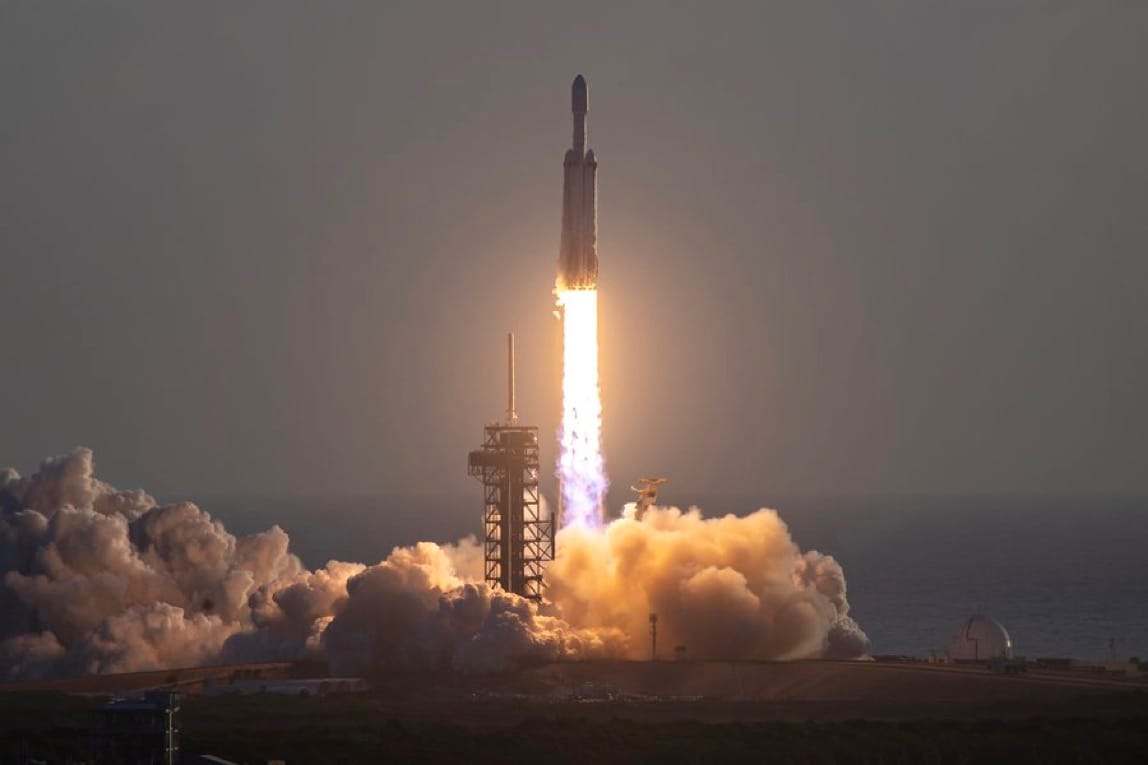
- Roman is now traveling roughly 1 million miles to the Sun-Earth L2 point, where it will use a field of view more than 100 times wider than Hubble’s to study dark matter and dark energy, map billions of galaxies, and discover thousands of planets beyond our solar system.
Statistic:
- Top assets by market capitalization:
- 🥇 Gold: $31.316T
- 🇺🇸 NVIDIA: $5.253T
- 🇺🇸 Apple: $4.665T
- 🇺🇸 Alphabet (Google): $4.193T
- 🇺🇸 Microsoft: $3.813T
- 🥈 Silver: $3.776T
- 🇺🇸 Amazon: $2.873T
- 🇹🇼 TSMC: $2.165T
- 🇺🇸 SpaceX: $1.865T
- 🇺🇸 Broadcom: $1.754T
- 🇸🇦 Saudi Aramco: $1.681T
- ₿ Bitcoin: $1.583T
- 🇺🇸 Meta Platforms: $1.472T
- 🇺🇸 Tesla: $1.377T
- 🇰🇷 Samsung: $1.223T
- 🇺🇸 Berkshire Hathaway: $1.081T
- 🇺🇸 Micron Technology: $1.053T
- 🇺🇸 Eli Lilly: $1.047T
- 🇺🇸 Vanguard S&P 500 ETF: $1.012T
- 🇺🇸 JPMorgan Chase: $950.62B
- 🇺🇸 iShares Core S&P 500 ETF: $887.59B
- 🇰🇷 SK Hynix: $850.99B
- 🇺🇸 Walmart: $820.39B
- 🇺🇸 SPDR S&P 500 ETF: $811.07B
- 🇺🇸 AMD: $760.04B
- 🇺🇸 Visa: $712.46B
History of the Real Estate Industry
- Real estate is one of the world’s oldest forms of wealth, evolving from land ownership into a massive industry built around property rights, lending, construction, brokerage, and investment. Ancient Mesopotamia, Egypt, Greece, Rome, India, and China recorded land ownership, leases, taxes, and transfers, while medieval Europe organized much of its economy around land controlled by monarchs and nobles. The modern industry accelerated during the 1700s–1800s as industrialization created cities, banks expanded mortgage lending, railroads opened new areas, and professional brokers emerged. In the U.S., standardized deeds, county records, mortgages, title insurance, appraisals, and brokerage created an increasingly organized market. The organization now known as the National Association of Realtors (NAR) was founded in 1908, while brokers developed cooperative listing systems that evolved into the Multiple Listing Service (MLS)—shared professional databases allowing brokerages to list properties and cooperate on sales. Paper listing books transitioned to computers during the 1970s–1990s and eventually the internet. Realtor.com, Zillow, Redfin, CoStar, LoopNet, and Homes.com later transformed property discovery and analysis. Today, real estate includes agents, developers, builders, landlords, property managers, banks, mortgage companies, REITs, private equity, insurers, title companies, appraisers, and massive property-data businesses.
- Real estate moves in waves because construction and property values depend heavily on credit, interest rates, population growth, supply, and investor psychology. After WWII, FHA and VA mortgages, highways, automobiles, rising incomes, and developments such as Levittown fueled America’s suburban housing explosion. High inflation and interest rates disrupted the market during the 1970s–early 1980s, followed by aggressive commercial lending and the Savings and Loan boom and crash, which contributed to hundreds of financial-institution failures. Falling rates then supported another expansion. During the 2000s housing bubble, subprime and adjustable-rate mortgages proliferated while Wall Street packaged mortgages into mortgage-backed securities and CDOs. Housing peaked around 2006, defaults surged, prices collapsed, Lehman Brothers failed in 2008, and millions of Americans faced foreclosure during the Global Financial Crisis. Low rates and distressed buying drove the 2010s recovery, followed by the extraordinary 2020–2022 pandemic boom, when cheap mortgages, remote work, stimulus, migration, and limited supply pushed prices sharply higher. Rate increases beginning in 2022 then crushed affordability and transaction volumes. The recurring cycle is essentially growth → easier credit → construction → rising prices → speculation → excessive debt/supply → tightening → correction/crash → distressed buying → recovery → another expansion.
- Today, the United States and China are the two real estate superpowers, although their markets are very different. China experienced one of history’s largest construction booms as hundreds of millions urbanized, producing enormous developers such as Evergrande, Country Garden, and Vanke. Excessive debt, dependence on presales, and overbuilding eventually contributed to a major property crisis beginning around 2021, with developer defaults, unfinished projects, declining sales, and falling prices. The United States has the world’s deepest and most sophisticated overall real estate industry, with roughly $55 trillion of residential property value by 2025, plus enormous commercial, mortgage, REIT, private-equity, brokerage, and PropTech markets. Japan, Germany, France, and the UK remain major developed markets; Canada and Australia have exceptionally valuable housing relative to their populations; the UAE has become an international luxury and development hub; and India is one of the largest long-term growth opportunities because of population and urbanization. The evolution is essentially ancient property → mortgages and brokers → 1908 NAR → MLS → postwar suburbs → REITs and securitization → S&L crash → internet listings → 2008 crash → Zillow/CoStar/PropTech → institutional investing → pandemic boom → high-rate correction → AI-driven real estate, with the U.S. leading the overall industry, China remaining an enormous property market, and India rapidly emerging.
Image of the day:

Thanks for reading! Earth is complicated, we make it simple.
- Download our mobile app:



Click below to view our previous newsletters:

Support/Suggestions Email:
support@earthintel.io