Friday☕️


Trending:
- As of June 26, 2026, Clashes continue in southern Lebanon despite the June 19 Israel-Hezbollah ceasefire.

- The latest reported incident near Beit Yahoun involved a Hezbollah ambush on Israeli forces, followed by Israeli artillery and airstrikes. Lebanon’s Health Ministry reports over 4,000 killed and more than 12,000 wounded in Lebanon since March 2, 2026, while Israel has reported 36 soldiers killed in the 2026 fighting so far, with both sides accusing the other of violating the US-brokered deal.
U.S. Southcom Earthquake Aid:
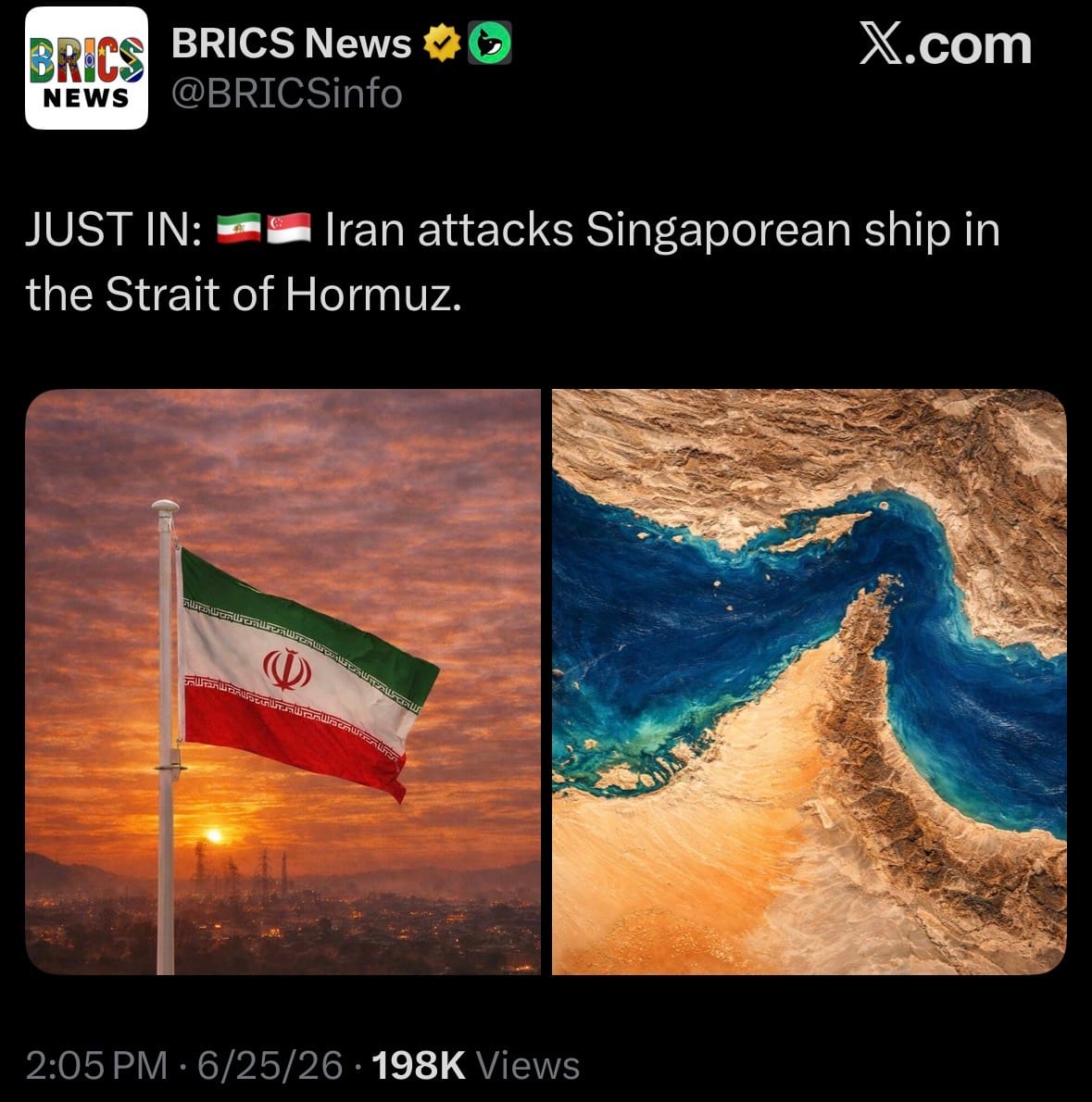
- The US Navy is deploying USS Fort Lauderdale (LPD 28) and USS Billings (LCS 15) to Venezuela at the direction of SOUTHCOM to support Department of State-led earthquake relief operations following the devastating 7.2 and 7.5 magnitude quakes that struck on June 24, 2026.
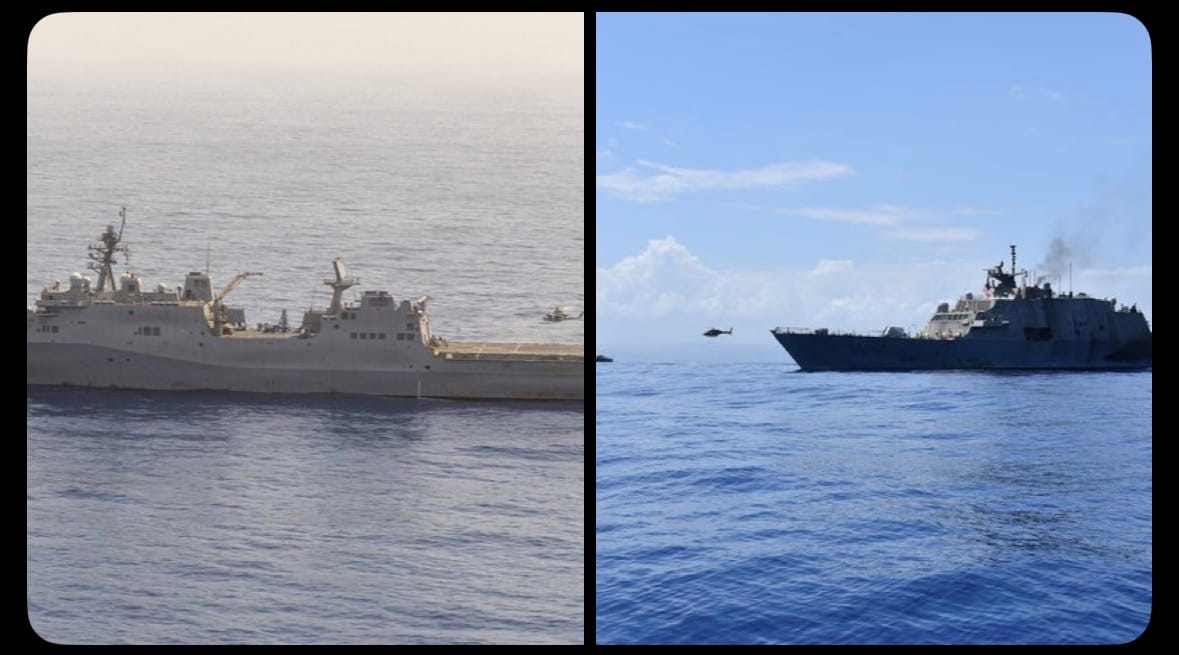
- USS Fort Lauderdale will serve as a floating command center with helicopter flight deck and well deck for landing craft, while the agile littoral combat ship USS Billings will provide close-to-shore support to accelerate response efforts.
Science & Technology:
- The US government has directed OpenAI to limit the initial release of GPT-5.6 to a small group of approved enterprise customers while it conducts a national security review, particularly around cybersecurity risks.
- OpenAI CEO Sam Altman responded that the company has made clear to the government “this is not our preferred long term model.”

Space:
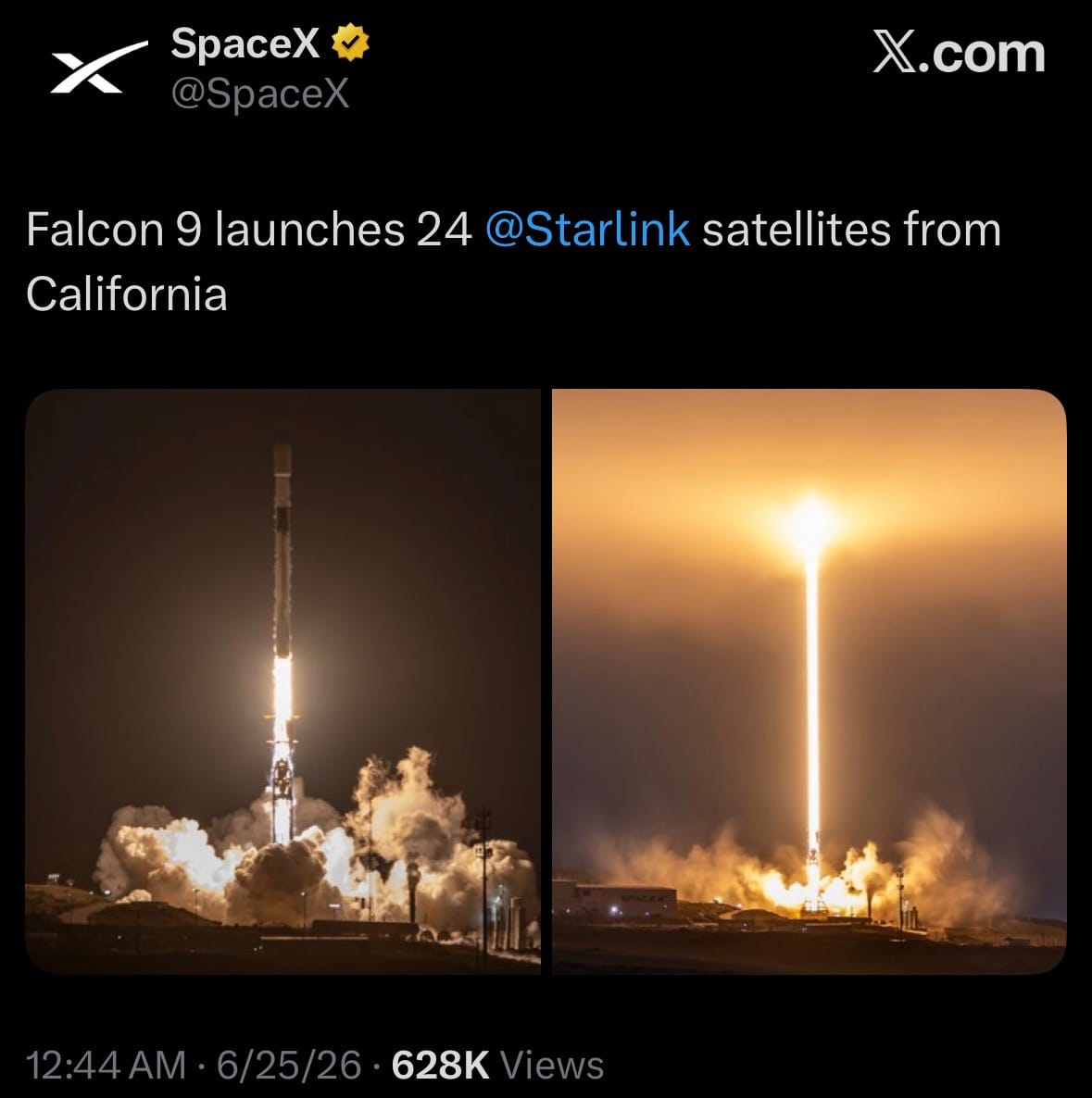
- SpaceX launched another 24 Starlink satellites via Falcon 9 from Vandenberg Space Force Base in California, further expanding its dominant constellation.
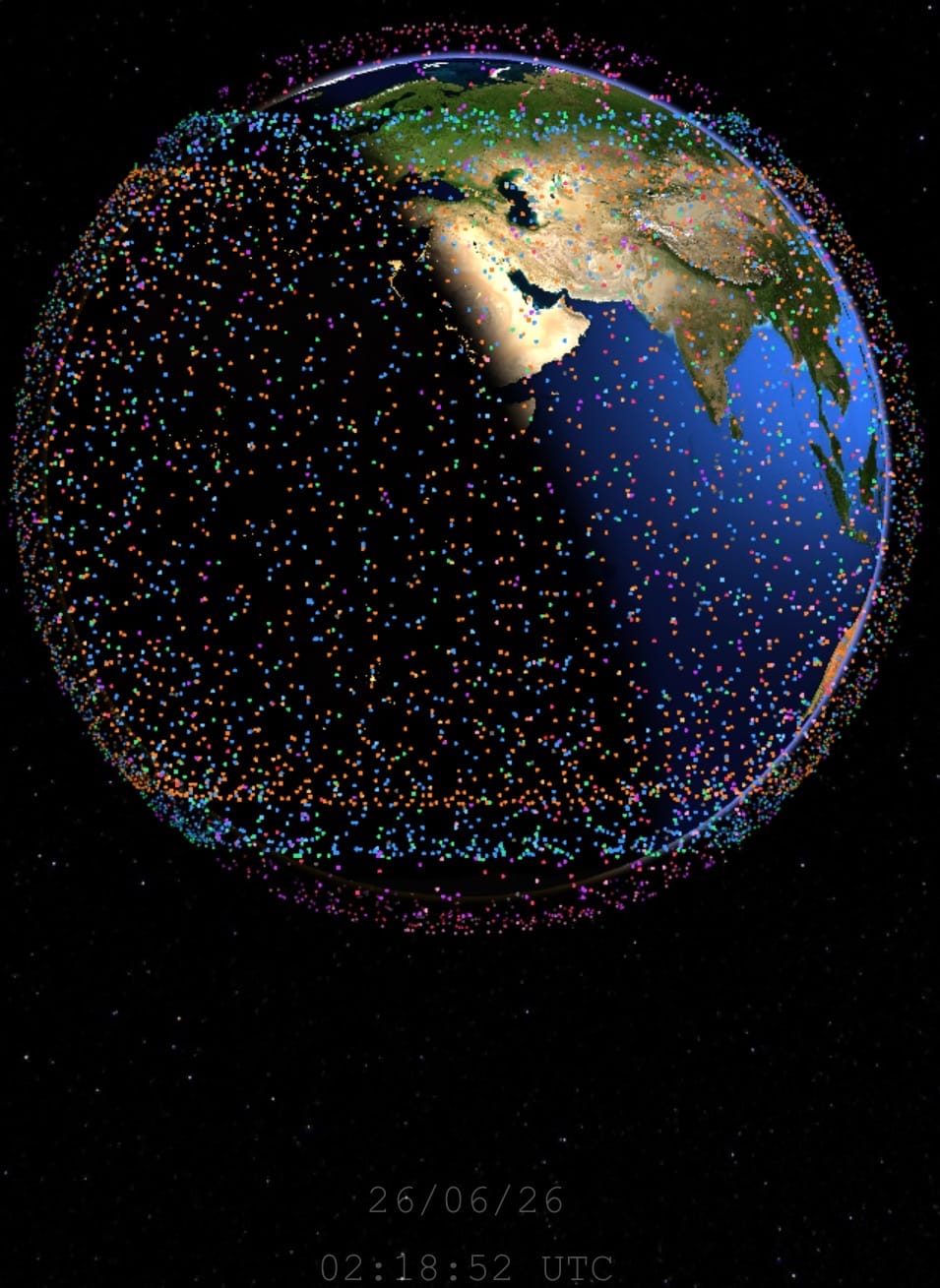
- Starlink has over 11,000 satellites in orbit (nearly all operational), vastly outpacing the next largest operators: commercial players Eutelsat OneWeb (~650 satellites) and Amazon’s Project Kuiper (~250 satellites), as well as major government constellations such as China’s Qianfan/Guowang (~350–500 combined in orbit) and traditional U.S. and Chinese military/government fleets (each in the low hundreds).
Statistic:
- Largest public companies by market capitalization:
- 🇺🇸 NVIDIA: $4.741T
- 🇺🇸 Alphabet (Google): $4.175T
- 🇺🇸 Apple: $4.041T
- 🇺🇸 Microsoft: $2.620T
- 🇺🇸 Amazon: $2.441T
- 🇹🇼 TSMC: $2.256T
- 🇺🇸 SpaceX: $2.015T
- 🇺🇸 Broadcom: $1.802T
- 🇸🇦 Saudi Aramco: $1.684T
- 🇰🇷 Samsung: $1.455T
- 🇺🇸 Tesla: $1.408T
- 🇺🇸 Meta Platforms: $1.378T
- 🇺🇸 Micron Technology: $1.370T
- 🇰🇷 SK Hynix: $1.280T
- 🇺🇸 Berkshire Hathaway: $1.052T
- 🇺🇸 Eli Lilly: $1.005T
- 🇺🇸 Walmart: $921.38B
- 🇺🇸 JPMorgan Chase: $897.95B
- 🇺🇸 AMD: $868.40B
- 🇳🇱 ASML: $709.62B
- 🇺🇸 Intel: $667.80B
- 🇺🇸 Visa: $628.56B
- 🇺🇸 Johnson & Johnson: $589.47B
- 🇺🇸 Exxon Mobil: $570.13B
- 🇺🇸 Applied Materials: $530.36B
- 🇺🇸 Lam Research: $502.50B
- 🇺🇸 Caterpillar: $486.85B
- 🇨🇳 Tencent: $481.30B
- 🇺🇸 Cisco: $468.91B
- 🇺🇸 Oracle: $439.15B
- 🇺🇸 Mastercard: $432.00B
History:
- Deep-ocean exploration is one of humanity’s oldest pursuits and one of its least completed. Although 71% of Earth’s surface is covered by oceans, scientists estimate that only about 25–30% of the seafloor has been mapped to modern high-resolution standards, and an even smaller fraction has been directly explored. Long before modern science, many civilizations viewed the deep ocean as a mysterious realm inhabited by powerful creatures. Ancient Mesopotamian, Greek, Norse, Polynesian, and other traditions described sea monsters and deities, while the Bible mentions creatures such as Leviathan (Job 41, Psalms, Isaiah) and Rahab, which have been interpreted variously as symbolic representations of chaos, poetic imagery, or great sea creatures. Christian tradition has often understood Leviathan symbolically, though interpretations have varied over time. Other cultures told stories of the Kraken, giant serpents, and dragons of the sea. These beliefs reflected how little of the ocean was understood. Modern oceanography began with the HMS Challenger Expedition (1872–1876), which mapped over 127,000 km (79,000 miles) of ocean, discovered more than 4,000 new species, and proved life existed even in the deep sea. Early diving milestones included the Bathysphere (1930–1934), reaching 923 meters (3,028 ft), followed by the Trieste on January 23, 1960, when Jacques Piccard and U.S. Navy Lt. Don Walsh became the first humans to reach the Challenger Deep at nearly 10,900 meters (35,800 ft). In 1977, scientists discovered hydrothermal vents, revealing ecosystems powered by chemosynthesis rather than sunlight—one of the greatest biological discoveries ever made.
- Although NASA, founded in 1958, has always focused on aeronautics and space, it has extensively used the ocean as an analog for space exploration because the deep sea shares many challenges with space: isolation, pressure, limited communications, and life-support requirements. Since 2001, astronauts have trained through NASA’s NEEMO missions inside the Aquarius Reef Base to prepare for future lunar and Martian missions. During the Cold War, however, the ocean also became a strategic military domain. The United States, Soviet Union, United Kingdom, France, and later China invested heavily in submarine technology, sonar, underwater surveillance, and seabed mapping. The U.S. Navy built the SOSUS underwater listening network to track Soviet submarines, while the CIA conducted Project Azorian (1974), secretly recovering part of the Soviet submarine K-129 from nearly 5,000 meters below the Pacific Ocean. Today, militaries continue operating classified programs involving autonomous underwater vehicles, seabed sensors, intelligence collection, protection of undersea fiber-optic cables, and submarine warfare. Because much of this work remains classified, the deep ocean continues to attract speculation about undisclosed technologies and unexplained observations, though many details are not publicly available.
- By 2026, deep-ocean exploration has become a race involving science, economics, and national security. Researchers are searching for new species, deep-sea microbes, and organisms that may lead to breakthroughs in medicine, while geologists study vast deposits of manganese nodules, cobalt, nickel, copper, rare earth elements, and polymetallic sulfides that could supply future batteries, electronics, and defense industries. Scientists are also investigating methane hydrates, underwater volcanoes, earthquake zones, carbon storage, and ancient climate records preserved beneath the seabed. The ocean floor also carries more than 95% of international internet traffic through undersea fiber-optic cables, making it one of the world’s most strategically important infrastructures. Public fascination continues around unidentified underwater phenomena (sometimes called USOs), submerged archaeological sites, and ancient traditions describing mysterious sea creatures. While no scientific evidence confirms the existence of legendary creatures such as Leviathan or the Kraken as described in folklore, discoveries of giant squid, colossal squid, bioluminescent organisms, and previously unknown deep-sea species have repeatedly shown that the ocean still contains extraordinary life forms. The greatest confirmed mystery is not that we have found something supernatural—but that humanity has explored only a tiny fraction of Earth’s largest environment, leaving countless biological, geological, archaeological, and technological discoveries still waiting beneath the sea.
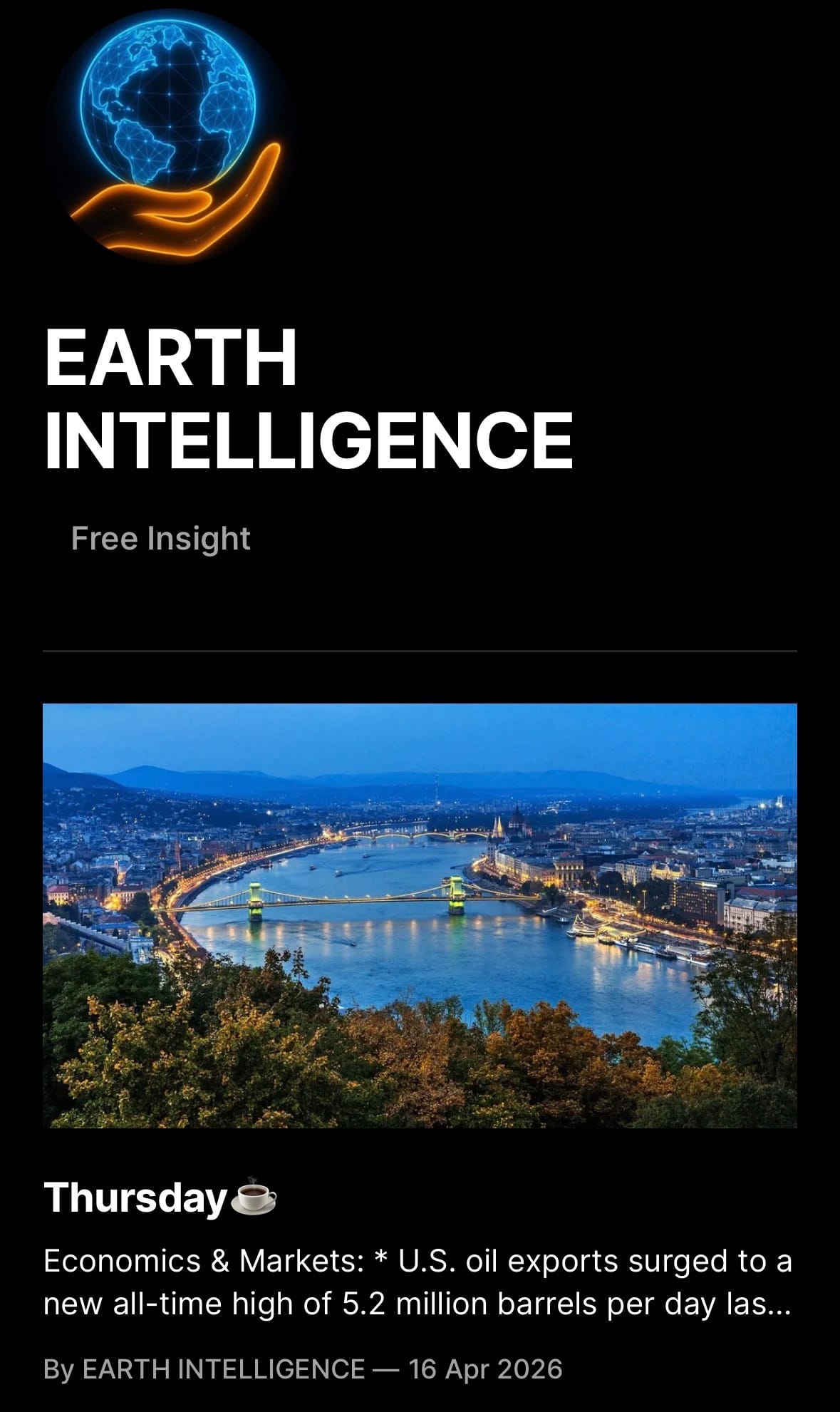
Image of the day:

Thanks for reading! Earth is complicated, we make it simple.
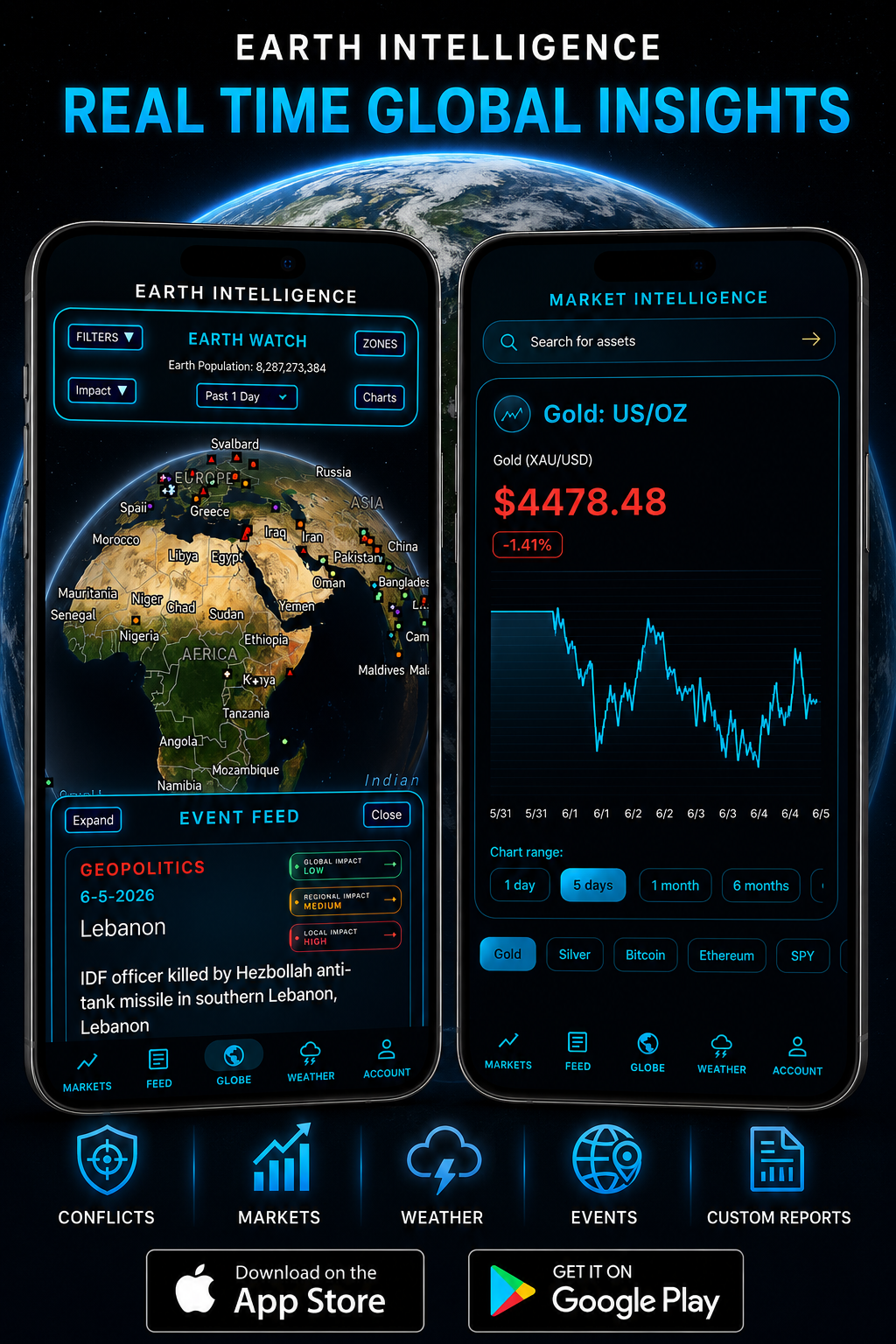
- Download our mobile app:


Click below to view our previous newsletters:
Support/Suggestions Email:
support@earthintel.io