Thursday☕️🌎


Trending:
- The United States plans to completely withdraw American troops from Iraq by the end of September, handing over all bases to Iraqi forces as part of the drawdown of military presence in the country.
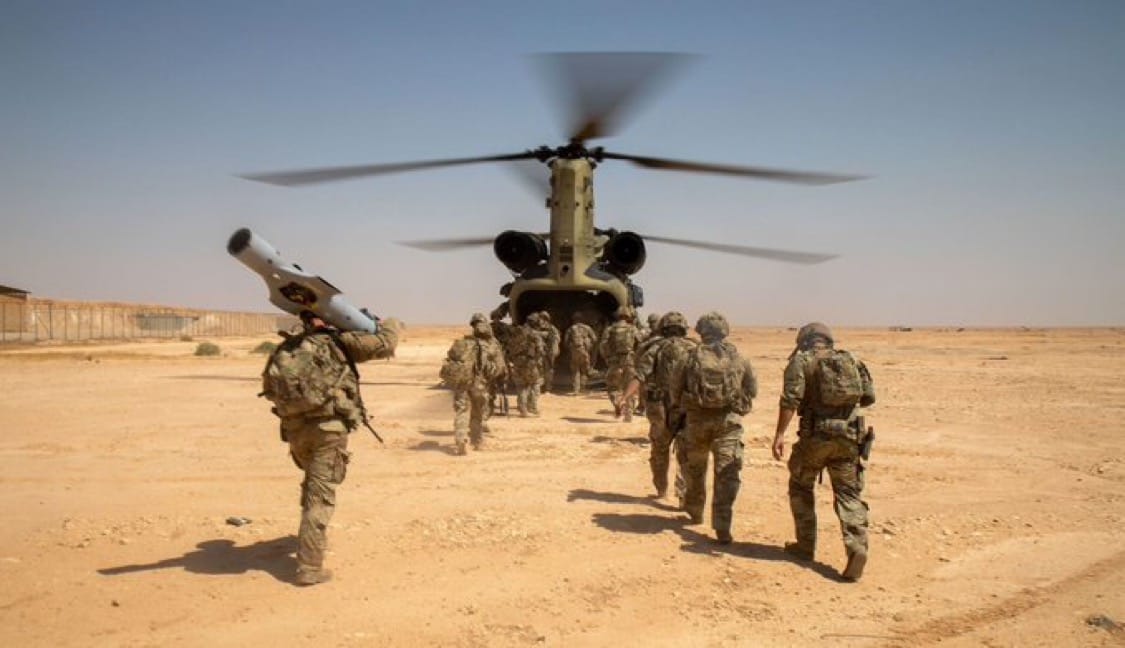
- This move marks the end of a long-term US military footprint in Iraq that began after the 2003 invasion and was later focused on counter-ISIS operations and training Iraqi forces.
Economics & Markets:
Geopolitics & Military Activity:
- On July 15, 2026, US Central Command conducted multiple waves of precision strikes against Iranian military targets, beginning at 6 a.m. ET and including a second wave at 3 p.m. ET, hitting command centers, air defense sites, missile and drone capabilities, coastal surveillance facilities, and locations including Bandar Abbas, Khormuj, Ahvaz, Qeshm, Tunb, Bushehr, and Kuh-e Stak.

- CENTCOM also enforced the resumed naval blockade, disabling the Curacao-flagged M/T Belma oil tanker with Hellfire missiles into its smokestack after it ignored warnings while heading toward Kharg Island.

Science & Technology:
- OpenAI has introduced GPT-Red, an internal automated tool that acts as a red teamer to find prompt injection vulnerabilities in its models on a large scale.
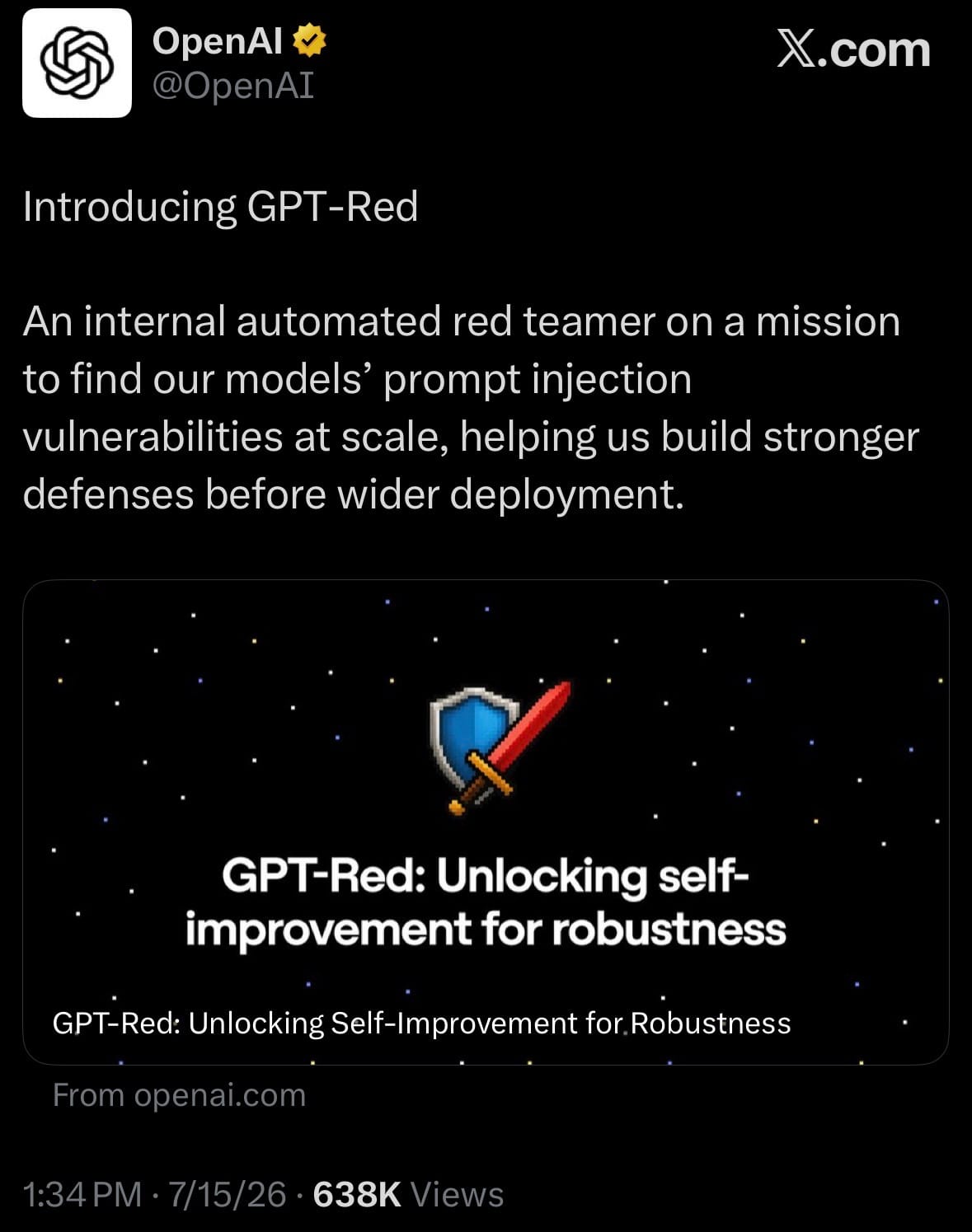
- Red teaming for AI in this case means deliberately testing the models by trying different kinds of tricky or malicious prompts to see if they can trick the AI into breaking its safety rules or behaving unexpectedly, which helps the team discover and fix those problems before releasing the models to more users.
Perplexity SPACE Release:
- Perplexity has introduced SPACE, a new sandbox platform that powers its Computer feature.
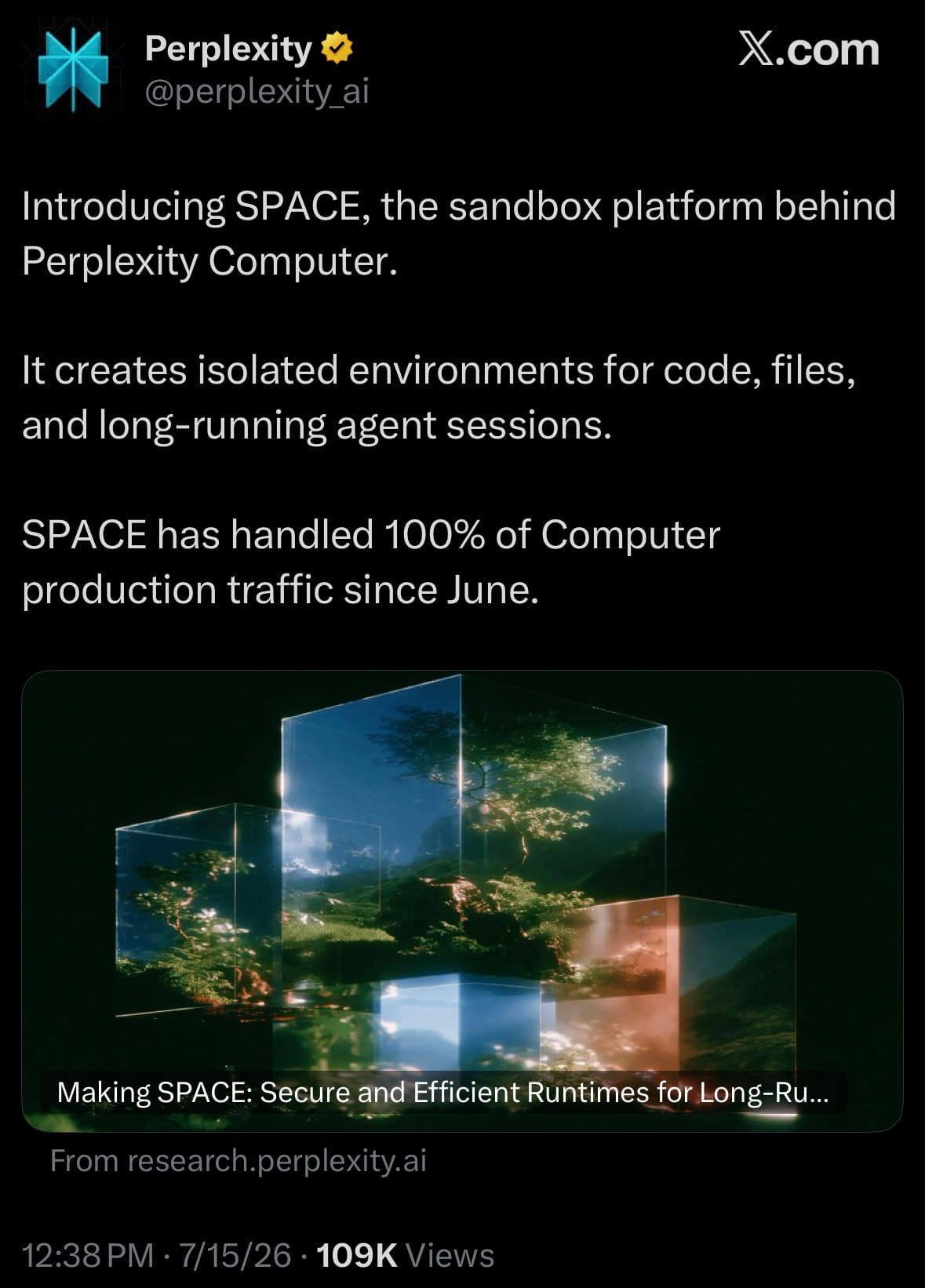
- It creates safe, isolated spaces where code, files, and AI agents can run for long periods without affecting other parts of the system — mainly to allow agents to safely execute tasks like coding, browsing, and file handling — and it has been handling all of the production traffic for the Computer tool since June.

Statistic:
- Largest public chemical companies by market capitalization:
- 🇬🇧 Linde: $237.71B
- 🇫🇷 Air Liquide: $127.74B
- 🇯🇵 Shin-Etsu Chemical: $85.54B
- 🇦🇺 Wesfarmers: $72.61B
- 🇩🇪 Merck KGaA: $69.86B
- 🇺🇸 Air Products and Chemicals: $65.39B
- 🇺🇸 Corteva: $56.48B
- 🇹🇼 Nan Ya Plastics: $56.06B
- 🇩🇪 Bayer: $53.76B
- 🇩🇪 BASF: $48.62B
- 🇸🇦 SABIC: $41.54B
- 🇩🇪 Henkel: $34.31B
- 🇨🇳 Wanhua Chemical: $32.46B
- 🇨🇭 Sika: $32.26B
- 🇺🇸 PPG Industries: $25.70B
- 🇨🇭 Ems-Chemie: $22.16B
- 🇺🇸 Dow: $21.40B
- 🇨🇱 Sociedad Química y Minera (SQM): $20.42B
- 🇦🇪 Borouge: $19.80B
- 🇺🇸 LyondellBasell: $18.72B
- 🇺🇸 DuPont de Nemours: $18.20B
- 🇶🇦 Industries Qatar: $18.03B
- 🇯🇵 Resonac Holdings: $17.80B
- 🇯🇵 Nippon Sanso: $16.42B
- 🇯🇵 Asahi Kasei: $15.74B
- 🇺🇸 Albemarle: $14.71B
History:
- History of Pesticides
- The history of pesticides began thousands of years before modern agriculture as civilizations searched for ways to protect crops from insects, fungi, rodents, and weeds. Ancient Sumerians (c. 2500 BC) were among the first to use sulfur compounds to control insects and mites. The Egyptians (c. 1500 BC) applied sulfur, oils, and plant extracts to crops, while the Greeks and Romans (500 BC–400 AD) used ash, lime, salt, vinegar, and botanical poisons to protect stored grain and orchards. Throughout Asia, particularly in China, farmers used arsenic compounds and naturally occurring insecticides centuries before modern chemistry. During the 1600s–1800s, naturally derived pesticides became common, including nicotine from tobacco, pyrethrum from chrysanthemum flowers, rotenone from tropical plants, and copper-based fungicides such as the Bordeaux mixture (1885), which is still used in some agriculture today. These products were effective but often inconsistent and sometimes highly toxic to both pests and humans.
- Modern pesticides emerged during the 20th century with advances in industrial chemistry. The most famous early synthetic pesticide was DDT (Dichlorodiphenyltrichloroethane). Although first synthesized in 1874, its insecticidal properties were discovered by Paul Hermann Müller in 1939, earning him the 1948 Nobel Prize. During World War II, DDT was widely used to control mosquitoes carrying malaria and lice spreading typhus, saving millions of lives. After the war, however, it became one of the most heavily used agricultural pesticides in history. By the 1960s, scientists began documenting its persistence in the environment and its accumulation in wildlife, particularly birds of prey. Rachel Carson’s landmark book Silent Spring (1962) brought widespread public attention to these environmental impacts and helped launch the modern environmental movement. The United States banned agricultural use of DDT in 1972, although it remains permitted in some countries for malaria control under international guidelines. Since then, agriculture has shifted toward newer pesticide classes, including organophosphates, carbamates, pyrethroids, neonicotinoids, and more recently biological pesticides derived from bacteria, fungi, viruses, and naturally occurring compounds. Herbicides such as glyphosate (introduced 1974) became some of the most widely used weed-control chemicals in history, especially after the introduction of genetically engineered herbicide-resistant crops during the 1990s.
- Today, pesticides are used on the majority of commercial fruits, vegetables, grains, and specialty crops worldwide to reduce crop losses from insects, weeds, fungi, bacteria, and other pests. Modern regulatory agencies—including the U.S. Environmental Protection Agency (EPA), European Food Safety Authority (EFSA), and similar organizations worldwide—establish maximum residue limits and require extensive safety testing before pesticides are approved. After application, many pesticides begin breaking down through sunlight, water, microbes, and natural chemical reactions, while washing, peeling, and cooking can reduce residues on many foods, though the amount varies depending on the chemical and crop. The scientific consensus is that pesticide residues on foods regulated within established limits are generally considered safe for consumers, but researchers continue studying the long-term effects of chronic low-level exposure, combinations of multiple pesticides, and potential impacts on children, farm workers, pollinators, biodiversity, and ecosystems. This has led to growing interest in integrated pest management (IPM), precision agriculture, biological controls, AI-guided spraying systems, and autonomous robots that reduce unnecessary pesticide use. From sulfur dust applied over 4,000 years ago to AI-controlled precision sprayers today, pesticides have become one of the most important—and most debated—technologies in modern agriculture, balancing higher food production and disease control against environmental protection and long-term human health considerations.
Image of the day:

Thanks for reading! Earth is complicated, we make it simple.
- Download our mobile app:


Click below to view our previous newsletters:
Support/Suggestions Email:
support@earthintel.io