Wednesday☕️🌎


Trending:
- The US House has passed legislation to make Daylight Saving Time permanent nationwide by a 308-117 vote, ending the twice-yearly clock changes, with the bill now moving to the Senate and backed by President Trump.

- If approved and signed into law, Americans would no longer spring forward or fall back, keeping clocks on Daylight Saving Time year-round for more consistent daylight in evenings.
Taco Bell Sickness Probe:
- Since May 1, 2026, the CDC has reported 1,645 confirmed cases of domestically acquired cyclosporiasis—a parasitic intestinal infection causing diarrhea, fatigue, and other symptoms—along with over 5,100 suspected cases, leading to 141 hospitalizations but no deaths, with Michigan recording more than 3,300 illnesses far above its usual annual total of around 50.

- Investigators are examining potential sources, including Taco Bell locations in Detroit where some ingredients like lettuce and cilantro were voluntarily pulled as a precaution, though no official link or recall has been confirmed.
Geopolitics & Military Activity:
- Yesterday, the US Treasury’s Office of Foreign Assets Control sanctioned multiple digital asset wallets linked to the Central Bank of Iran, freezing over $130 million as part of efforts to disrupt Iran’s illicit financial activities, including the use of cryptocurrencies.

- Treasury officials stated they will continue aggressively targeting the regime’s revenue sources to deny access to funds from illicit schemes.


Science & Technology:
- Anthropic is introducing Claude for Teachers, providing free access to premium Claude capabilities for verified K-12 educators in the US, along with a library of teaching skills and direct connections to evidence-based curricula mapped to academic standards in all 50 states.

- The program aims to equip teachers with AI tools designed to support classroom instruction and lesson planning while emphasizing educational quality and safety.

Statistic:
- Largest assets on Earth by market capitalization:
- 🥇 Gold: $28.228T
- 🇺🇸 NVIDIA: $5.130T
- 🇺🇸 Apple: $4.624T
- 🇺🇸 Alphabet (Google): $4.360T
- 🥈 Silver: $3.327T
- 🇺🇸 Microsoft: $2.859T
- 🇺🇸 Amazon: $2.662T
- 🇹🇼 TSMC: $2.180T
- 🇺🇸 Broadcom: $1.851T
- 🇺🇸 SpaceX: $1.792T
- 🇸🇦 Saudi Aramco: $1.729T
- 🇺🇸 Meta Platforms (Facebook): $1.677T
- 🇺🇸 Tesla: $1.487T
- ₿ Bitcoin: $1.302T
- 🇰🇷 Samsung: $1.160T
- 🇺🇸 Micron Technology: $1.110T
- 🇺🇸 Berkshire Hathaway: $1.059T
- 🇺🇸 Eli Lilly: $1.027T
- 🇺🇸 Vanguard S&P 500 ETF: $989.41B
- 🇺🇸 JPMorgan Chase: $918.77B
- 🇰🇷 SK Hynix: $912.47B
- 🇺🇸 Walmart: $904.83B
- 🇺🇸 AMD: $893.78B
- 🇺🇸 iShares Core S&P 500 ETF: $890.43B
- 🇺🇸 SPDR S&P 500 ETF: $783.35B
- 🇳🇱 ASML: $684.36B
- 🇺🇸 Visa: $677.05B
History:
- History of Time Zones & Daylight Saving Time
- Before standardized time, every city, town, and village kept its own local solar time, meaning noon occurred when the Sun reached its highest point overhead. Since the Earth rotates 360° every 24 hours, locations only a few miles apart could have clocks differing by several minutes. This caused little trouble when people traveled by foot, horse, or sailing ship. However, the Industrial Revolution (late 1700s–1800s) fundamentally changed transportation. As railroads spread across Europe and North America during the 1830s–1870s, trains required precise schedules, and telegraph networks allowed information to move almost instantly between cities whose clocks often differed. By the 1880s, the United States alone had over 140 different local time standards, creating confusion, scheduling errors, and even train collisions. British railways began using Greenwich Mean Time (GMT) during the 1840s, and Parliament officially adopted it nationwide in 1880. Canadian engineer Sir Sandford Fleming proposed dividing the Earth into 24 standardized time zones, each representing approximately 15 degrees of longitude. On October 13, 1884, delegates from 25 nations met at the International Meridian Conference in Washington, D.C., selecting Greenwich, England, as the world’s Prime Meridian (0° longitude) by a vote of 22–1. This established the global reference for navigation, mapping, astronomy, and international timekeeping. Shortly before that, on November 18, 1883, U.S. and Canadian railroads voluntarily adopted the now-familiar Eastern, Central, Mountain, and Pacific time zones in what became known as “The Day of Two Noons.” Congress later made the system official through the Standard Time Act of 1918, and over the following decades nearly every nation adopted standardized time zones, although many adjusted them to better fit political borders rather than exact longitude.
- The idea of Daylight Saving Time (DST) developed separately from time zones. In 1784, Benjamin Franklin humorously suggested that people wake earlier during summer to save candles, but he never proposed changing clocks. The first serious proposal came from George Hudson, a New Zealand entomologist, in 1895, followed by British builder William Willett, who published The Waste of Daylight in 1907, arguing that moving clocks forward would increase productive evening daylight. The first city widely credited with adopting seasonal clock changes was Port Arthur, Ontario, in 1908. During World War I, governments searched for ways to reduce coal consumption, leading Germany and Austria-Hungary to become the first countries to implement DST nationwide on April 30, 1916. The United Kingdom, France, and many European nations followed within weeks, while the United States adopted DST in 1918. After World War I, many countries abandoned it because it proved unpopular outside wartime. During World War II, however, many nations—including the United States with “War Time” (1942–1945)—again adopted year-round or extended daylight saving to conserve energy. Following the war, inconsistent local rules caused major confusion until the United States passed the Uniform Time Act of 1966, standardizing when most states changed their clocks while allowing states to opt out entirely. The 1973 oil crisis prompted another experiment with extended daylight saving beginning in 1974, but darker winter mornings created public opposition, especially for schoolchildren, and the policy was shortened. The Energy Policy Act of 2005 established the modern U.S. schedule beginning in 2007, with clocks moving forward on the second Sunday in March and back on the first Sunday in November.
- Today, time zones and daylight saving are essential pieces of global infrastructure supporting aviation, shipping, GPS, satellites, financial markets, telecommunications, military operations, power grids, and the internet. Nearly every international transaction, flight, missile launch, satellite maneuver, and stock exchange depends on synchronized time, coordinated through Coordinated Universal Time (UTC), which replaced GMT as the international scientific standard beginning in 1972 using highly accurate atomic clocks. Not every country observes daylight saving. As of 2026, most of Europe still changes clocks together each spring and autumn, while countries including Russia (2014), Turkey (2016), Brazil (2019), Mexico (mostly 2022), and Iran (2022) have abolished seasonal clock changes. China, despite spanning enough territory for roughly five natural time zones, has used a single national clock—Beijing Time (UTC+8)—since 1949, resulting in very late sunrises in western regions. India uses one national time zone (UTC+5:30) across the entire country, while Nepal uniquely uses UTC+5:45. Australia operates several time zones, with only certain states observing DST. Although daylight saving was originally promoted to save fuel and electricity, modern studies generally find that any energy savings are modest and vary by region, while the twice-yearly clock change can temporarily affect sleep, productivity, transportation, and healthcare. More than a century after the first international agreement on standard time, the global system remains a blend of astronomy, politics, economics, engineering, and international cooperation—forming one of the most important invisible infrastructures that allows modern civilization to function.
Image of the day:
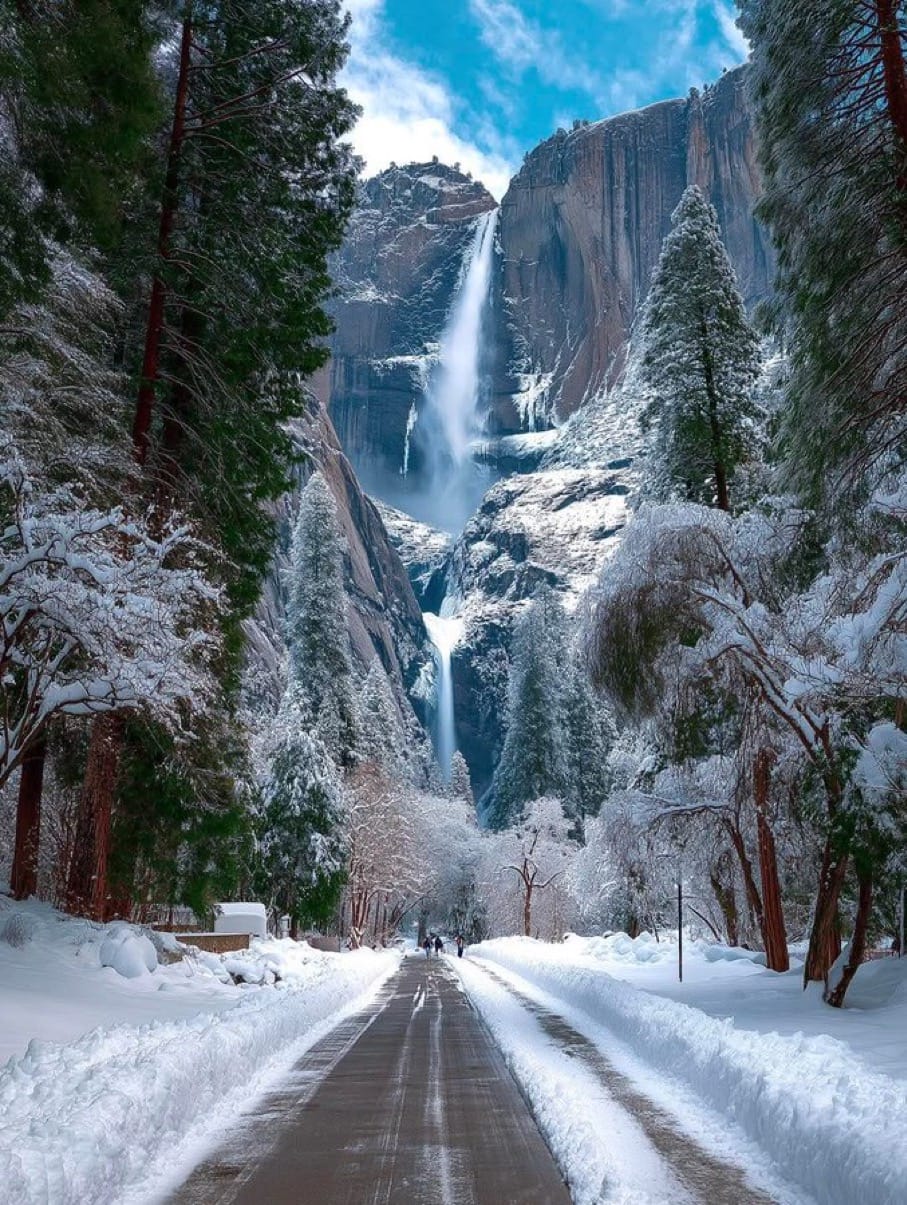
Thanks for reading! Earth is complicated, we make it simple.
- Download our mobile app:




Click below to view our previous newsletters:

Support/Suggestions Email:
support@earthintel.io