Tuesday☕️🌎


Trending:
- On July 14 at 4 p.m. ET, U.S. Central Command will resume blockading maritime traffic to and from Iranian ports at the direction of the Commander in Chief.
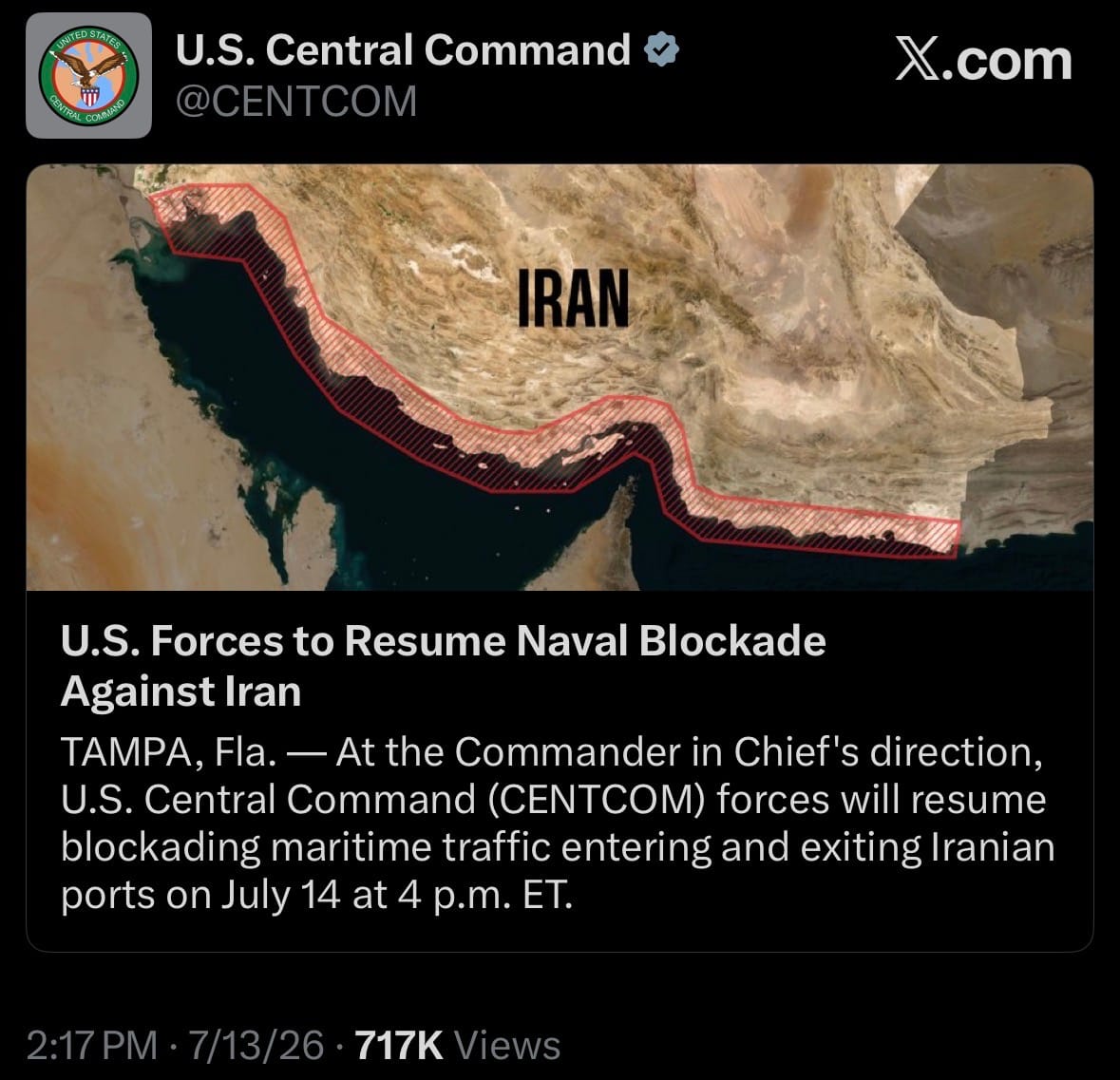
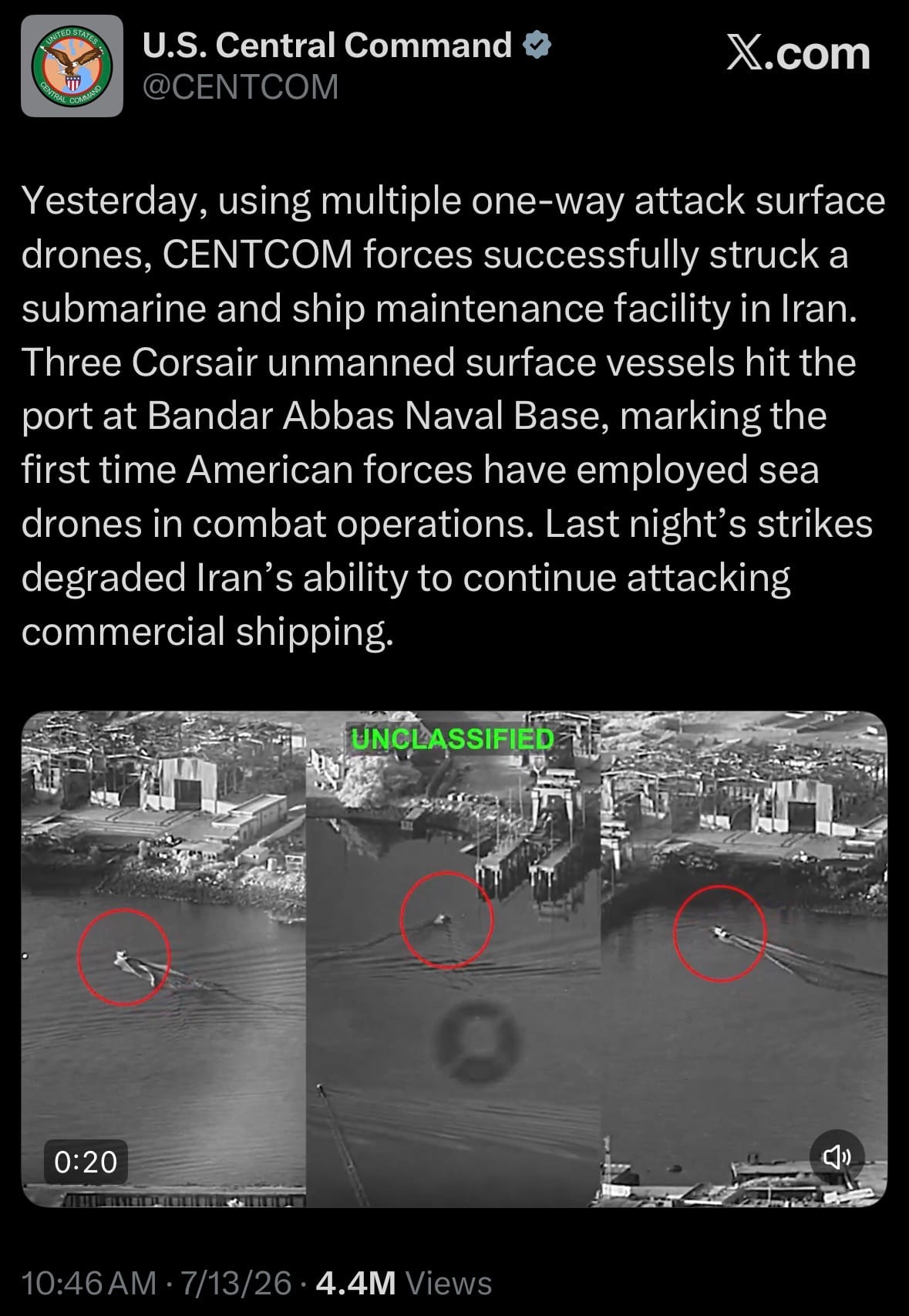
- The blockade targets violating vessels while allowing compliant commercial and humanitarian traffic to continue, following the earlier one from April 13 to June 18 that redirected over 140 ships and disabled nine non-compliant ones.
Economics & Markets:
- Argentina’s peso has fallen to an all-time low against the US dollar, having collapsed by 99.8% since 2009 amid chronic inflation, currency controls, and repeated economic crises.
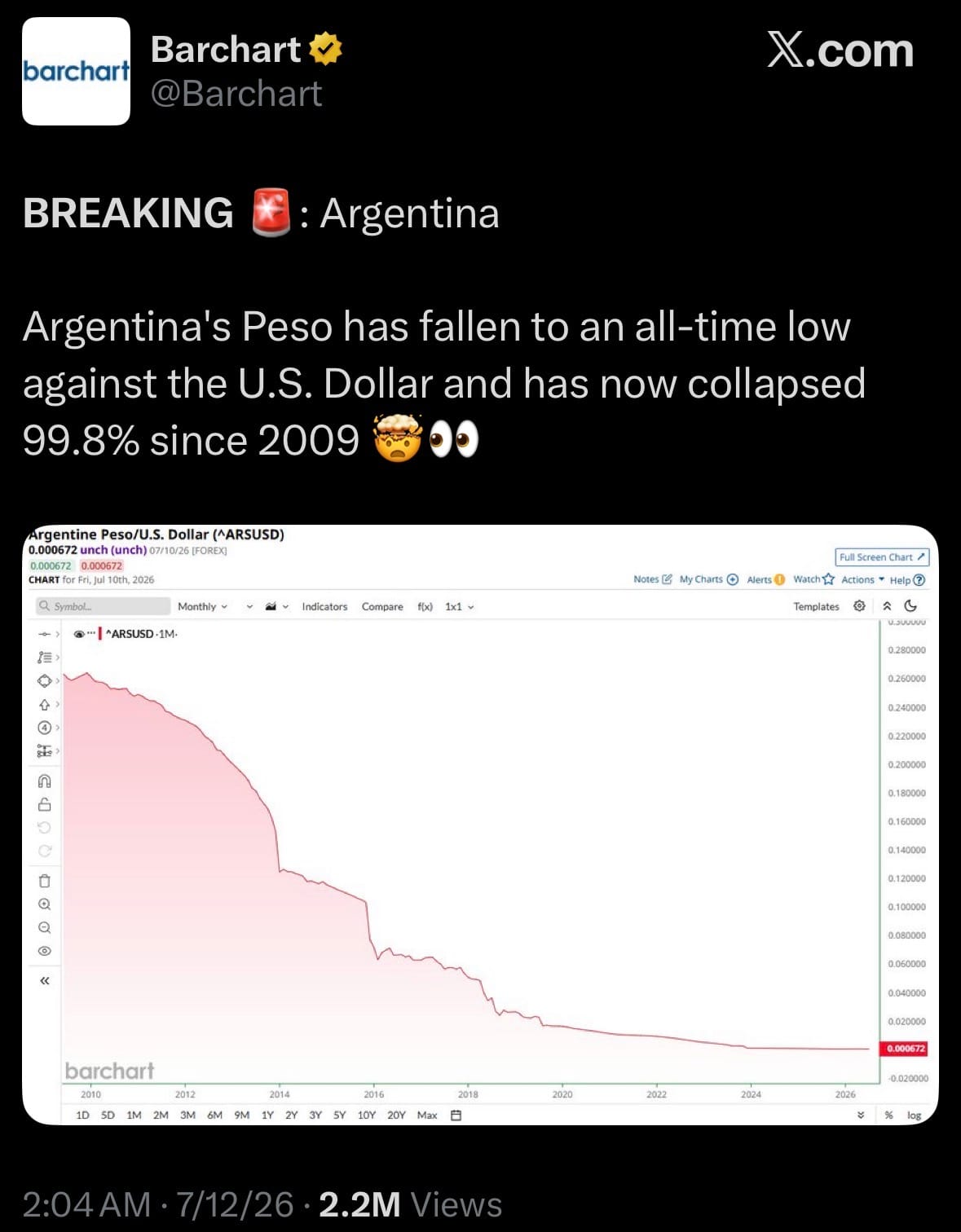
- The depreciation reflects ongoing challenges with fiscal policy, debt, and investor confidence despite recent stabilization efforts under the current government.
Science & Technology:
- Anthropic researchers are studying why Claude’s expressed values can change from one conversation to another and whether this variation is actually a good thing, since the model is now part of millions of daily chats.

- Their new approach helps identify what causes these differences in Claude’s responses on topics like ethics or preferences, with the goal of better understanding and potentially guiding how the AI expresses values in the future.

Statistic:
- Largest public maritime transportation companies by market capitalization:
- 🇩🇰 Maersk: $36.77B
- 🇨🇳 COSCO Shipping: $31.83B
- 🇩🇪 Hapag-Lloyd: $23.98B
- 🇯🇵 Nippon Yūsen: $13.21B
- 🇹🇼 Evergreen Marine: $13.10B
- 🇨🇳 COSCO Shipping Energy: $12.40B
- 🇰🇷 HMM: $12.31B
- 🇭🇰 SITC International: $11.41B
- 🇯🇵 Mitsui O.S.K. Lines: $11.29B
- 🇭🇰 Orient Overseas Container Line (OOCL): $11.01B
- 🇯🇵 K Line: $9.45B
- 🇲🇾 MISC Berhad: $8.65B
- 🇧🇲 Frontline: $8.21B
- 🇺🇸 Kirby Corporation: $7.63B
- 🇭🇰 China Merchants Port: $7.21B
- 🇹🇼 Wan Hai Lines: $6.90B
- 🇶🇦 Qatar Gas Transport Company: $6.49B
- 🇺🇸 Matson: $6.20B
- 🇳🇴 Wallenius Wilhelmsen: $5.94B
- 🇹🇼 Yang Ming: $5.43B
- 🇺🇸 Seaboard Corporation: $4.50B
- 🇧🇪 CMB.TECH: $4.48B
- 🇺🇸 International Seaways: $4.26B
- 🇸🇦 National Shipping Company of Saudi Arabia (Bahri): $4.18B
- 🇲🇨 Scorpio Tankers: $3.84B
- 🇴🇲 Asyad Shipping Company: $3.76B
History:
- Iranian oil began with the 1901 D’Arcy Concession, when Qajar Shah Mozaffar al-Din Shah gave British investor William Knox D’Arcy rights to search for oil across most of Persia for 60 years. Commercial oil was discovered at Masjed Soleyman on May 26, 1908, the first major petroleum discovery in the Middle East, leading to the creation of the Anglo-Persian Oil Company in 1909, later renamed the Anglo-Iranian Oil Company and eventually BP. Britain purchased a controlling 51% interest in 1914, largely to secure fuel for the Royal Navy, making Iranian oil central to British imperial power. Iranian resentment grew because foreign owners controlled production, refining, pricing, and the enormous Abadan refinery, while Iran received comparatively limited royalties. In 1933, Reza Shah negotiated a revised concession but retained foreign corporate control. The decisive break came in March 1951, when parliament nationalized the oil industry under Prime Minister Mohammad Mosaddegh, creating the National Iranian Oil Company—NIOC. Britain responded with an embargo and international pressure that sharply reduced Iranian exports. On August 19, 1953, Mosaddegh was removed in a coup supported by British intelligence and the CIA, after which a 1954 international consortium restored Western companies to Iranian production, although formal ownership remained Iranian. Iran helped found OPEC in 1960, benefited heavily from the 1973–1974 oil-price surge, and became one of the world’s largest exporters under Shah Mohammad Reza Pahlavi, producing more than 6 million barrels per day by the late 1970s.
- The 1979 Islamic Revolution removed the shah, eliminated the foreign consortium and placed the industry fully under the revolutionary state through NIOC, but production collapsed because of strikes, political upheaval and the departure of foreign technicians. The Iran–Iraq War of 1980–1988 damaged refineries, ports, pipelines and export terminals; during the Tanker War of 1984–1988, Iran and Iraq attacked oil shipping in the Persian Gulf, prompting U.S. naval escorts and direct U.S.–Iran clashes, including Operation Praying Mantis in April 1988. Iran rebuilt after the war, but American sanctions steadily restricted investment: the U.S. prohibited most trade and investment in 1995, nuclear-related sanctions intensified from 2006, and European and U.S. restrictions in 2012 sharply reduced exports and blocked access to shipping insurance and international banking. The 2015 Joint Comprehensive Plan of Action, implemented in January 2016, temporarily reopened markets and allowed production and exports to recover. President Donald Trump withdrew the United States from the agreement on May 8, 2018 and restored “maximum pressure” sanctions, forcing Iran to sell through discounted pricing, intermediaries, ship-to-ship transfers, altered documentation, reflagged tankers and a so-called shadow fleet. From 2020 through 2025, exports recovered despite sanctions, rising toward roughly 1.5–1.7 million barrels per day, with approximately 90% of exported crude ultimately going to China, especially independent “teapot” refineries that value discounted Iranian grades. Smaller volumes or petroleum products have moved through regional markets and trading hubs connected to the UAE, Oman, Pakistan, Afghanistan, Syria and Venezuela, but China became the essential customer sustaining Iranian oil revenue.
- By July 2026, the ongoing U.S.–Iran war and renewed battle over the Strait of Hormuz are fracturing that trade. Iranian attacks, selective transit controls and restrictions in the strait have collided with U.S. strikes and a renewed American blockade policy aimed at Iranian vessels and customers, while allowing non-Iranian traffic in principle. Commercial crossings have fallen sharply, tanker insurance and freight costs have surged, and Iran’s ability to move crude from export centers such as Kharg Island to Asian customers has become increasingly uncertain. The United States directly imports essentially zero Iranian crude or petroleum products because sanctions prohibit normal purchases; America therefore does not depend on Iran as a supplier. It is affected indirectly through global pricing and through the Strait of Hormuz, which also carries oil and LNG from Saudi Arabia, Iraq, Kuwait, the UAE and Qatar. China faces the greatest direct loss of discounted Iranian supply, especially its smaller refiners, although large inventories and alternative Russian, Saudi and Iraqi barrels provide temporary protection. Iran itself faces the most severe financial impact because petroleum exports fund government spending, foreign exchange and regional operations. Other major losers include Asian importers such as India, Japan and South Korea if broader Gulf flows are interrupted; Gulf producers whose exports use Hormuz; shipping and insurance companies; energy-intensive manufacturers; airlines; and consumers worldwide through higher fuel, electricity, food and transportation costs. Iranian oil has therefore evolved from a British imperial concession in 1901, to the center of the 1951 nationalization crisis, to the financial foundation of the Islamic Republic, and now into a contested wartime trade system where control of tankers, sanctions, payment channels and the Strait of Hormuz matters almost as much as the oil fields themselves.
Image of the day:

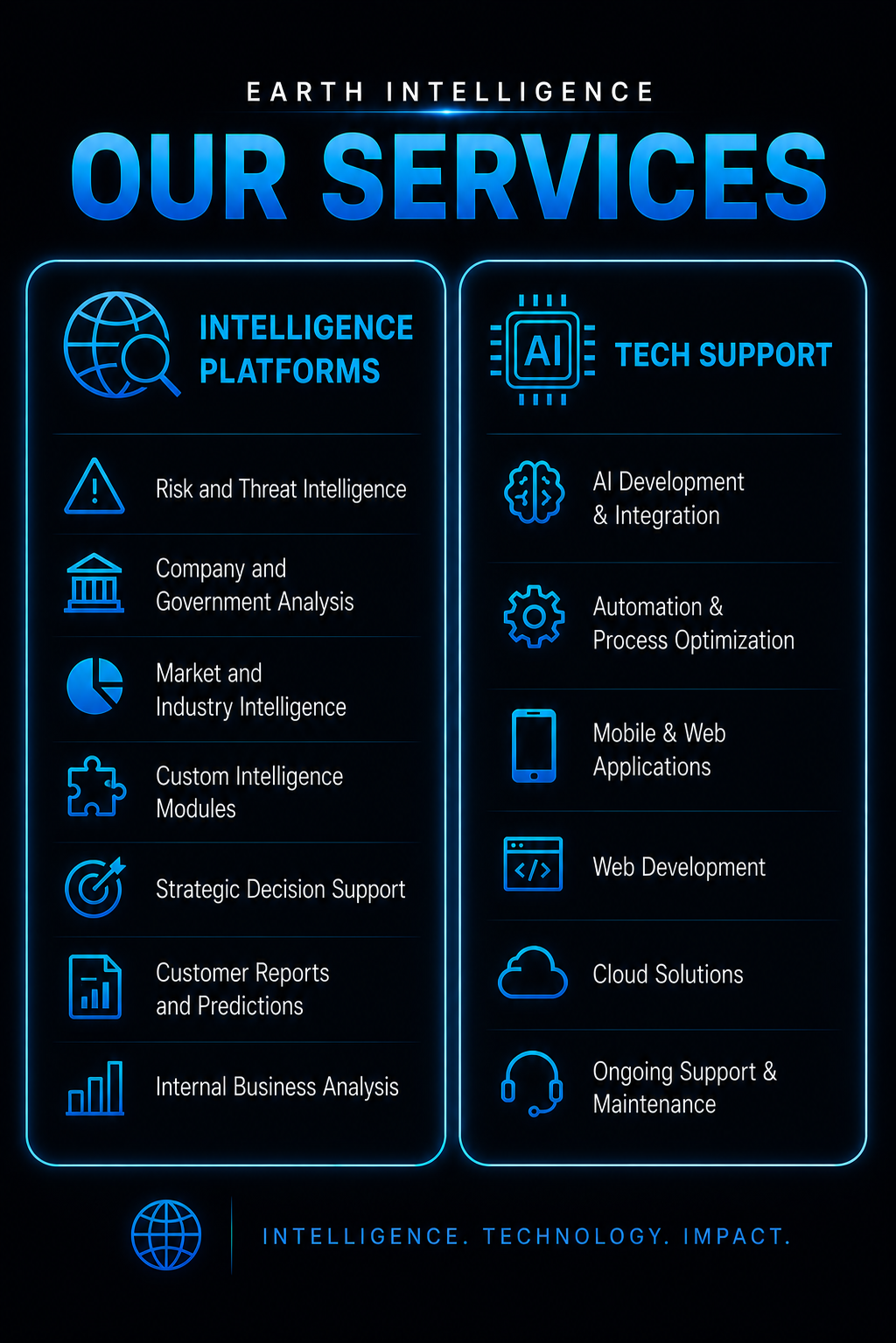
Thanks for reading! Earth is complicated, we make it simple.
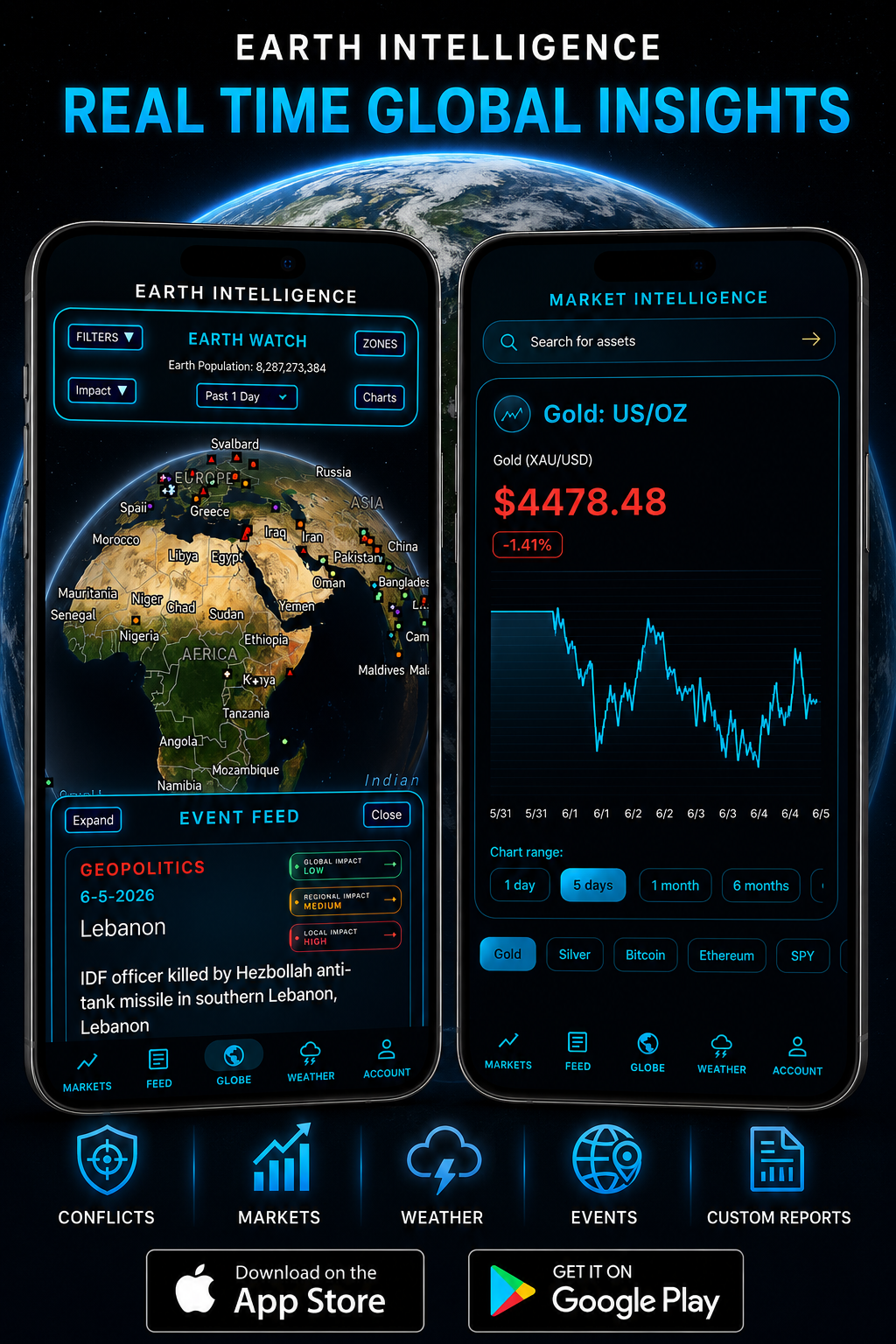
- Download our mobile app:


Click below to view our previous newsletters:
Support/Suggestions Email:
support@earthintel.io