Wednesday☕️


Trending:
- On June 23, 2026, the U.S. Senate passed a war powers resolution by a 50–48 vote directing President Trump to halt U.S. military action against Iran.
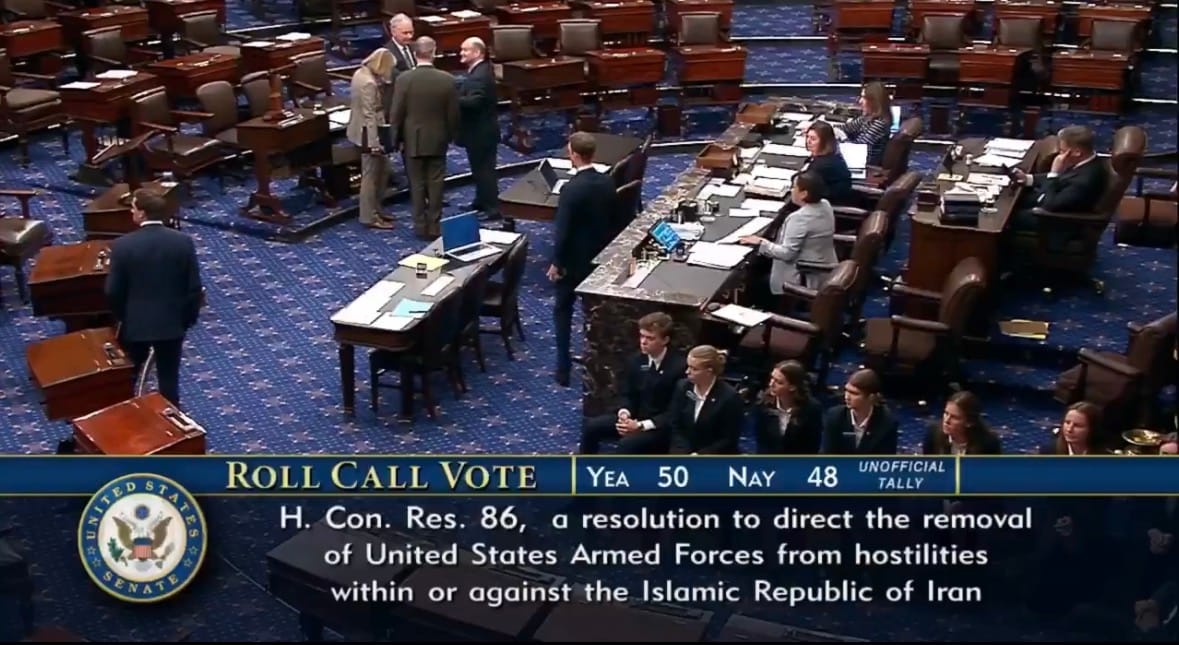
- Four Republicans joined Democrats in support of the measure, which had already passed the House. It is largely symbolic — the first such resolution to clear both chambers since 1973 — and is expected to face a presidential veto.
Geopolitics & Military Activity:
- As of June 24, 2026, the United States and Iran are continuing negotiations after signing a Memorandum of Understanding earlier this month. The interim deal includes an immediate ceasefire on all fronts including Lebanon, the lifting of the U.S. naval blockade, toll-free shipping through the Strait of Hormuz for 60 days, immediate oil export waivers, release of frozen funds, and over $300 billion in reconstruction support, with Iran agreeing not to develop nuclear weapons.
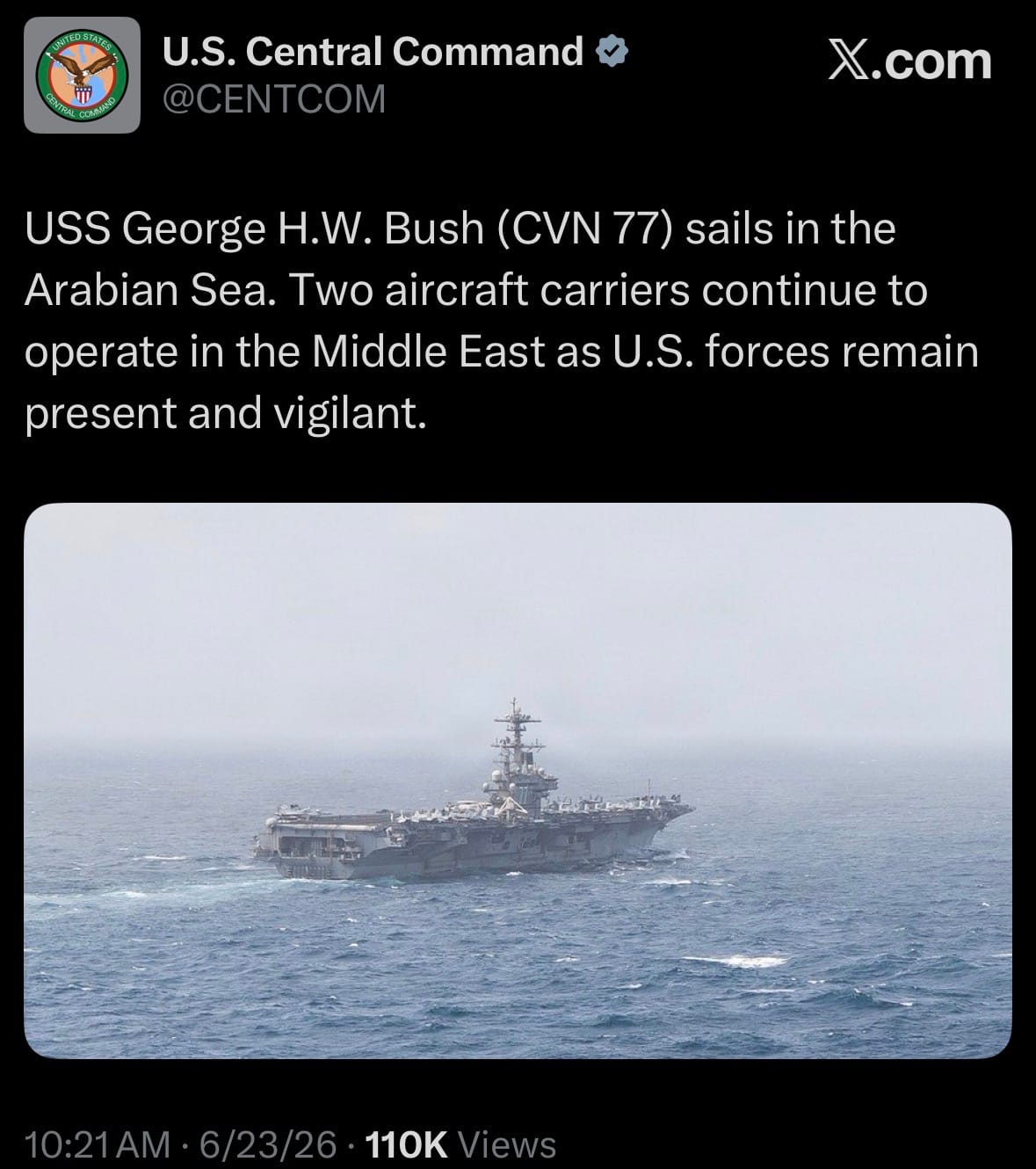
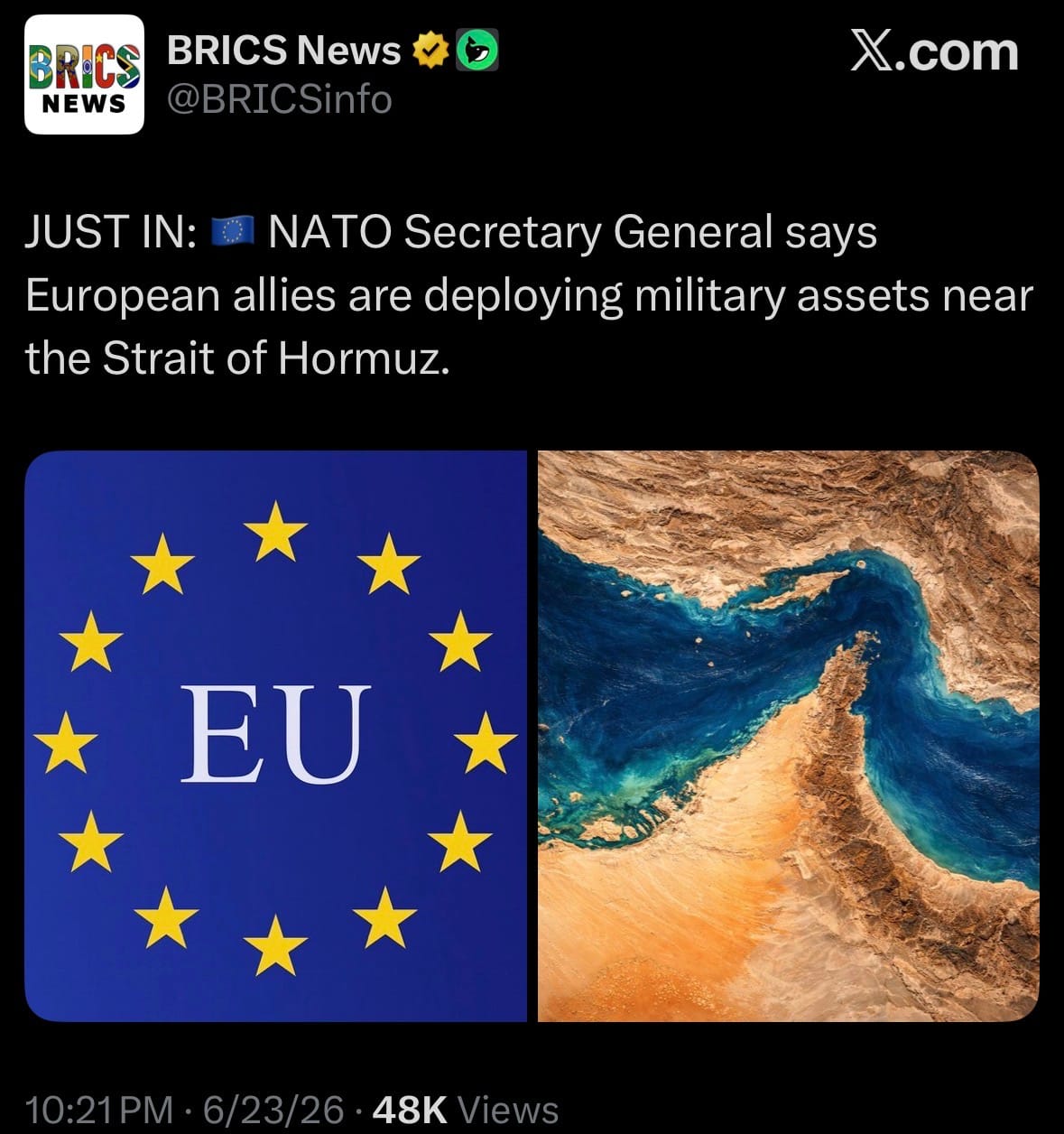
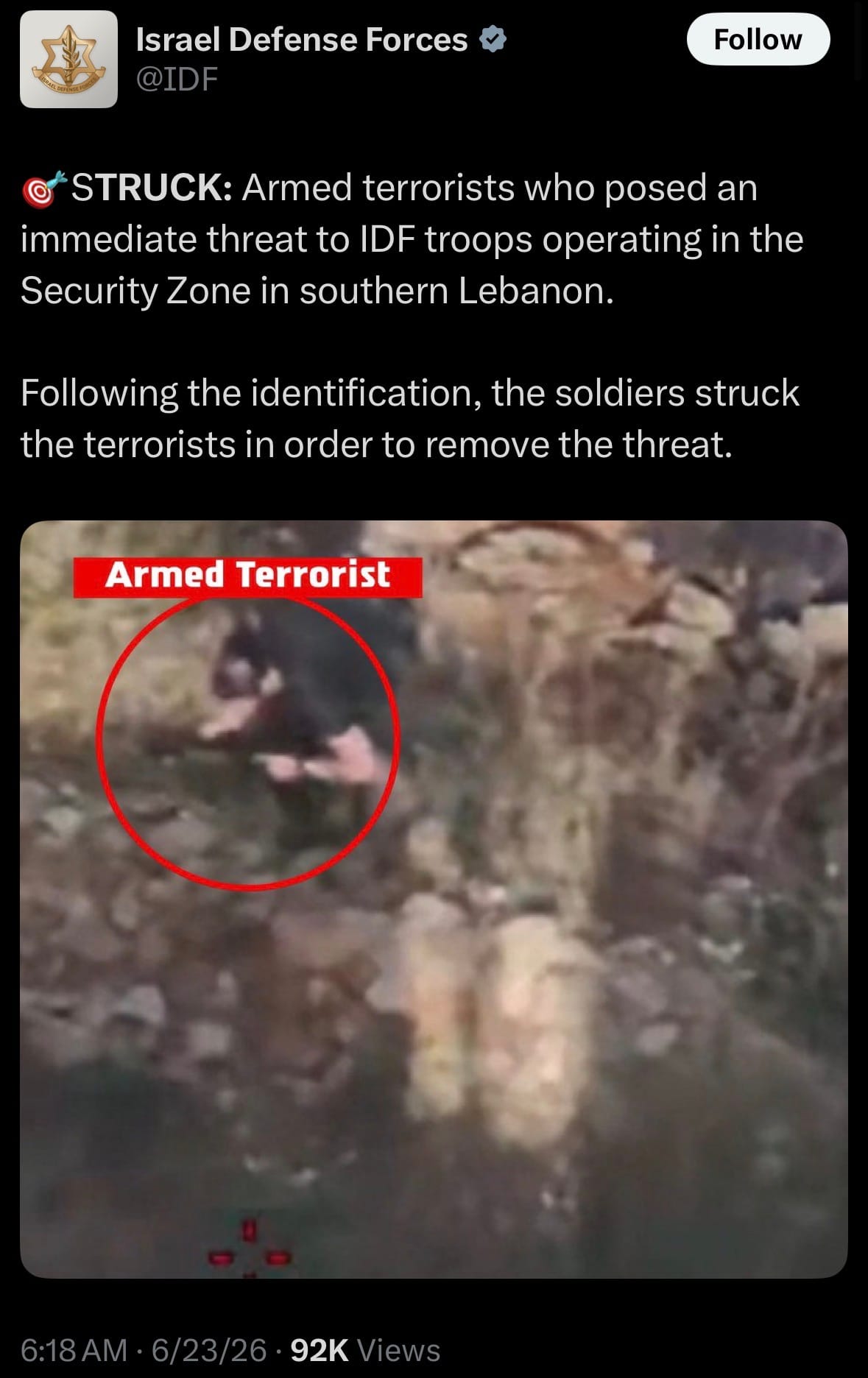
- Progress is ongoing but tensions remain, especially over the IDF’s continued presence in southern Lebanon and occasional conflicting claims about the status of the Strait of Hormuz.
Science & Technology:
- On June 23, 2026, the U.S. Department of Energy announced $17.5 billion in conditional loans for the American Nuclear Supply Chain Loans program.
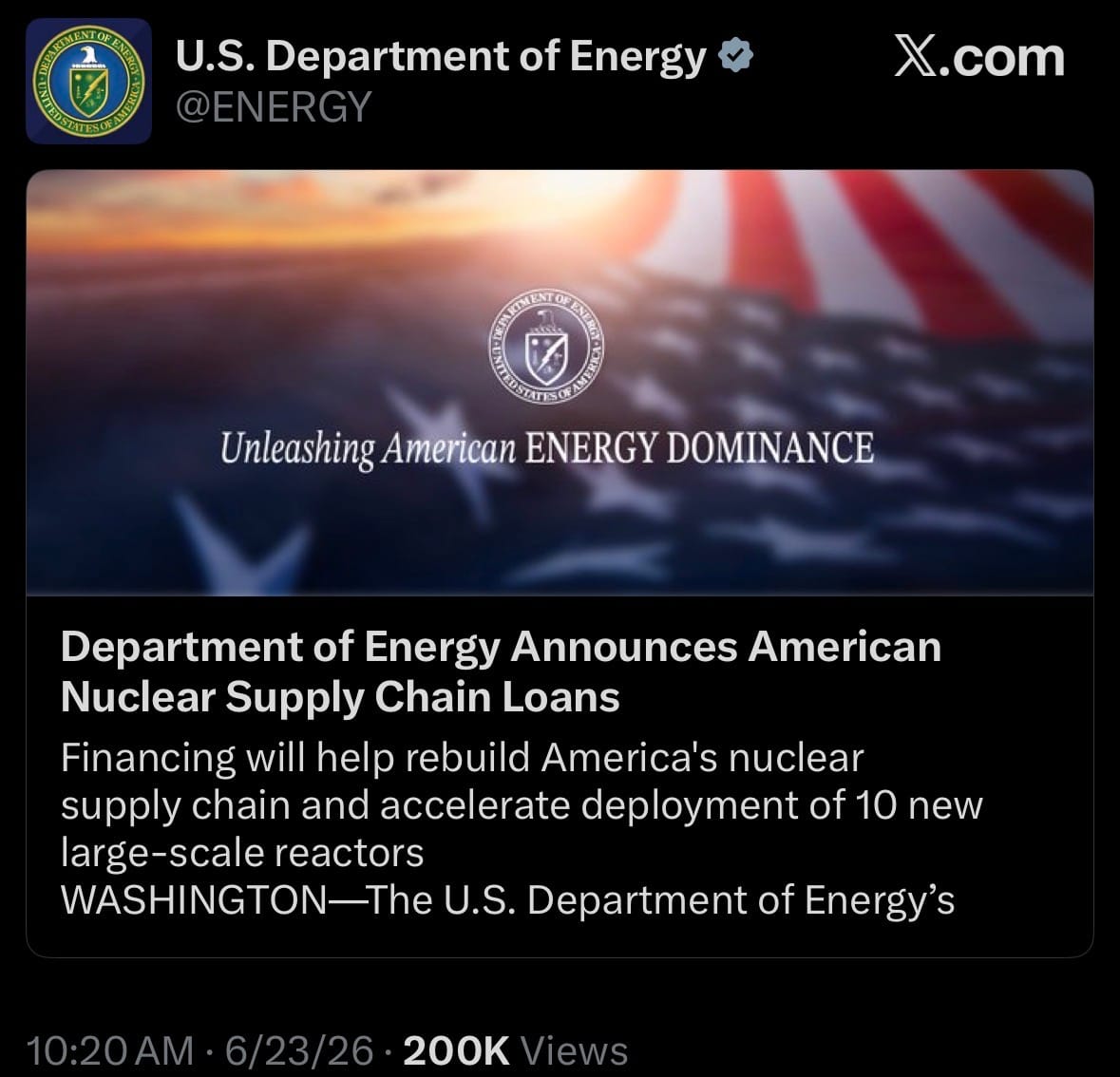
- The funding will support five projects to purchase long-lead components (such as pressure vessels and steam generators) for up to 10 new Westinghouse AP1000 nuclear reactors. This aims to rebuild the domestic supply chain, cut construction timelines by up to three years, and accelerate large-scale nuclear deployment in the United States.
Statistic:
- Largest e-commerce companies by market capitalization:
- 🇺🇸 Amazon: $2.518T
- 🇨🇳 Alibaba: $246.15B
- 🇨🇦 Shopify: $139.73B
- 🇨🇳 PDD Holdings (Pinduoduo): $108.97B
- 🇦🇷 MercadoLibre: $80.28B
- 🇺🇸 Carvana: $71.10B
- 🇸🇬 Sea Limited: $56.21B
- 🇨🇳 Meituan: $53.58B
- 🇺🇸 eBay: $48.38B
- 🇨🇳 JD.com: $35.27B
- 🇺🇸 Coupang: $31.43B
- 🇺🇸 Copart: $28.51B
- 🇨🇳 JD Health: $13.55B
- 🇺🇸 Wayfair: $11.19B
- 🇺🇸 Instacart (Maplebear): $10.83B
- 🇵🇱 Allegro.eu: $10.48B
- 🇺🇸 Ozon: $10.03B
- 🇯🇵 Rakuten: $9.38B
- 🇮🇳 Nykaa: $9.33B
- 🇩🇪 Zalando: $7.48B
- 🇺🇸 Chewy: $7.30B
- 🇺🇸 Etsy: $7.10B
- 🇭🇰 Alibaba Health Information Technology: $6.72B
- 🇨🇳 Vipshop: $6.32B
- 🇯🇵 ZOZO: $5.99B
- 🇮🇱 Global-e: $5.99B
History:
- The Defense Intelligence Agency (DIA) was created on October 1, 1961, during the height of the Cold War after U.S. leaders realized military intelligence was too fragmented. Before the DIA, each military branch—the Army, Navy, Air Force, and Marine Corps—largely collected and analyzed intelligence independently, often producing conflicting assessments and competing for resources. Following intelligence failures surrounding events such as the Korean War (1950–1953) and growing concerns about Soviet military capabilities, Secretary of Defense Robert McNamara pushed for a centralized military intelligence organization. The DIA was established to serve as the primary intelligence agency for the Department of Defense, responsible for analyzing foreign militaries, weapons systems, force structures, military capabilities, and potential threats. During the 1962 Cuban Missile Crisis, only a year after its creation, the DIA played an important role in assessing Soviet military deployments. Throughout the 1960s and 1970s, the agency expanded rapidly during the Vietnam War, producing intelligence on North Vietnamese forces, Soviet military modernization, Chinese military developments, and global Cold War flashpoints. Unlike the CIA, which focuses broadly on political, economic, and covert intelligence, the DIA’s mission centered specifically on military intelligence—understanding how foreign armed forces fight, organize, equip, and plan operations.
- During the Cold War (1947–1991), the DIA became one of the most important intelligence organizations in the United States. It developed extensive human intelligence (HUMINT) networks, deployed defense attachés to U.S. embassies worldwide, and produced assessments on Soviet nuclear forces, Warsaw Pact military capabilities, ballistic missile developments, and emerging threats. By the 1980s, DIA analysts were helping monitor Soviet strategic forces, Middle Eastern conflicts, terrorism, and global military modernization. The agency’s role expanded significantly during Operation Desert Storm (1991), where DIA intelligence helped planners understand Iraqi military capabilities and weaknesses. Throughout the 1990s, the agency shifted attention toward regional conflicts, weapons proliferation, rogue states, and emerging terrorist organizations. Following the September 11, 2001 attacks, DIA underwent another major transformation. Counterterrorism, Afghanistan, Iraq, Al-Qaeda, ISIS, Iran, North Korea, and global military networks became top priorities. The agency greatly expanded its human intelligence operations, deploying officers alongside military units and special operations forces worldwide. During the wars in Iraq and Afghanistan, DIA personnel became deeply integrated with combat commands, special operations task forces, and intelligence fusion centers supporting real-time military operations.
- By 2026, the DIA is one of the largest intelligence organizations in the world, employing roughly 16,000–18,000 personnel and supporting the Department of Defense, Joint Chiefs of Staff, Combatant Commands, U.S. military services, and national policymakers. The agency is responsible for analyzing foreign military capabilities from countries such as China, Russia, Iran, North Korea, and other potential adversaries. It oversees the Defense Attaché System, one of the world’s largest military diplomatic and intelligence networks, with officers stationed in embassies across more than 100 countries. The DIA also manages significant HUMINT operations and works closely with the CIA, NSA, NGA, NRO, FBI, and allied intelligence services. Major focus areas include Chinese military modernization, Taiwan contingencies, Russian military operations, nuclear weapons programs, missile development, cyber warfare, space warfare, hypersonic weapons, drone technologies, and emerging battlefield technologies. While agencies like the CIA and NSA often receive more public attention, the DIA serves as the primary organization responsible for answering one of the most important national security questions: What can foreign militaries actually do, how would they fight, and what threats do they pose to the United States and its allies? Today, it stands as the military intelligence backbone of the U.S. national security system, providing critical analysis that influences defense planning, military operations, force development, and strategic decision-making around the world.
Image of the day:

Thanks for reading! Earth is complicated, we make it simple.
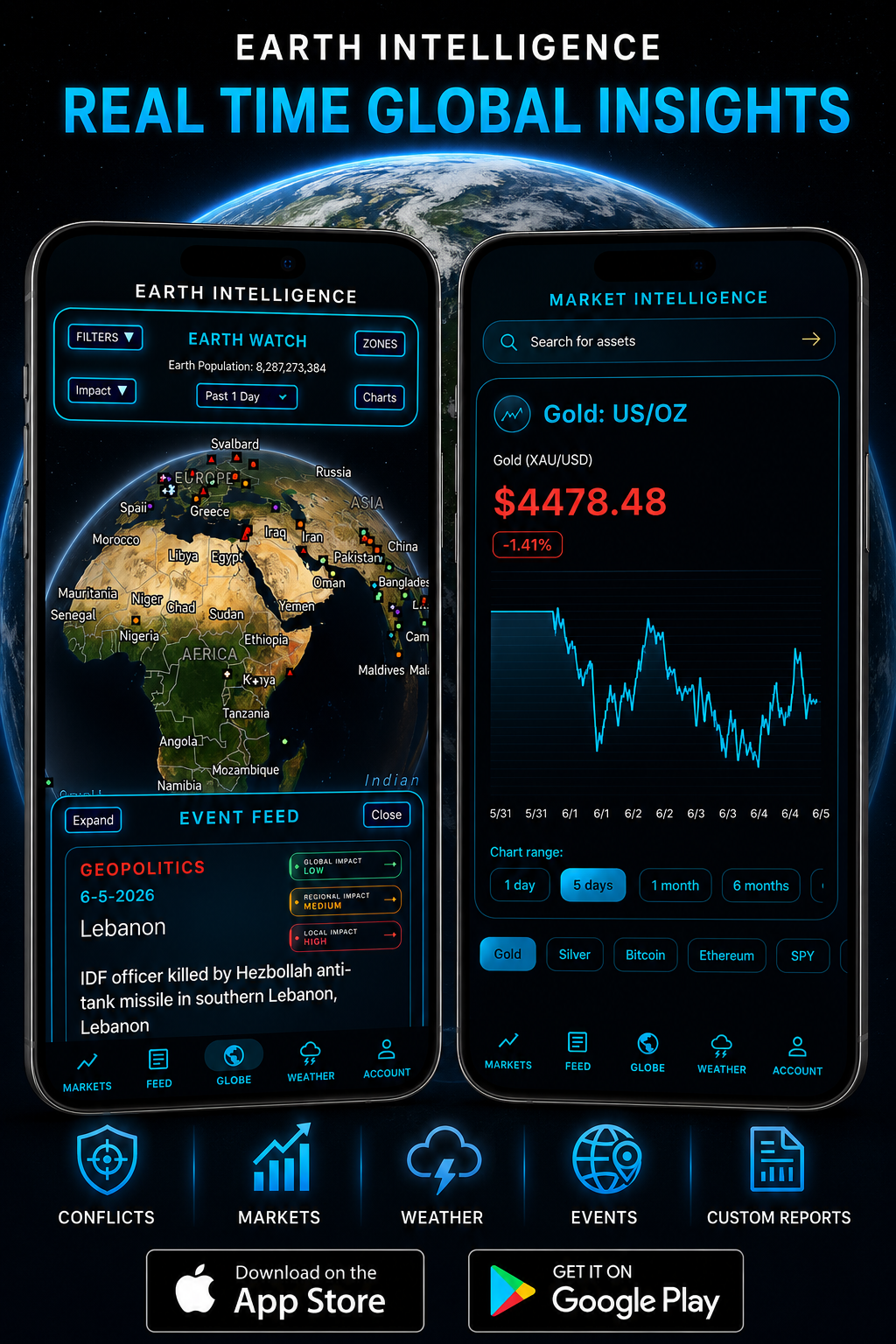
- Download our mobile app:


Click below to view our previous newsletters:

Support/Suggestions Email:
support@earthintel.io