Thursday☕️


Trending:
- On June 24, 2026, two powerful shallow earthquakes struck northern Venezuela one minute apart: a magnitude 7.2 quake followed by a 7.5 mainshock, both centered near Morón on the Caribbean coast west of Caracas.
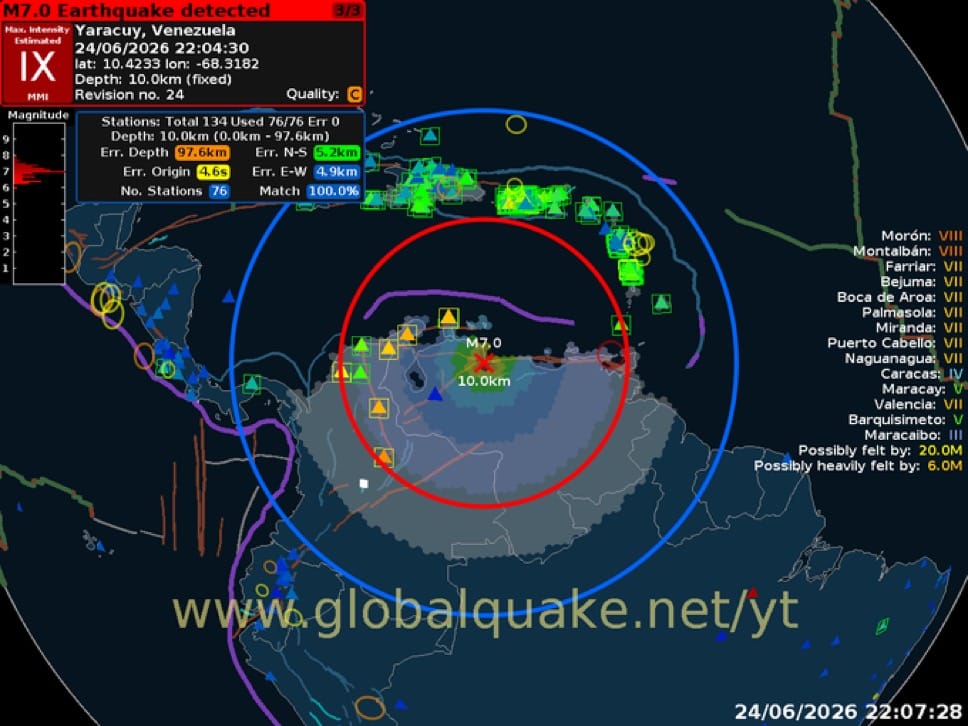
- The quakes caused building collapses in Caracas and other areas, with reports of injuries and trapped people. The USGS issued a red alert warning of probable high casualties and extensive damage. Rescue operations are underway, aftershocks continue, and a brief tsunami advisory for parts of the Caribbean was later lifted.
Economics & Markets:
- On June 24, 2026, it was announced that SpaceX will be added to the Nasdaq-100 Index effective July 6, 2026.
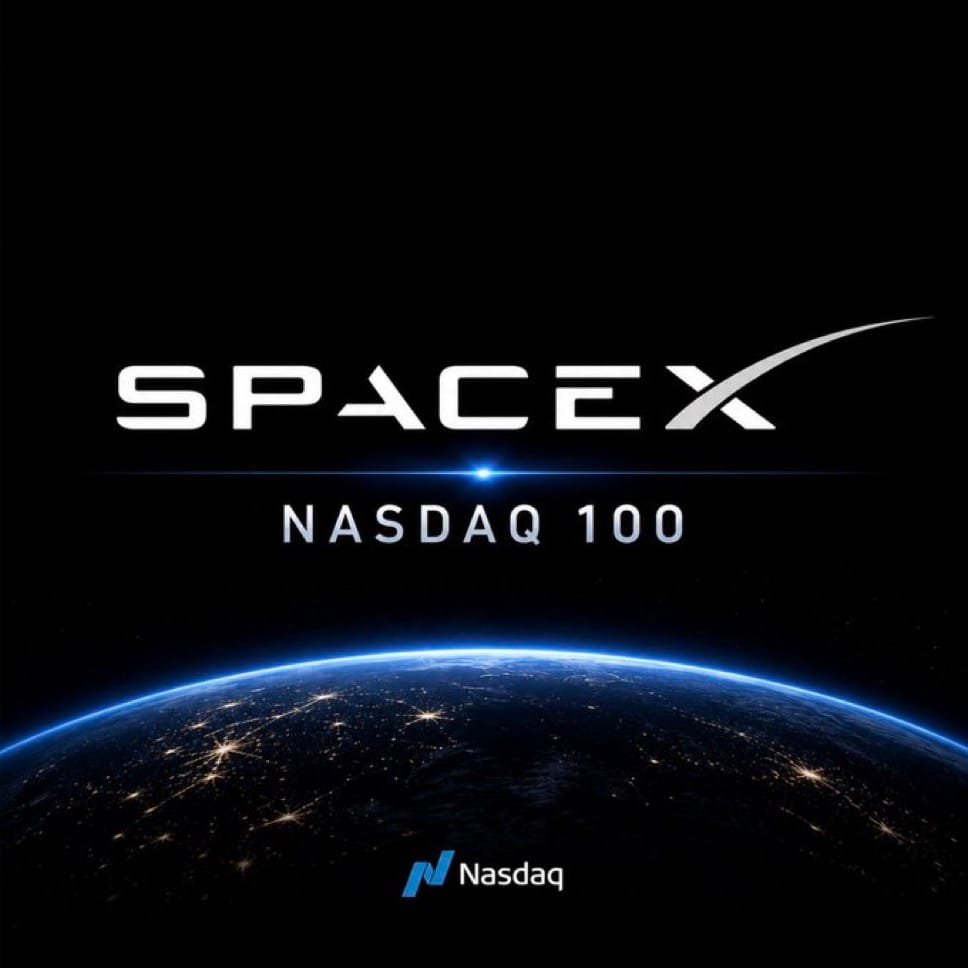
- The Nasdaq-100 is a major stock market index that tracks the 100 largest non-financial companies listed on the Nasdaq stock exchange. It is heavily weighted toward technology, consumer services, and innovative growth companies (such as Apple, Microsoft, Nvidia, Amazon, and Tesla). SpaceX’s inclusion highlights its rapid rise in value and importance in the global markets.
Geopolitics & Military Activity:
- On June 24, 2026, U.S. Central Command forces announced a precision airstrike in northwest Syria that killed senior ISIS leader Ali Husayn al-‘Ulaywi.
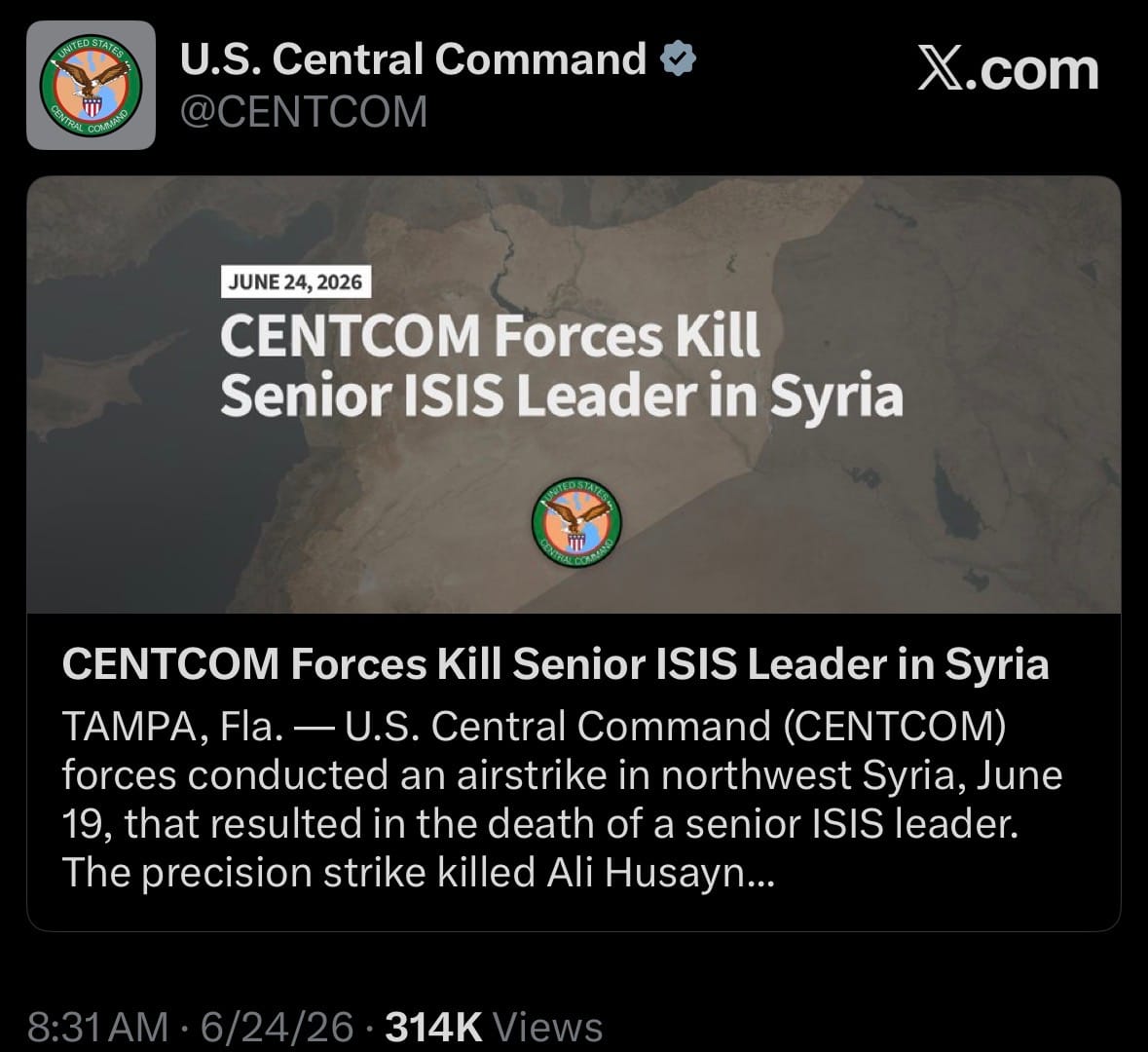
- The strike is part of ongoing U.S. efforts to disrupt and eliminate ISIS terrorists who threaten American forces and the homeland. CENTCOM continues to work with regional partners in these operations.
Science & Technology:
- On June 24, 2026, OpenAI announced its first custom AI chip, named Jalapeño. Developed in partnership with Broadcom, the chip is specifically designed for large language model workloads that power ChatGPT, Codex, the API, and future AI agents. This marks OpenAI’s move into hardware, strengthening its full-stack control from software to infrastructure and helping it scale AI more efficiently.

Statistic:
- Largest public banks by market capitalization:
- 🇺🇸 JPMorgan Chase: $893.48B
- 🇺🇸 Bank of America: $409.68B
- 🇨🇳 China Construction Bank: $379.84B
- 🇺🇸 Morgan Stanley: $346.78B
- 🇨🇳 Agricultural Bank of China: $324.22B
- 🇬🇧 HSBC: $321.87B
- 🇺🇸 Goldman Sachs: $317.69B
- 🇨🇳 ICBC: $305.94B
- 🇨🇳 Bank of China: $282.41B
- 🇨🇦 Royal Bank of Canada: $280.93B
- 🇺🇸 Wells Fargo: $257.97B
- 🇺🇸 Citigroup: $244.90B
- 🇯🇵 Mitsubishi UFJ Financial: $223.39B
- 🇨🇦 Toronto-Dominion Bank: $196.29B
- 🇪🇸 Santander: $191.85B
- 🇦🇺 Commonwealth Bank: $189.99B
- 🇨🇭 UBS: $161.92B
- 🇺🇸 Charles Schwab: $158.93B
- 🇯🇵 Sumitomo Mitsui Financial Group: $150.06B
- 🇨🇳 CM Bank: $146.23B
- 🇸🇬 DBS Group: $144.80B
- 🇪🇸 Banco Bilbao Vizcaya Argentaria: $134.03B
- 🇮🇹 UniCredit: $132.36B
- 🇮🇳 HDFC Bank: $131.21B
- 🇫🇷 BNP Paribas: $126.98B
- 🇺🇸 Capital One: $123.49B
- 🇨🇦 Bank of Montreal: $120.73B
- 🇮🇹 Intesa Sanpaolo: $120.64B
History:
- The National Security Agency (NSA) was officially established on November 4, 1952, by President Harry S. Truman during the early Cold War, replacing the Armed Forces Security Agency (AFSA), which had struggled to coordinate military cryptography and signals intelligence after World War II. The NSA was created to become the United States’ primary organization for Signals Intelligence (SIGINT)—intercepting, analyzing, and decrypting foreign communications—and Information Assurance, protecting U.S. government communications from interception. Its roots stretch back to World War I, when the U.S. Army created the Cipher Bureau (“Black Chamber”) in 1919, and later to the Army’s Signals Intelligence Service (1930) under legendary cryptologist William Friedman. During World War II (1939–1945), American cryptographers helped break Japanese diplomatic and naval codes, including PURPLE and JN-25, while working alongside Britain’s codebreakers at Bletchley Park, whose breaking of Germany’s Enigma and Lorenz ciphers significantly influenced the war. These successes convinced U.S. leaders that communications intelligence would become a permanent strategic necessity, leading directly to the NSA’s creation.
- Throughout the Cold War (1947–1991), the NSA grew into one of the world’s largest and most secretive intelligence organizations. It monitored Soviet military communications, tracked missile tests, intercepted diplomatic traffic, and supported U.S. military operations during the Korean War, Vietnam War, and numerous Cold War crises including the Cuban Missile Crisis (1962). The NSA became a founding member of the Five Eyes alliance, alongside the United Kingdom, Canada, Australia, and New Zealand, creating one of history’s most extensive intelligence-sharing partnerships. During the 1970s–1990s, the agency expanded into satellite interception, undersea cable monitoring, electronic surveillance, and supercomputing for cryptanalysis. Following the September 11, 2001 attacks, the NSA dramatically increased its counterterrorism mission under the USA PATRIOT Act (2001) and other authorities, expanding its ability to analyze communications linked to foreign intelligence and terrorism. In 2013, former NSA contractor Edward Snowden disclosed thousands of classified documents revealing numerous surveillance programs, including metadata collection and international interception capabilities. The disclosures triggered worldwide debates over privacy, encryption, intelligence oversight, and the balance between national security and civil liberties, leading to reforms such as the USA FREEDOM Act (2015), which modified certain domestic metadata collection authorities.
- By 2026, the NSA is widely regarded as the world’s most advanced signals intelligence and cryptologic agency, employing an estimated 30,000–40,000 personnel at its headquarters in Fort Meade, Maryland, with additional facilities across the United States and overseas. The agency works closely with the CIA, DIA, FBI, NGA, NRO, U.S. Cyber Command, and the Five Eyes intelligence alliance. Its mission now spans SIGINT, cybersecurity, cryptography, cyber warfare support, foreign communications interception, AI-assisted intelligence analysis, quantum-resistant encryption research, and protection of classified U.S. government networks. The NSA plays a central role in monitoring military communications from countries such as China, Russia, Iran, and North Korea, tracking cyber threats, protecting critical infrastructure, and supporting military operations worldwide. Although much of its work remains classified, the NSA has become one of the most technologically sophisticated organizations ever created, operating at the center of the global information age. From breaking enemy codes during World War II to defending against cyberattacks and analyzing enormous volumes of digital communications today, the NSA has evolved into one of the most influential intelligence agencies in modern history, with capabilities that have helped shape warfare, diplomacy, cybersecurity, and the global balance of power.
Image of the day:
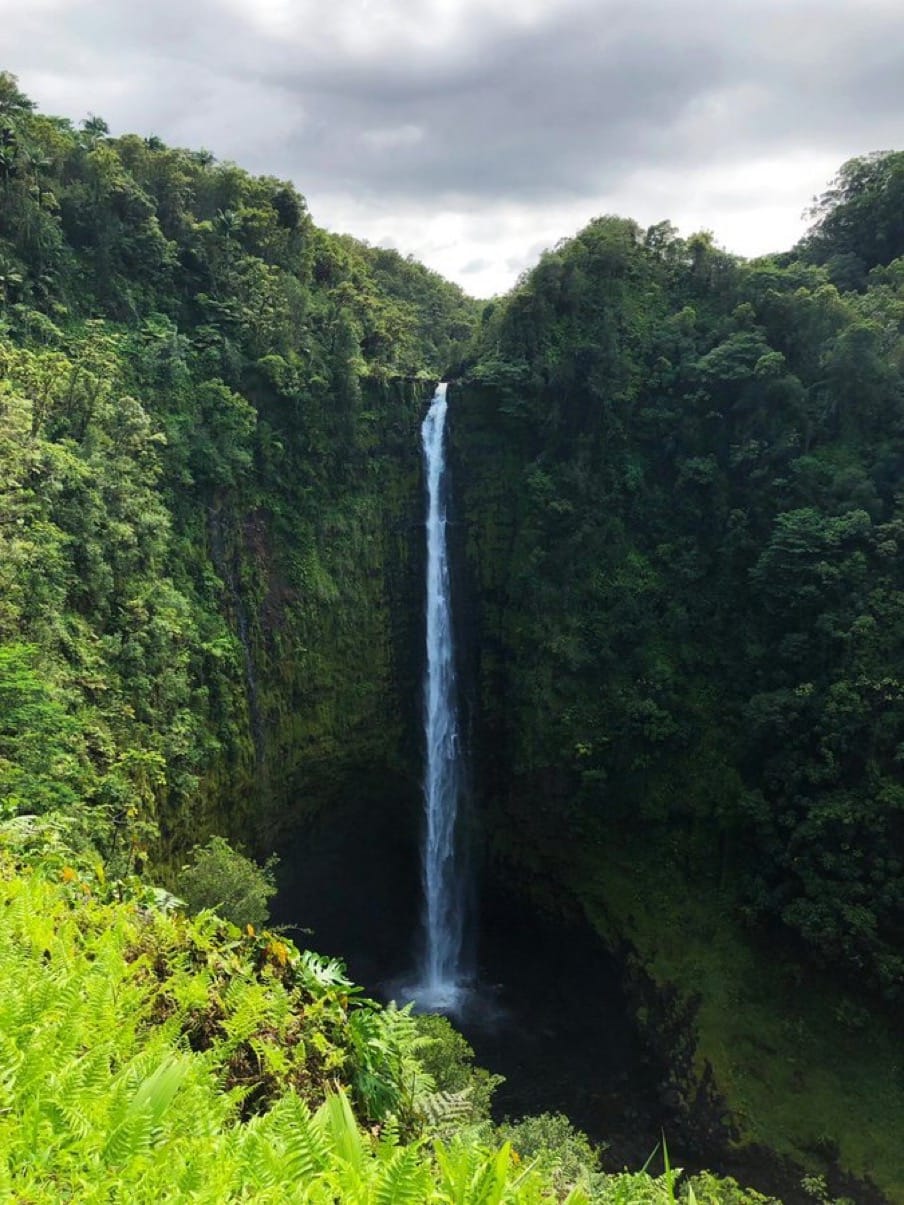
Thanks for reading! Earth is complicated, we make it simple.
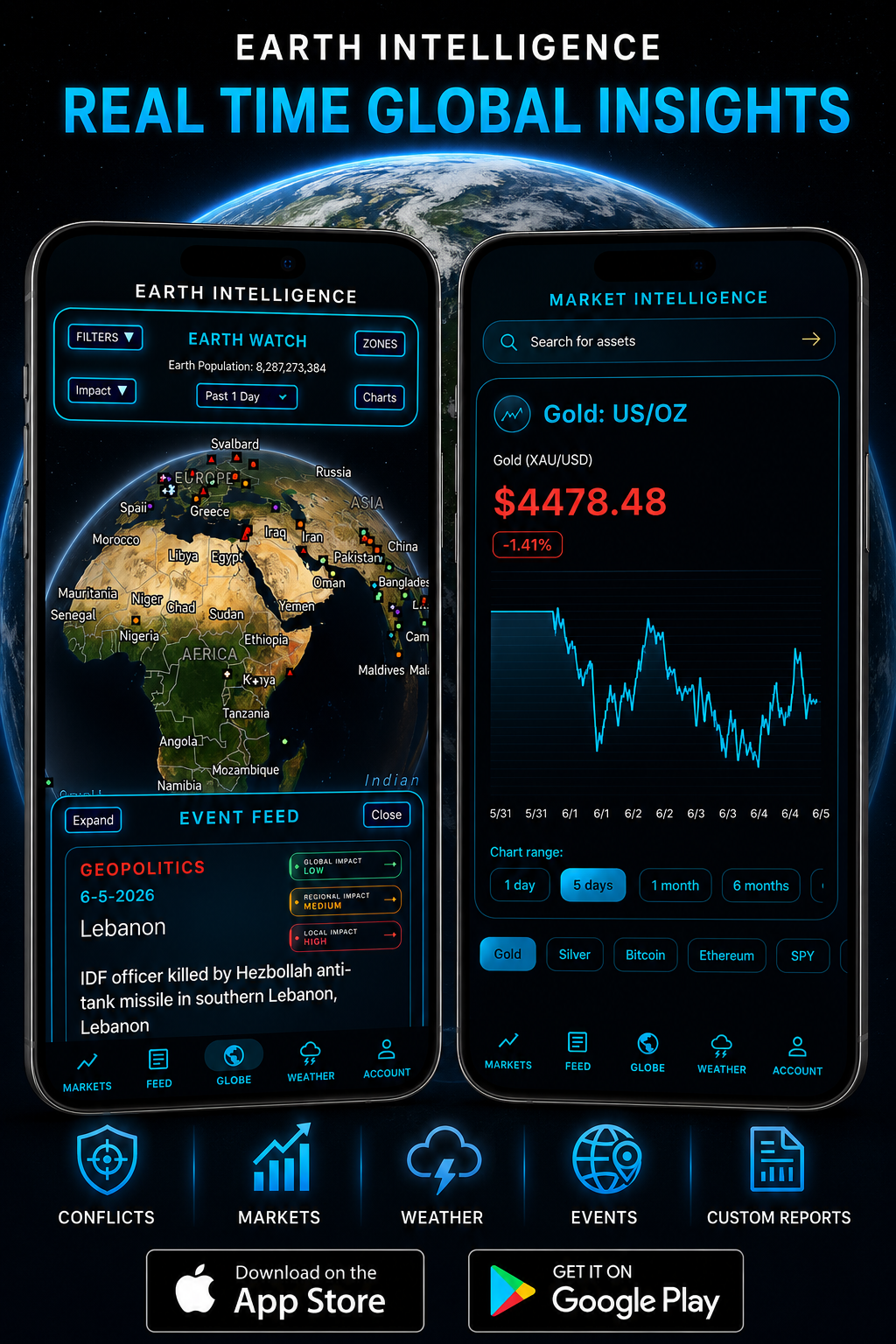
- Download our mobile app:


Click below to view our previous newsletters:
Support/Suggestions Email:
support@earthintel.io