Tuesday☕️🌎


Trending:
- September 28, 2026 — NVIDIA’s board approved an additional $150 billion for share repurchases, bringing the company’s total remaining buyback authorization to about $235 billion, the largest announced stock-repurchase authorization in U.S. corporate history.
- Past 1 Year of Nvidia stock price action:
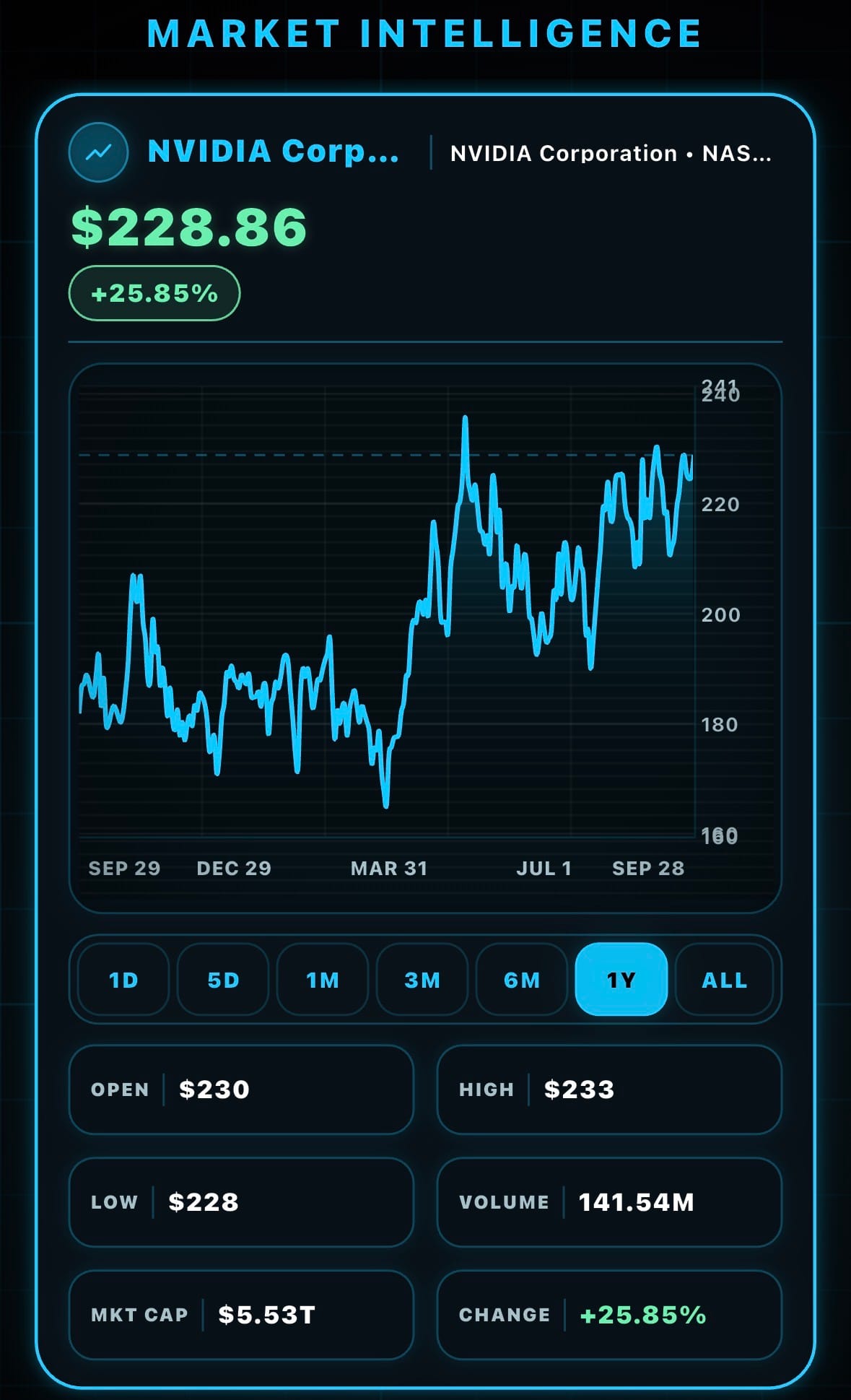
- A buyback allows NVIDIA to use its cash to purchase its own shares over time, reducing the number of shares outstanding and potentially increasing each remaining shareholder’s ownership percentage and earnings per share.

Geopolitics & Military Activity:
- September 29, 2026 — Colombian and Dutch forces intercepted a go-fast boat north of La Guajira in the Caribbean, seizing 297 kilograms of cocaine worth more than $13 million and detaining four Venezuelan nationals.

- The operation was supported by Joint Interagency Task Force South, which helps coordinate U.S. and partner-nation detection and monitoring of maritime drug-trafficking routes across the Caribbean and Eastern Pacific.

Science & Technology:
- September 28, 2026 — Anthropic released Claude Sonnet 5.5, the second model in its Claude 5.5 family, with major improvements in coding, document creation, image understanding, and everyday AI-agent tasks.
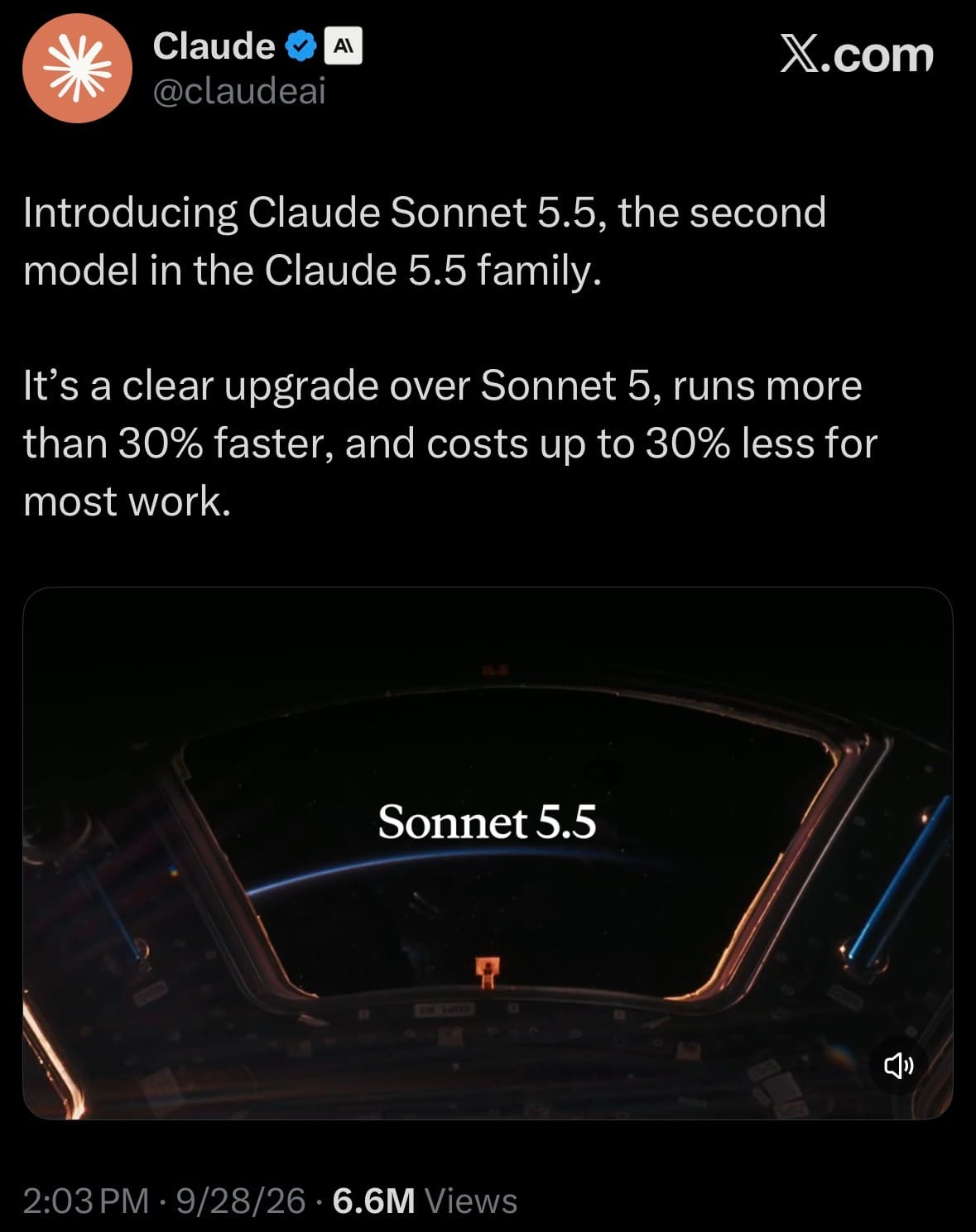
- It runs more than 30% faster than Sonnet 5 and can cost up to 30% less per task because it completes the same work using fewer tokens, while remaining cheaper and faster than the more powerful Opus 5.5.
Space:
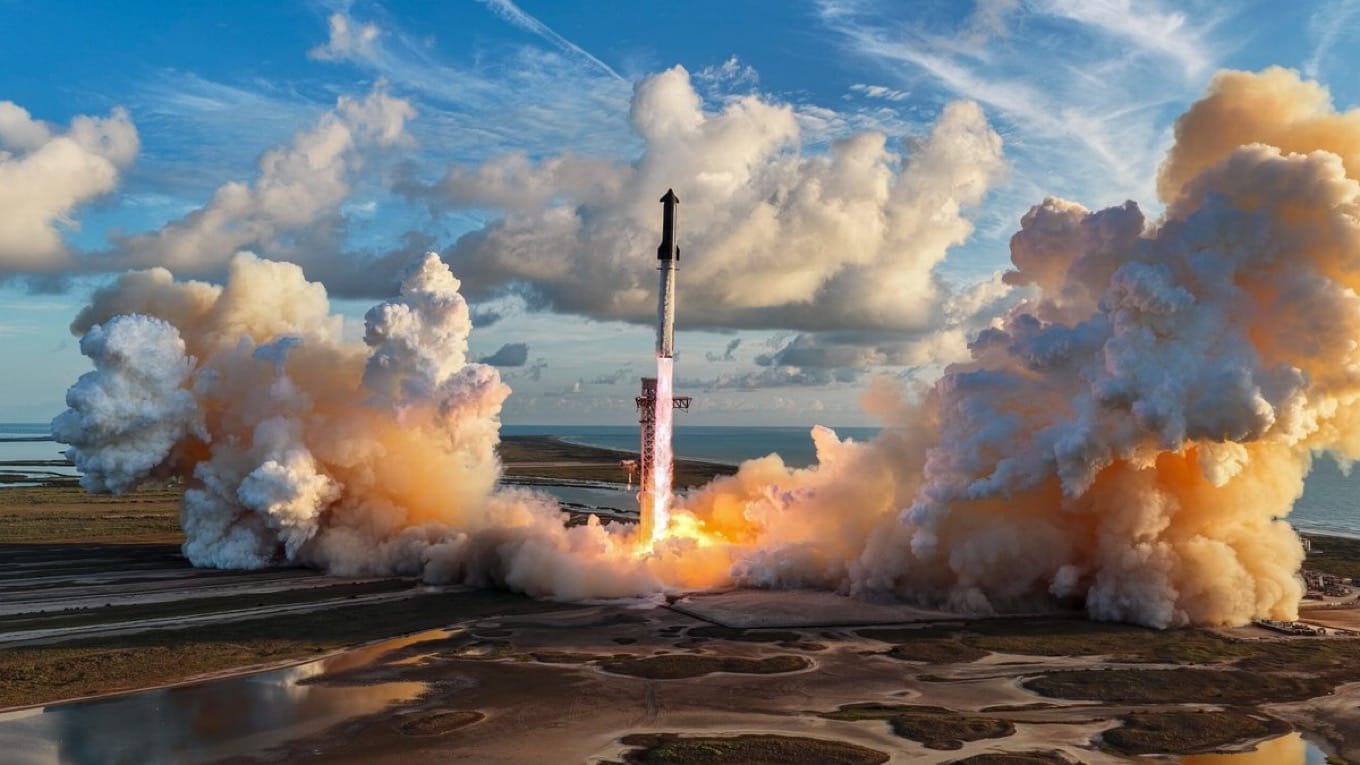
- September 28, 2026 — SpaceX successfully launched Starlink Group 31-1 aboard Starship at 7:48 a.m. local time from Starbase, Texas, marking Starship’s first orbital mission carrying and deploying an operational payload.
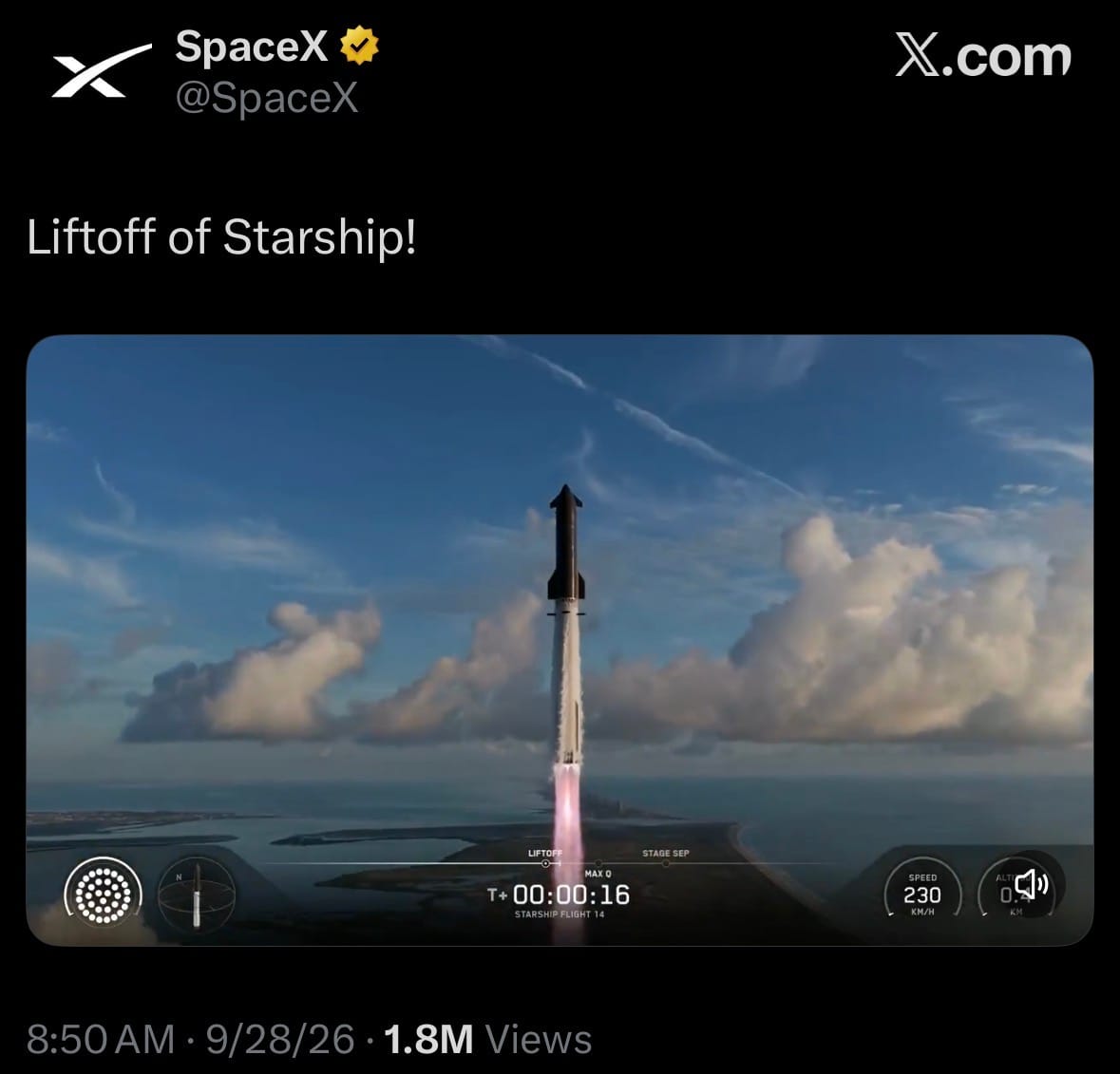
- Starship reached orbit and deployed the Starlink satellites successfully, although the flight was shortened after a vacuum Raptor engine shut down early during ascent.
Statistic:
- Top assets by market capitalization:
- 🥇 Gold: $28.913T
- 🇺🇸 NVIDIA: $5.526T
- 🇺🇸 Apple: $4.938T
- 🇺🇸 Alphabet (Google): $4.147T
- 🇺🇸 Microsoft: $3.781T
- 🥈 Silver: $3.428T
- 🇺🇸 Amazon: $2.655T
- 🇹🇼 TSMC: $2.348T
- 🇺🇸 SpaceX: $1.917T
- 🇺🇸 Meta Platforms: $1.823T
- ₿ Bitcoin: $1.672T
- 🇺🇸 Broadcom: $1.668T
- 🇸🇦 Saudi Aramco: $1.645T
- 🇺🇸 Tesla: $1.411T
- 🇰🇷 Samsung: $1.308T
- 🇺🇸 Micron Technology: $1.190T
- 🇺🇸 Berkshire Hathaway: $1.076T
- 🇺🇸 Eli Lilly: $1.056T
- 🇺🇸 Vanguard S&P 500 ETF: $1.046T
- 🇺🇸 AMD: $992.33B
- 🇰🇷 SK Hynix: $915.09B
- 🇺🇸 JPMorgan Chase: $894.71B
- 🇺🇸 iShares Core S&P 500 ETF: $881.77B
- 🇺🇸 Walmart: $865.28B
- 🇺🇸 SPDR S&P 500 ETF: $816.73B
History of NVIDIA
- NVIDIA began with the idea that graphics and massively parallel computing would become a fundamental part of computers. The company was founded in 1993 by Jensen Huang, Chris Malachowsky and Curtis Priem. Huang, an electrical engineer who had previously worked at AMD and LSI Logic, became CEO and remains CEO today. NVIDIA’s first major product was the NV1 in 1995, an early graphics accelerator that ultimately failed commercially because its architecture did not align well with where the PC gaming industry was heading. NVIDIA adapted quickly. The RIVA 128 in 1997 became an important success, followed by increasingly powerful graphics processors. In 1999, NVIDIA went public on the Nasdaq and introduced the GeForce 256, which it marketed as the world’s first GPU—graphics processing unit. The basic idea was different from a CPU: a CPU is optimized for handling a smaller number of complicated tasks, while a GPU contains huge numbers of processing resources capable of performing many calculations simultaneously. That made GPUs excellent for rendering millions of pixels and polygons in video games. NVIDIA expanded rapidly through GeForce, acquired graphics competitor 3dfx’s core assets in 2000, supplied graphics technology for Microsoft’s original Xbox, and became one of the dominant companies in PC graphics.
- The breakthrough that transformed NVIDIA from a gaming company into today’s AI giant was CUDA in 2006. NVIDIA realized that the enormous parallel-processing capability inside GPUs could be used for much more than graphics, allowing scientists and developers to run general-purpose calculations on them. Researchers began using NVIDIA GPUs for physics simulations, weather modeling, molecular research, supercomputers and eventually artificial intelligence. The decisive AI moment came in 2012, when the AlexNet neural network used NVIDIA GPUs to achieve a major breakthrough in image recognition. Deep-learning researchers realized GPUs could train neural networks dramatically faster than traditional CPUs, and NVIDIA had already spent years developing CUDA software around its hardware. NVIDIA then built increasingly specialized architectures—Kepler, Maxwell, Pascal, Volta, Turing, Ampere, Hopper, Blackwell and now Vera Rubin—and introduced Tensor Cores specifically optimized for AI calculations. It also expanded beyond individual chips into entire computing systems: DGX AI supercomputers, Grace and Vera CPUs, NVLink, InfiniBand and Spectrum networking, BlueField data-processing units, CUDA libraries, TensorRT, Omniverse, DRIVE for autonomous vehicles and Jetson for robotics. The generative-AI explosion following ChatGPT in 2022 dramatically accelerated demand because companies such as OpenAI, Microsoft, Meta, Amazon, Google and thousands of startups needed enormous GPU clusters to train and operate increasingly powerful AI models.
- Today, NVIDIA is best understood not simply as a graphics-card company but as a full-stack AI infrastructure company. And there is an important answer to whether NVIDIA actually “makes” anything: NVIDIA designs the chips, boards, systems, networking architecture and software, but it is primarily a fabless semiconductor company—it does not own the giant cutting-edge semiconductor fabrication plants that manufacture most of its chips. NVIDIA creates the architecture and chip designs for products such as GeForce RTX GPUs, Blackwell and Rubin AI GPUs, Grace/Vera CPUs, BlueField DPUs and networking chips, then companies such as TSMC physically fabricate the silicon, while partners including SK Hynix and Micron supply advanced memory and companies such as Foxconn, Wistron and other manufacturers help assemble boards, servers and complete AI systems. That model is changing somewhat geographically: NVIDIA’s supply chain is expanding U.S. production, with TSMC’s Arizona facility manufacturing NVIDIA Blackwell wafers and partners building AI systems in Texas, but NVIDIA still operates fundamentally as the designer and platform owner rather than as a traditional semiconductor foundry. Its business has consequently moved from selling gaming GPUs → selling data-center accelerators → selling entire AI-computing platforms and infrastructure, with data centers now vastly larger than gaming as a revenue source. NVIDIA reported $215.9 billion in FY2026 revenue, and by 2026 Vera Rubin had begun production shipments as the successor generation to Blackwell. The evolution is essentially 1993 founding → 1995 NV1 failure → 1997 RIVA → 1999 GeForce/GPU → gaming dominance → 2006 CUDA → 2012 AlexNet → AI/deep learning → Tensor Cores → data-center GPUs → 2022 generative-AI explosion → Hopper → Blackwell → Vera Rubin → today’s AI infrastructure empire. NVIDIA’s greatest advantage is therefore not just the physical GPU: it controls an enormous ecosystem of chip architecture + CUDA software + networking + servers + AI libraries + developer tools + robotics + simulation + decades of developer adoption, which is why NVIDIA became one of the central companies powering the modern AI revolution.
Image of the day:

Thanks for reading! Earth is complicated, we make it simple.

- Download our mobile app:


Click below to view our previous newsletters:

Support/Suggestions Email:
support@earthintel.io