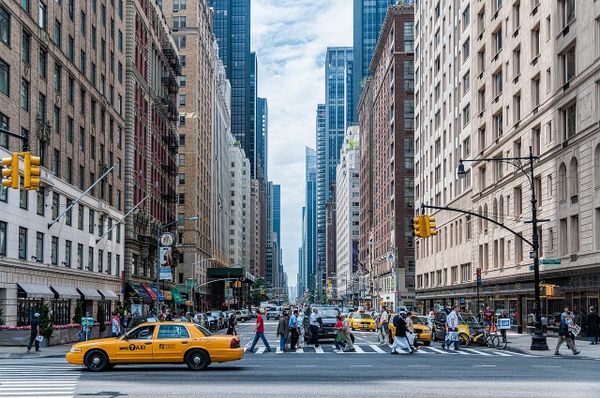
Wednesday☕️🌎


Trending:
- September 22, 2026 — The United States, Denmark, and Greenland signed a new Arctic security agreement that gives the U.S. permanent military basing rights in Greenland, expands operations beyond Pituffik Space Base, and allows the U.S. to help block hostile foreign military activity or sensitive investments there.

- The deal keeps Greenland under Danish sovereignty and preserves Greenland’s right to self-determination, while significantly expanding the U.S. and NATO military presence in the Arctic.
Economics & Markets:
Geopolitics & Military Activity:
- September 22, 2026 — U.S. Coast Guard and Customs and Border Protection crews intercepted a suspected drug-smuggling boat in the Caribbean after an aerial patrol spotted it and the crew began throwing cargo overboard.
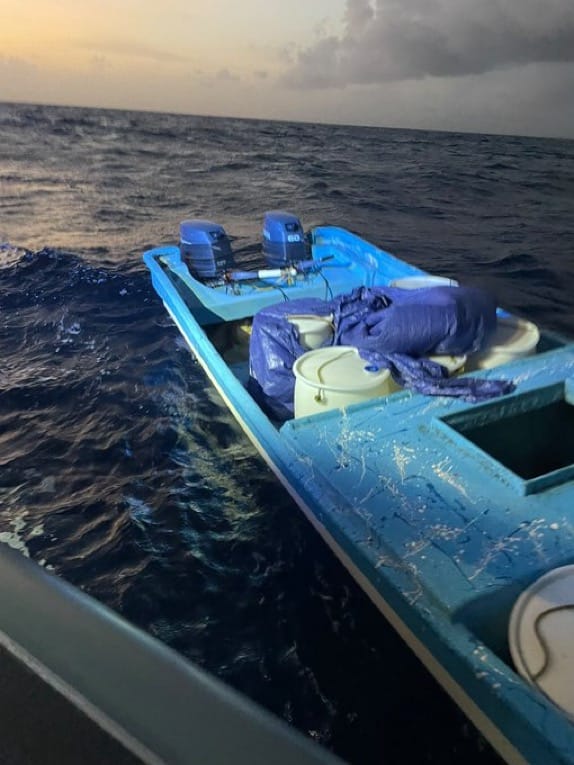
- Authorities recovered eight bales containing 288 kilograms of cocaine and detained two Dominican nationals, with the operation supporting U.S.-led efforts to disrupt maritime drug-trafficking routes across the Caribbean.
Science & Technology:
- September 22, 2026 — Anthropic released Claude Opus 5.5, the first model in its new Claude 5.5 family, designed to deliver near-Fable 5.1-level performance on most tasks while running faster and costing 40% less than Opus 5.
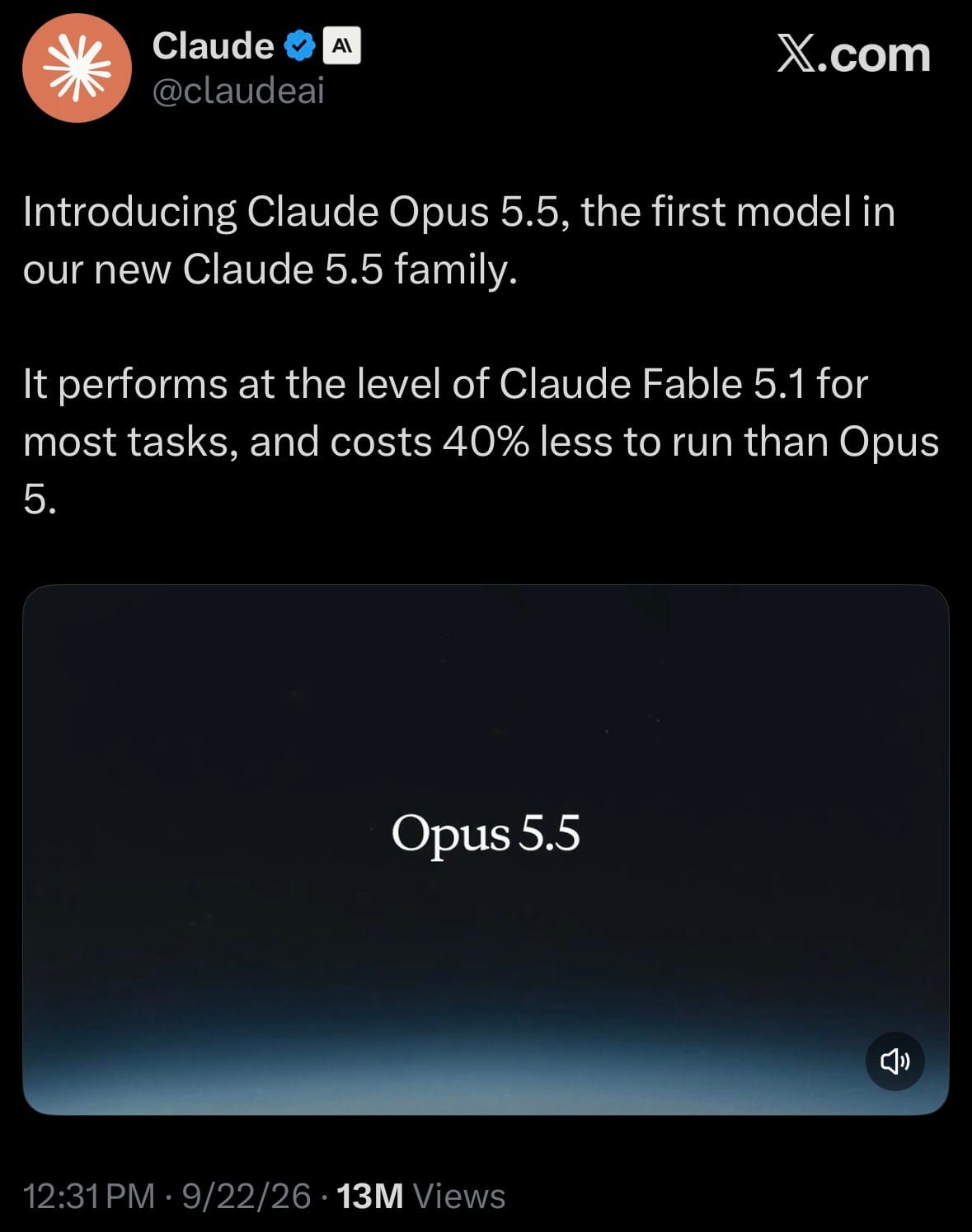
- Anthropic says the model is aimed at demanding coding, research, professional work, and long-running AI-agent tasks, giving businesses more high-end performance at a lower cost.

Statistic:
- Largest semiconductor companies by market capitalization:
- 🇺🇸 NVIDIA: $5.526T
- 🇹🇼 TSMC: $2.344T
- 🇺🇸 Broadcom: $1.740T
- 🇰🇷 Samsung: $1.373T
- 🇺🇸 Micron Technology: $1.237T
- 🇺🇸 AMD: $1.018T
- 🇰🇷 SK Hynix: $977.91B
- 🇳🇱 ASML: $671.36B
- 🇺🇸 Intel: $654.73B
- 🇨🇳 CXMT: $611.62B
- 🇺🇸 Lam Research: $389.11B
- 🇺🇸 Applied Materials: $374.94B
- 🇬🇧 Arm Holdings: $355.85B
- 🇹🇼 MediaTek: $261.21B
- 🇺🇸 Texas Instruments: $247.86B
- 🇺🇸 KLA: $246.04B
- 🇺🇸 Marvell Technology: $235.78B
- 🇺🇸 QUALCOMM: $211.76B
- 🇺🇸 Analog Devices: $189.15B
- 🇯🇵 Tokyo Electron: $153.30B
- 🇯🇵 Advantest: $147.01B
- 🇹🇼 ASE Group: $117.68B
- 🇨🇳 Cambricon Technologies: $105.22B
- 🇩🇪 Infineon: $89.48B
- 🇺🇸 Synopsys: $78.42B
History of Under Armour
- Under Armour began with a very simple problem: Kevin Plank hated practicing football in sweat-soaked cotton shirts. Plank was a University of Maryland football player, and after graduating he founded Under Armour in 1996 at age 23, initially working out of his grandmother’s rowhouse in Washington, D.C. His idea was to create a tight athletic shirt made from synthetic material that pulled moisture away from the body instead of absorbing it like cotton. The original prototype, #0037 or “The Shorty,” became the foundation for what would become HeatGear. Plank drove around selling shirts directly to football programs, with Georgia Tech becoming an important early team customer. Under Armour quickly expanded into HeatGear, ColdGear and AllSeasonGear, essentially building its identity around performance fabrics rather than traditional sportswear. The company moved its headquarters to Baltimore in 1998, gained exposure through professional and college football, and broke into mainstream sports culture with its aggressive “Protect This House” campaign in 2003. Under Armour’s timing was excellent: athletes increasingly wanted compression clothing and technical fabrics, and the company positioned itself as the young, performance-focused challenger to Nike and Adidas.
- The company then expanded from shirts into an entire sports brand. Under Armour went public on November 17, 2005, and its shares doubled on their first trading day. It entered footwear in 2006 with football cleats, opened its first Brand House store in 2007 and passed $1 billion in annual revenue around 2010–2011. It expanded aggressively into running, training, football, baseball, golf and basketball while signing major athletes and teams. One of its most important moves was signing Stephen Curry in 2013, before Curry became a multiple-time NBA MVP and championship superstar. His success gave Under Armour something it had previously lacked: a globally recognizable basketball athlete capable of challenging Nike’s enormous basketball business. Under Armour also made an ambitious move into technology, buying MapMyFitness, MyFitnessPal and Endomondo and attempting to build a massive Connected Fitness ecosystem. By the middle of the 2010s, Under Armour was one of the fastest-growing major athletic brands in America and was seriously discussed as a potential long-term challenger to Nike and Adidas. But rapid expansion created problems: excessive inventory, discounting, dependence on North America, difficulties establishing a major lifestyle business, uneven footwear performance and expensive digital-fitness investments slowed its momentum. Founder Kevin Plank stepped down as CEO at the beginning of 2020, and the company spent the following years restructuring and trying to restore a more premium performance identity.
- Today, Under Armour remains a major global athletic company, but it is in a comeback and rebuilding period rather than the hyper-growth phase of the 2010s. Plank returned as CEO in April 2024, arguing that Under Armour had become too complicated and had tried to compete in too many areas at once. The company has been simplifying operations, reducing discounting, tightening product lines and refocusing on premium performance apparel, footwear and athletes. Fiscal 2026 revenue declined as the company deliberately restructured, particularly in North America, while management emphasized rebuilding the brand rather than chasing sales volume. One major change was Stephen Curry and Under Armour agreeing in November 2025 to separate Curry Brand from Under Armour after more than a decade together; Curry 13 became their final signature shoe, with remaining collections continuing through 2026. Under Armour now competes primarily against Nike, Adidas, Lululemon, Puma, New Balance, On, Hoka and other specialized performance brands, while continuing to develop technologies such as HeatGear, ColdGear, HOVR and newer performance materials. In 2026 the company celebrates its 30th anniversary, with Plank once again running the business he created. Its evolution is essentially 1996 sweat-wicking shirt → football teams → 1998 Baltimore → 2003 “Protect This House” → 2005 IPO → 2006 footwear → $1 billion brand → 2013 Stephen Curry → mid-2010s explosive growth → Connected Fitness expansion → growth problems and restructuring → 2024 Plank returns → 2025–26 Curry separation and brand reset → today’s Under Armour. The company ultimately became important because it helped turn the tight, moisture-wicking performance base layer into a mainstream category, then used that single innovation to build one of America’s most recognizable athletic brands.
Image of the day:

Thanks for reading! Earth is complicated, we make it simple.
- Download our mobile app:

Click below to view our previous newsletters:
Support/Suggestions Email:
support@earthintel.io