Thursday☕️🌎


Trending:
- September 23, 2026 — Two businessmen, David Greenhalgh and Christos Farmakis, were each sentenced to 16 years in prison in the UK for illegally brokering weapons deals to embargoed countries including Libya, South Sudan, Iraq, Iran, and Sudan.
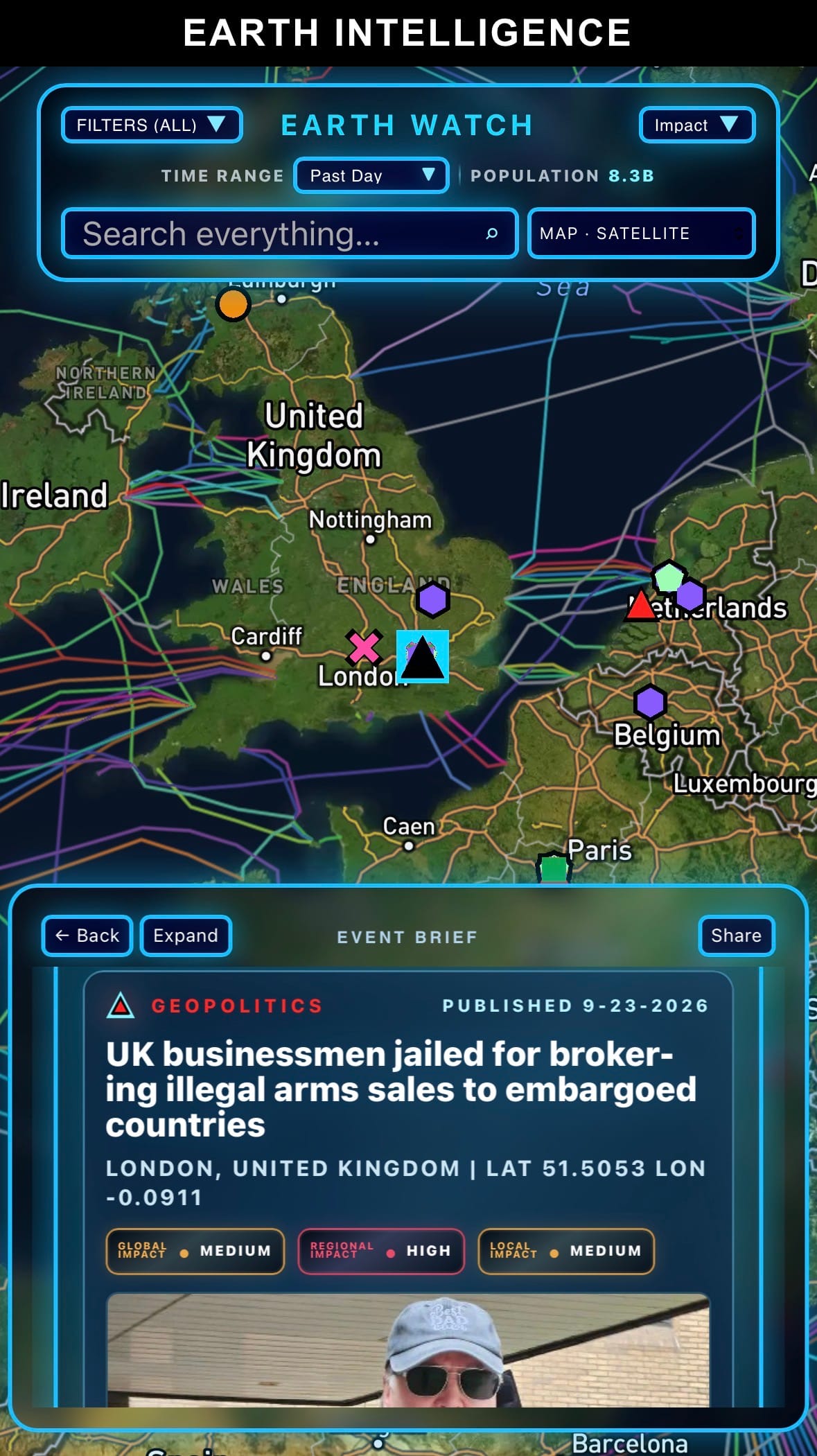
- Prosecutors said they tried to arrange sales involving AK-47s, tanks, fighter jets, combat helicopters, anti-tank weapons, and surface-to-air missile systems while using fake paperwork and third countries to hide where the weapons were really going.
Geopolitics & Military Activity:
- September 23, 2026 — Pakistan says it shot down eight drones that crossed into its airspace from Afghanistan, with four intercepted near the Torkham border and four near Kohat, as fighting along the Pakistan-Afghanistan border continues to escalate.
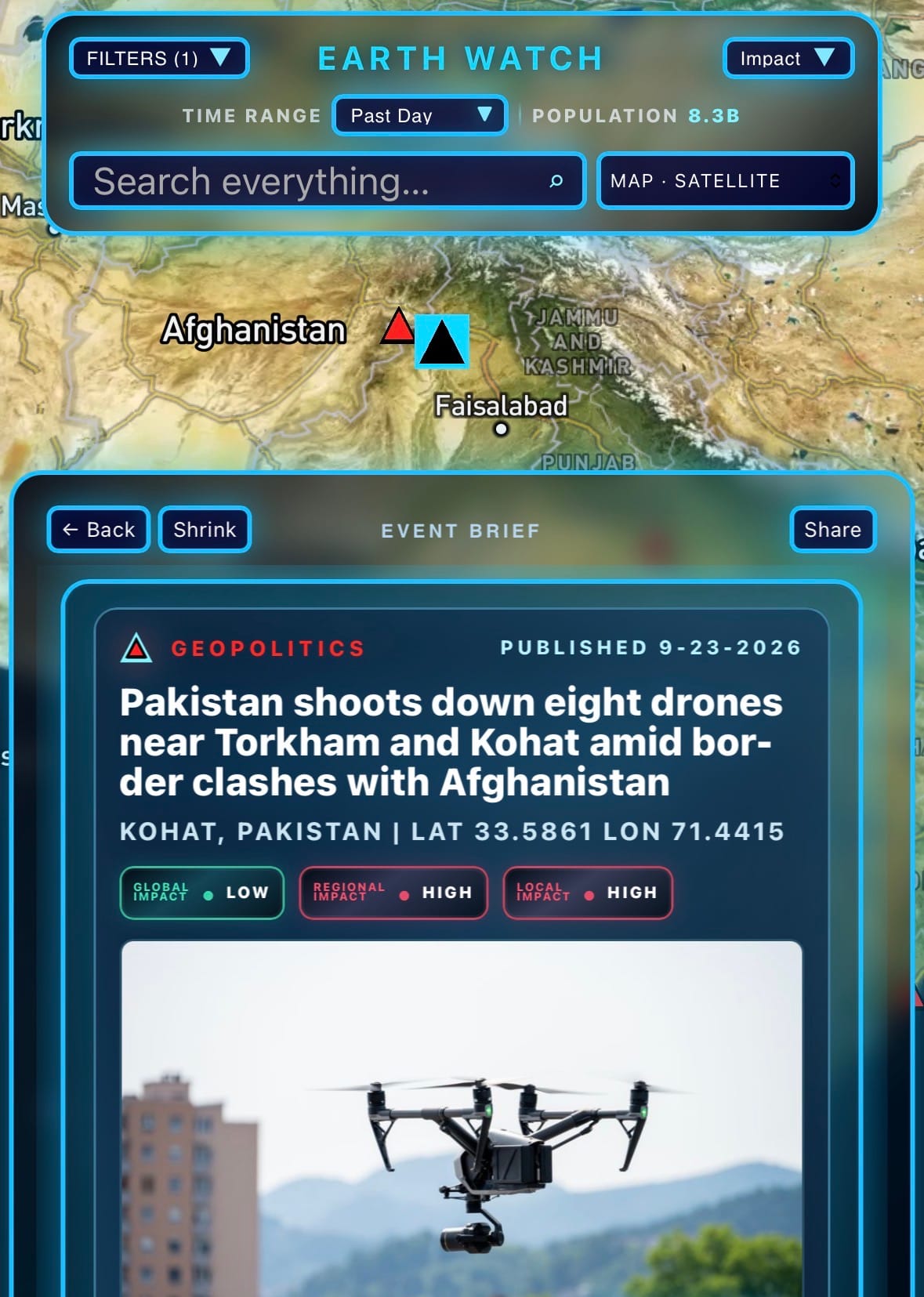
- Pakistani forces also exchanged artillery and heavy-weapons fire with Afghan Taliban positions after recent Pakistani airstrikes on militant hideouts, while Afghanistan has accused Pakistan of violating its sovereignty and causing civilian casualties.
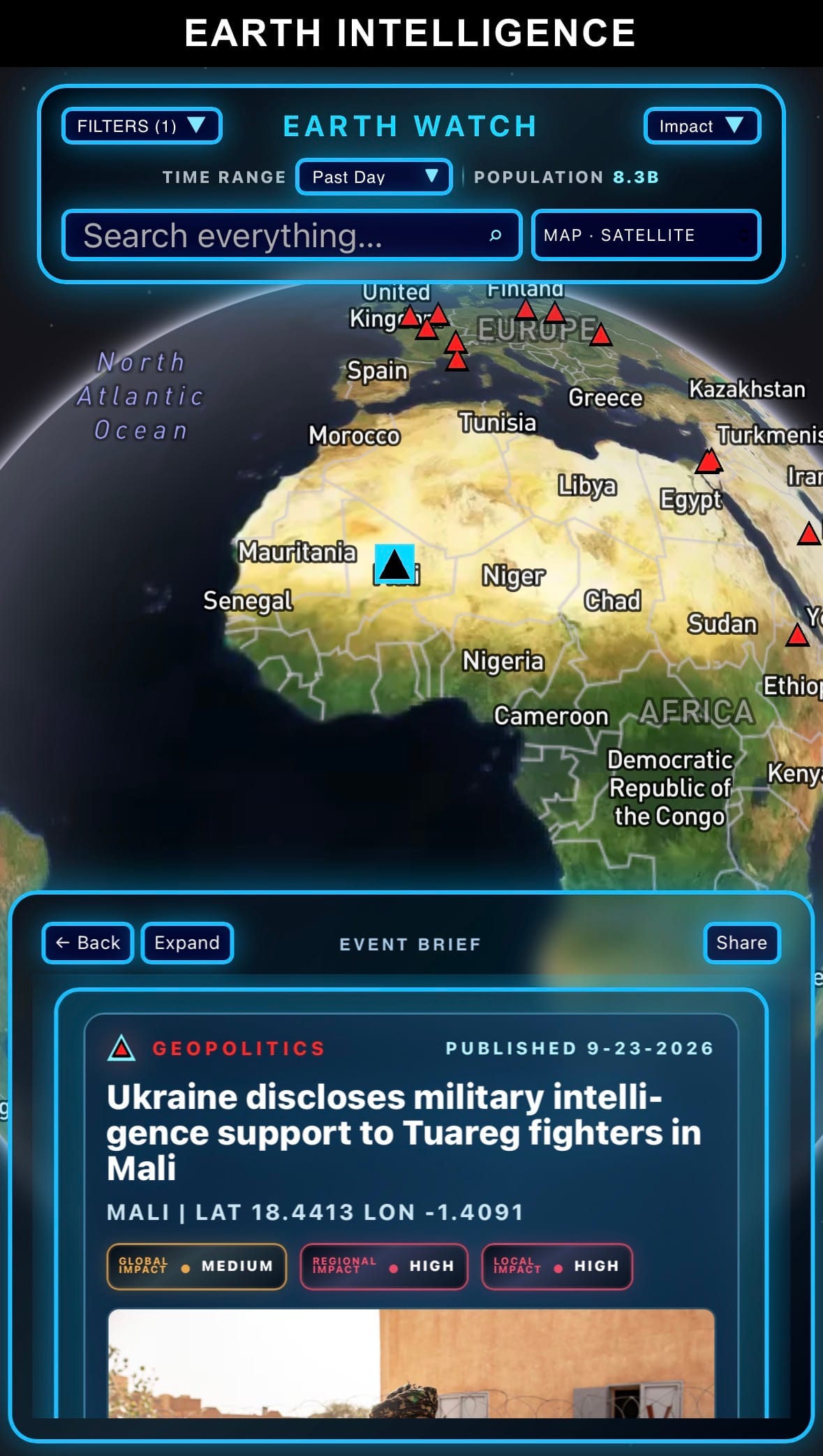
Science & Technology:
- September 23, 2026 — OpenAI upgraded ChatGPT Voice so users can access plugins like email, calendar, and Slack, use newer GPT models, and control ChatGPT Work by voice to create documents, presentations, websites, spreadsheets, and complete browser-based tasks.

Space:
- September 23, 2026 — China successfully launched nine SatNet communication satellites at 9:32 p.m. local time from the Wenchang Space Launch Site aboard a Long March 8A rocket.
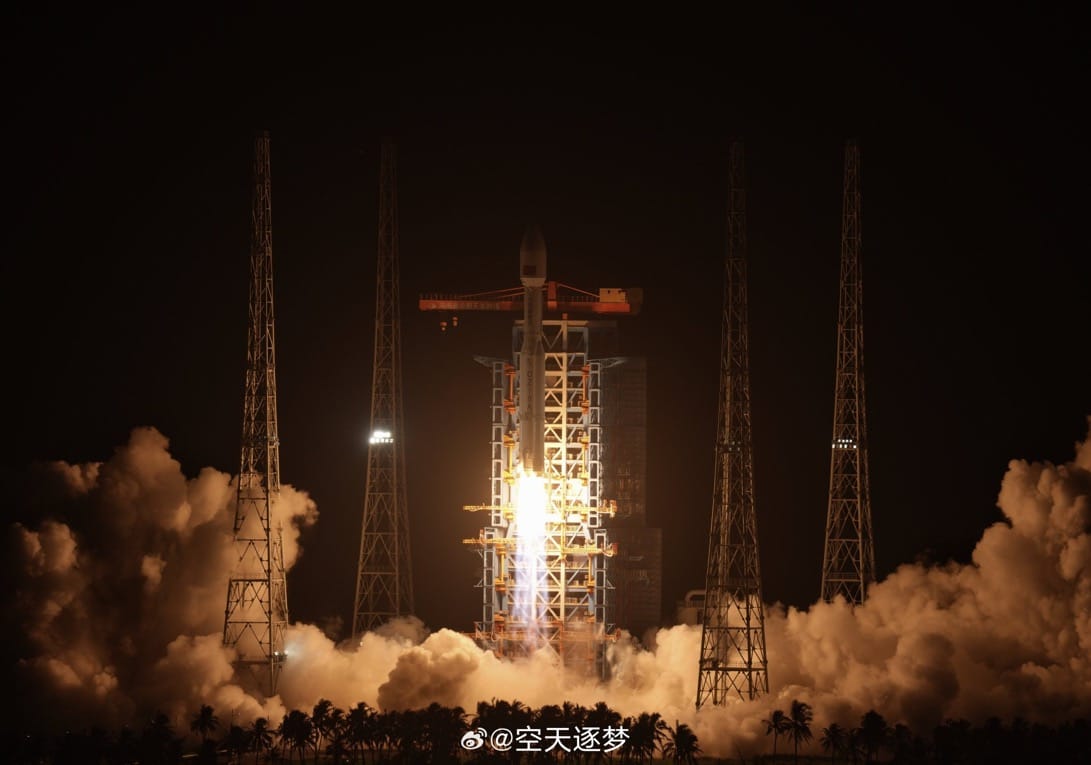
- The satellites are part of China’s state-backed SatNet network, a planned constellation of roughly 13,000 low-Earth-orbit satellites designed to provide broadband internet and communications services.
Statistic:
- Top assets by market cap:
- 🥇 Gold: $30.069T
- 🇺🇸 NVIDIA: $5.445T
- 🇺🇸 Apple: $4.918T
- 🇺🇸 Alphabet (Google): $4.096T
- 🇺🇸 Microsoft: $3.717T
- 🥈 Silver: $3.652T
- 🇺🇸 Amazon: $2.688T
- 🇹🇼 TSMC: $2.316T
- 🇺🇸 SpaceX: $1.955T
- 🇺🇸 Meta Platforms: $1.895T
- ₿ Bitcoin: $1.696T
- 🇺🇸 Broadcom: $1.694T
- 🇸🇦 Saudi Aramco: $1.651T
- 🇺🇸 Tesla: $1.501T
- 🇰🇷 Samsung: $1.372T
- 🇺🇸 Micron Technology: $1.210T
- 🇺🇸 Berkshire Hathaway: $1.085T
- 🇺🇸 Vanguard S&P 500 ETF: $1.052T
- 🇺🇸 Eli Lilly: $1.026T
- 🇺🇸 AMD: $1.003T
- 🇰🇷 SK Hynix: $967.66B
- 🇺🇸 JPMorgan Chase: $897.21B
- 🇺🇸 Walmart: $879.60B
- 🇺🇸 iShares Core S&P 500 ETF: $850.99B
- 🇺🇸 SPDR S&P 500 ETF: $791.02B
History of Telescopes
- The telescope grew out of thousands of years of discoveries about light, lenses and vision. Ancient Greek thinkers including Euclid and Ptolemy studied optics, while around 1021, the scientist Ibn al-Haytham (Alhazen) produced major experimental work explaining how light and vision function. European lensmaking advanced during the Middle Ages, producing eyeglasses by the late 1200s. The decisive breakthrough came in the Netherlands in 1608, when spectacle maker Hans Lippershey attempted to patent an instrument combining lenses to magnify distant objects; Jacob Metius and Zacharias Janssen are also associated with early telescope claims. Galileo Galilei heard about the invention in 1609, constructed greatly improved versions and became the first person to transform the telescope into a revolutionary astronomical instrument. He observed the mountains and craters of the Moon, four large moons orbiting Jupiter, the phases of Venus, sunspots and enormous numbers of previously invisible stars. These observations provided powerful evidence against the traditional Earth-centered model of the universe. Johannes Kepler described an improved two-convex-lens telescope in 1611, while astronomers including Christiaan Huygens and Giovanni Cassini subsequently used increasingly powerful instruments to study Saturn and the Solar System.
- A fundamental limitation remained: lenses produced optical distortions and became increasingly difficult to manufacture as telescopes grew larger. Isaac Newton solved part of this problem in 1668 by constructing the first successful reflecting telescope, using a curved mirror rather than a large objective lens. John Dollond’s achromatic lens in 1758 greatly improved refracting telescopes by reducing color distortion, while larger reflecting telescopes became increasingly important. William Herschel built enormous reflectors and discovered Uranus in 1781; his famous 40-foot telescope became one of the largest scientific instruments of its era. Lord Rosse’s Leviathan of Parsonstown, completed in 1845, used a 72-inch mirror and revealed spiral structures in objects later understood to be galaxies. Astronomy then expanded beyond simply looking through an eyepiece. Astronomical photography emerged in the 1800s, allowing telescopes to collect light over long exposures, while Fraunhofer, Kirchhoff and Bunsen helped establish spectroscopy, allowing astronomers to determine what stars were made of by analyzing their light. Giant observatories followed. At Mount Wilson, Edwin Hubble used the 100-inch Hooker Telescope during the 1920s to demonstrate that Andromeda was another galaxy and provide observational evidence that the universe was expanding. Astronomy also moved beyond visible light: Karl Jansky discovered cosmic radio emissions in 1932, Grote Reber constructed an early radio telescope in 1937, and scientists eventually developed instruments capable of observing radio, infrared, ultraviolet, X-ray and gamma-ray radiation.
- The next revolution was putting telescopes above Earth’s atmosphere. Atmospheric distortion and absorption limit what ground observatories can see, so spaceflight opened entirely new wavelengths and levels of precision. NASA’s early Orbiting Astronomical Observatories in the 1960s and 1970s demonstrated space astronomy, followed by increasingly sophisticated observatories. The Hubble Space Telescope, launched in 1990, became one of history’s most important scientific instruments; after astronauts corrected its flawed primary mirror system in 1993, Hubble helped measure the universe’s expansion, study galaxy formation, characterize exoplanet atmospheres and produce extraordinarily detailed deep-field observations. NASA’s Compton Gamma Ray Observatory (1991), Chandra X-ray Observatory (1999), Spitzer Space Telescope (2003), Kepler (2009) and ESA’s Gaia (2013) extended astronomy into different wavelengths and precision measurements. The biggest modern leap came with the James Webb Space Telescope, launched in 2021 and operating around the Sun-Earth L2 region roughly 1.5 million kilometers from Earth. Its 6.5-meter segmented mirror and infrared instruments allow astronomers to study some of the earliest galaxies, star and planet formation, black holes and exoplanet atmospheres. Meanwhile enormous ground observatories use adaptive optics, interferometry and increasingly large segmented mirrors, while radio arrays connect antennas across huge distances. Telescopes have also become essential outside pure astronomy: satellites and specialized optical systems now support Earth observation, weather forecasting, reconnaissance, missile warning, space-domain awareness and tracking satellites and orbital debris. The evolution is essentially ancient optics → medieval lenses → 1608 telescope → 1609 Galileo → 1668 Newton reflector → Herschel’s giant telescopes → photography and spectroscopy → giant observatories → radio astronomy → Hubble → multi-wavelength space observatories → Kepler/Gaia → James Webb → today’s enormous ground and space observatories. What began as two pieces of glass in a tube has become humanity’s primary technology for observing everything from nearby satellites and planets to galaxies whose light has traveled more than 13 billion years to reach us.
Image of the day:

Thanks for reading! Earth is complicated, we make it simple.
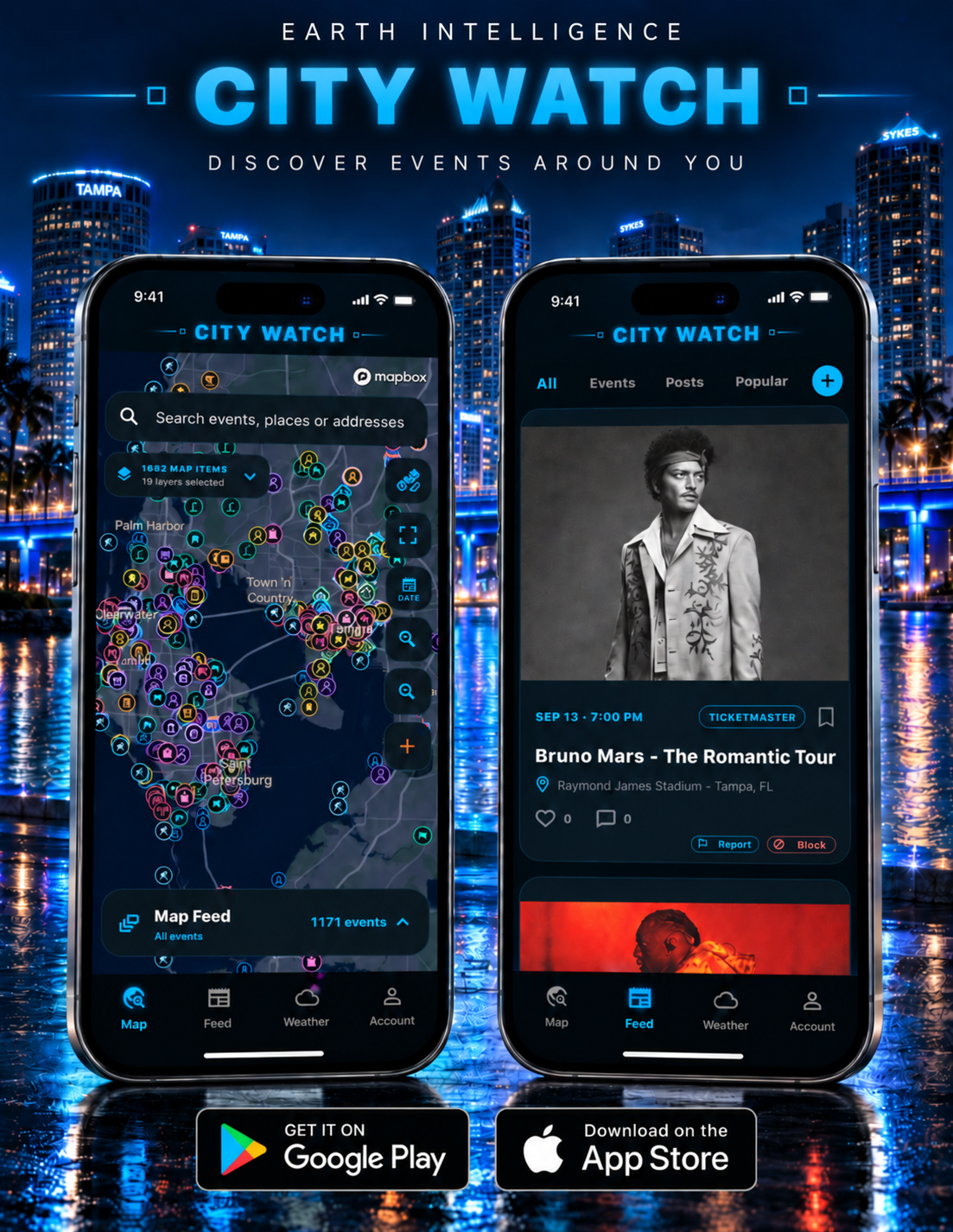
- Download our mobile app:

Click below to view our previous newsletters:
Support/Suggestions Email:
support@earthintel.io