Friday☕️


Trending:
- On April 23, 2026, the U.S. government announced it has obtained evidence that foreign entities — primarily in China — are conducting large-scale “distillation” campaigns to steal American AI technology.
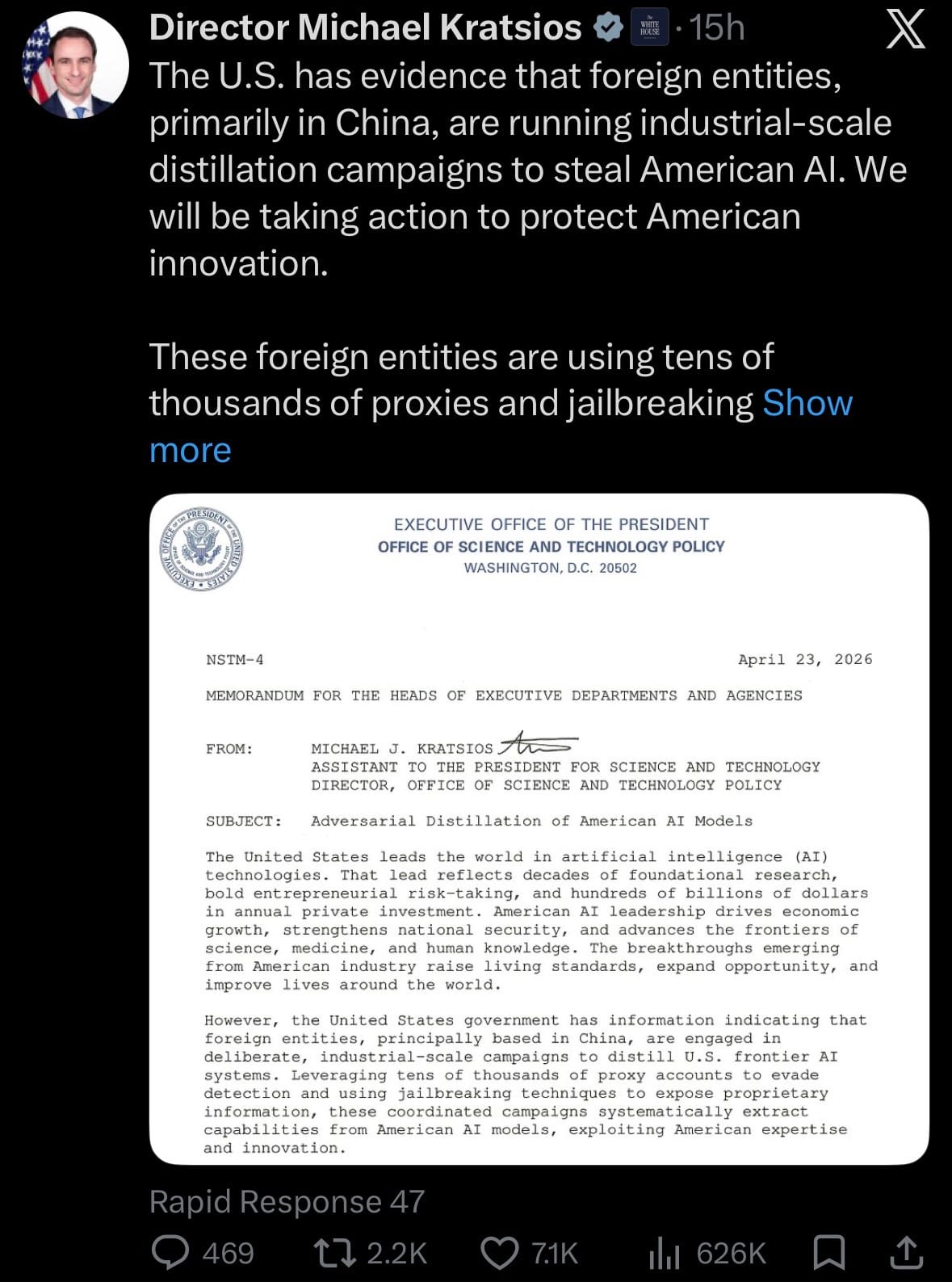
- These operations use tens of thousands of proxy accounts and sophisticated jailbreaking techniques in coordinated efforts to systematically extract and reproduce U.S. AI breakthroughs.
Military Prediction Bet:
- On April 23, 2026, the Department of Justice released additional details on U.S. Army soldier Gannon Ken van Dyke, who allegedly won more than $400,000 by betting on the removal of Venezuelan President Nicolás Maduro.
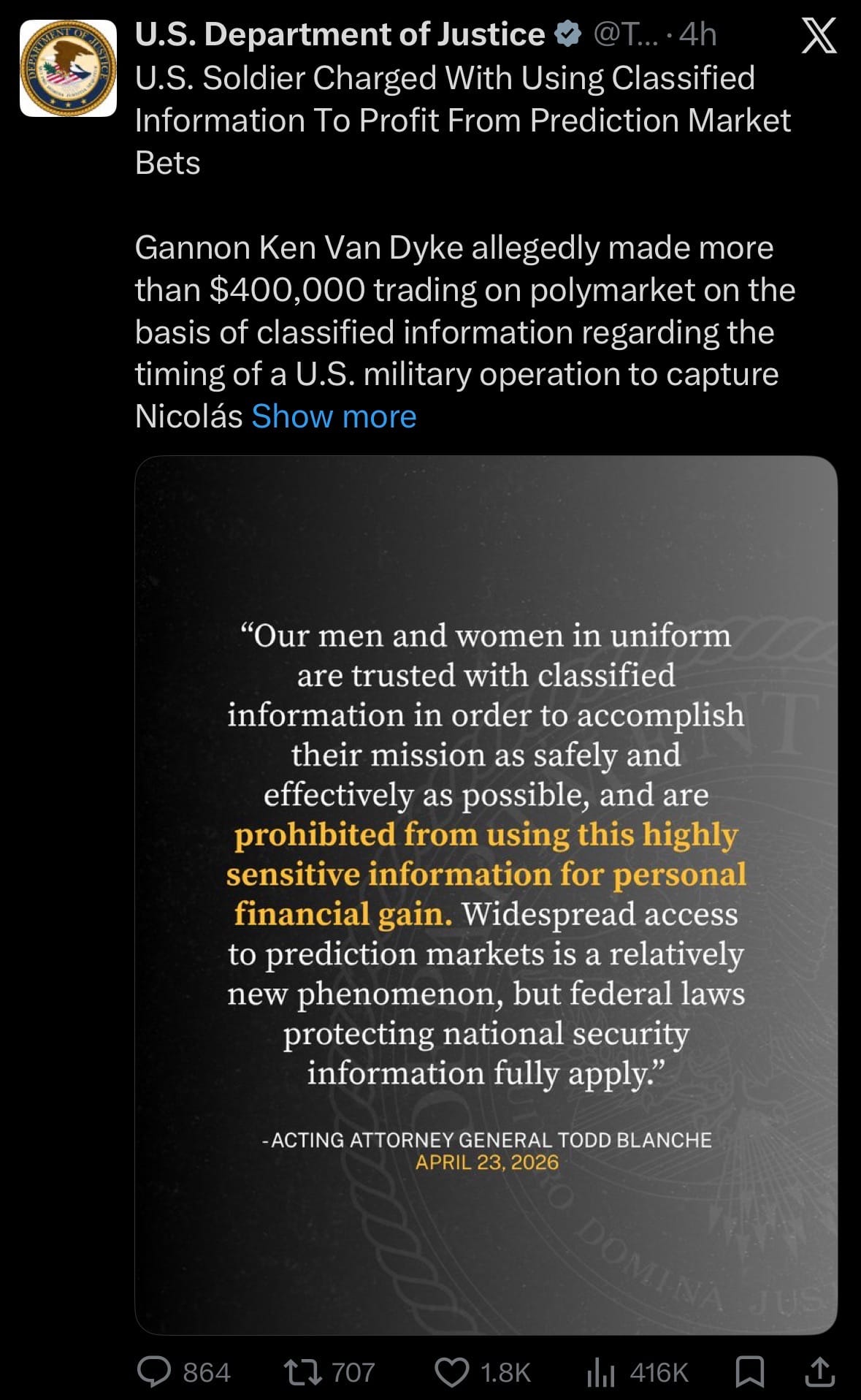
- Van Dyke now faces up to 60 years in prison on multiple charges, and federal prosecutors are moving to seize the full amount of his winnings.
Geopolitics & Military Activity:

Environment & Weather:
- On April 23, 2026, a violent tornado struck Vance Air Force Base in Enid, Oklahoma, causing significant damage to base facilities and nearby residential areas.
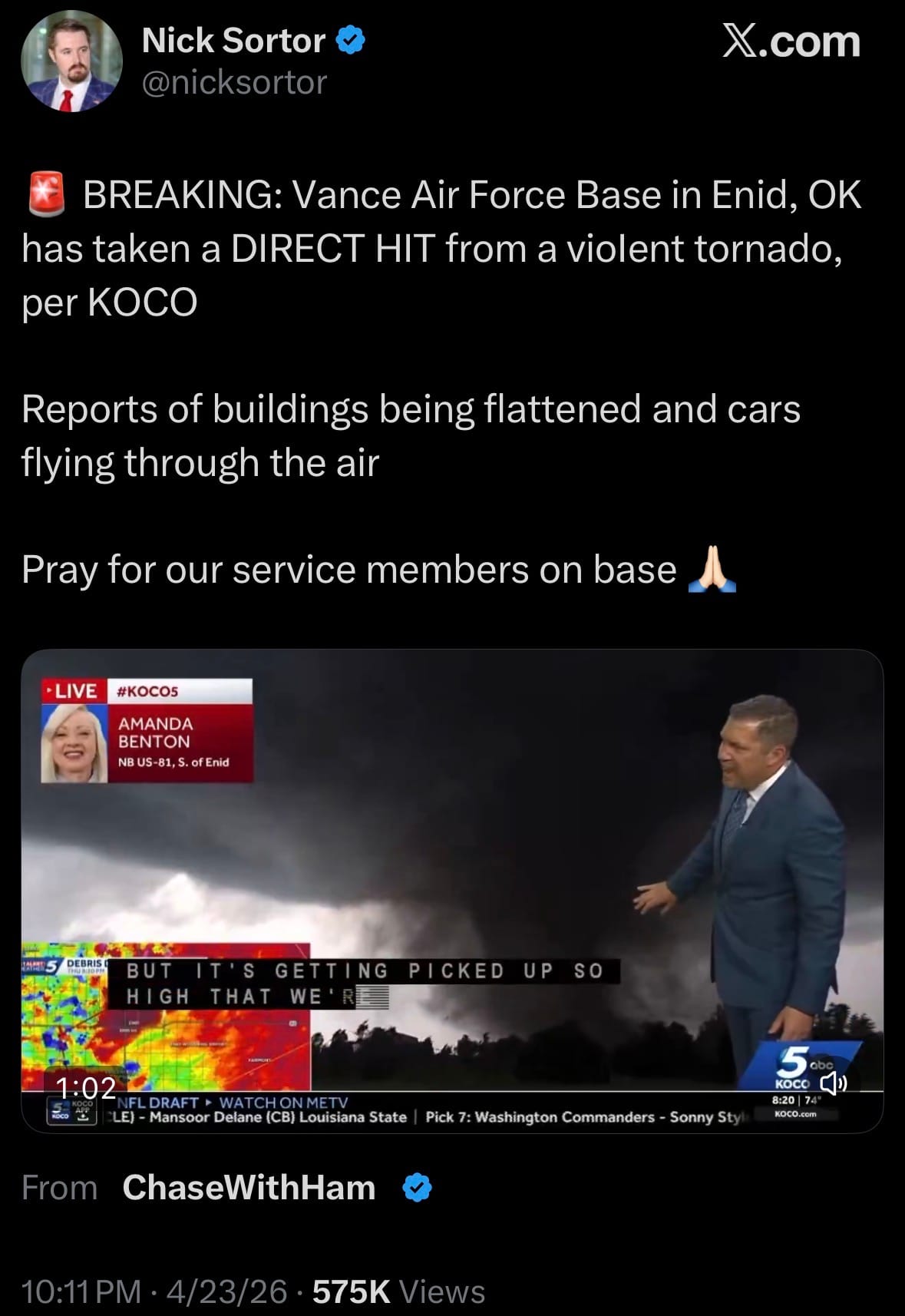
- The tornado flattened several buildings, damaged infrastructure, tossed vehicles, and destroyed homes in the vicinity. At least 10 people were injured, search and rescue operations are ongoing, and officials are continuing to assess the full extent of the damage.
Science & Technology:
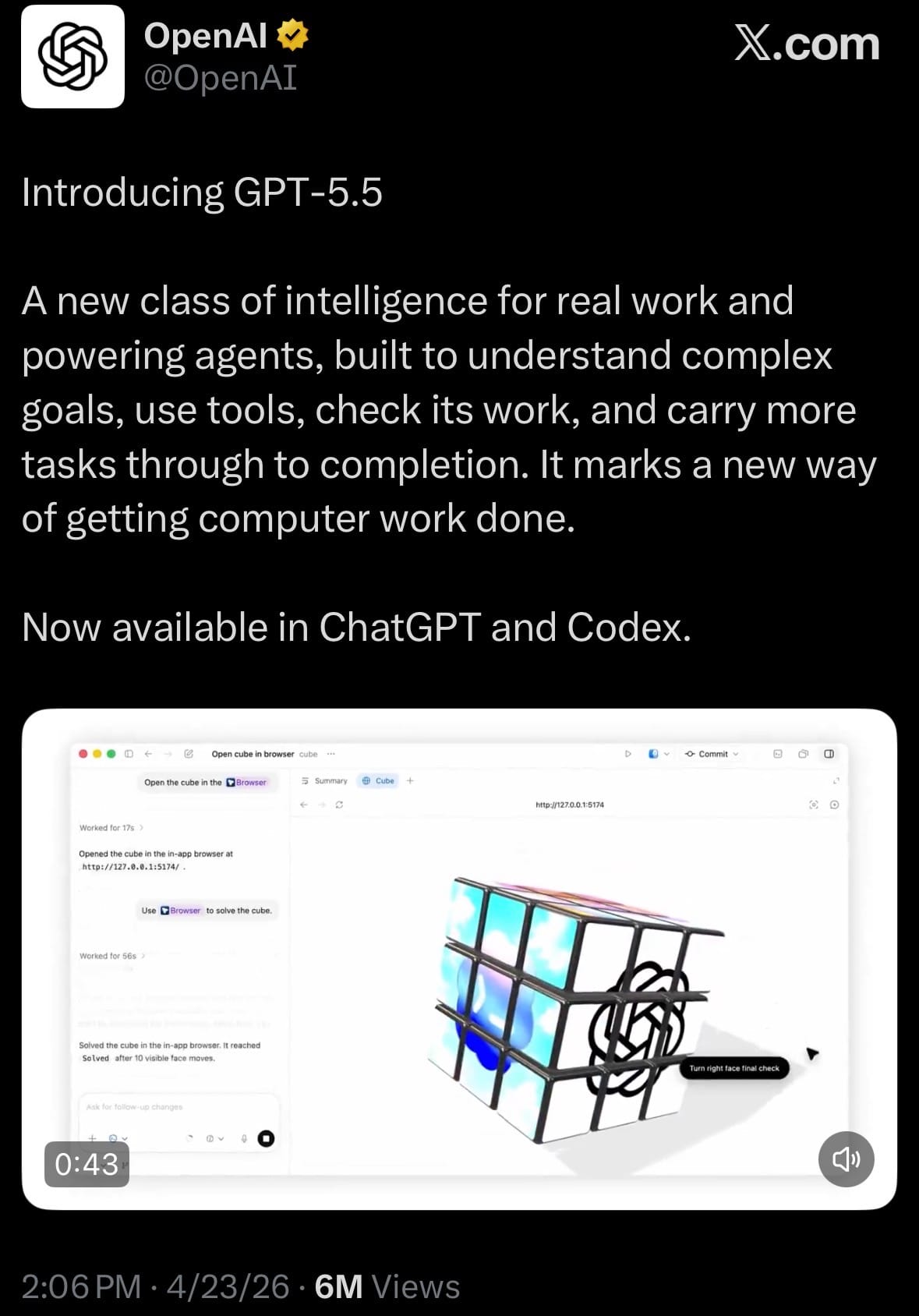
- On April 23, 2026, OpenAI released GPT-5.5, a major new model designed as “a new class of intelligence for real work and powering agents.”
xAI Release:
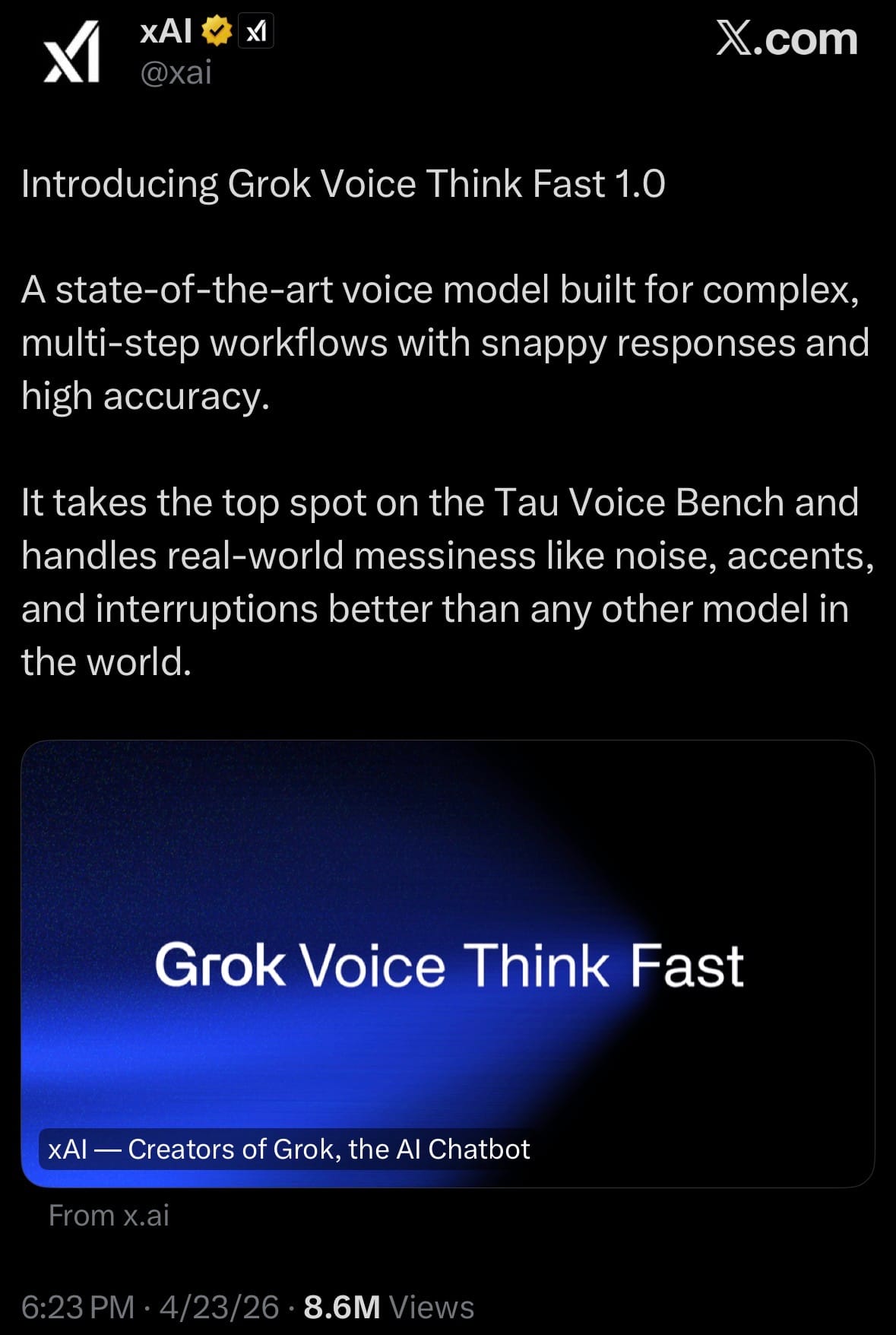
- On April 23, 2026, xAI introduced Grok Voice Think Fast 1.0, a new state-of-the-art voice model optimized for complex, multi-step conversations and real-world workflows.
Statistic:
- Largest e-commerce companies by market capitalization:
- 🇺🇸 Amazon: $2.743T
- 🇨🇳 Alibaba: $324.98B
- 🇨🇦 Shopify: $161.62B
- 🇨🇳 PDD Holdings (Pinduoduo): $138.79B
- 🇦🇷 MercadoLibre: $91.72B
- 🇨🇳 Meituan: $64.79B
- 🇺🇸 Carvana: $57.62B
- 🇸🇬 Sea Limited: $51.05B
- 🇺🇸 eBay: $46.32B
- 🇨🇳 JD.com: $40.94B
- 🇺🇸 Coupang: $37.62B
- 🇺🇸 Copart: $32.63B
- 🇨🇳 JD Health: $18.75B
- 🇺🇸 Ozon: $12.76B
- 🇺🇸 Chewy: $10.68B
- 🇯🇵 Rakuten: $10.59B
- 🇺🇸 Instacart (Maplebear): $10.10B
- 🇺🇸 Wayfair: $10.06B
- 🇭🇰 Alibaba Health: $9.38B
- 🇵🇱 Allegro: $8.38B
- 🇮🇳 Nykaa: $7.96B
- 🇨🇳 Vipshop: $6.84B
- 🇩🇪 Zalando: $6.65B
- 🇺🇸 Etsy: $6.03B
- 🇯🇵 ZOZO: $5.84B
- 🇯🇵 Monotaro: $5.74B
History:
- Amazon was founded in 1994 by Jeff Bezos during the early days of the internet, originally as an online bookstore operating out of a garage in Seattle. Bezos chose books because they had a vast catalog and were easy to ship, but his real vision was much bigger—he saw the internet as a platform to build “the everything store.” Amazon launched publicly in 1995, and by 1997 it went public on the stock market. In its early years, Amazon focused heavily on growth over profit, expanding beyond books into music, electronics, and other goods, while building out its logistics and distribution network. During the dot-com bubble (late 1990s–2000), many internet companies collapsed, but Amazon survived by tightening operations and continuing to scale. A major turning point came in the early 2000s when Amazon launched Amazon Marketplace (2000), allowing third-party sellers to sell on the platform, transforming Amazon from a retailer into a platform-based ecosystem. Around the same time, it began investing heavily in infrastructure, warehouses, and fulfillment systems, laying the groundwork for its future dominance in logistics and e-commerce.
- The next phase of Amazon’s evolution came from expanding beyond retail into technology and services. In 2005, it launched Amazon Prime, offering fast shipping and later bundling in streaming, creating a powerful customer loyalty system. In 2006, Amazon introduced Amazon Web Services (AWS), which would become one of its most important innovations—providing cloud computing infrastructure to businesses and eventually powering a significant portion of the internet. This shifted Amazon from just a commerce company into a core piece of global digital infrastructure. Through the 2010s, Amazon expanded aggressively into new sectors: acquiring Whole Foods (2017) to enter physical retail, building devices like Alexa and Echo, and investing in automation, AI, and global logistics networks including planes, trucks, and last-mile delivery systems. By 2020–2022, during the COVID-19 pandemic, Amazon’s role exploded as e-commerce demand surged, accelerating its growth and solidifying its position as a critical supply chain backbone. As of 2026, Amazon operates as a multi-layered system: a global marketplace, a logistics empire, a cloud computing giant (AWS), a media company, and an AI-driven technology platform. Its evolution shows a clear pattern—from bookstore → to e-commerce platform → to infrastructure provider → to one of the most powerful and integrated systems in the global economy, influencing how goods, data, and services move around the world.
Image of the day:

Thanks for reading! Earth is complicated, we make it simple.
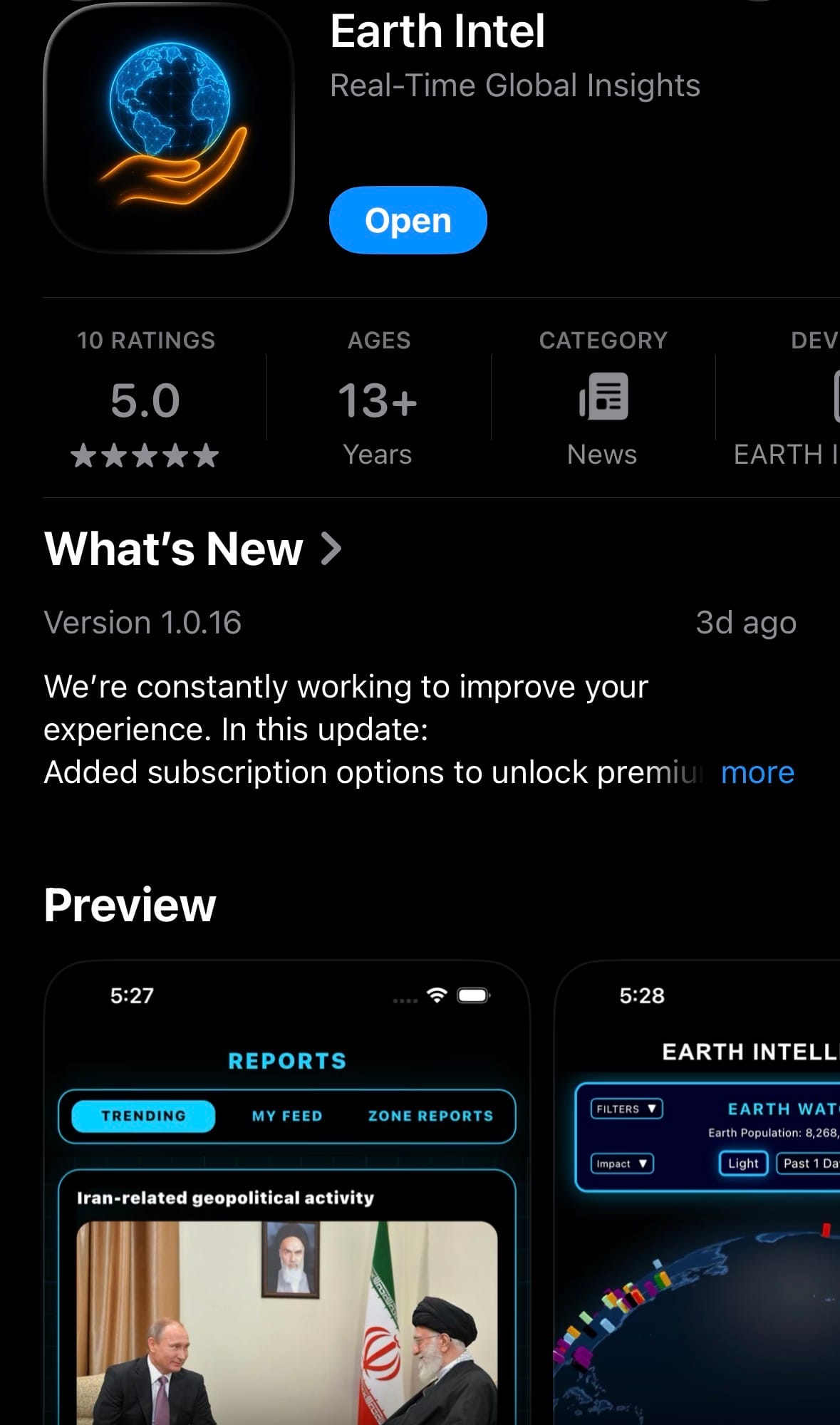
- Download our mobile app:


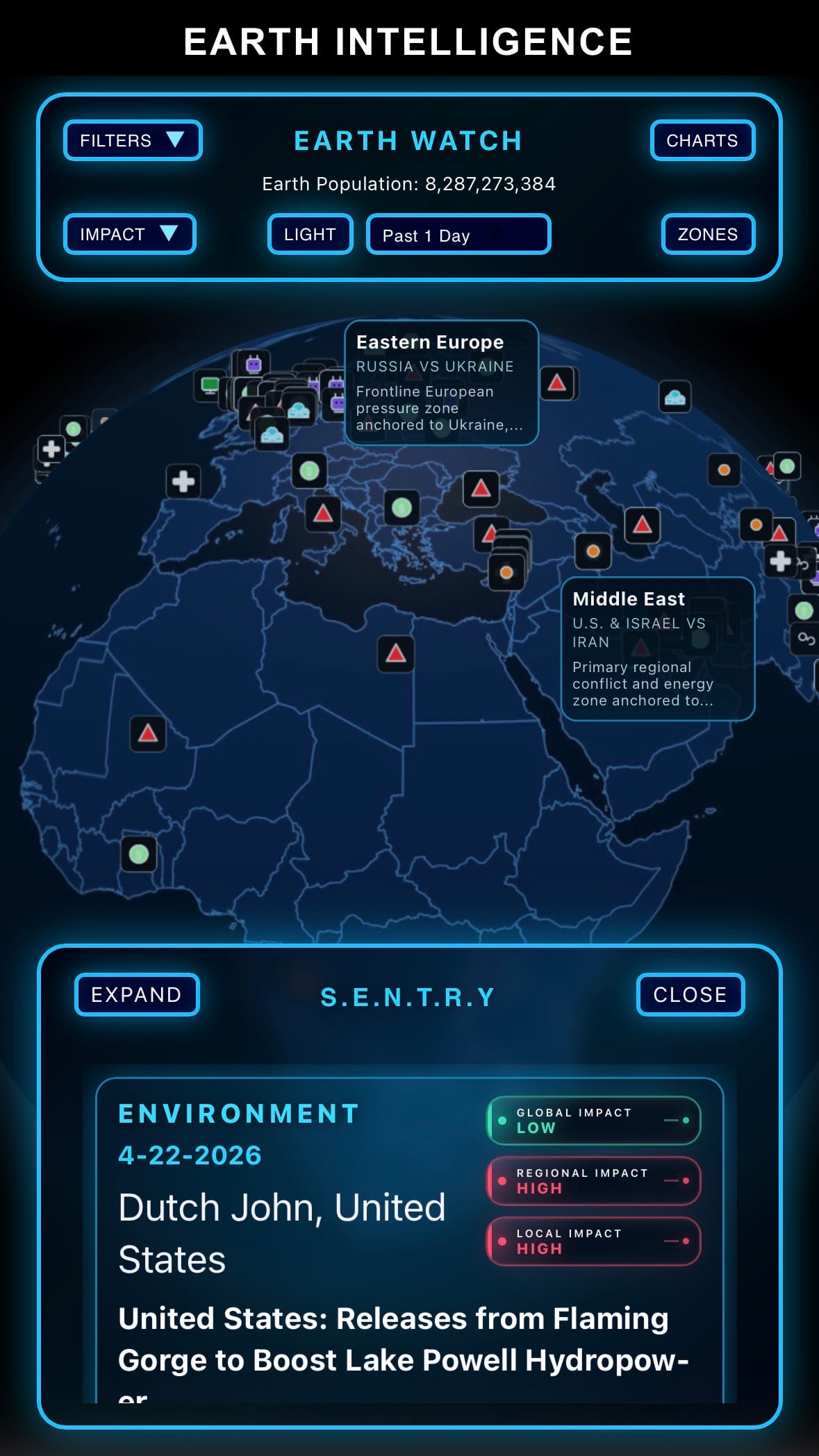
- Click below if you’d like to view our free EARTH WATCH globe:
Click below to view our previous newsletters:
Support/Suggestions Email:
support@earthintel.io