Monday☕️


Economics & Markets:
- On April 17, 2026, Brazil’s state-owned oil company Petrobras announced it signed a deal to acquire a 75% stake and operatorship of offshore Block 3 in São Tomé and Príncipe, a small island nation off the west coast of Africa.
- The specific financial terms were not disclosed, but the acquisition is part of Petrobras’ $1.3 billion international exploration budget over the next five years. Once approved, ownership will be split as Petrobras 75%, Oranto Petroleum 15%, and the local government oil agency 10%. This strengthens Petrobras’ position in Africa and gives it access to a promising but high-risk underexplored area in the Gulf of Guinea to help offset declining reserves in Brazil.


Geopolitics & Military Activity:
- As of Monday, April 20, 2026, the Strait of Hormuz remains effectively closed due to a dual blockade situation involving both the United States and Iran.
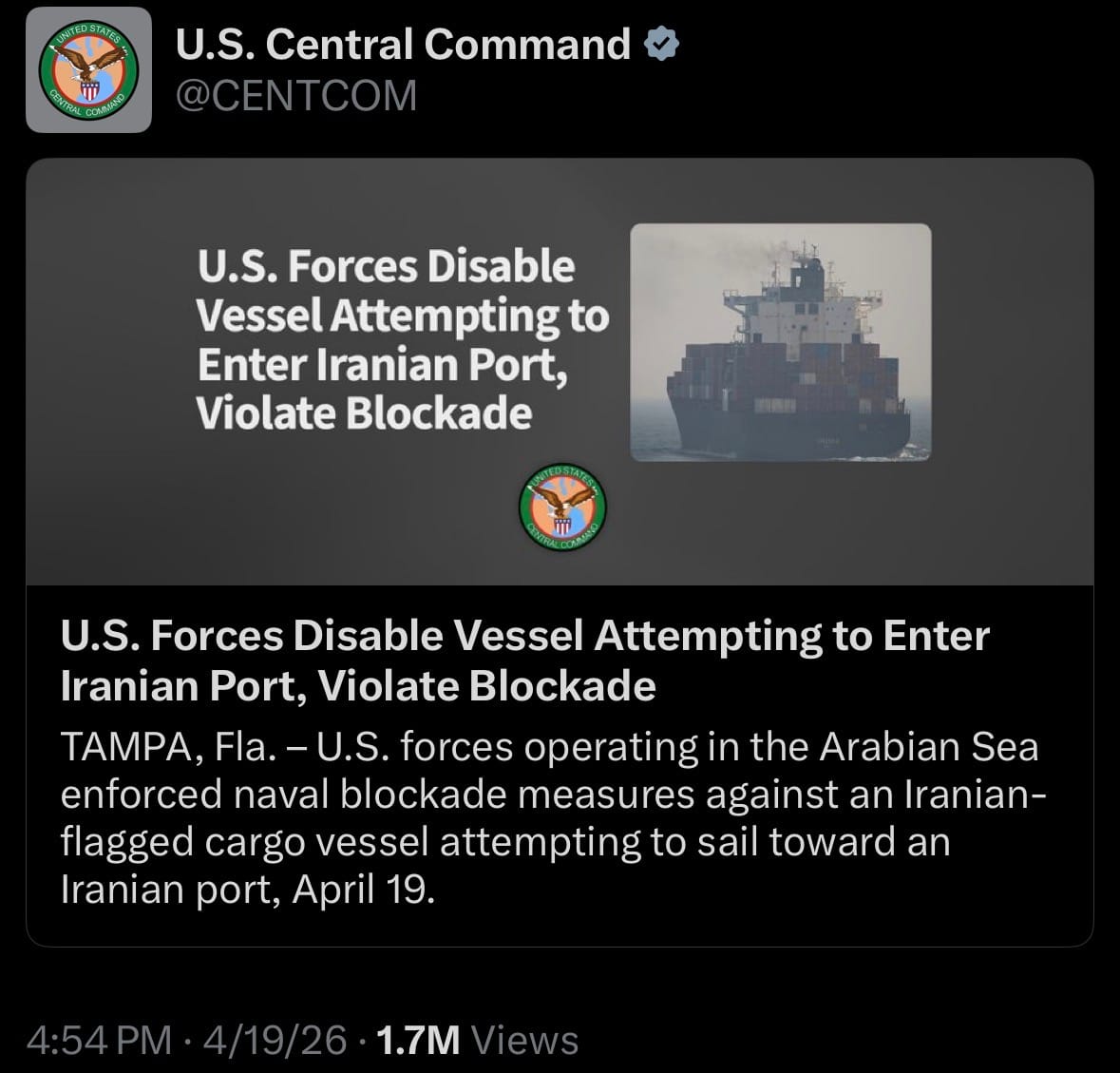
- The U.S. continues its naval blockade of Iranian ports, while Iran has re-closed the strait in retaliation and is actively turning back or firing on vessels attempting to transit. On April 19, the U.S. Navy fired on and seized the Iranian-flagged cargo vessel MV Touska after it ignored repeated warnings — the first forcible interception since the operation began. The situation remains highly tense with both sides on high alert.
Science & Technology:
- On April 17, 2026, the U.S. State Department approved a potential $11.9 billion Foreign Military Sale to Germany for eight shipsets of the Aegis-based Integrated Combat System, including AN/SPY-6 radars, MK 41 Vertical Launch Systems, and related weapons and support equipment.
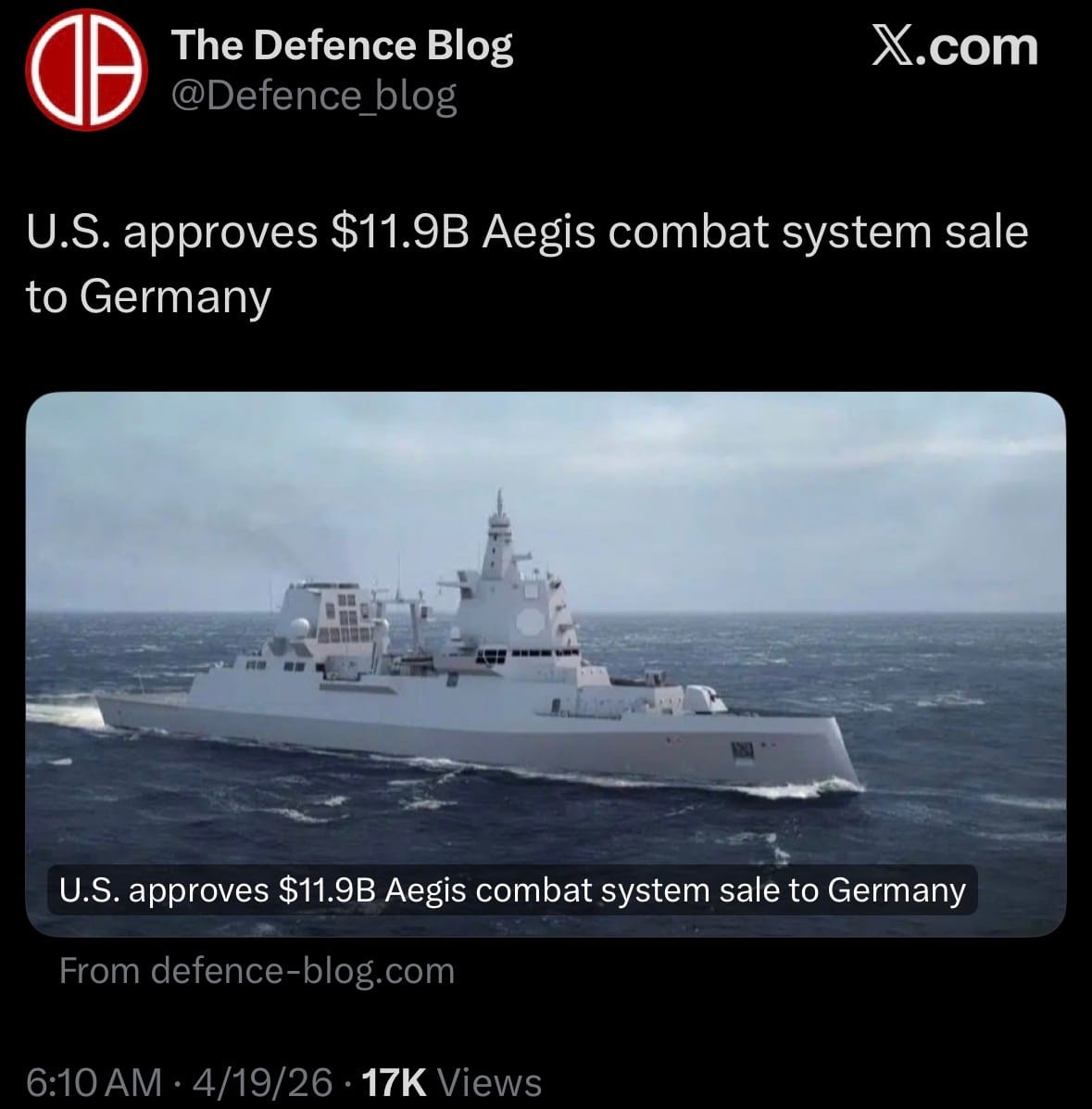
- The Aegis combat system, made primarily by Lockheed Martin (with key radar components from RTX), is one of the world’s most advanced naval combat systems. It integrates powerful radars, sensors, computers, and weapons to detect, track, and simultaneously engage multiple air, surface, and missile threats — giving warships exceptional air and missile defense capabilities while greatly improving Germany’s naval defense and NATO interoperability.
Space:
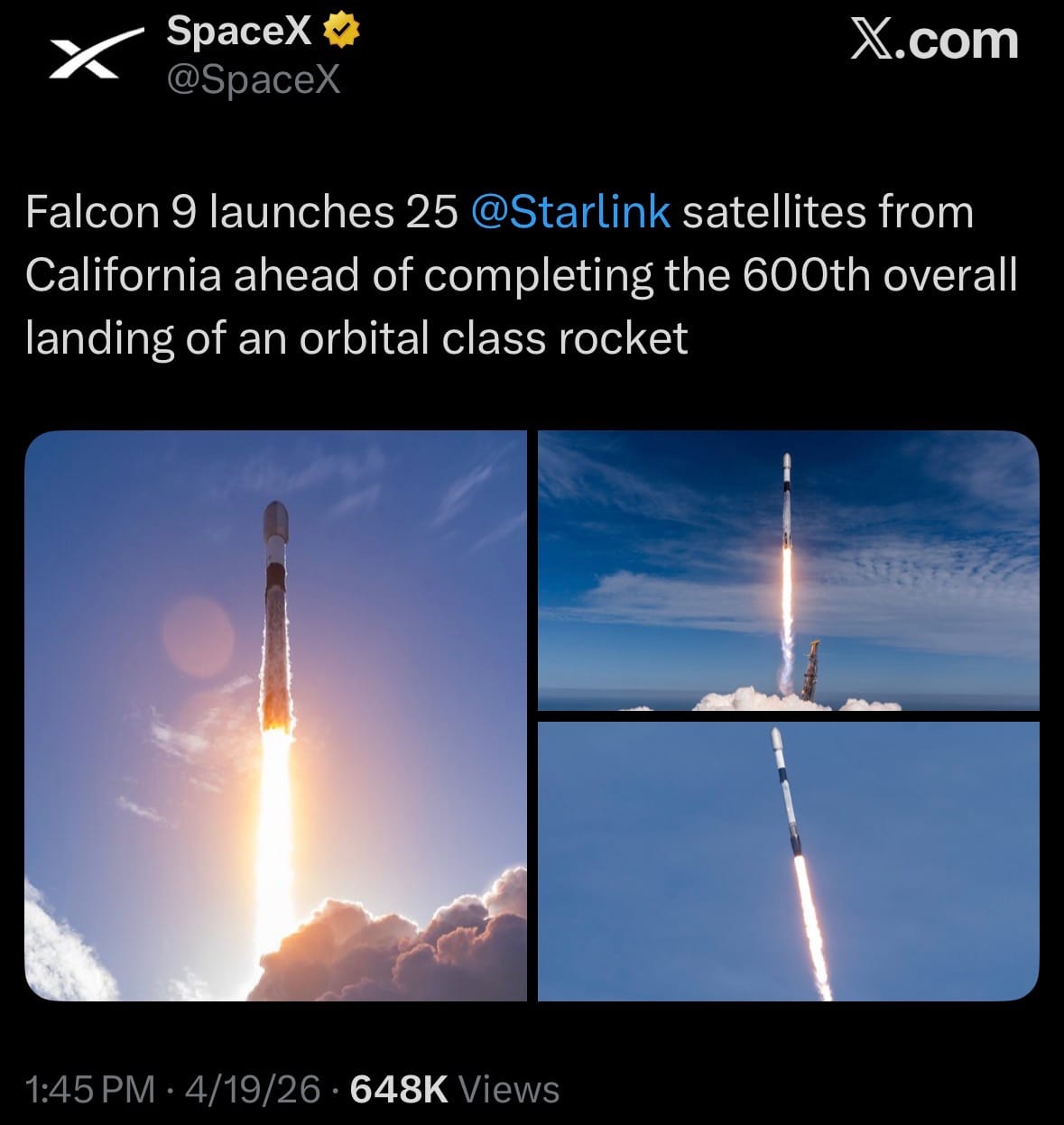
- On April 19, 2026, SpaceX successfully launched Starlink Group 17-22 from Vandenberg Space Force Base in California, deploying 25 Starlink v2 Mini satellites into a sun-synchronous low-Earth orbit to expand global broadband coverage.
- On the same day, Blue Origin launched BlueBird Block 2 FM2 (also known as BlueBird 7) aboard its New Glenn rocket from Cape Canaveral — the first re-flight of a New Glenn booster — carrying the second next-generation satellite for AST SpaceMobile’s direct-to-cell satellite constellation, though the mission encountered an issue with the second stage that placed the satellite into an unusable low orbit.
Statistic:
- Largest assets on Earth by market capitalization:
- Gold: $33.466T
- 🇺🇸 NVIDIA: $4.901T
- Silver: $4.521T
- 🇺🇸 Alphabet (Google): $4.105T
- 🇺🇸 Apple: $3.971T
- 🇺🇸 Microsoft: $3.142T
- 🇺🇸 Amazon: $2.694T
- 🇺🇸 Broadcom: $1.927T
- 🇹🇼 TSMC: $1.921T
- 🇸🇦 Saudi Aramco: $1.754T
- 🇺🇸 Meta Platforms: $1.747T
- 🇺🇸 Tesla: $1.503T
- Bitcoin: $1.493T
- 🇺🇸 Berkshire Hathaway: $1.023T
- 🇺🇸 Walmart: $1.016T
- 🇰🇷 Samsung: $974.40B
- 🇺🇸 Vanguard S&P 500 ETF (VOO): $892.54B
- 🇺🇸 JPMorgan Chase: $836.86B
- 🇺🇸 Eli Lilly: $829.70B
- 🇺🇸 iShares Core S&P 500 ETF (IVV): $783.48B
- 🇺🇸 SPDR S&P 500 ETF (SPY): $720.31B
- 🇺🇸 Vanguard Total Stock Market ETF (VTI): $612.45B
- 🇺🇸 Visa: $611.22B
- 🇺🇸 Exxon Mobil: $608.68B
- 🇨🇳 Tencent: $603.20B
History:
- Modern intelligence agencies were built out of the need for organized, continuous information gathering and covert action, especially during the early 20th century when global conflict became more complex and interconnected. MI6 (United Kingdom), formally established in 1909 as the Secret Intelligence Service (SIS), was one of the first modern foreign intelligence agencies, created to monitor German military expansion before World War I. It developed early espionage networks, human intelligence (HUMINT) operations, and covert communication systems. During World War II, MI6 worked alongside organizations like Bletchley Park, where codebreaking efforts (including cracking the German Enigma machine) became one of the most important intelligence breakthroughs in history. The CIA (United States) was established later in 1947 under the National Security Act, evolving from the wartime OSS (Office of Strategic Services). The CIA was designed not just to gather intelligence, but to conduct covert operations globally during the Cold War, countering Soviet influence. It played major roles in operations like the 1953 Iran coup (Operation Ajax) and the 1961 Bay of Pigs invasion, showing how intelligence agencies could directly shape political outcomes. On the Soviet side, intelligence evolved through agencies like the NKVD and KGB, eventually becoming today’s FSB (Federal Security Service) after the collapse of the Soviet Union in 1991, focusing on internal security, counterintelligence, and maintaining state control while still projecting influence externally through networks and cyber operations.
- Mossad (Israel), established in 1949, developed a reputation as one of the most aggressive and effective intelligence agencies, specializing in targeted operations, counterterrorism, and global intelligence gathering to protect Israel in a hostile regional environment. Notable operations include the capture of Adolf Eichmann in 1960, tracking a Nazi war criminal across continents, and various covert actions aimed at disrupting enemy capabilities. Across the Cold War and into the modern era, these agencies expanded beyond traditional espionage into covert action, regime influence, psychological operations, and technological intelligence, including signals intelligence (SIGINT), satellite surveillance, and cyber capabilities. By the 2000s and 2010s, intelligence shifted heavily into the digital domain, with mass data collection, global surveillance systems, and cyber warfare becoming central—blurring the lines between intelligence gathering and active operations. As of 2026, these agencies operate in a constant shadow layer beneath global events, influencing conflicts, elections, economic systems, and security environments through a mix of human networks, advanced technology, and covert strategy. They don’t just observe the world—they quietly shape it, acting as hidden force multipliers for national power in an era where information, access, and control are often more decisive than direct military action.
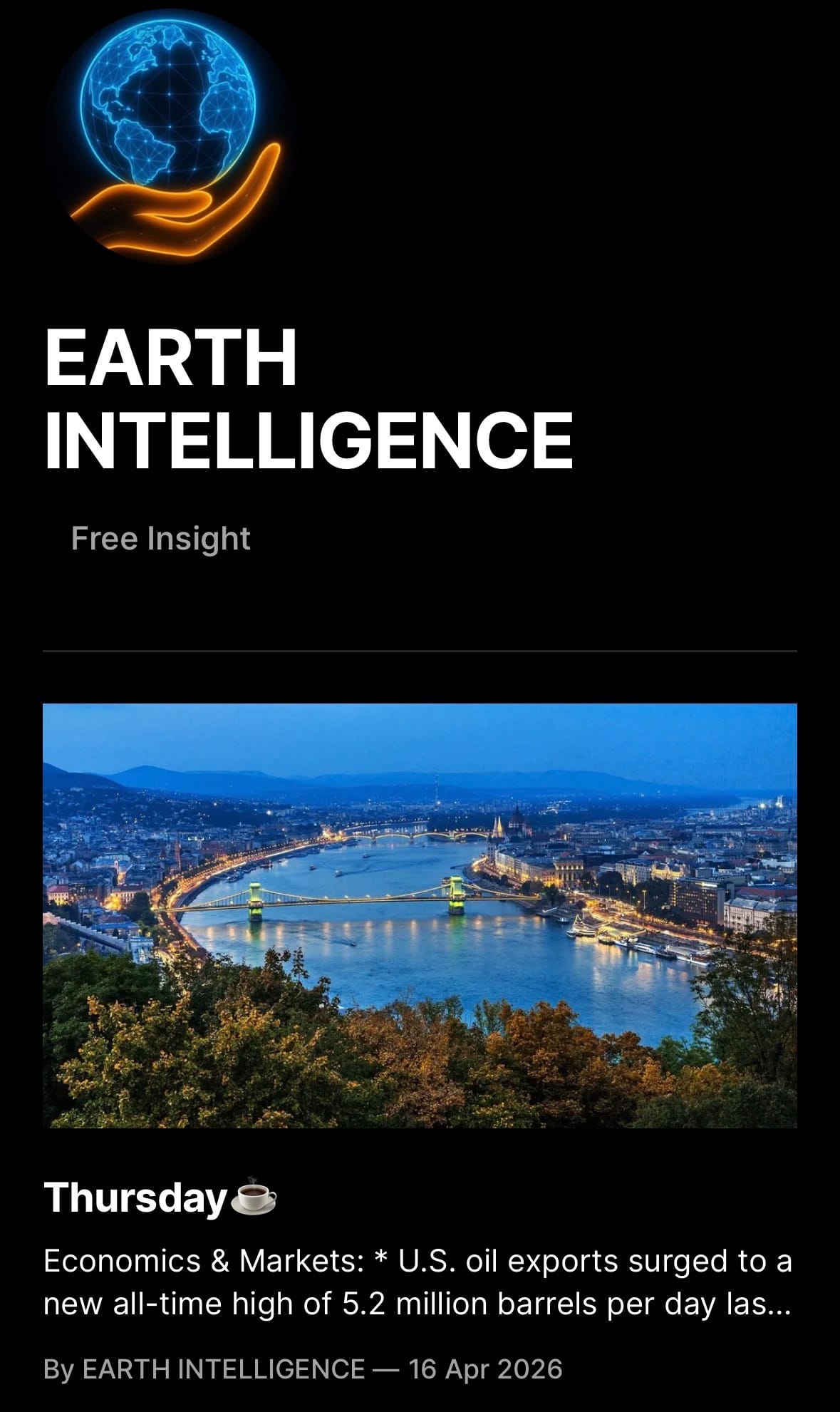
Image of the day:

Thanks for reading! Earth is complicated, we make it simple.
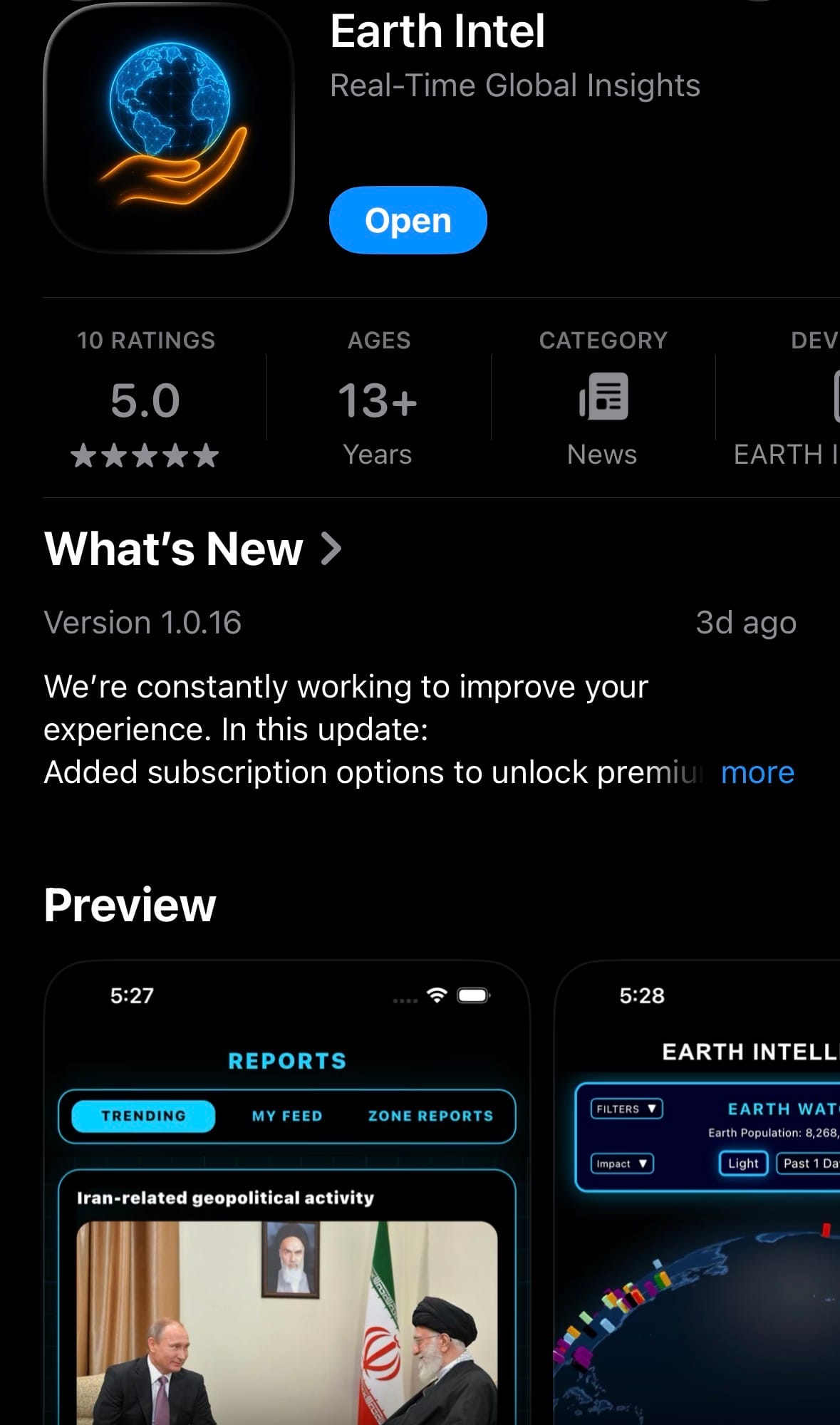
- Download our mobile app:


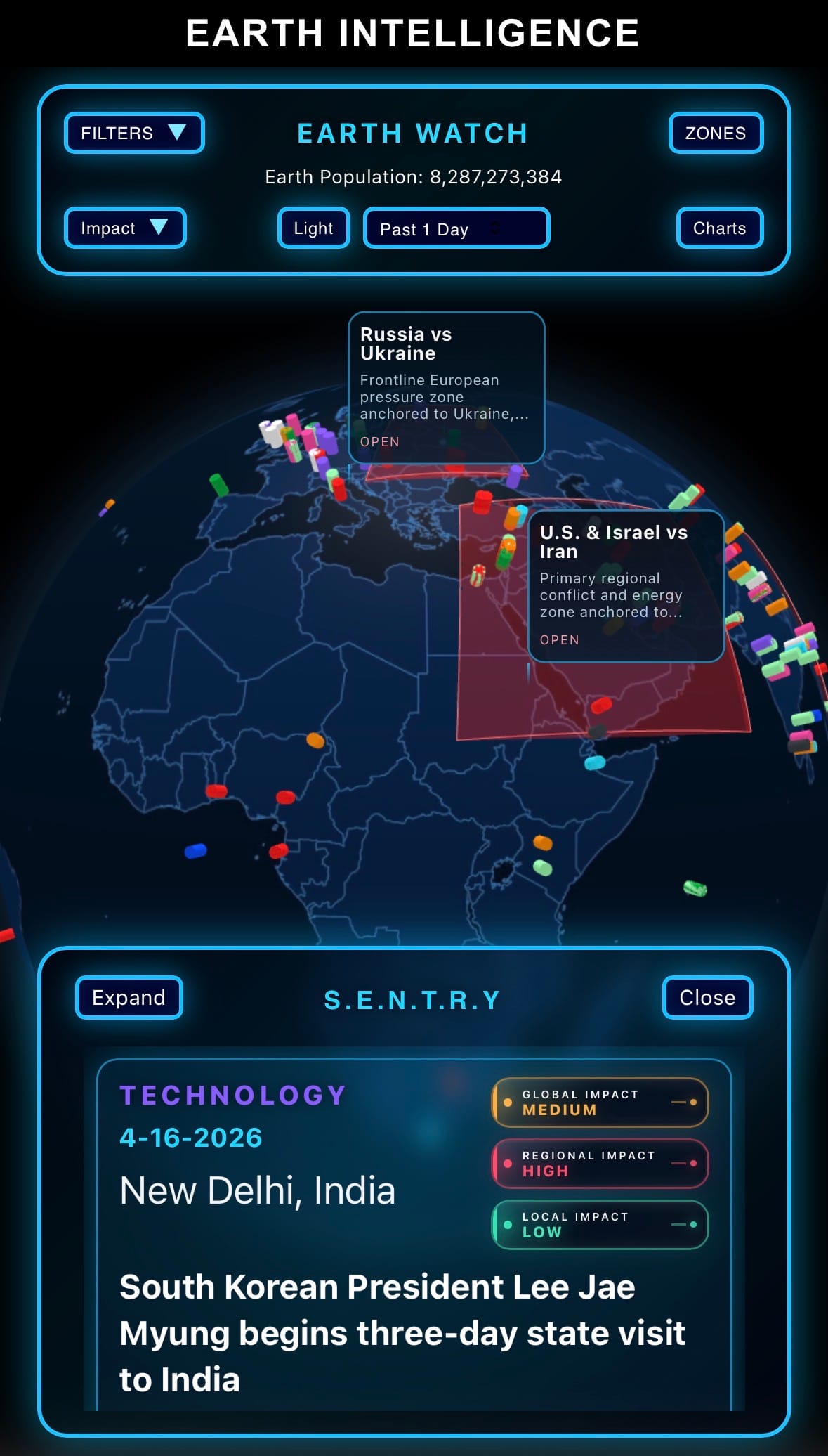
- Click below if you’d like to view our free EARTH WATCH globe:
Click below to view our previous newsletters:
Support/Suggestions Email:
support@earthintel.io