Thursday☕️


Trending:
- On April 23, 2026, the U.S. Navy awarded a major contract worth up to $1.9 billion to 25 vendors to repair, maintain, and modernize its fleet of nuclear attack submarines (Virginia and Los Angeles classes) at the four public shipyards (Portsmouth, Norfolk, Puget Sound, and Pearl Harbor).
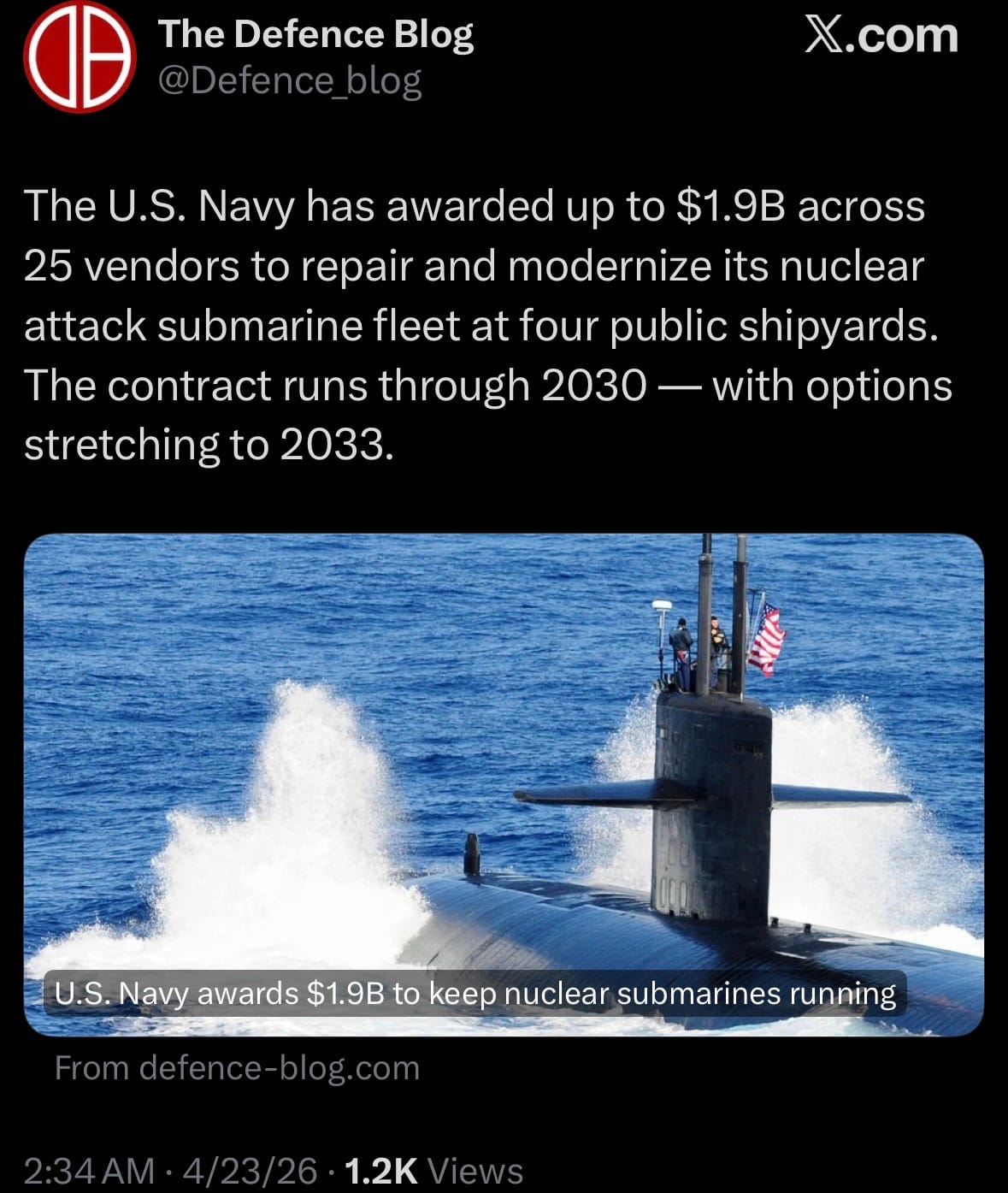
- The multi-year contract runs through 2030, with options that could extend it to 2033. This investment is aimed at increasing the availability and readiness of the Navy’s fast-attack submarine force, which is critical for undersea warfare and deterrence in the Indo-Pacific.
Economics & Markets:
- Tesla reported Q1 2026 earnings on April 22, 2026, beating profit expectations while slightly missing on revenue. The company posted adjusted EPS of $0.41 (beating estimates of ~$0.37) and revenue of $22.39 billion (vs. ~$22.6 billion expected), with net income rising to $477 million.
- Automotive gross margins improved significantly to 19.2%, energy storage margins hit a record 39.5%, and free cash flow reached $1.4 billion. Tesla also highlighted progress on affordable models, energy growth, and autonomy initiatives during the earnings call.
Geopolitics & Military Activity:
Environment & Weather:
Space:
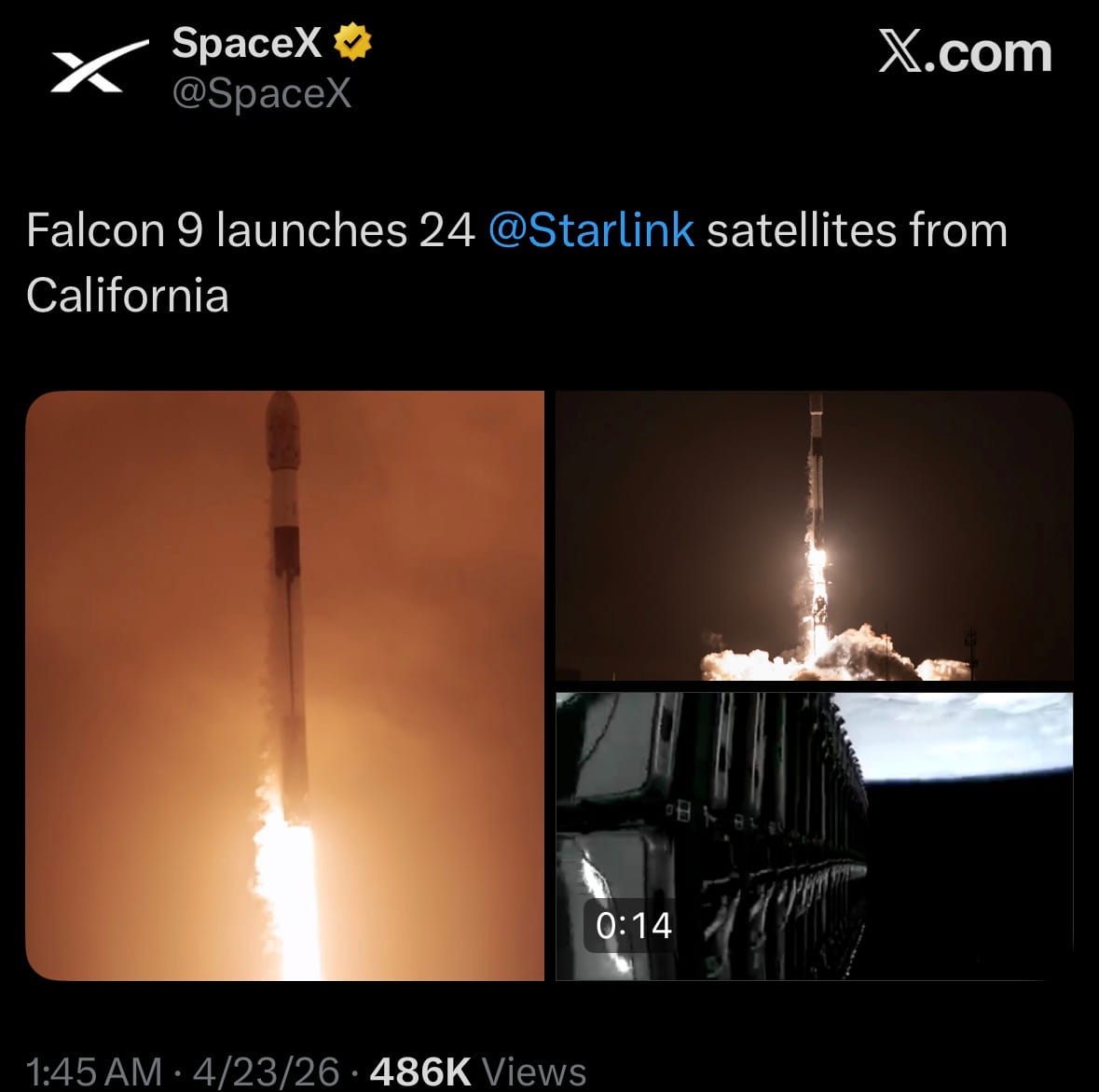
- On April 22, 2026 (April 23 UTC), SpaceX successfully launched Starlink Group 17-14 from SLC-4E at Vandenberg Space Force Base in California using a Falcon 9 rocket. The mission deployed 24 Starlink v2 Mini satellites into a sun-synchronous low-Earth orbit to expand global broadband coverage.
- On April 23, 2026, Rocket Lab successfully launched its Electron rocket on the “Kakushin Rising” mission from Launch Complex 1 in New Zealand at 3:09 p.m. local time.
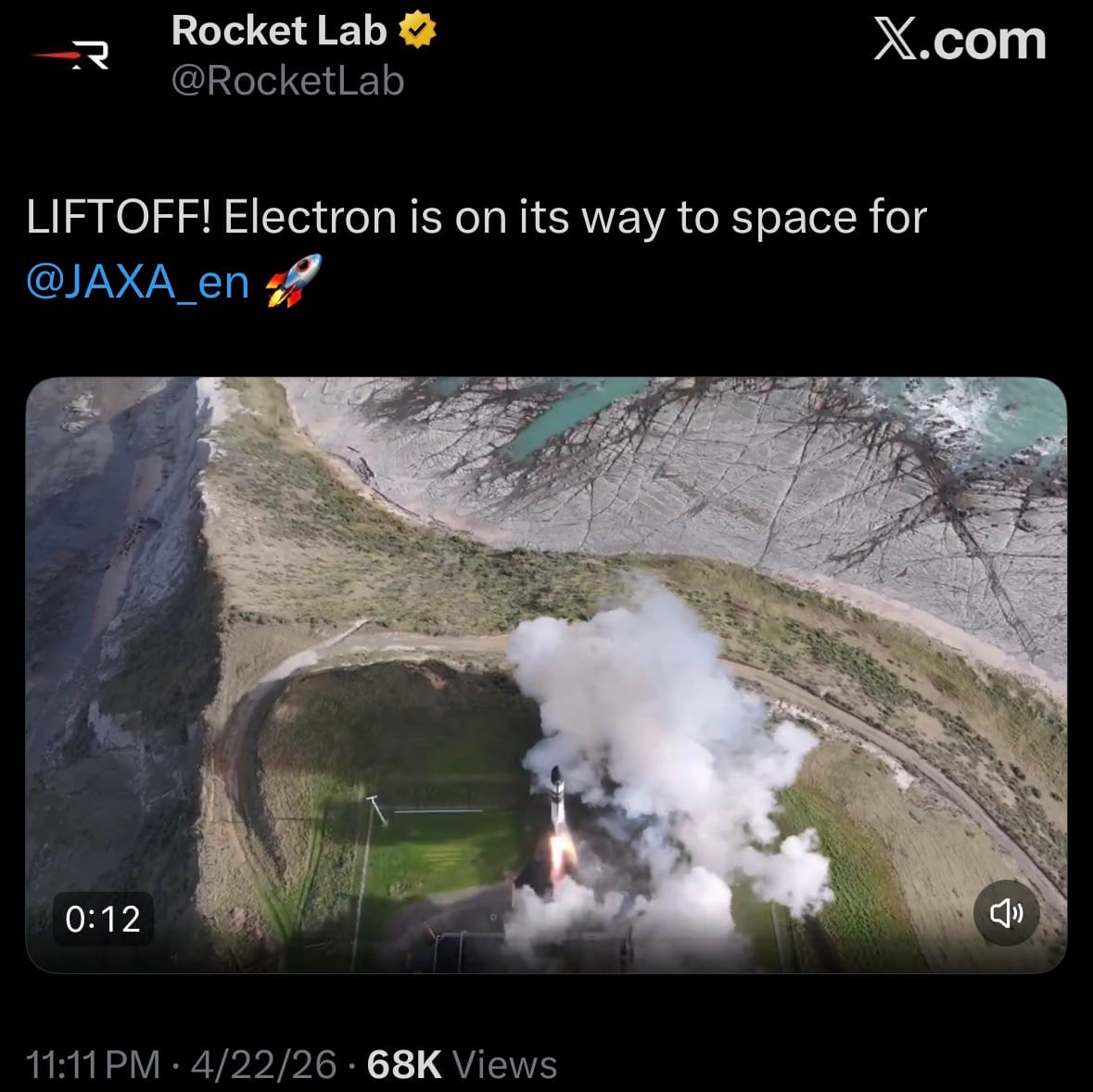
- The mission deployed eight Japanese satellites for JAXA’s Innovative Satellite Technology Demonstration Program into sun-synchronous orbit, including educational smallsats, an ocean-monitoring satellite, a multispectral camera demonstrator, and OrigamiSat-2 — a satellite with a large antenna that folds like origami and deploys to 25 times its packed size.
Statistic:
- Largest public automakers on Earth by market capitalization:
- 🇺🇸 Tesla: $1.454T
- 🇯🇵 Toyota: $261.22B
- 🇨🇳 BYD: $133.58B
- 🇨🇳 Xiaomi: $105.33B
- 🇰🇷 Hyundai: $93.56B
- 🇺🇸 General Motors: $71.41B
- 🇮🇹 Ferrari: $64.18B
- 🇩🇪 BMW: $57.36B
- 🇩🇪 Mercedes-Benz: $52.30B
- 🇩🇪 Volkswagen: $51.60B
- 🇺🇸 Ford: $50.65B
- 🇩🇪 Porsche: $44.78B
- 🇮🇳 Maruti Suzuki: $44.12B
- 🇰🇷 Kia: $41.59B
- 🇮🇳 Mahindra & Mahindra: $39.02B
- 🇨🇳 Geely: $32.62B
- 🇯🇵 Honda: $32.30B
- 🇨🇳 Great Wall Motors: $25.64B
- 🇳🇱 Stellantis: $24.62B
- 🇨🇳 Chery Automobile: $23.64B
- 🇨🇳 Seres Group: $23.60B
- 🇨🇳 SAIC Motor: $23.39B
- 🇺🇸 Rivian: $22.01B
- 🇯🇵 Suzuki Motor: $21.85B
- 🇨🇳 Li Auto: $19.06B
- 🇮🇳 Tata Motors: $16.63B
History:
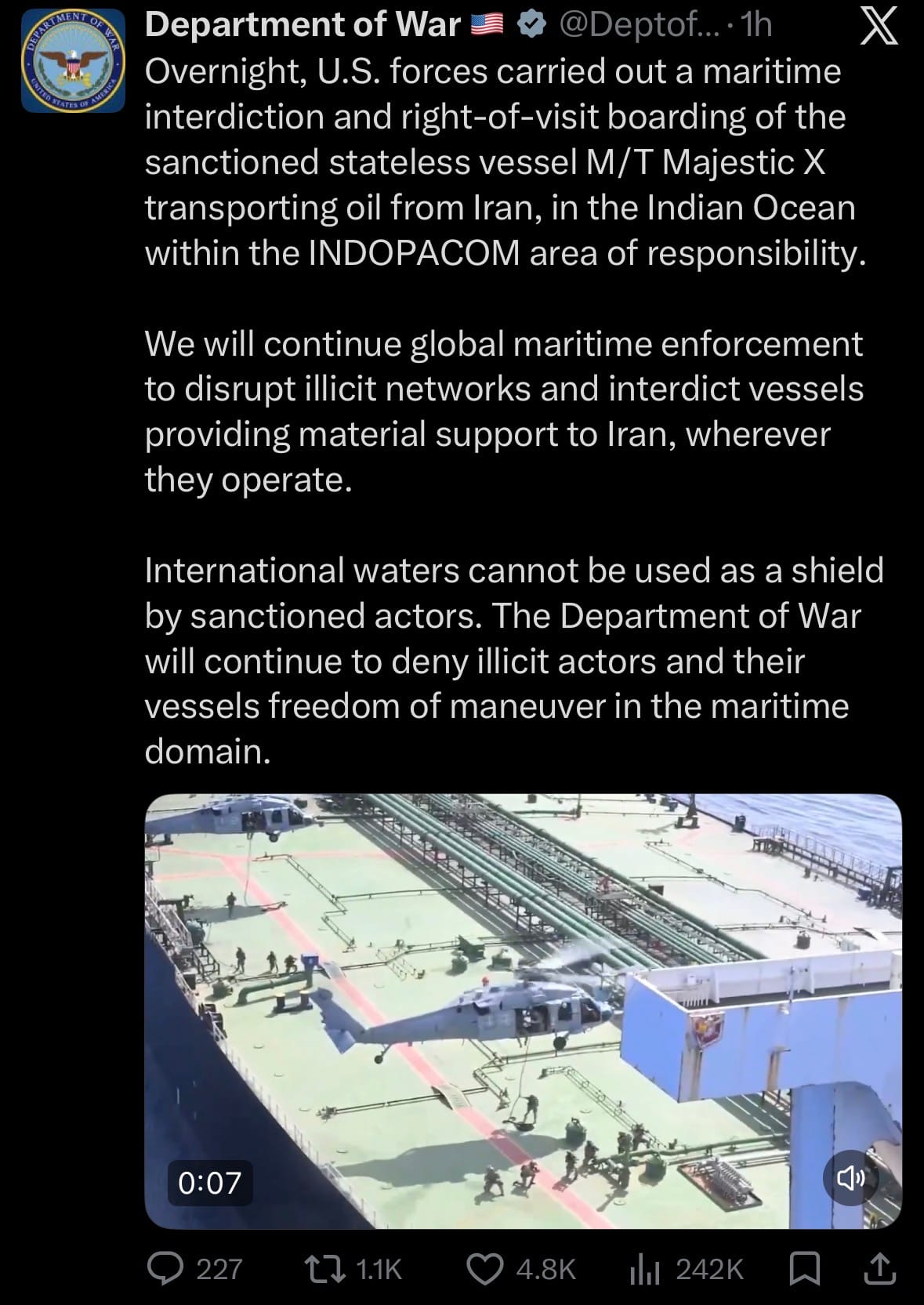
- The U.S. military command structure evolved out of the need to manage increasingly complex, global operations, especially during the 20th century. Before World War II, the U.S. military was relatively decentralized, with the Army and Navy operating largely independently and commands organized more by service than by region. That changed during World War II (1939–1945), when the U.S. had to coordinate massive operations across multiple continents. This led to the creation of theater commands, such as the European and Pacific theaters, where a single commander had authority over all forces—land, sea, and air—in a specific region. This was a major shift toward joint operations, meaning all branches working under one unified command. After the war, the U.S. realized this structure was essential for modern warfare, leading to the National Security Act of 1947, which created the Department of Defense, unified the military under civilian leadership, and established the foundation for a permanent joint command system.
- During the Cold War (late 1940s–1991), this system expanded into what are now known as Unified Combatant Commands, each responsible for a specific geographic region or function. Commands like EUCOM (Europe, established 1952) and PACOM (Pacific, established 1947, now INDOPACOM) were created to manage U.S. forces in key strategic areas facing the Soviet Union and later China. CENTCOM (Central Command) was established in 1983 to focus on the Middle East, especially as oil, regional instability, and conflicts like the Iran-Iraq War made the region critical. Later, NORTHCOM (Northern Command) was created in 2002 after 9/11, marking a major shift toward homeland defense, something the U.S. had not formally centralized before. Other commands include SOUTHCOM (Latin America, 1963) and AFRICOM (Africa, 2007), reflecting growing global engagement. In addition to geographic commands, the U.S. also developed functional commands like STRATCOM (nuclear and strategic deterrence), SOCOM (special operations, 1987), CYBERCOM (cyber warfare, 2009), and SPACECOM (re-established 2019)—showing how warfare expanded beyond physical regions into domains like cyber and space.
- By 2026, the U.S. command structure is a highly integrated global system designed for real-time, multi-domain operations. Each combatant command operates almost like a regional headquarters with control over all military branches in its area, allowing rapid coordination of air, land, sea, cyber, and space assets. The shift from PACOM to INDOPACOM (renamed 2018) reflects the growing importance of the Indo-Pacific region and strategic competition with China. Modern commands are not just about fighting wars—they manage deterrence, alliances, intelligence coordination, and crisis response. The evolution shows a clear trajectory: from fragmented service-based control → to unified regional commands → to today’s multi-domain global command network, where the U.S. military is structured to operate simultaneously across every major region and domain on Earth, with command systems designed to respond instantly to threats anywhere in the world.
Image of the day:

Thanks for reading! Earth is complicated, we make it simple.

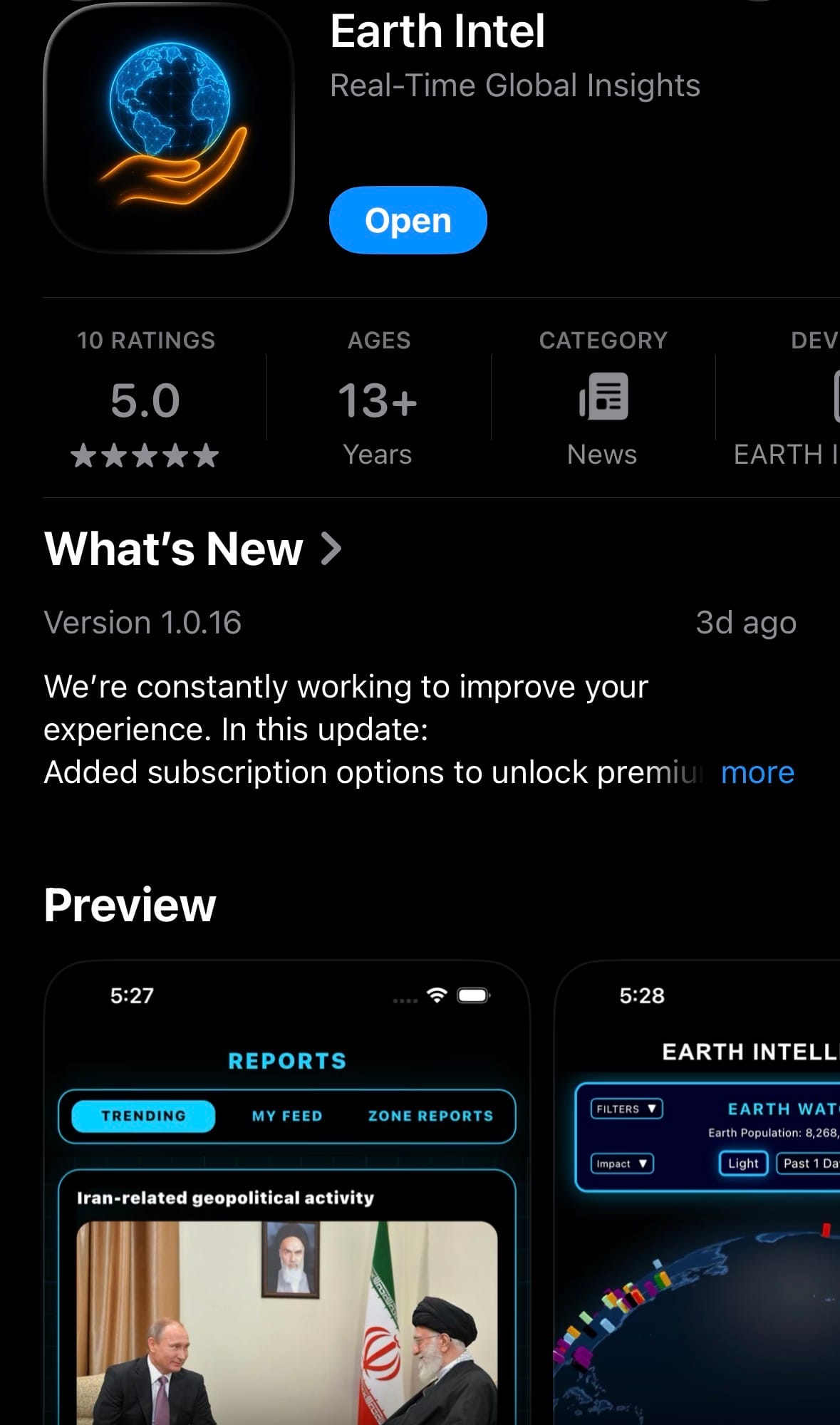
- Download our mobile app:


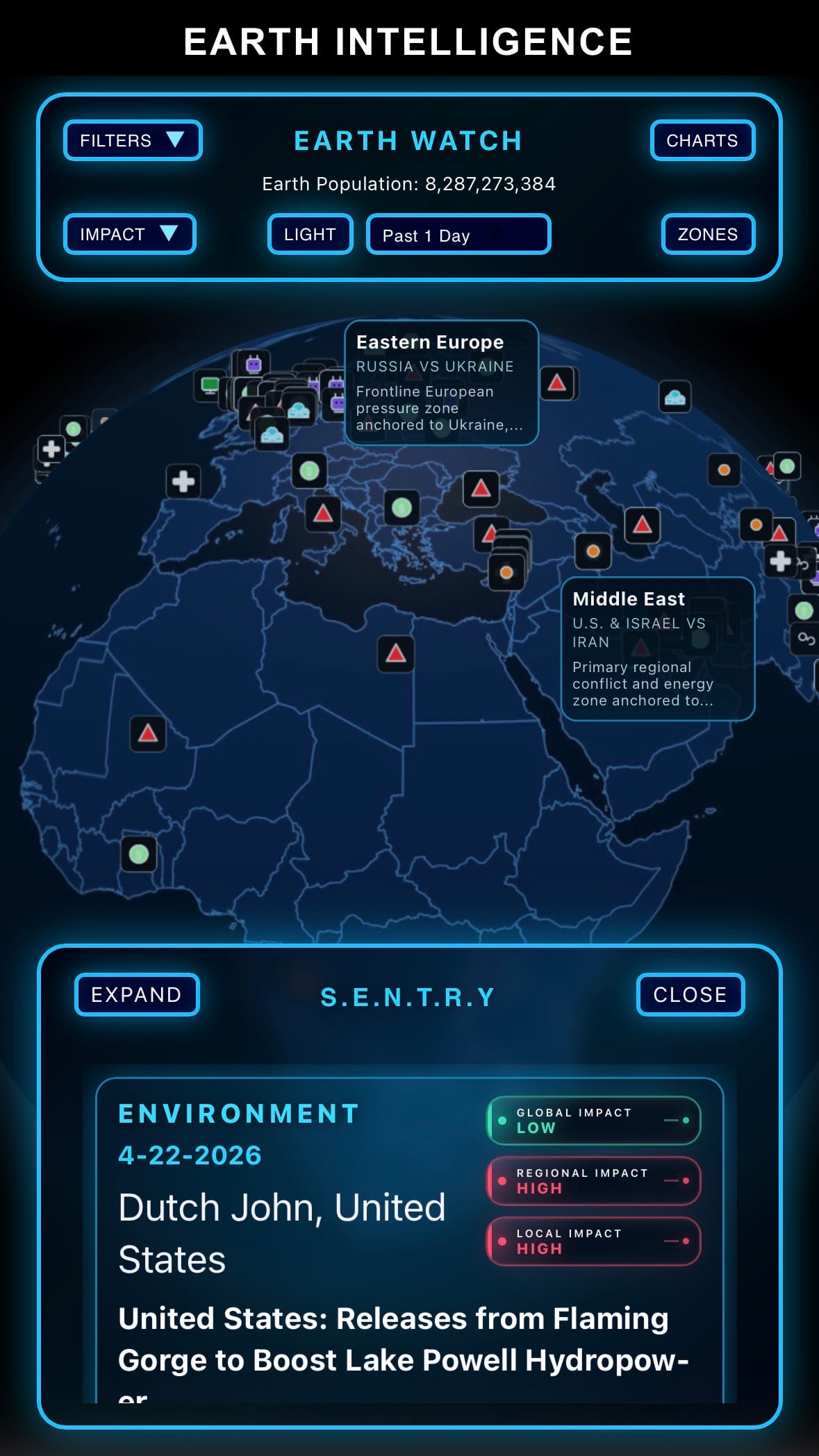
- Click below if you’d like to view our free EARTH WATCH globe:
Click below to view our previous newsletters:

Support/Suggestions Email:
support@earthintel.io