Wednesday☕️


Trending:
- Over the past 21 days in April 2026, at least 10 major energy facilities worldwide have experienced significant fires, explosions, or attacks, including multiple Ukrainian drone strikes on Russian oil refineries and export terminals (notably repeated hits on the Tuapse complex), a deadly boiler explosion at India’s Vedanta power plant, a major fire at Australia’s Geelong refinery (one of the country’s last two), and other incidents in India, Mexico, Romania, and Texas.
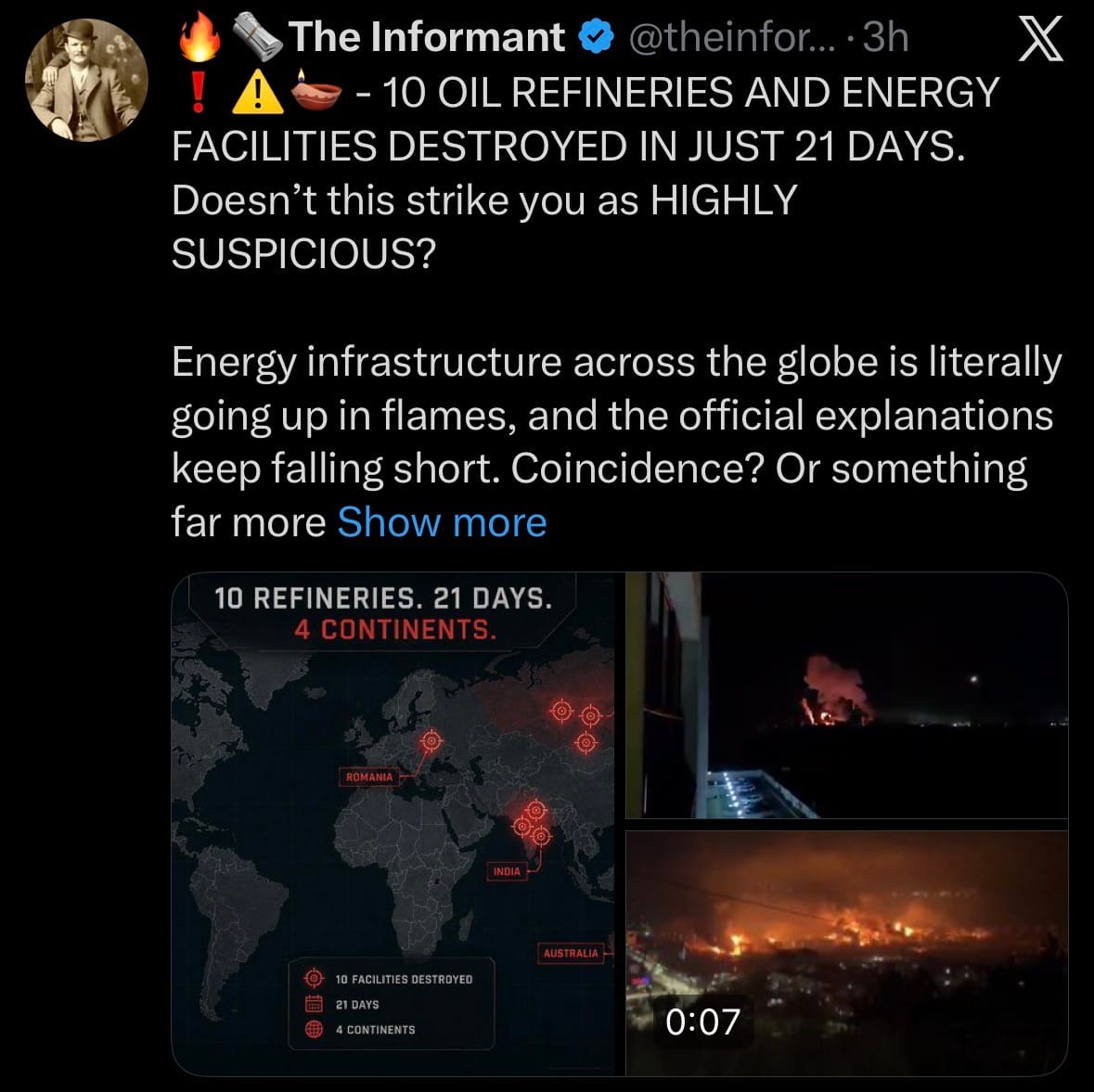
- While the Russian incidents are confirmed wartime attacks aimed at disrupting Moscow’s oil revenue, most of the others appear to be industrial accidents (such as gas leaks or equipment failures), though the unusual clustering has fueled online speculation about broader sabotage amid the global energy crunch caused by the Strait of Hormuz blockade and rising oil prices.
Economics & Markets:
- Yesterday’s U.S. stock market:

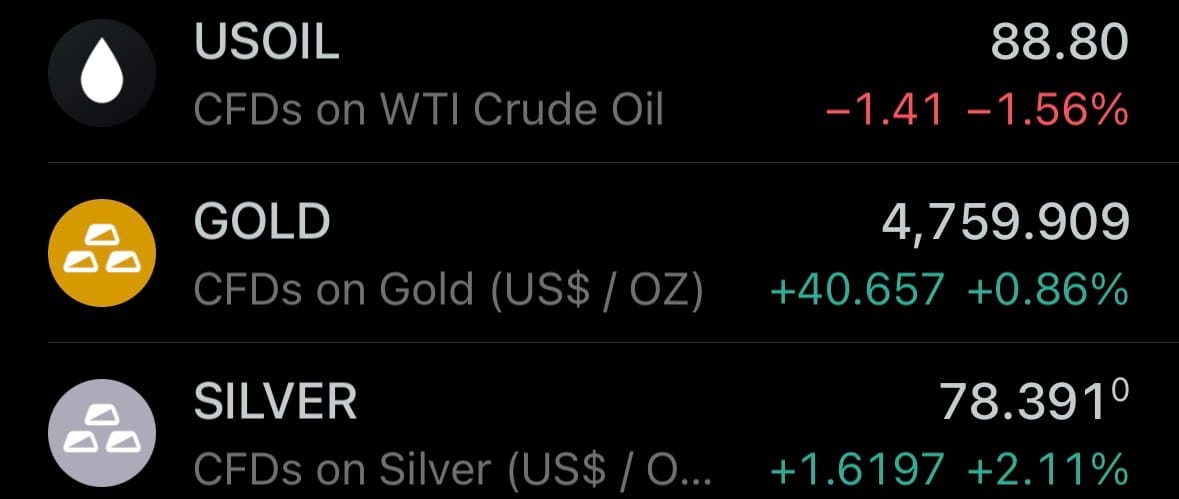
- Yesterday’s commodity market:
- Yesterday’s crypto market:

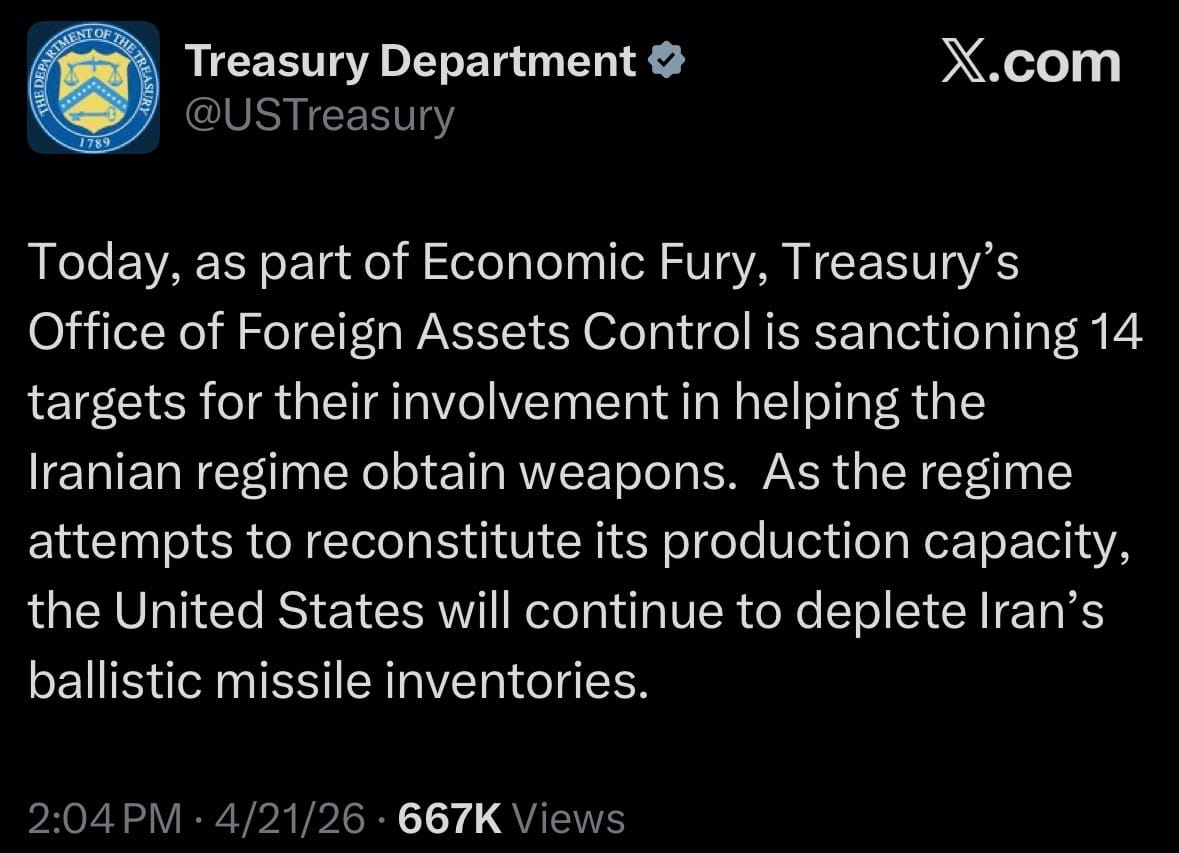
Geopolitics & Military Activity:

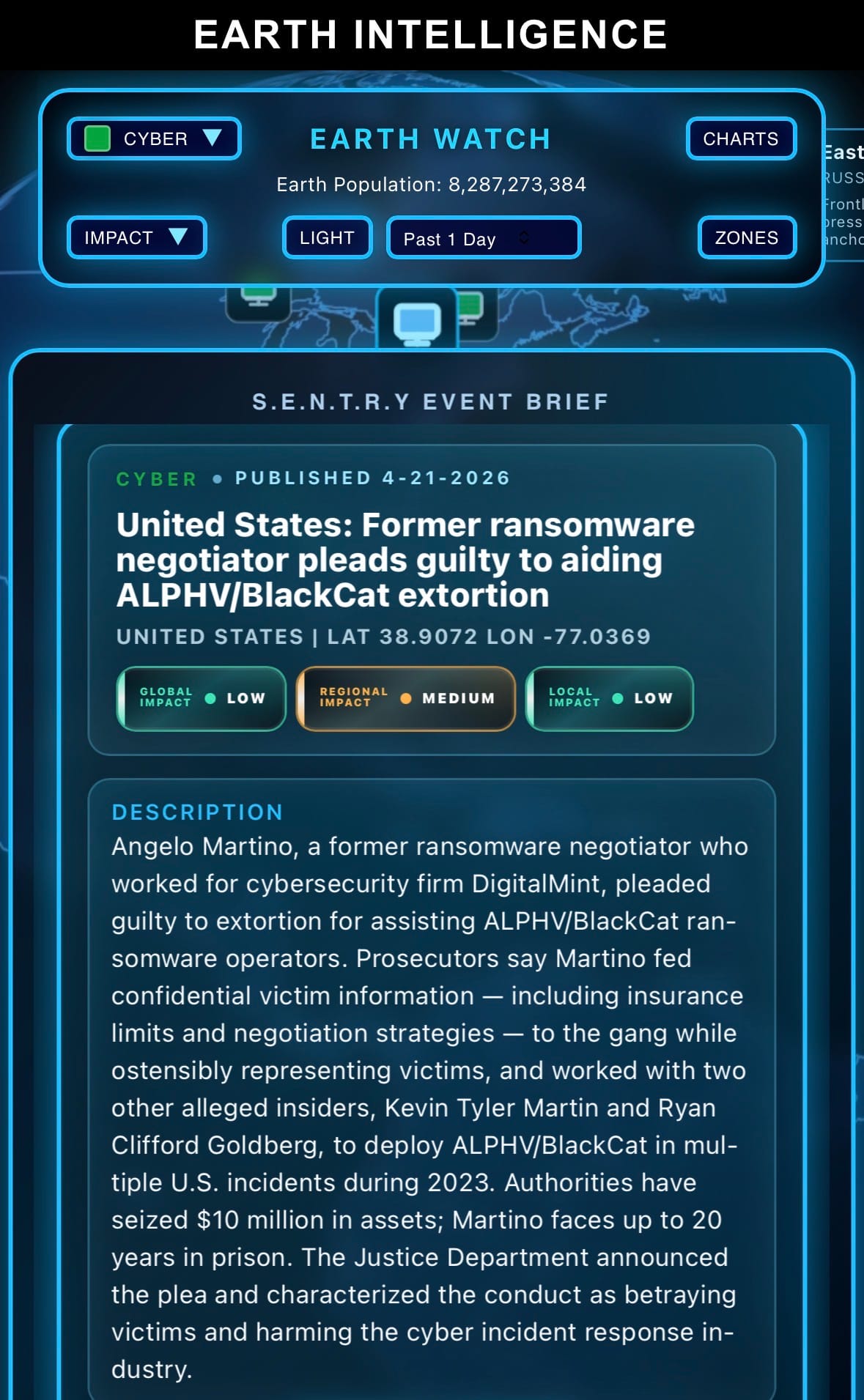
Cyber:
Science & Technology:

- On April 21, 2026, Tesla secured a major master purchasing agreement with Sourcewell, the largest government purchasing cooperative in the United States, unlocking direct sales access to more than 50,000 public agencies, cities, school districts, state governments, and nonprofit organizations.
- The deal allows these entities to purchase Model 3, Model Y, and Cybertruck vehicles (and potentially future models) with pre-negotiated pricing and without lengthy competitive bidding processes. This significantly opens up the large U.S. government fleet market for Tesla and is expected to accelerate EV adoption across public sector fleets nationwide. The contract runs through November 2029 with extension options.
OpenAI Image Model:
- On April 21, 2026, OpenAI released ChatGPT Images 2.0, a major upgrade to its image generation model that delivers sharper, more precise visuals with significantly better text rendering, multilingual support, complex layouts, and “thinking-level” intelligence for handling detailed instructions.

- The new model can tackle complex visual tasks, produce immediately usable images (such as marketing materials, multi-panel comics, or UI designs), generate multiple variations from one prompt, and self-verify outputs for higher accuracy — making it far more practical for professional and creative work.
Statistic:
- Largest public companies on Earth by market capitalization:
- 🇺🇸 NVIDIA: $4.858T
- 🇺🇸 Alphabet (Google): $3.997T
- 🇺🇸 Apple: $3.912T
- 🇺🇸 Microsoft: $3.152T
- 🇺🇸 Amazon: $2.687T
- 🇹🇼 TSMC: $1.909T
- 🇺🇸 Broadcom: $1.906T
- 🇸🇦 Saudi Aramco: $1.751T
- 🇺🇸 Meta Platforms: $1.697T
- 🇺🇸 Tesla: $1.450T
- 🇺🇸 Walmart: $1.033T
- 🇺🇸 Berkshire Hathaway: $1.010T
- 🇰🇷 Samsung: $970.48B
- 🇺🇸 JPMorgan Chase: $844.17B
- 🇺🇸 Eli Lilly: $808.21B
- 🇺🇸 Exxon Mobil: $616.66B
- 🇺🇸 Visa: $597.57B
- 🇨🇳 Tencent: $588.73B
- 🇰🇷 SK Hynix: $579.45B
- 🇳🇱 ASML: $572.87B
- 🇺🇸 Johnson & Johnson: $545.02B
- 🇺🇸 Oracle: $521.05B
- 🇺🇸 Micron Technology: $506.78B
- 🇺🇸 AMD: $463.83B
- 🇺🇸 Mastercard: $456.34B
History:
- The history of Faraday materials begins with the discovery of electromagnetic shielding in 1836, when Michael Faraday demonstrated that a conductive enclosure could block external electric fields by redistributing charge along its surface. Early “Faraday cages” were made from simple conductive materials like copper, iron, and steel, which were effective because they allowed electrons to move freely and cancel incoming electromagnetic fields. As electricity and communication systems expanded in the late 1800s and early 1900s, these materials became essential for stabilizing telegraph lines, radio systems, and early electrical infrastructure. By World War II, shielding materials evolved further as militaries needed to protect radar and communication systems from interference and detection. This led to more refined conductive meshes, grounded enclosures, and the early use of layered materials to block different frequencies. During the Cold War, Faraday materials became highly specialized under programs like TEMPEST, where rooms, cables, and entire facilities were built using advanced conductive materials, gaskets, and coatings designed to prevent even the smallest electromagnetic leaks that could be intercepted for intelligence purposes.
- From the late 20th century into 2026, Faraday materials have evolved from simple metals into highly engineered, multi-layered systems designed to handle a wide range of electromagnetic threats. Modern shielding now uses combinations of copper, aluminum, nickel, conductive polymers, carbon-based materials (like graphene), and specialized coatings that can absorb, reflect, or dissipate electromagnetic energy across different frequencies. Instead of just blocking signals, these materials are tuned for specific purposes—some are optimized for high-frequency signals like 5G and radar, while others protect against low-frequency fields or large-scale threats like electromagnetic pulses (EMP). In corporate and civilian use, these materials are built into data centers, secure rooms, cables, and consumer products like signal-blocking cases, while in military and intelligence environments they are integrated into vehicles, portable systems, and hardened infrastructure. The trend now is toward lightweight, flexible, and adaptive materials that can be embedded directly into fabrics, coatings, and electronics, allowing for mobile and scalable protection. As the electromagnetic environment becomes more crowded and contested, Faraday materials are no longer just passive barriers—they are becoming active components of electromagnetic control systems, forming a critical layer in protecting data, communications, and infrastructure in an increasingly signal-dense world.
Image of the day:

Thanks for reading! Earth is complicated, we make it simple.

- Download our mobile app:



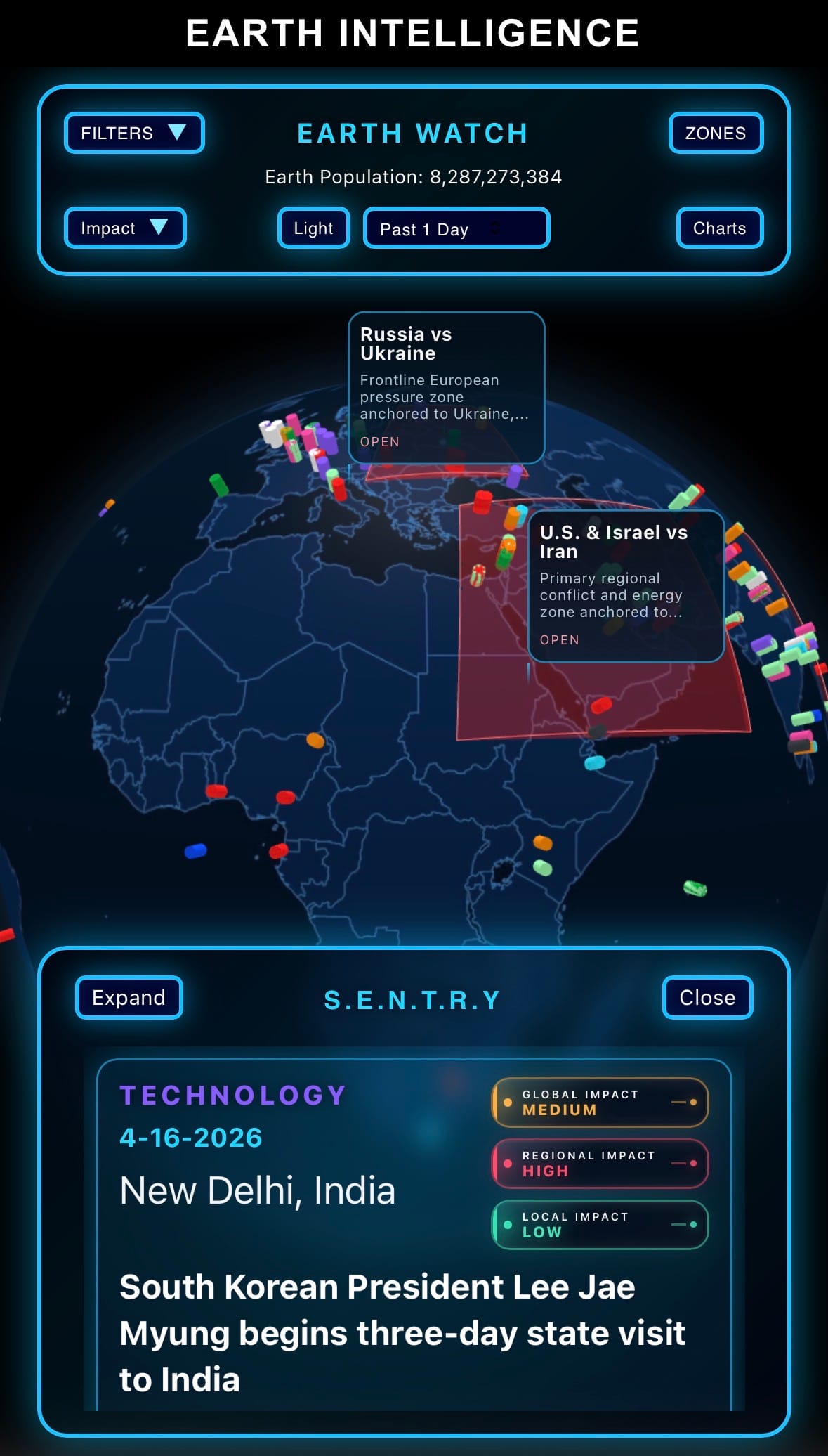
- Click below if you’d like to view our free EARTH WATCH globe:
Click below to view our previous newsletters:

Support/Suggestions Email:
support@earthintel.io