Friday☕️

Trending:
- On April 30, 2026, the United States and Venezuela restored direct commercial flights for the first time in nearly 7 years, with the first route reopening between Miami and Caracas.
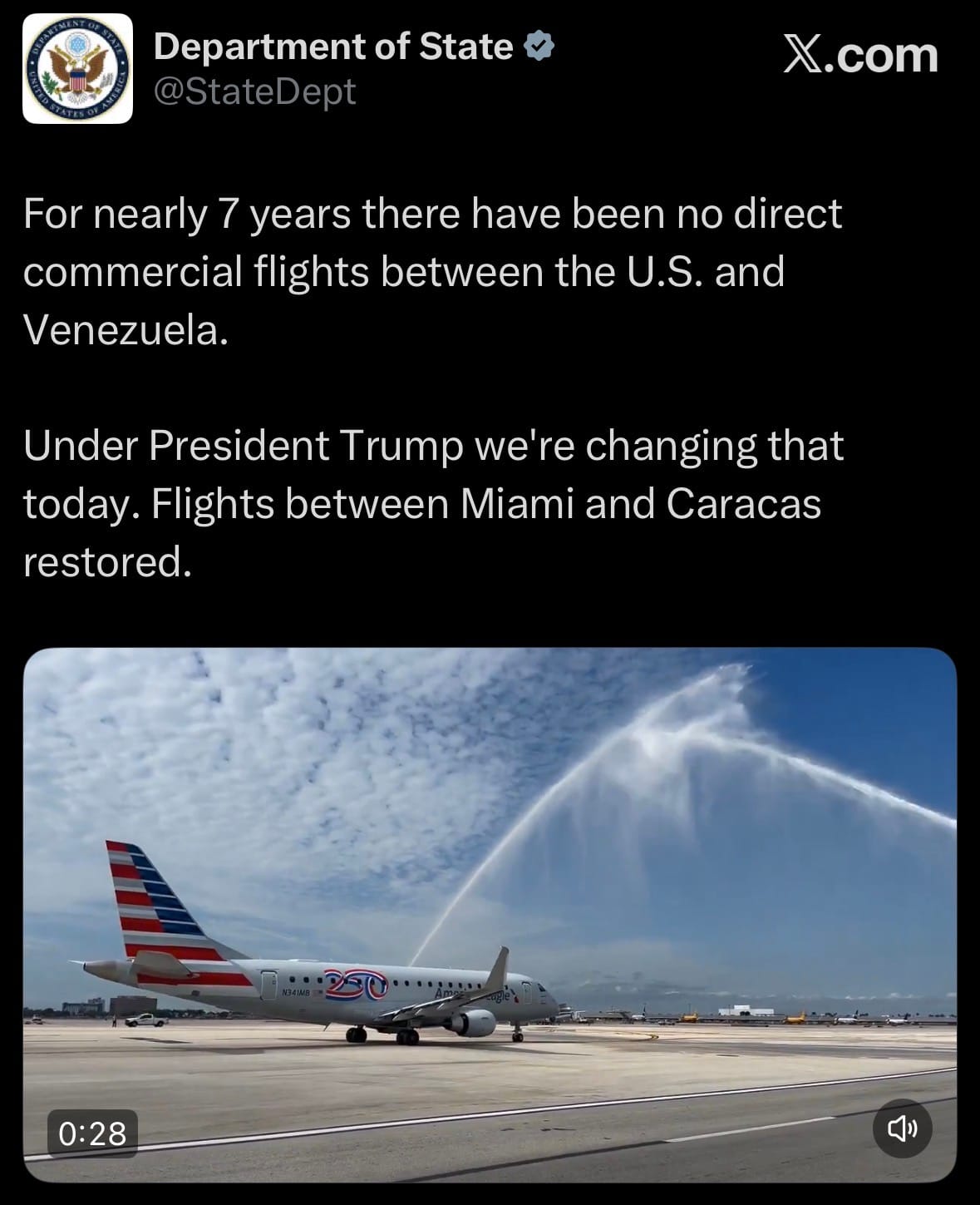
- The move, announced by the Trump administration, marks a significant step toward normalizing relations and is expected to expand to additional routes in the coming weeks. This ends a long-standing aviation ban that had been in place since 2019.
Economics & Markets:


Geopolitics & Military Activity:
- On April 30, 2026, Ukraine’s Security Service (SBU) conducted a long-range drone strike on the Lukoil-owned Perm oil refinery in western Russia — one of the country’s largest facilities with a capacity of nearly 13 million tons per year. Satellite imagery from NASA FIRMS confirmed fires at both the refinery’s primary processing unit and a nearby oil-pumping station, marking the second consecutive attack on the Perm complex.
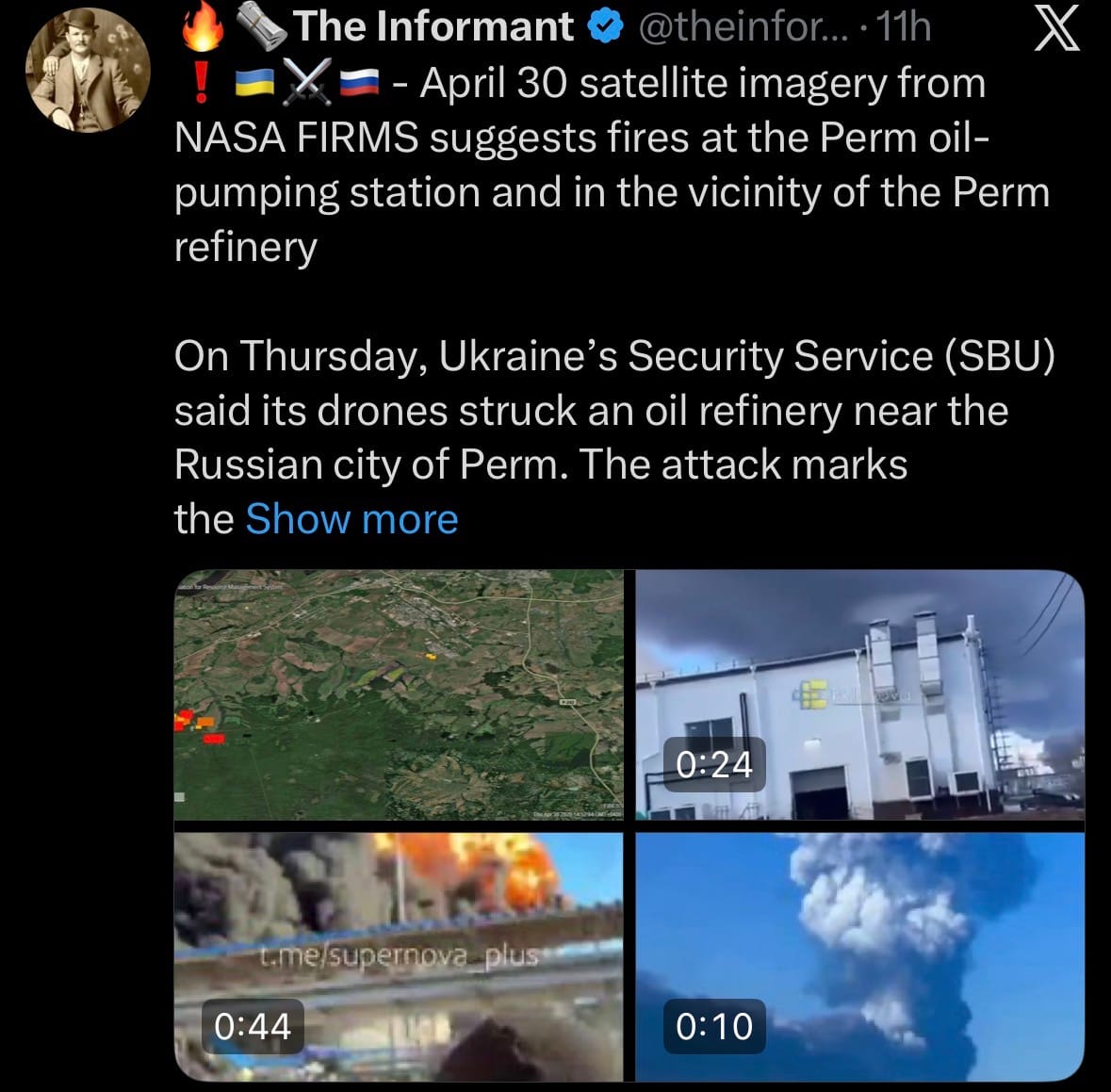
- The strike is part of Ukraine’s intensified campaign to disrupt Russian oil production and reduce revenue funding the war in Ukraine. The facility is located more than 1,500 km (932 miles) from Ukrainian territory.
Science & Technology:
- On April 30, 2026, Anduril Industries announced the 5G Comms Sentry Tower (CST), the newest addition to its Sentry family of systems.
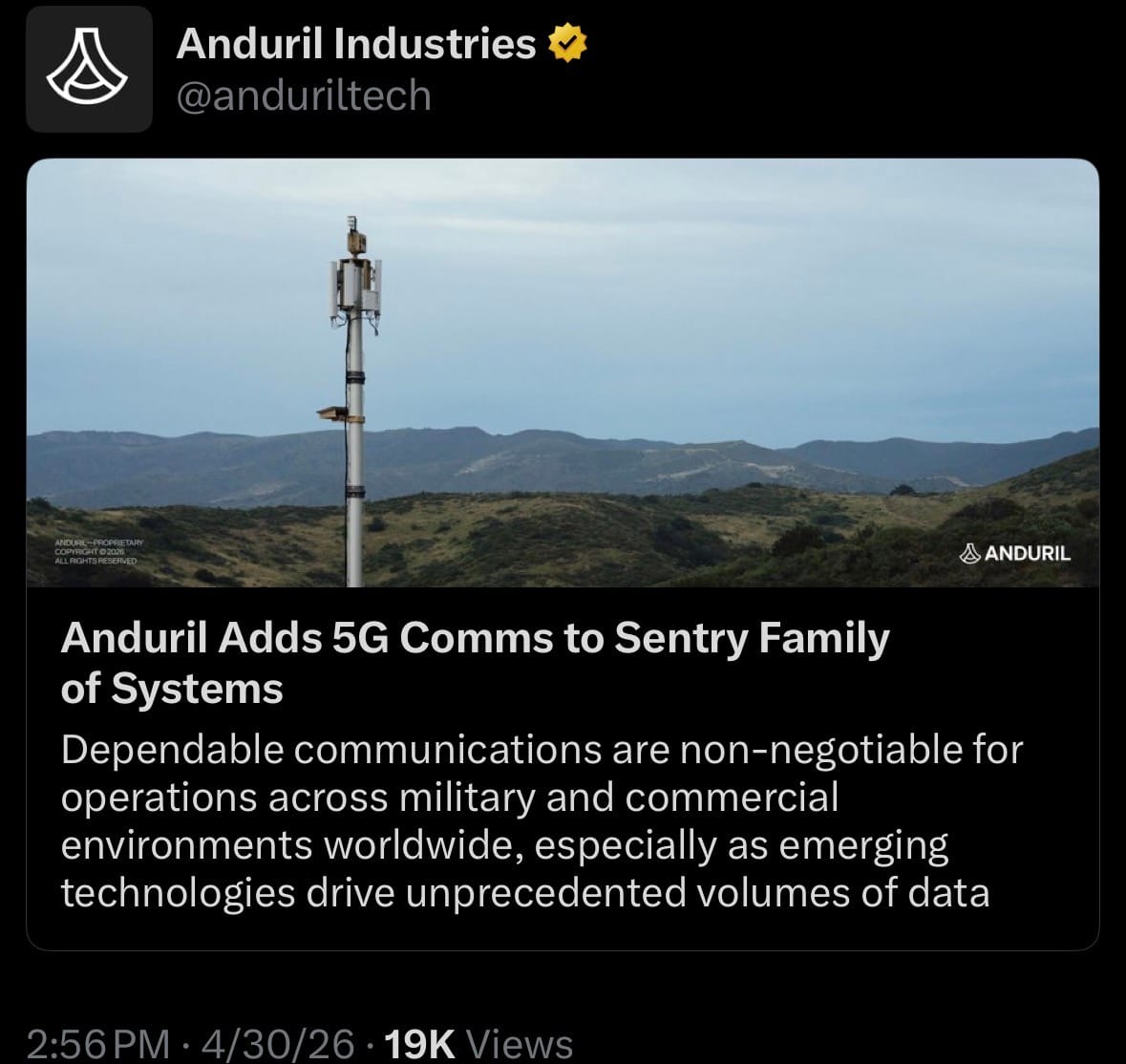
- Developed in partnership with Nokia Federal Solutions, the rapidly deployable tower provides private 5G connectivity, high-speed data, and low-latency communications in remote, austere, or infrastructure-denied environments — delivering a self-contained “bubble” of secure 5G coverage that can be operational in hours for military, border security, and disaster response missions. Over 400 Sentry towers are already deployed globally.
Anthropic Launch:
- On April 30, 2026, Anthropic launched Claude Security in public beta for Claude Enterprise customers.

- The new tool automatically scans entire codebases for vulnerabilities, validates each finding to significantly reduce false positives, and generates ready-to-apply patches that developers can review and approve — making secure coding faster and more reliable at scale.
Statistic:
- Largest public utility companies on Earth by market capitalization:
- 🇺🇸 Nextera Energy: $204.11B
- 🇪🇸 Iberdrola: $158.18B
- 🇮🇹 Enel: $115.54B
- 🇺🇸 Constellation Energy: $113.39B
- 🇺🇸 Southern Company: $109.01B
- 🇺🇸 Duke Energy: $100.81B
- 🇨🇳 China Yangtze Power: $97.91B
- 🇬🇧 National Grid: $89.06B
- 🇫🇷 ENGIE: $83.68B
- 🇦🇪 TAQA: $70.71B
- 🇩🇪 E.ON: $57.91B
- 🇺🇸 Dominion Energy: $56.69B
- 🇺🇸 Entergy: $53.97B
- 🇺🇸 Xcel Energy: $51.77B
- 🇪🇸 Endesa: $46.13B
- 🇬🇧 SSE: $43.24B
- 🇮🇳 NTPC Limited: $40.78B
- 🇺🇸 WEC Energy Group: $38.41B
- 🇦🇪 DEWA: $36.07B
- 🇸🇦 ACWA Power: $34.35B
- 🇺🇸 DTE Energy: $31.55B
- 🇺🇸 Atmos Energy: $31.43B
- 🇨🇦 Fortis: $29.12B
- 🇪🇸 Naturgy: $29.10B
- 🇧🇷 AXIA Energia: $28.11B
- 🇺🇸 Edison International: $26.73B
History:
- Water filtration for civilian use has a long, layered history that tracks directly with humanity’s understanding of disease and chemistry. Early methods were purely physical. Around 2000–1500 BC, civilizations in Egypt and India used cloth filtration and sand settling to remove visible particles. By ~500 BC, Hippocrates described boiling and filtering water using a cloth “Hippocratic sleeve,” one of the first recorded filtration devices. The Romans (300 BC–400 AD) built massive aqueduct systems and used settling tanks to reduce sediment, though they lacked disinfection knowledge. After centuries of limited progress, the modern era began in the early 1800s with the invention of slow sand filtration (first used in Scotland, 1804), where water passed slowly through sand beds, allowing biological layers to remove contaminants. A major scientific breakthrough came in 1854, when John Snow linked cholera to contaminated water, proving that filtration needed to address invisible pathogens. This led to rapid adoption of filtration plants across Europe and the U.S. By 1890s, rapid sand filtration was developed, using coagulation (adding alum or iron salts) to bind small particles into larger ones that could be filtered more efficiently. The next major leap was chlorination, first widely implemented in 1908 in Jersey City, which killed bacteria and drastically reduced waterborne diseases. By the early 1900s, the standard treatment process was established: coagulation → flocculation → sedimentation → filtration → disinfection, forming the backbone of modern municipal water systems.
- From the mid-20th century to 2026, filtration evolved into highly engineered, multi-barrier systems designed to remove not just pathogens but chemicals, heavy metals, and microscopic contaminants. In the 1950s–1970s, activated carbon filtration became widely used to remove chlorine, organic compounds, and taste/odor issues. The 1970s–1980s introduced membrane technologies, including reverse osmosis (RO), which forces water through semi-permeable membranes to remove dissolved salts, heavy metals, and even viruses. Around the same time, ultraviolet (UV) disinfection began being used to neutralize microorganisms without chemicals. By the 1990s–2000s, advanced membranes expanded into microfiltration, ultrafiltration, and nanofiltration, allowing extremely precise separation at microscopic and molecular levels. Infrastructure also scaled massively: modern systems include intake structures, treatment plants, storage reservoirs, pumping stations, and distribution networks spanning thousands of miles. Leading countries pushed innovation further—Singapore (NEWater, launched 2003) uses microfiltration → reverse osmosis → UV disinfection to recycle wastewater into drinking water; Israel (2000s–present) leads in large-scale desalination using RO, producing a majority of its drinking water from seawater; and Europe (Germany, Switzerland) focuses on high-quality source protection with minimal but precise treatment. In the U.S., major systems use layered treatment but face aging infrastructure challenges, highlighted by events like the Flint water crisis (2014–2016). From 2020–2026, the focus has shifted toward real-time monitoring, PFAS (“forever chemical”) removal, AI-driven treatment optimization, and decentralized purification systems. Today’s filtration is no longer just about making water safe—it’s about removing everything from pathogens to pharmaceuticals at the molecular level, turning water systems into highly controlled, continuously monitored infrastructure critical to national resilience.
Image of the day:

Thanks for reading! Earth is complicated, we make it simple.

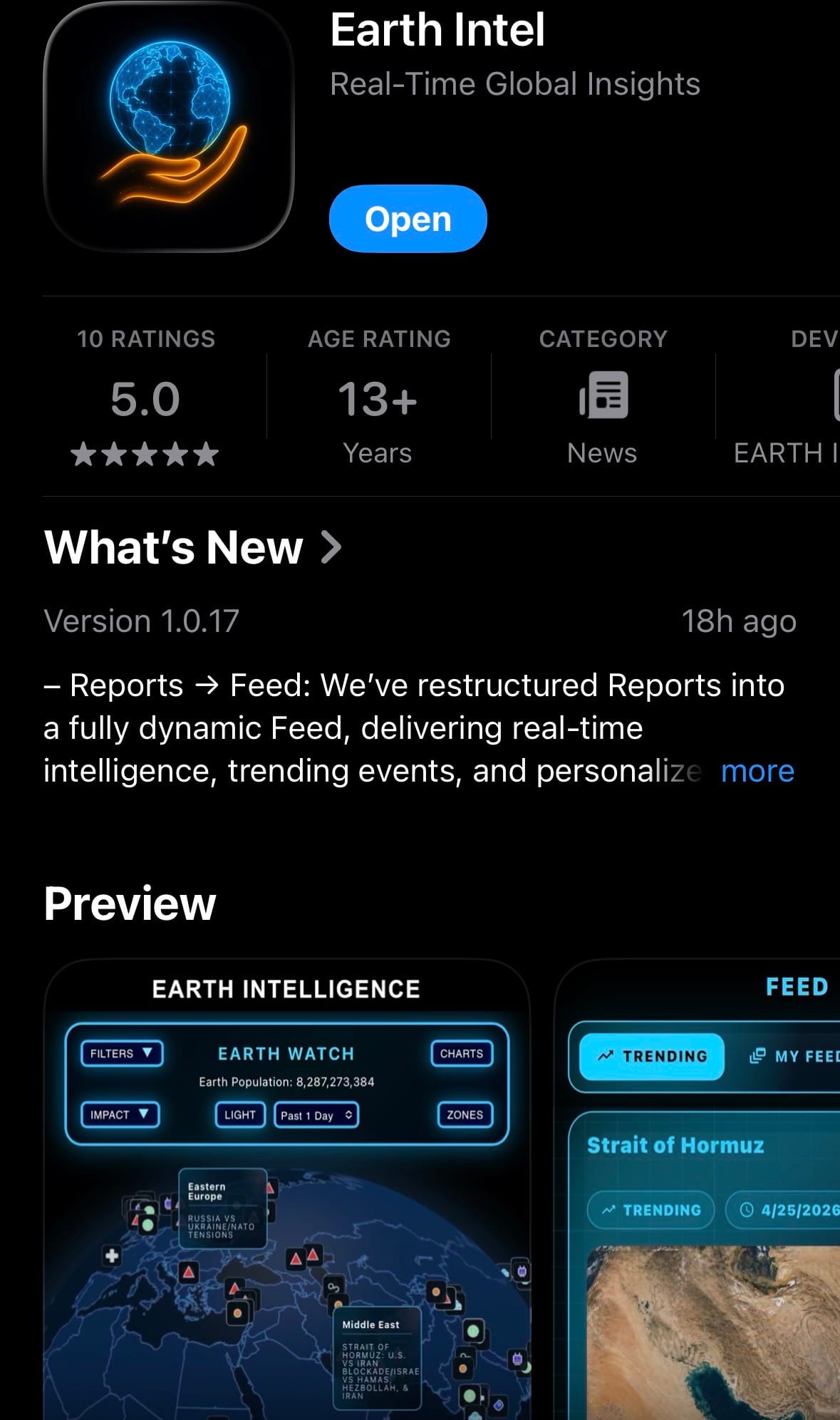
- Download our mobile app:


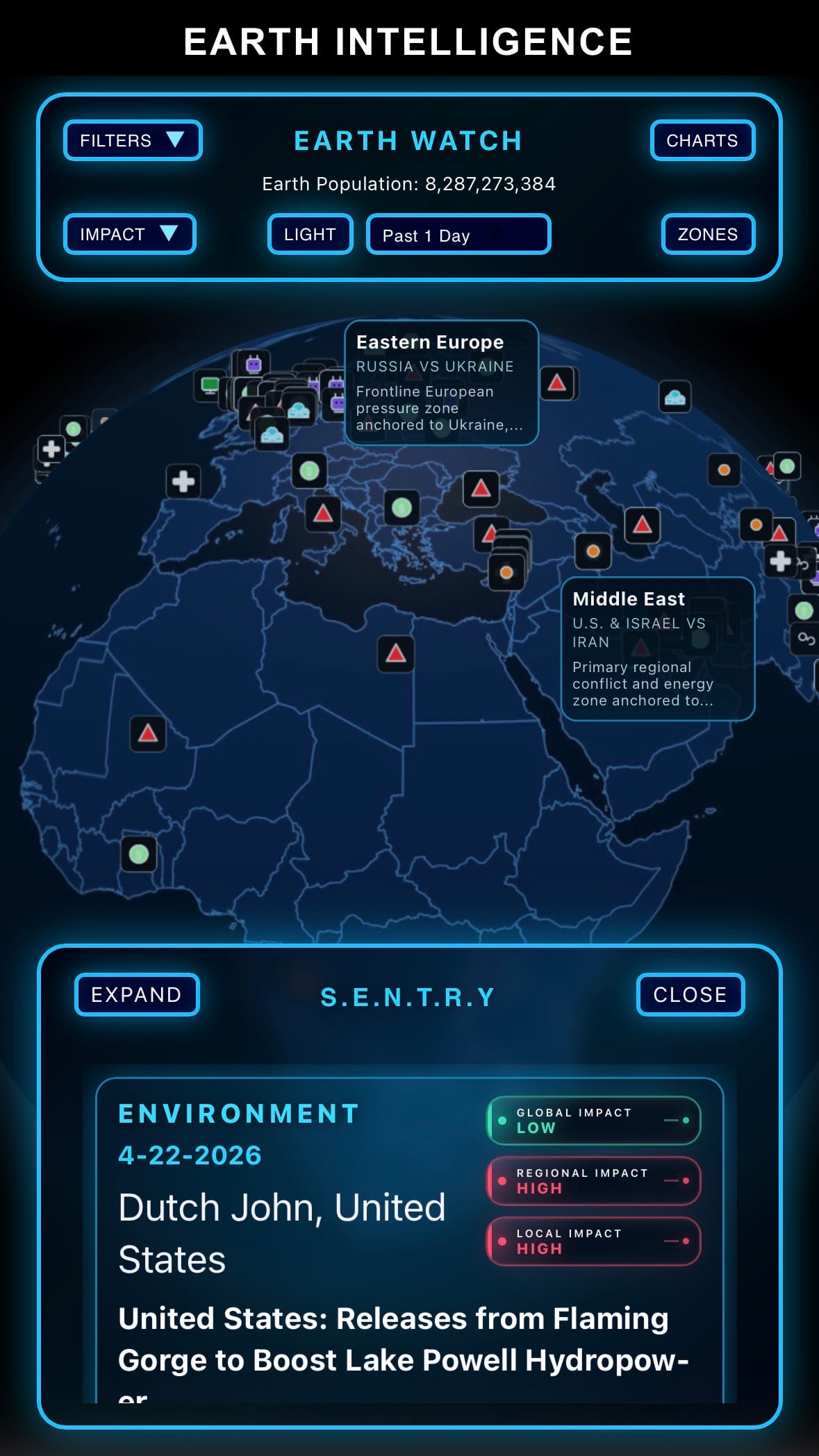
- Click below if you’d like to view our free EARTH WATCH globe:
Click below to view our previous newsletters:
Support/Suggestions Email:
support@earthintel.io