Wednesday☕️


Trending:
- On April 28, 2026, the United Arab Emirates announced it is withdrawing from OPEC and OPEC+, effective May 1.
- The move gives the UAE full control to produce and sell as much oil as it wants, in any currency and to any buyer, without quota restrictions. It represents a major blow to Saudi Arabia’s leadership of the group, is expected to increase global oil supply over time, and further weakens OPEC’s influence amid the ongoing Strait of Hormuz crisis.
Economics & Markets:
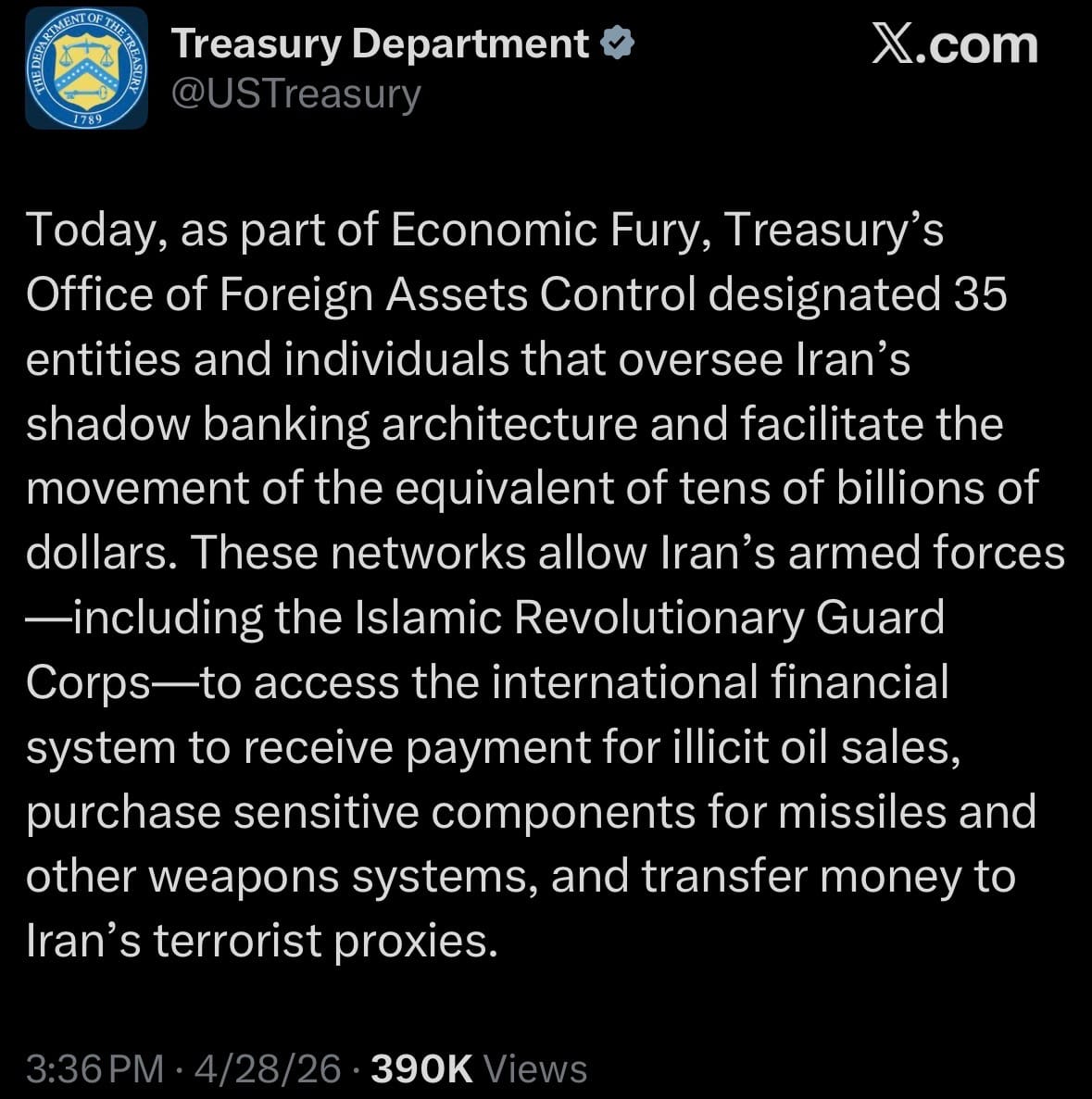
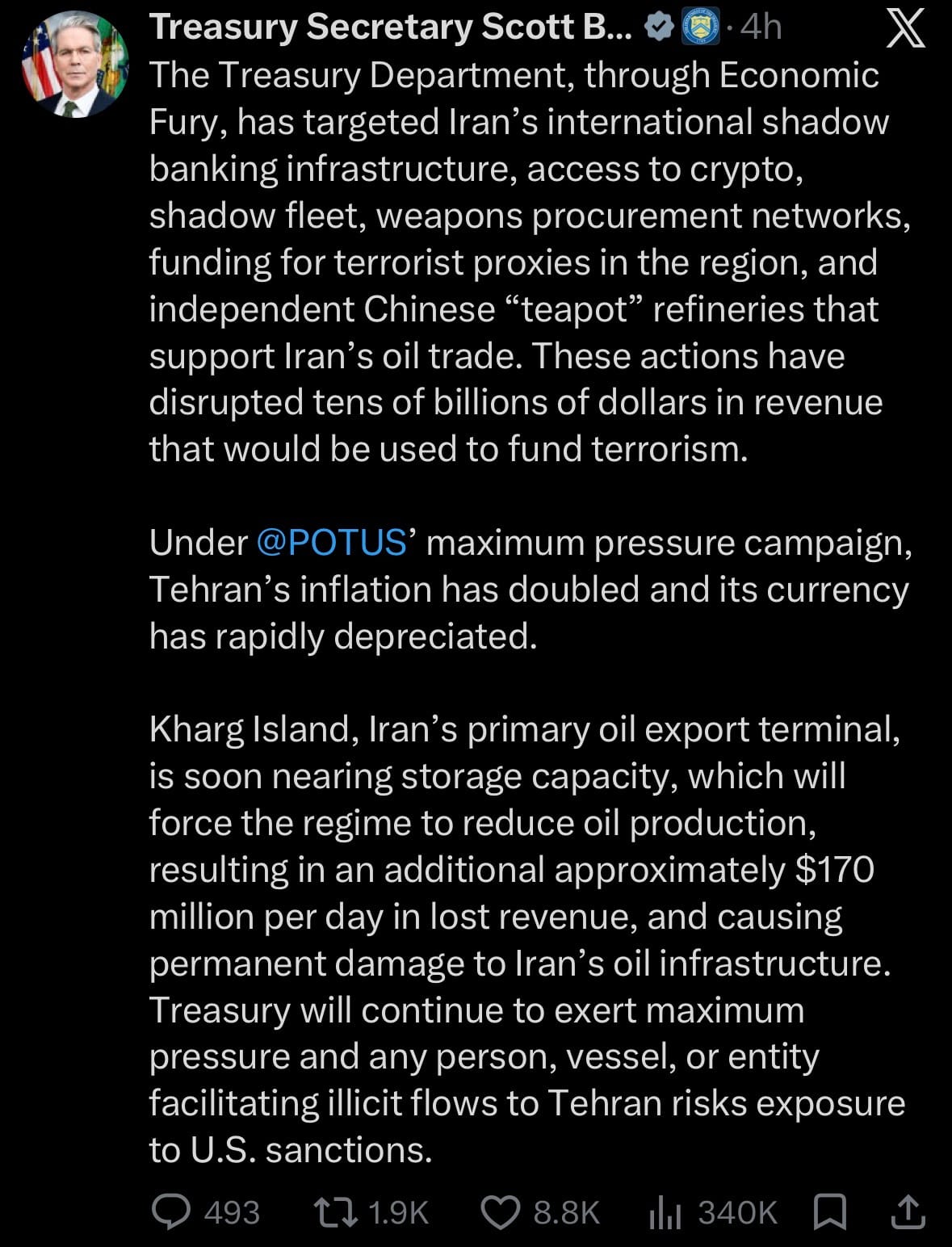
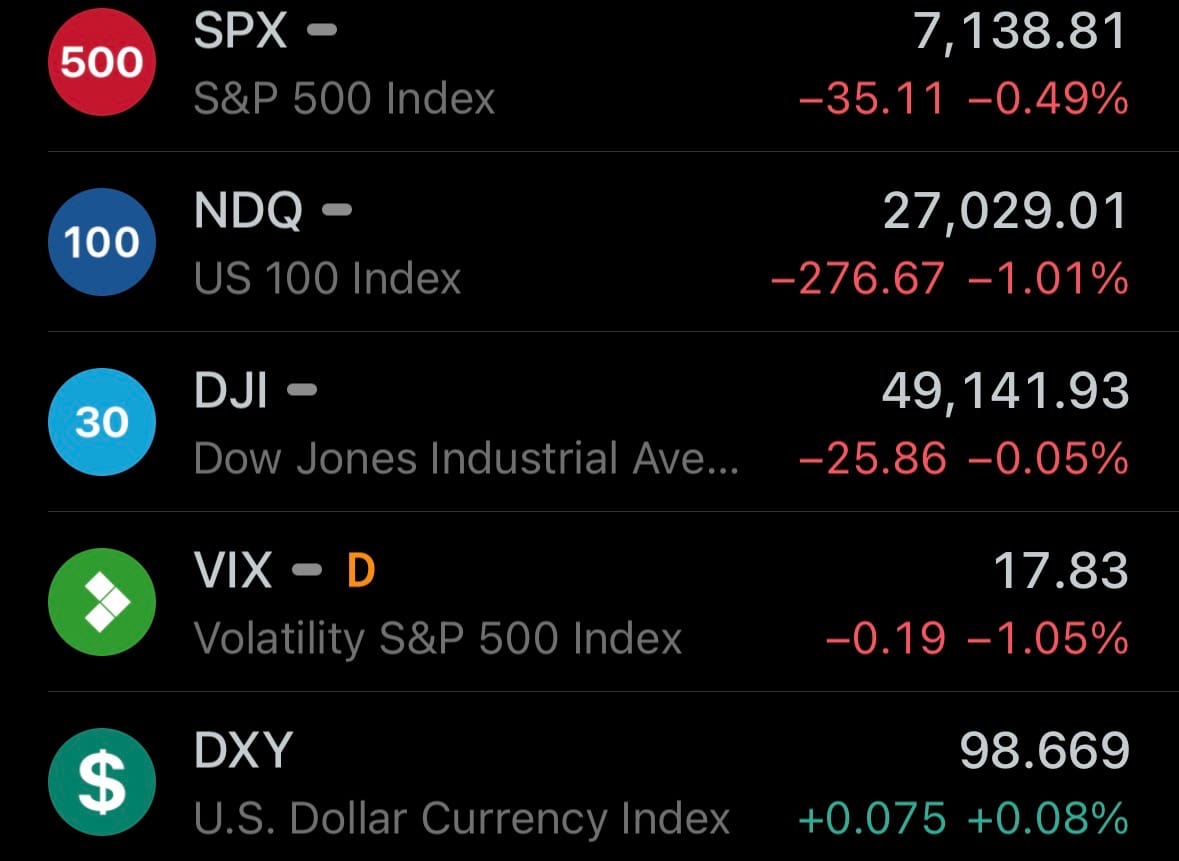
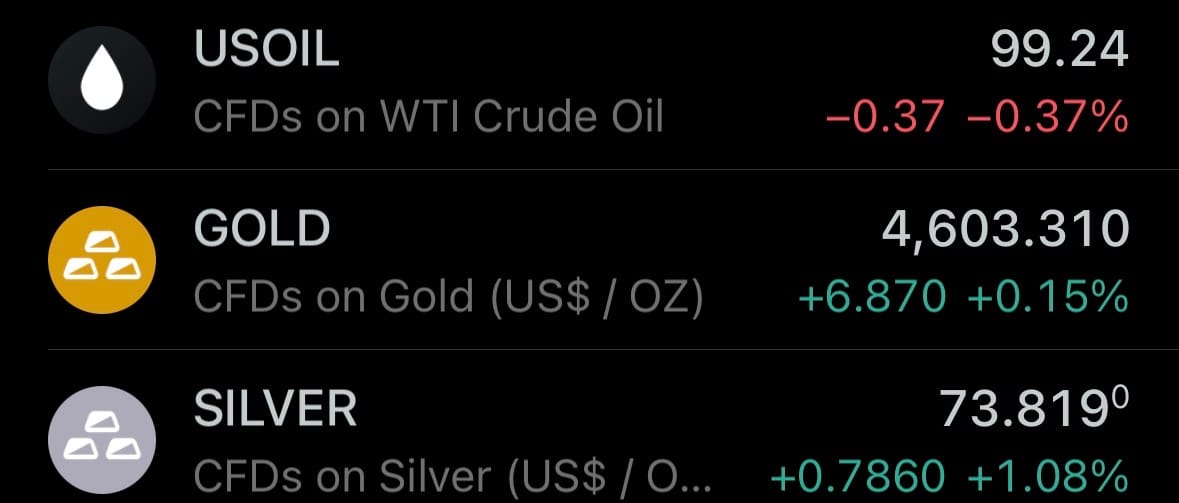
Geopolitics & Military Activity:
- On April 28, 2026, Ukraine released dramatic nighttime footage showing a successful long-range drone strike that heavily damaged Russia’s Tuapse oil terminal on the Black Sea coast.

- The attack destroyed large fuel storage tanks and loading infrastructure, and when combined with previous strikes on the same facility, has effectively paralyzed Russian oil and refined product exports through the Black Sea. This represents one of the most significant blows yet to Russia’s energy export infrastructure.
Science & Technology:
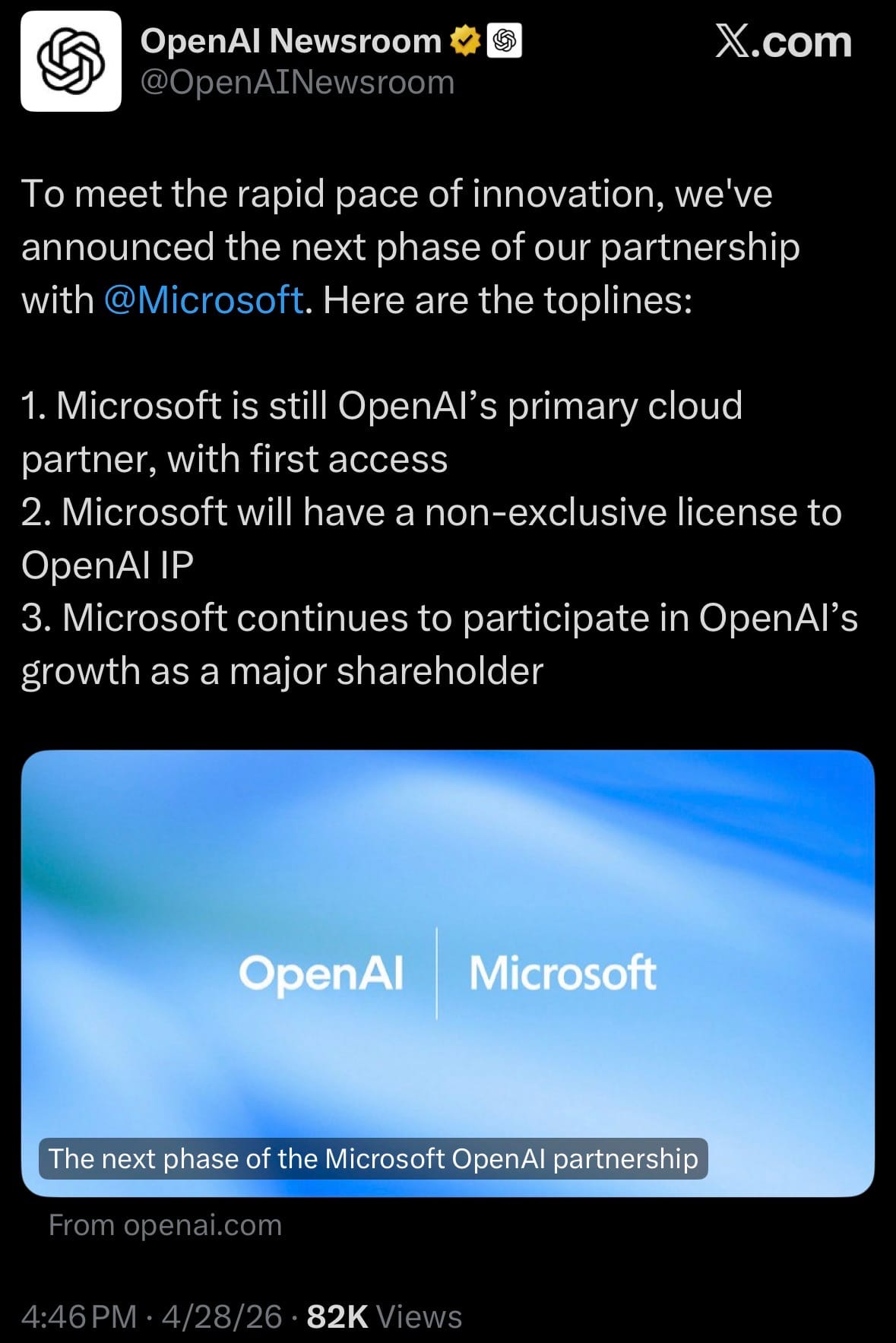
- On April 28, 2026, Google signed a major agreement with the U.S. Department of War (DoW) allowing the Pentagon and other government agencies to use Gemini AI.
- OpenAI and xAI have similar broad agreements already in place. This gives the U.S. military wide access to frontier AI models for intelligence, planning, logistics, and other defense applications.
Statistic:
- Largest public financial service companies by market capitalization:
- 🇺🇸 JPMorgan Chase: $834.53B
- 🇺🇸 Visa: $596.34B
- 🇺🇸 Mastercard: $448.92B
- 🇺🇸 Bank of America: $375.46B
- 🇨🇳 China Construction Bank: $370.76B
- 🇨🇳 Agricultural Bank of China: $351.16B
- 🇨🇳 ICBC: $328.39B
- 🇬🇧 HSBC: $311.73B
- 🇺🇸 Morgan Stanley: $302.26B
- 🇺🇸 Goldman Sachs: $274.95B
- 🇨🇳 Bank of China: $270.98B
- 🇺🇸 Wells Fargo: $249.74B
- 🇨🇦 Royal Bank of Canada: $247.17B
- 🇺🇸 Citigroup: $224.83B
- 🇺🇸 American Express: $215.54B
- 🇦🇺 Commonwealth Bank: $207.25B
- 🇯🇵 Mitsubishi UFJ Financial: $197.98B
- 🇯🇵 SoftBank Group: $188.12B
- 🇨🇦 Toronto-Dominion Bank: $176.70B
- 🇪🇸 Santander: $173.81B
- 🇺🇸 Charles Schwab: $159.15B
- 🇨🇳 CM Bank: $153.84B
- 🇯🇵 Sumitomo Mitsui Financial Group: $133.24B
- 🇺🇸 Interactive Brokers: $131.74B
- 🇨🇭 UBS: $130.16B
History:
- Apple was founded in 1976 by Steve Jobs, Steve Wozniak, and Ronald Wayne during the early personal computing revolution, with the goal of making computers accessible to individuals rather than just corporations or governments. Their first product, the Apple I, was a simple circuit board sold to hobbyists, but the real breakthrough came with the Apple II (1977)—one of the first mass-produced personal computers with color graphics and a user-friendly design. Apple quickly became a leader in early computing, but its most important conceptual shift came with the Macintosh in 1984, which introduced the graphical user interface (GUI) and mouse-driven interaction to a wider audience, fundamentally changing how humans interact with machines. However, internal conflicts led to Steve Jobs being pushed out in 1985, and Apple struggled through the late 1980s and early 1990s with declining market share, lack of clear direction, and competition from Microsoft’s Windows ecosystem. By the mid-1990s, Apple was close to collapse.
- The turning point came in 1997, when Steve Jobs returned after Apple acquired NeXT, bringing both leadership and new software architecture. He simplified Apple’s product line and launched the iMac (1998), restoring profitability and brand identity. From there, Apple transformed from a computer company into a consumer technology ecosystem. The iPod (2001) and iTunes redefined digital media, but the biggest shift came with the iPhone (2007), which combined a phone, internet device, and touchscreen interface into one product—effectively reshaping the entire mobile industry. The App Store (2008) created a new software economy, turning Apple into a platform rather than just a hardware maker. Through the 2010s, Apple expanded with the iPad (2010), Apple Watch, AirPods, and a tightly integrated ecosystem of devices, software, and services. By 2020, Apple began transitioning to its own silicon chips (M1 and beyond), gaining full control over hardware performance and efficiency. From 2023–2026, Apple has focused heavily on AI integration, spatial computing (Vision Pro), services revenue, and ecosystem lock-in, positioning itself not just as a hardware company but as a closed, vertically integrated digital environment. Today, Apple operates as one of the most powerful companies in the world—controlling hardware, software, distribution, and user experience—shaping how billions of people interact with technology on a daily basis.
Image of the day:

Thanks for reading! Earth is complicated, we make it simple.
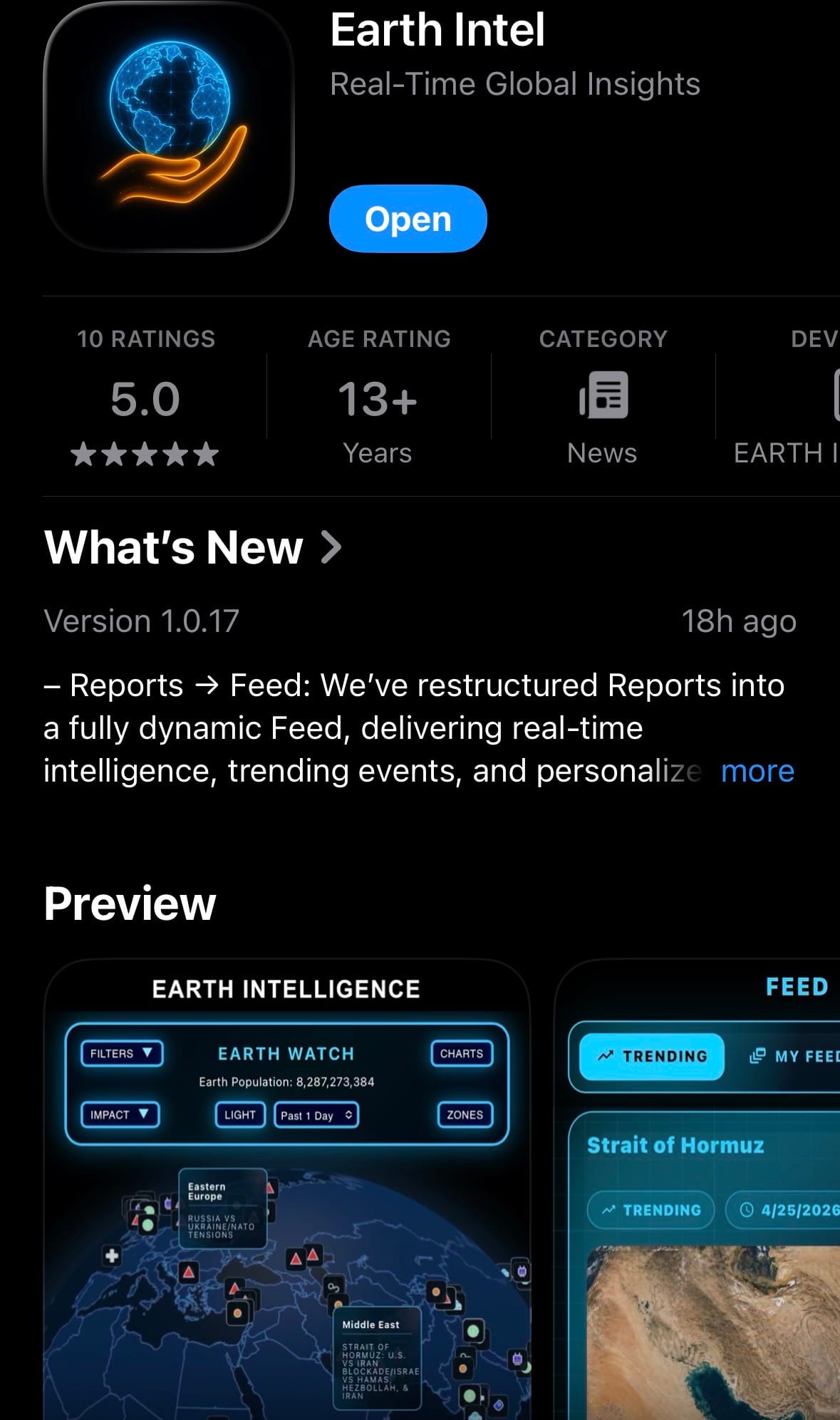
- Download our mobile app:

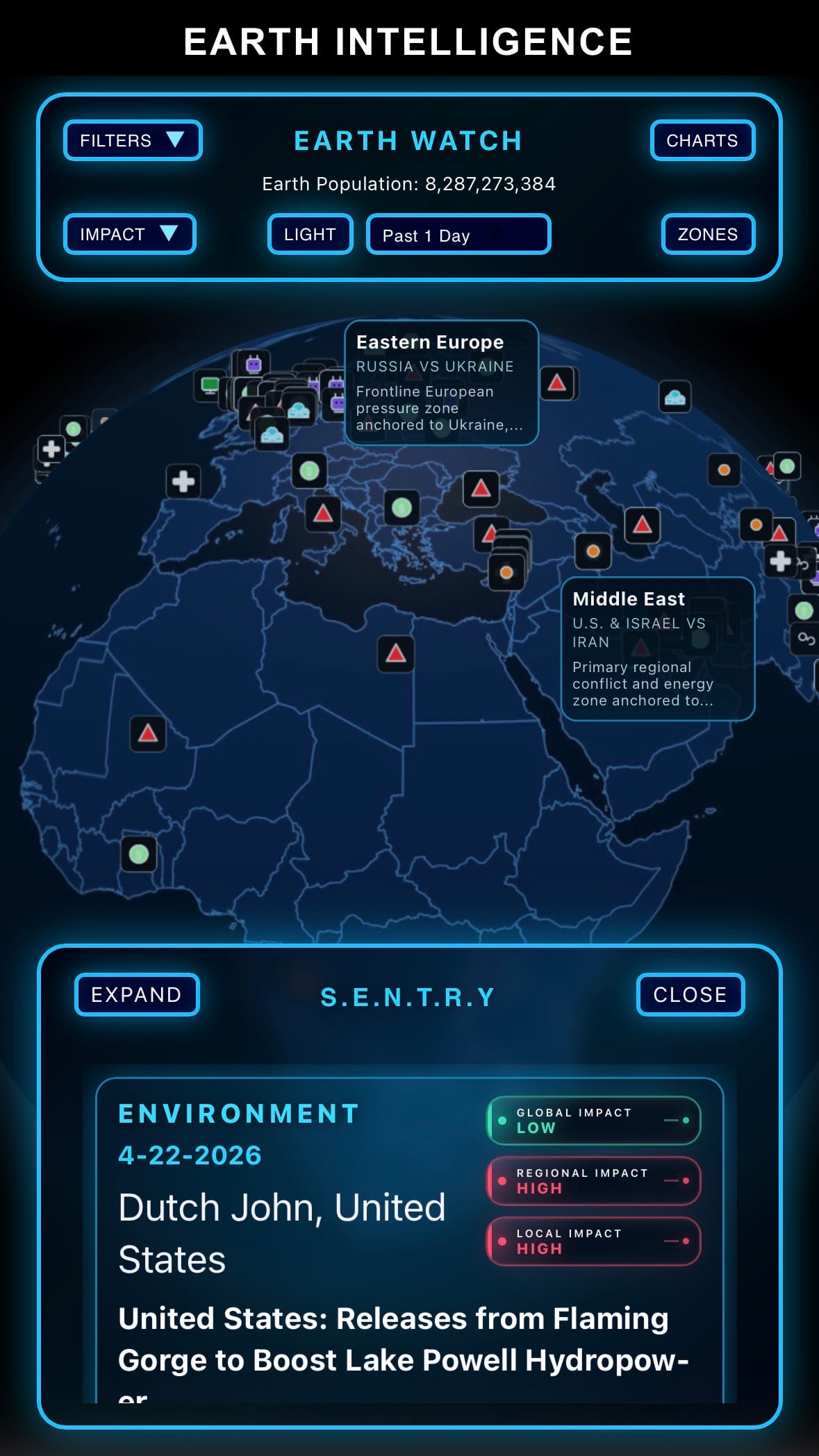
- Click below if you’d like to view our free EARTH WATCH globe:
Click below to view our previous newsletters:
Support/Suggestions Email:
support@earthintel.io