Monday☕️


Trending:
- On April 25, 2026, gunfire erupted at the White House Correspondents’ Dinner at the Washington Hilton when a gunman armed with a shotgun, handgun, and knives tried to breach a security checkpoint and stormed toward the ballroom.

- President Trump, First Lady Melania Trump, Vice President JD Vance, and other senior officials were quickly rushed off the stage by Secret Service; Trump was unharmed, though one Secret Service agent was shot (protected by a vest). The suspect, identified as 31-year-old Cole Tomas Allen from California, was taken into custody.

Economics & Markets:
- On April 26, 2026, Japan received its first U.S. oil shipment since the start of the Iran conflict, delivered by a single tanker that departed Texas and took 35 days to reach Japan via the Panama Canal.
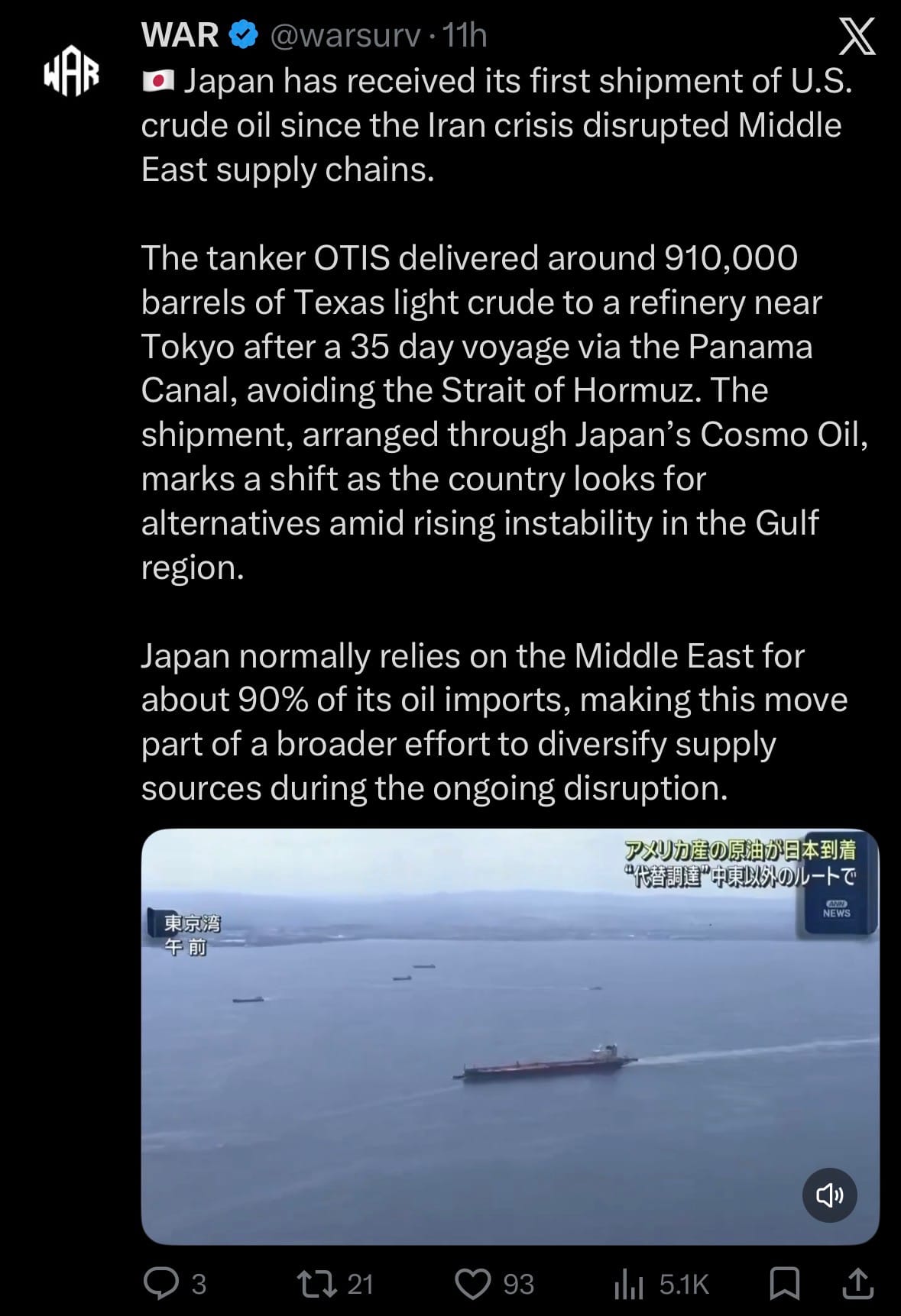
- The cargo represents roughly half a day’s worth of Japan’s domestic oil consumption, highlighting the ongoing disruption in traditional Middle East supplies due to the Strait of Hormuz blockade and the resulting shift toward longer-haul American crude.
Geopolitics & Military Activity:
- On April 26, 2026, U.S. Southern Command (SOUTHCOM) forces engaged and destroyed a vessel carrying narcoterrorists attempting to enter the United States, killing 3 individuals with no injuries to U.S. personnel.



Environment & Weather:
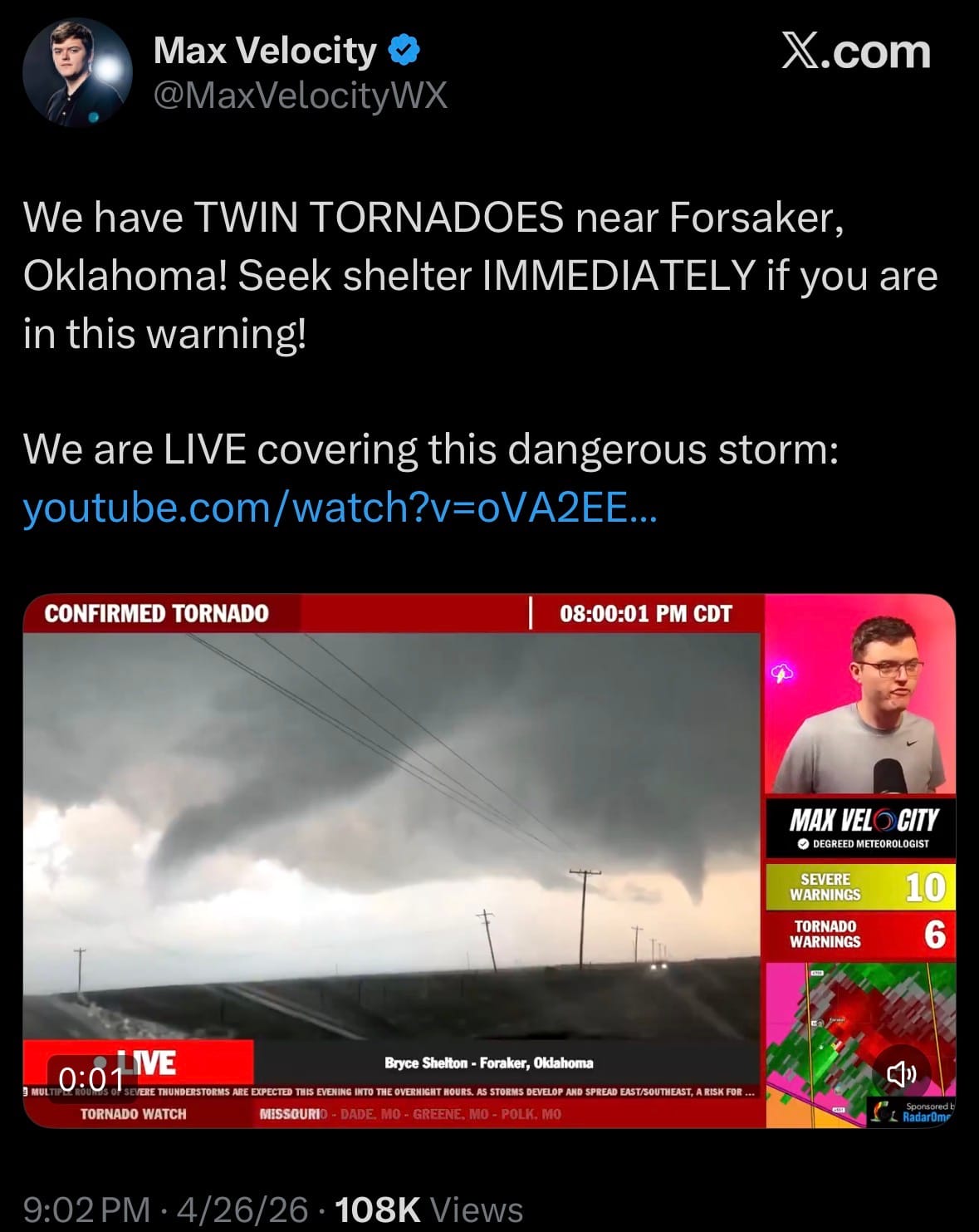
- On April 23, 2026, storm chasers captured dramatic footage of twin tornadoes (a large main tornado with a satellite tornado) touching down near Braman / Foraker in northern Oklahoma (Kay and Osage counties).
Science & Technology:

EARTH INTELLIGENCE:
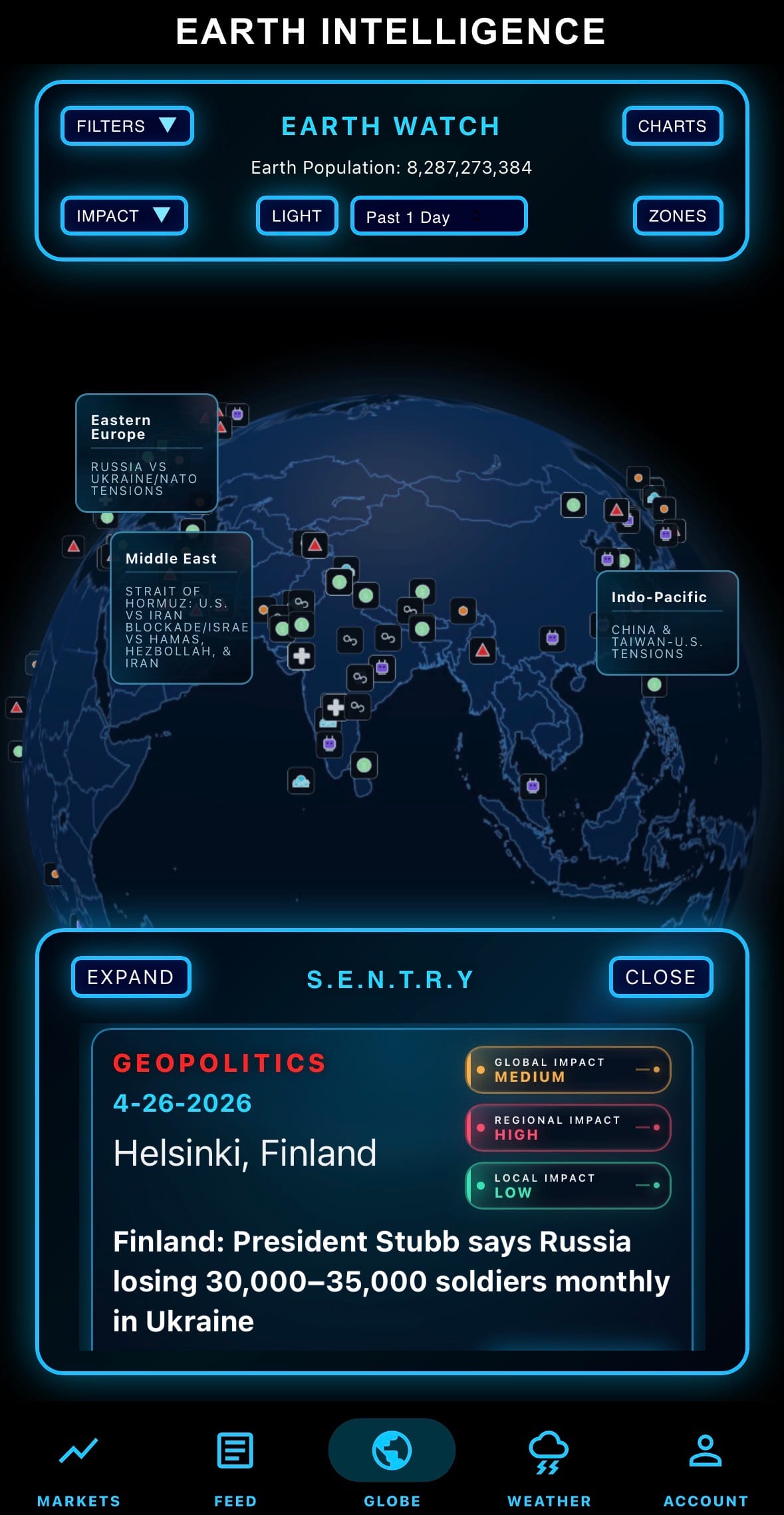
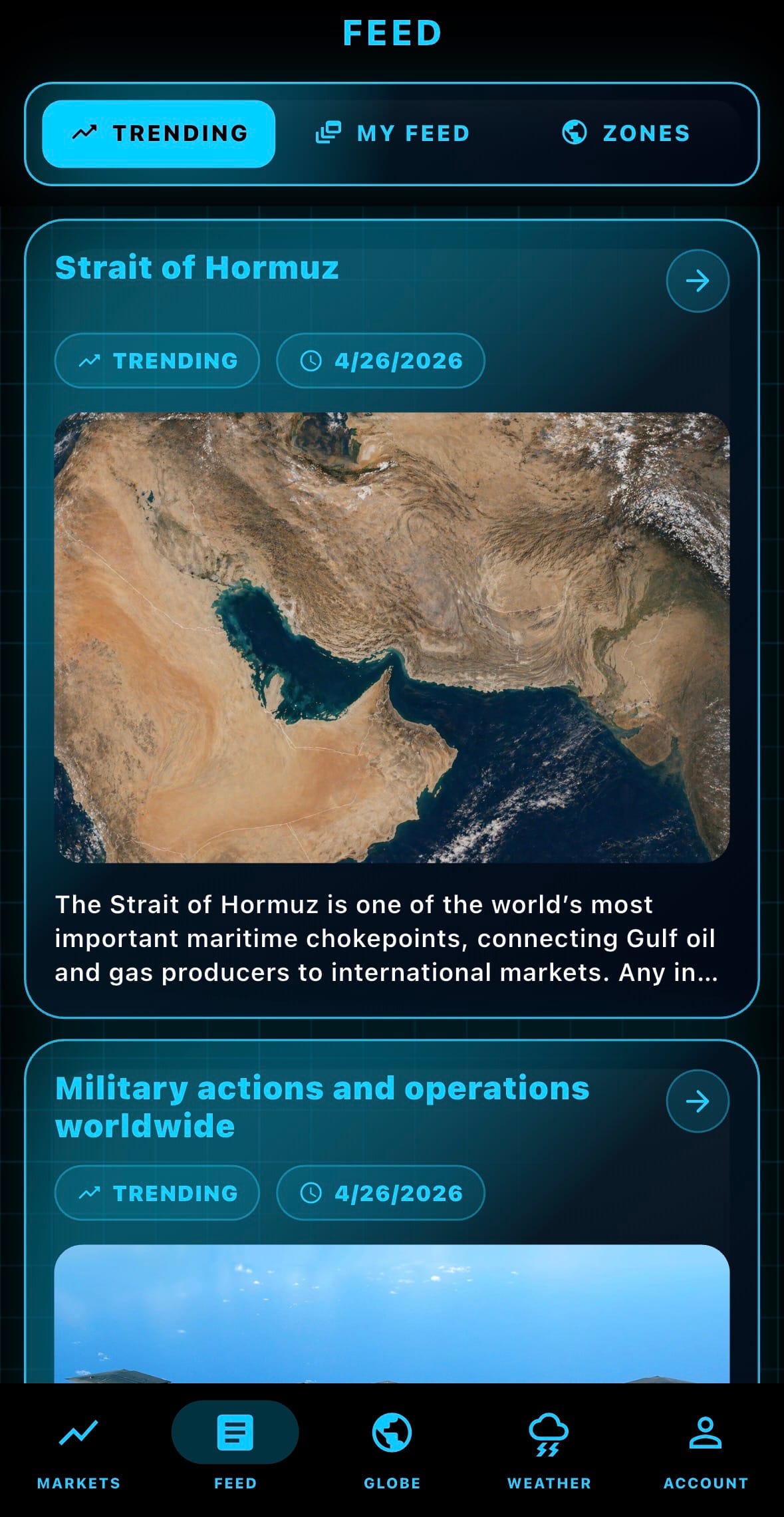
- New updates have launched to all mobile app users! Key upgrades include faster load speeds, ui upgrades for visual effect, better trend monitoring & reporting, and enhanced filters for custom intel reports. More updates coming soon!
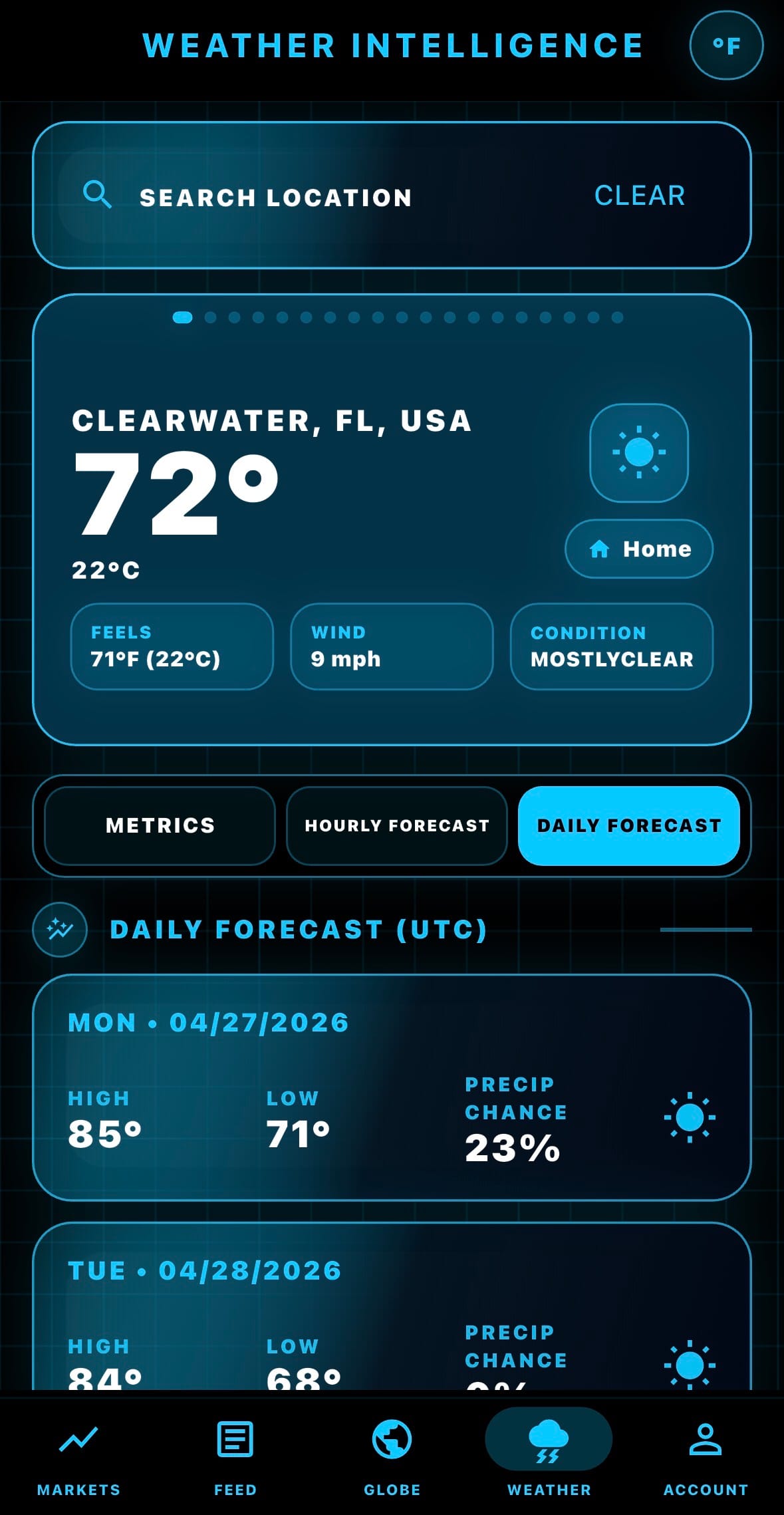
Mobile App
- Download our mobile app:


Statistic:
- Largest alcohol companies on Earth by market capitalization
- 🇨🇳 Kweichow Moutai: $267.20B
- 🇧🇪 Anheuser-Busch InBev: $140.72B
- 🇨🇳 Wuliangye Yibin: $57.59B
- 🇧🇷 Ambev: $44.91B
- 🇬🇧 Diageo: $44.07B
- 🇳🇱 Heineken: $43.66B
- 🇺🇸 Constellation Brands: $26.86B
- 🇨🇳 Luzhou Laojiao: $22.13B
- 🇫🇷 Pernod Ricard: $19.31B
- 🇩🇰 Carlsberg: $16.65B
- 🇯🇵 Asahi Group: $14.26B
- 🇺🇸 Brown-Forman: $13.25B
- 🇭🇰 Budweiser APAC: $12.75B
- 🇯🇵 Kirin Holdings: $12.68B
- 🇨🇳 Tsingtao: $12.32B
- 🇨🇳 Yanghe: $11.00B
- 🇭🇰 China Resources Beer: $10.80B
- 🇮🇳 United Spirits: $10.74B
- 🇮🇹 Davide Campari-Milano: $8.72B
- 🇯🇵 Suntory: $8.58B
- 🇹🇭 Thai Beverage: $8.27B
- 🇺🇸 Molson Coors: $7.99B
- 🇨🇳 Beijing Yanjing Brewery: $5.20B
- 🇮🇳 Radico Khaitan: $4.52B
- 🇦🇺 Endeavour Group: $4.48B
History:
- Wine is one of the oldest continuously produced and traded products in human history, with origins dating back to around 6000–7000 BC in regions like modern-day Georgia, Iran, and Armenia, where early humans discovered that fermented grapes produced alcohol naturally. Archaeological evidence shows clay jars used for fermentation and storage, marking the beginning of intentional winemaking. From there, wine spread through ancient civilizations—Mesopotamia and Egypt (3000–2000 BC) used it in religious rituals and elite society, while the Greeks (around 1000 BC) expanded its cultural significance, developing early wine trade networks across the Mediterranean. The Romans (500 BC–400 AD) then industrialized wine production, introducing large-scale vineyards, improved storage techniques like wooden barrels, and standardized trade routes across Europe. They planted vineyards throughout regions like France, Spain, and Germany, many of which remain major wine producers today. After the fall of the Roman Empire, wine production was largely preserved by Christian monasteries during the Middle Ages (500–1400 AD), where monks refined winemaking techniques and maintained vineyards, especially in regions like Burgundy and Bordeaux.
- In the modern era (1500s–1800s), wine became a global commodity as European powers expanded trade routes, spreading vineyards to the Americas, South Africa, and Australia. However, the industry faced a major crisis in the late 1800s with the phylloxera epidemic, a pest that devastated European vineyards, leading to the development of grafting techniques using resistant American rootstocks—a breakthrough that still underpins modern viticulture. In the 20th century, wine production became more scientific and standardized, with advances in fermentation control, sanitation, and quality classification systems like France’s AOC (Appellation d’Origine Contrôlée). By the 2000s–2026, wine has evolved into a highly globalized and technologically advanced industry, combining traditional methods with modern tools like climate monitoring, precision agriculture, and data-driven fermentation. Regions like California, Chile, and Australia have become major players alongside traditional European producers. Today, wine sits at the intersection of agriculture, culture, and global trade, valued not just as a beverage but as a product shaped by geography, climate (“terroir”), and centuries of refinement—making it one of the most enduring and culturally significant industries in human history.
Image of the day:

Thanks for reading! Earth is complicated, we make it simple.

- Download our mobile app:

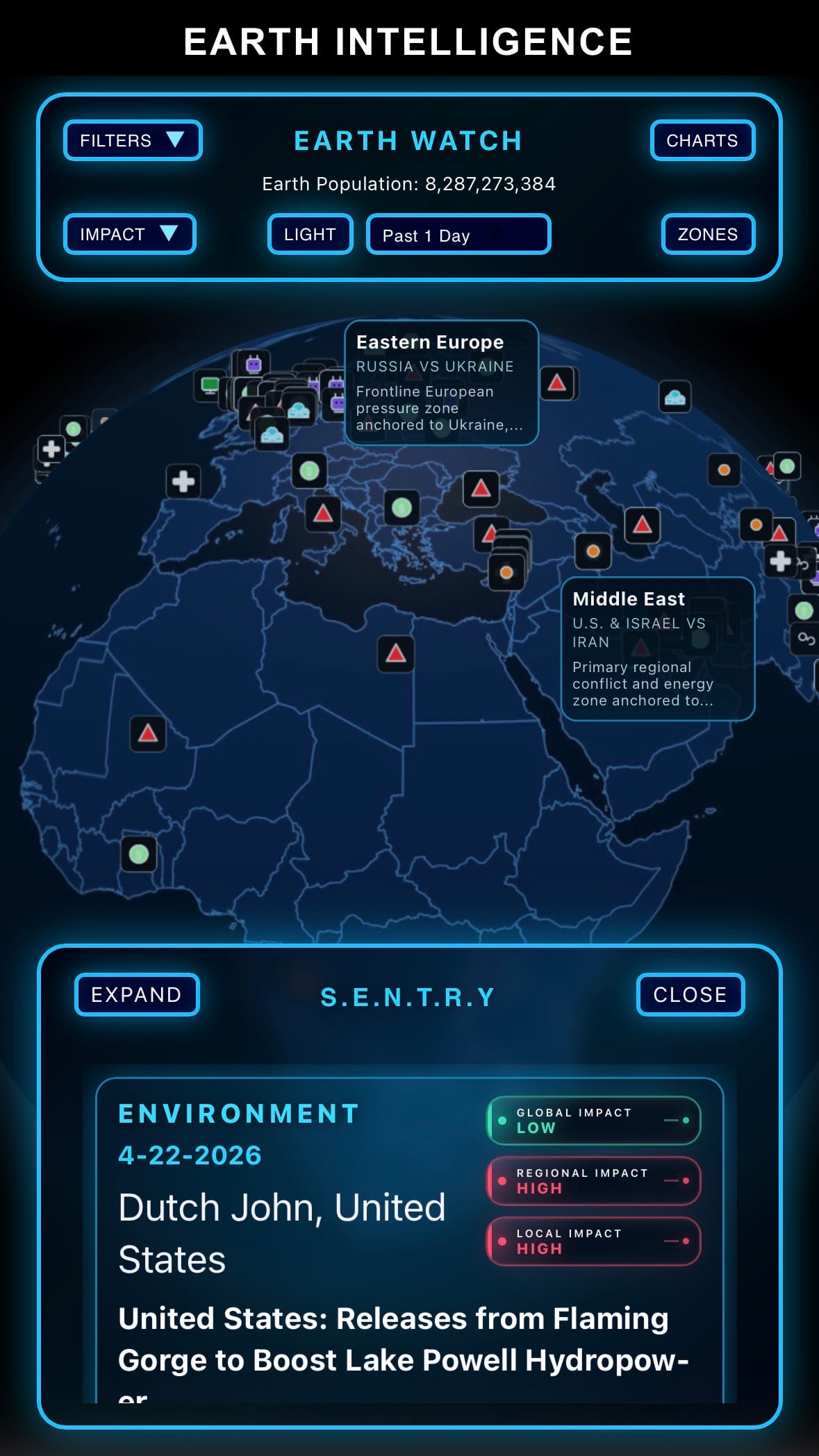
- Click below if you’d like to view our free EARTH WATCH globe:
Click below to view our previous newsletters:

Support/Suggestions Email:
support@earthintel.io