Thursday☕️


Economics & Markets:
- On April 29, 2026, the Federal Reserve (in what is likely Jerome Powell’s final meeting as Chair) voted to keep interest rates unchanged at 3.5%–3.75%.

- Powell noted persistent inflation concerns tied to the ongoing Iran conflict and global energy disruptions, while highlighting a divided FOMC with a record number of dissents. He also confirmed he will remain on the Fed’s Board of Governors after his term as Chair ends on May 15.
Google & Microsoft Earnings:
- On April 29, 2026, both Alphabet (Google) and Microsoft reported strong Q1/FY2026 Q3 results that beat expectations, driven by robust cloud and AI demand.
- Alphabet posted revenue of $109.9 billion (up 22% YoY) and EPS of $5.11 (well above estimates), while Microsoft delivered revenue of $82.9 billion (up 18% YoY) and EPS of $4.27 (beating estimates), with Microsoft Cloud reaching a record $54.5 billion (up 29%).


Geopolitics & Military Activity:
- On April 25, 2026, jihadist forces from JNIM (al-Qaeda affiliate) and Tuareg separatists from the Azawad Liberation Front captured the key northern Malian city of Kidal after Russian Africa Corps and Malian junta troops withdrew under a negotiated deal.
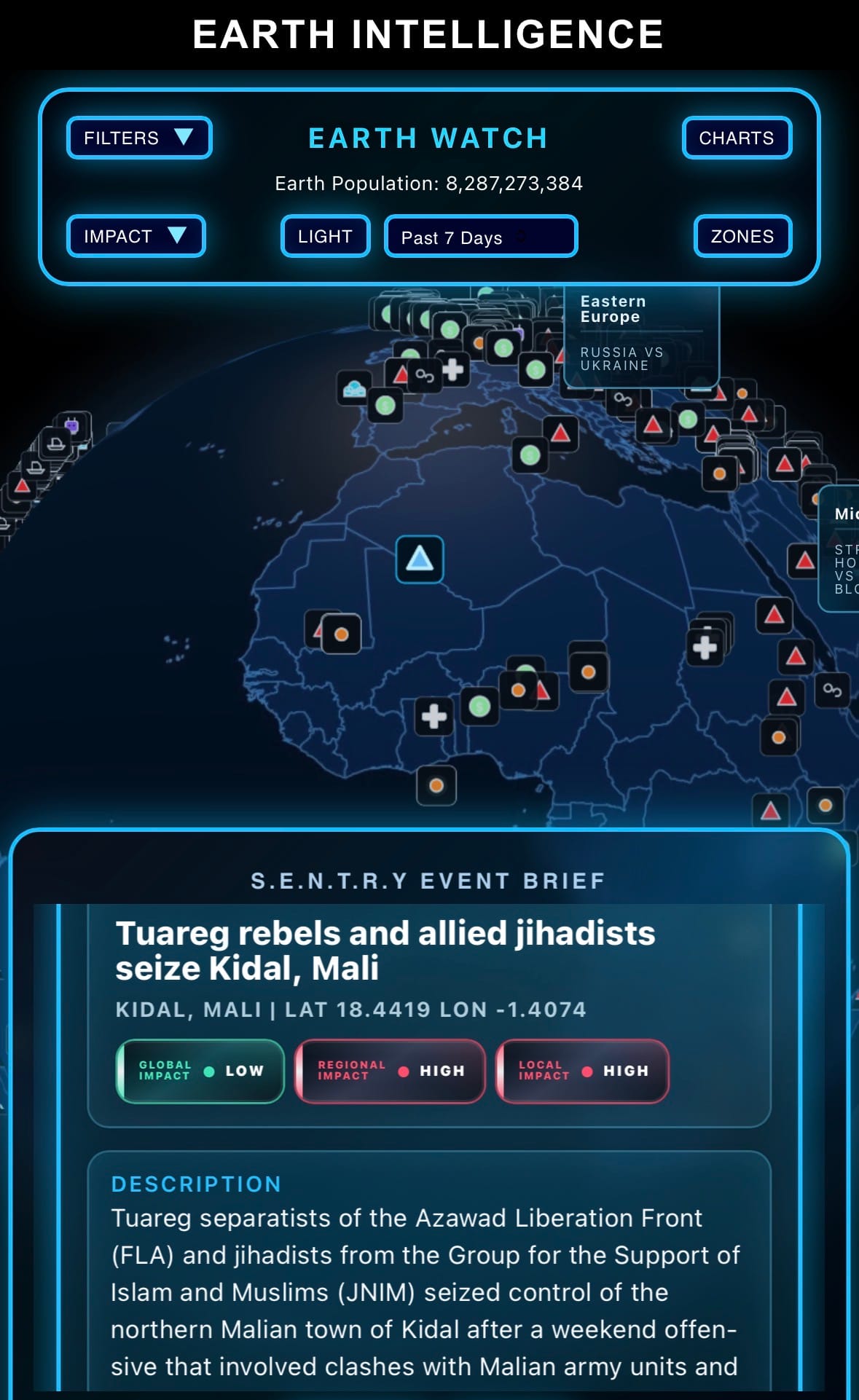

- On April 29, 2026, JNIM released footage showing large amounts of weaponry and equipment they seized during the takeover, including S-8 rockets, armored vehicles, and a Bayraktar TB2 drone ground control station. The rapid collapse has triggered a broader retreat of Russian and Malian forces from several northern towns and significantly weakened the junta’s control in the region.
Science & Technology:
- On April 29, 2026, Japan Airlines announced it will begin trialing humanoid robots for baggage handling and aircraft cleaning at Tokyo’s Haneda Airport starting in May.

- The trial aims to address severe workforce shortages and handle surging tourist numbers, with robots performing repetitive physical tasks such as loading/unloading luggage and cabin cleaning. This marks one of the first major real-world deployments of humanoid robots in daily airport operations.
Space:
- On April 29, 2026, SpaceX successfully launched ViaSat-3 F3 (the final satellite in the ViaSat-3 constellation) aboard a Falcon Heavy rocket from Kennedy Space Center’s LC-39A.
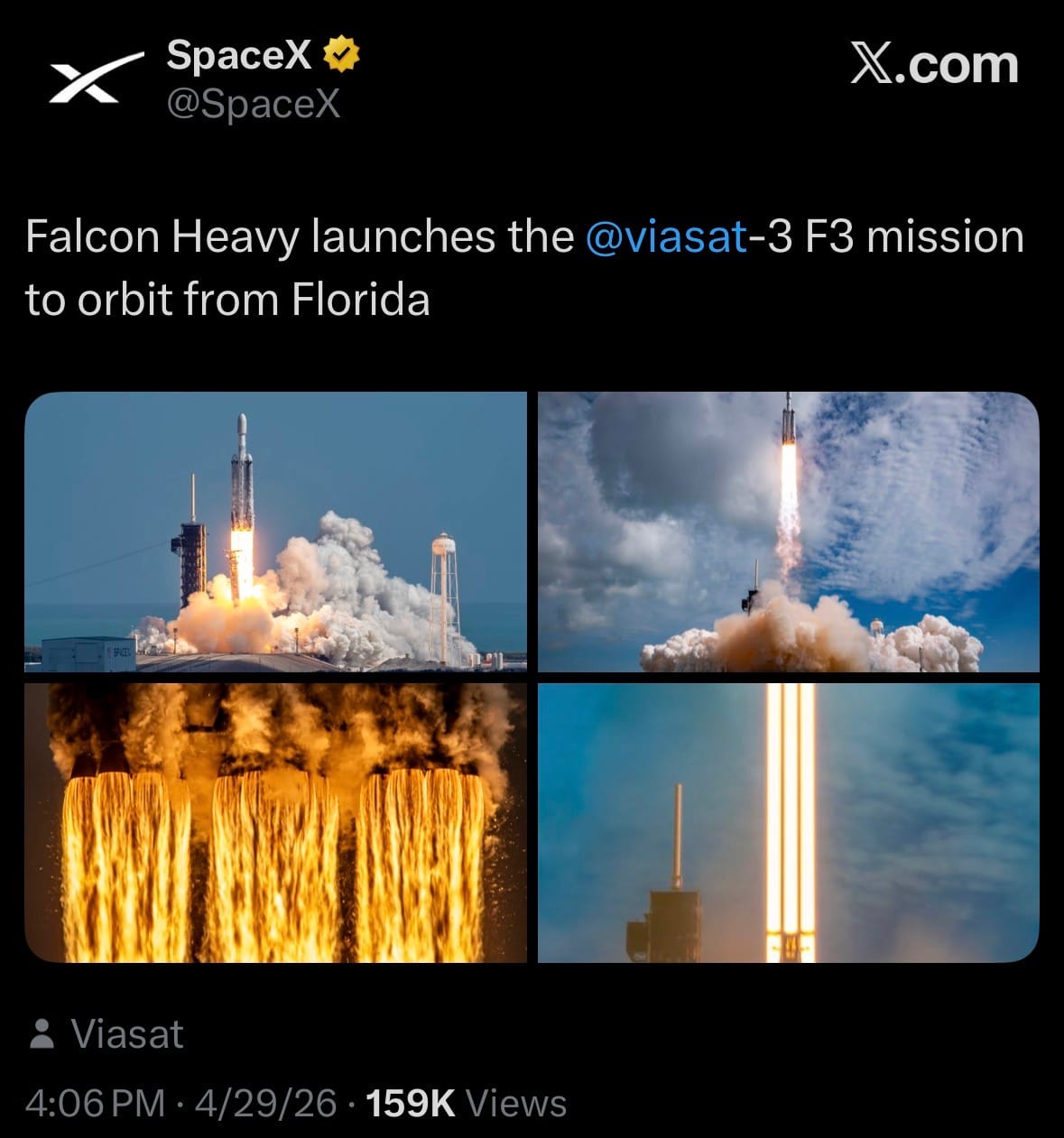
- The massive high-capacity satellite was deployed into geosynchronous transfer orbit to provide more than 1 Terabit per second of broadband capacity across the Asia-Pacific region, completing Viasat’s global ViaSat-3 network and significantly expanding high-speed connectivity for aviation, maritime, enterprise, and government users.
Statistic:
- Largest assets on Earth by market capitalization:
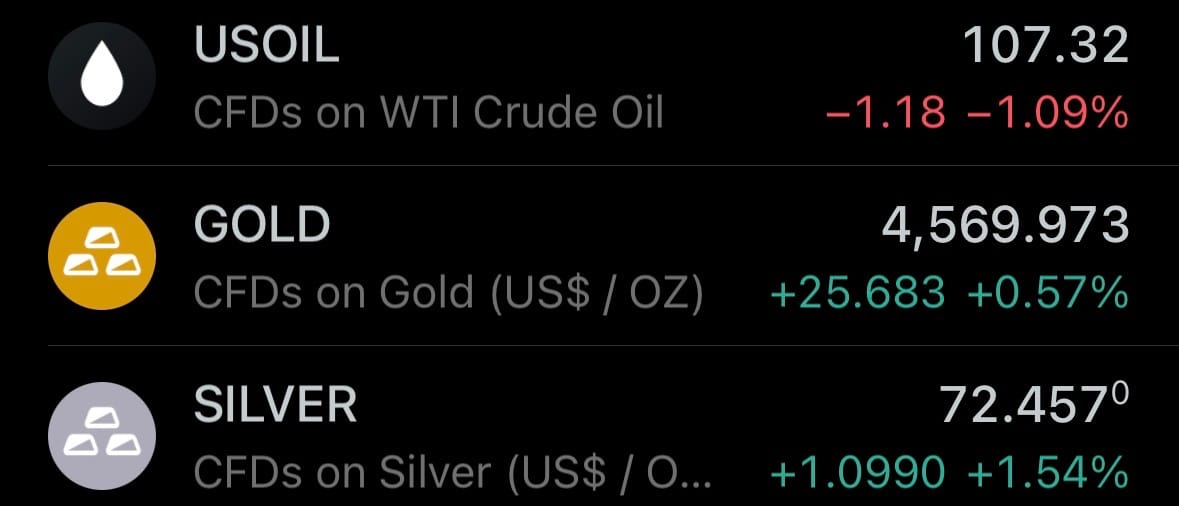
- Gold: $31.808T
- 🇺🇸 NVIDIA: $5.085T
- 🇺🇸 Alphabet (Google): $4.201T
- Silver: $4.083T
- 🇺🇸 Apple: $3.966T
- 🇺🇸 Microsoft: $3.154T
- 🇺🇸 Amazon: $2.828T
- 🇹🇼 TSMC: $2.042T
- 🇺🇸 Broadcom: $1.919T
- 🇸🇦 Saudi Aramco: $1.778T
- 🇺🇸 Meta Platforms (Facebook): $1.698T
- Bitcoin: $1.522T
- 🇺🇸 Tesla: $1.400T
- 🇺🇸 Berkshire Hathaway: $1.025T
- 🇺🇸 Walmart: $1.020T
- 🇰🇷 Samsung: $1.019T
- Vanguard S&P 500 ETF: $894.53B
- 🇺🇸 JPMorgan Chase: $828.63B
- iShares Core S&P 500 ETF: $786.73B
- 🇺🇸 Eli Lilly: $760.43B
- SPDR S&P 500 ETF: $726.61B
- 🇺🇸 Visa: $645.62B
- 🇺🇸 Exxon Mobil: $642.89B
- 🇰🇷 SK Hynix: $632.72B
- Vanguard Total Stock Market ETF: $611.89B
History:
- Palantir was founded in 2003 by Peter Thiel, Alex Karp, Stephen Cohen, Joe Lonsdale, and Nathan Gettings with a very specific goal: build software that could integrate massive amounts of data for intelligence and counterterrorism operations. The company emerged directly out of the post-9/11 environment, where U.S. intelligence agencies were struggling to connect fragmented data across systems. Early on, Palantir received backing from In-Q-Tel, the venture capital arm of the CIA, which provided both funding and access to real-world intelligence problems. This shaped the company’s DNA—Palantir wasn’t built like a typical Silicon Valley startup; it was built alongside intelligence agencies to solve national security challenges. Its first major product, Palantir Gotham, was designed for defense and intelligence use, allowing analysts to ingest, connect, and visualize data from multiple sources—everything from signals intelligence to human reports—into a single operational picture. It became widely used by U.S. agencies like the CIA, NSA, FBI, and military units, particularly in Iraq and Afghanistan, where it helped identify insurgent networks, track IED threats, and support targeting operations. Palantir’s approach focused heavily on human-in-the-loop analysis, meaning the software enhances decision-making rather than fully automating it, which made it more acceptable for sensitive intelligence work.
- As the company matured, it expanded beyond government into commercial sectors while maintaining its deep ties to defense and intelligence. It launched Palantir Foundry, a platform designed for corporations to integrate and analyze internal data—used by industries like manufacturing, healthcare, energy, and finance to optimize operations and decision-making. Another major product, Palantir Apollo, provides continuous deployment and management of software across secure and complex environments, including classified systems. Palantir has secured major contracts with the U.S. Department of Defense, including work with the Army’s data platforms, Special Operations, and battlefield intelligence systems, as well as partnerships with NATO and allied governments for defense coordination and data integration. In the private sector, it has worked with companies like Airbus, BP, Merck, and various healthcare systems, especially during COVID-19 for data tracking and logistics. From 2020–2026, Palantir has positioned itself at the center of the AI and defense-tech convergence, integrating advanced analytics and AI into its platforms while expanding into areas like battlefield software, real-time operational intelligence, and industrial automation. Today, Palantir operates as a hybrid between a tech company and a strategic defense contractor—building software that acts as a decision-making layer across governments, militaries, and corporations, effectively turning data into a real-time operational advantage.
Image of the day:

Thanks for reading! Earth is complicated, we make it simple.
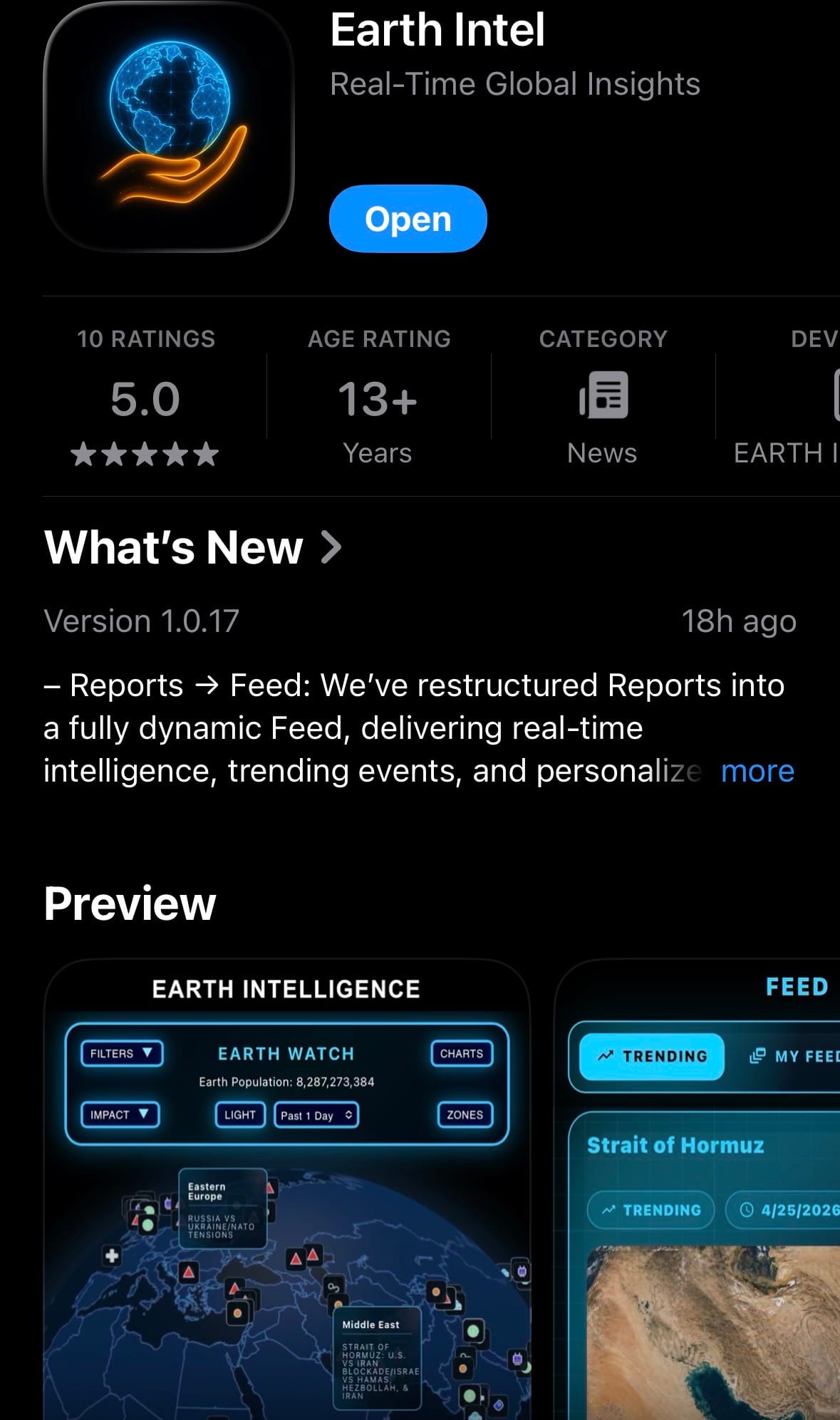
- Download our mobile app:


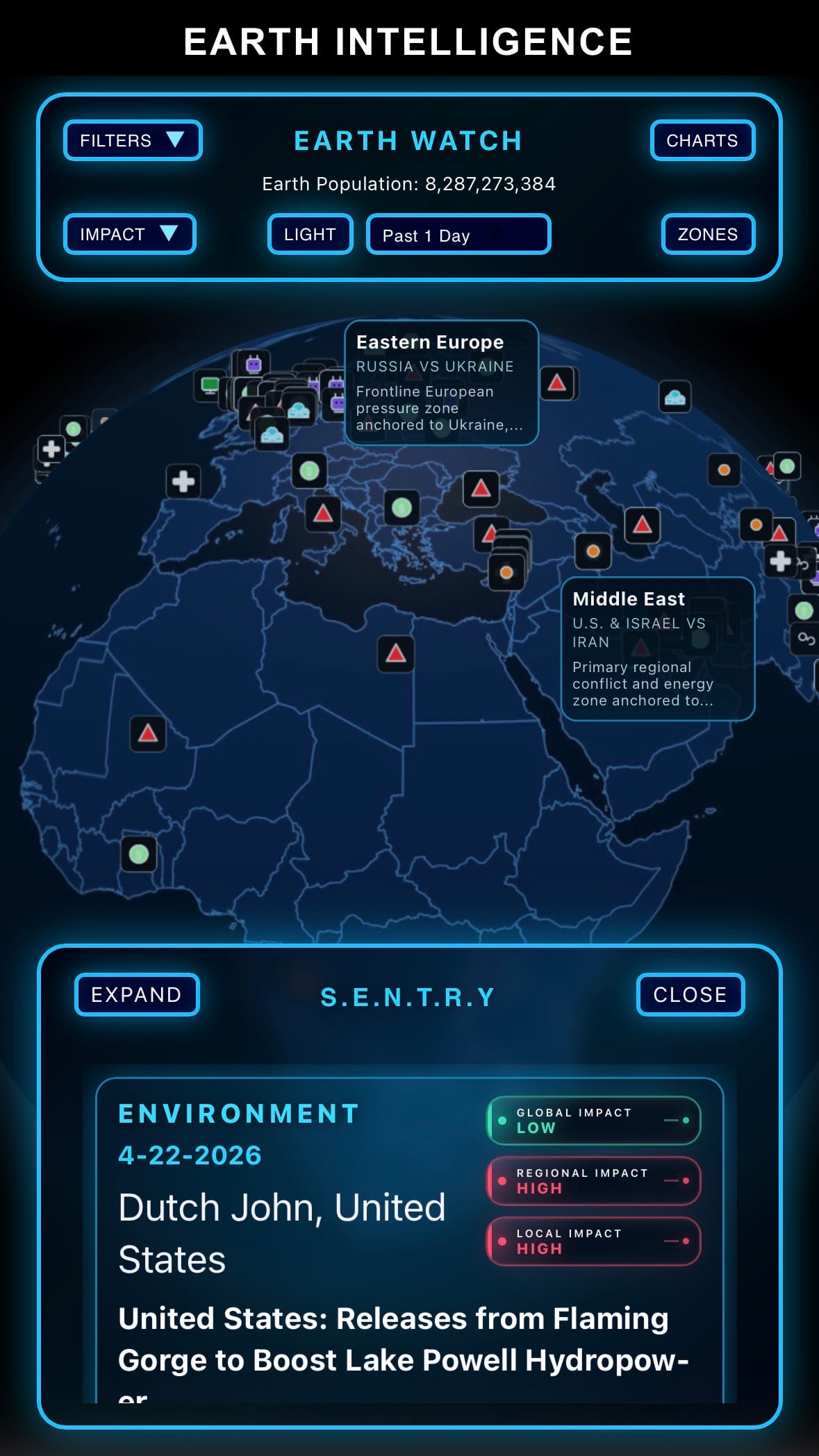
- Click below if you’d like to view our free EARTH WATCH globe:
Click below to view our previous newsletters:
Support/Suggestions Email:
support@earthintel.io