Friday☕️🌎


Trending:
- September 3, 2026 — The United States imposed new sanctions on Fidel Ernesto Castro Calis, grandson of former Cuban leader Raúl Castro, along with Cuba’s state-owned Banco Exterior de Cuba and four companies operating in the country’s energy, oil, nickel, and mining sectors.
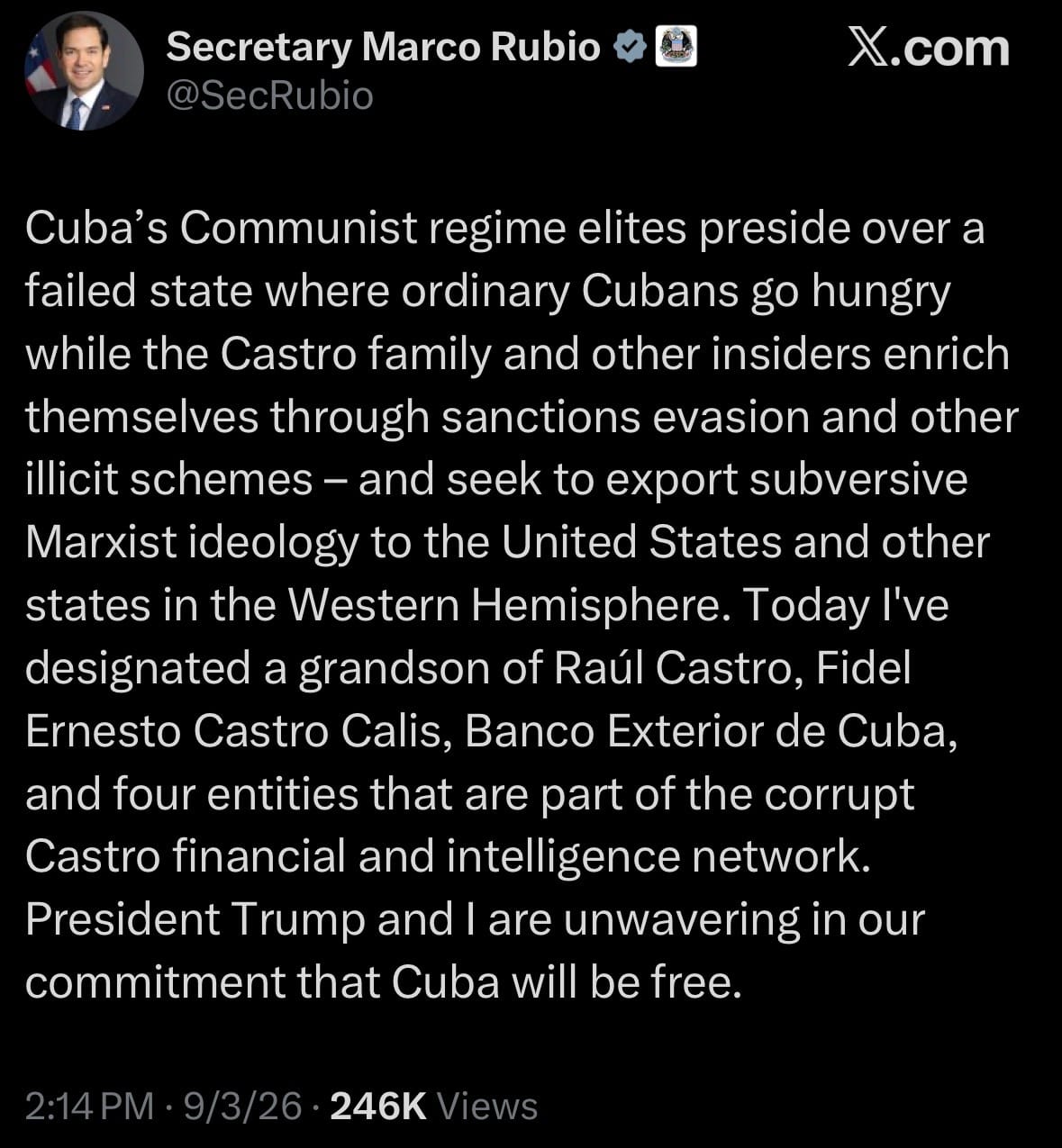
- Secretary of State Marco Rubio said the measures are intended to cut financial and resource networks benefiting Cuba’s government and Castro-linked elites, while Cuban officials argue the expanding U.S. sanctions are worsening the island’s severe energy shortages, blackouts, and economic crisis.
Economics & Markets:
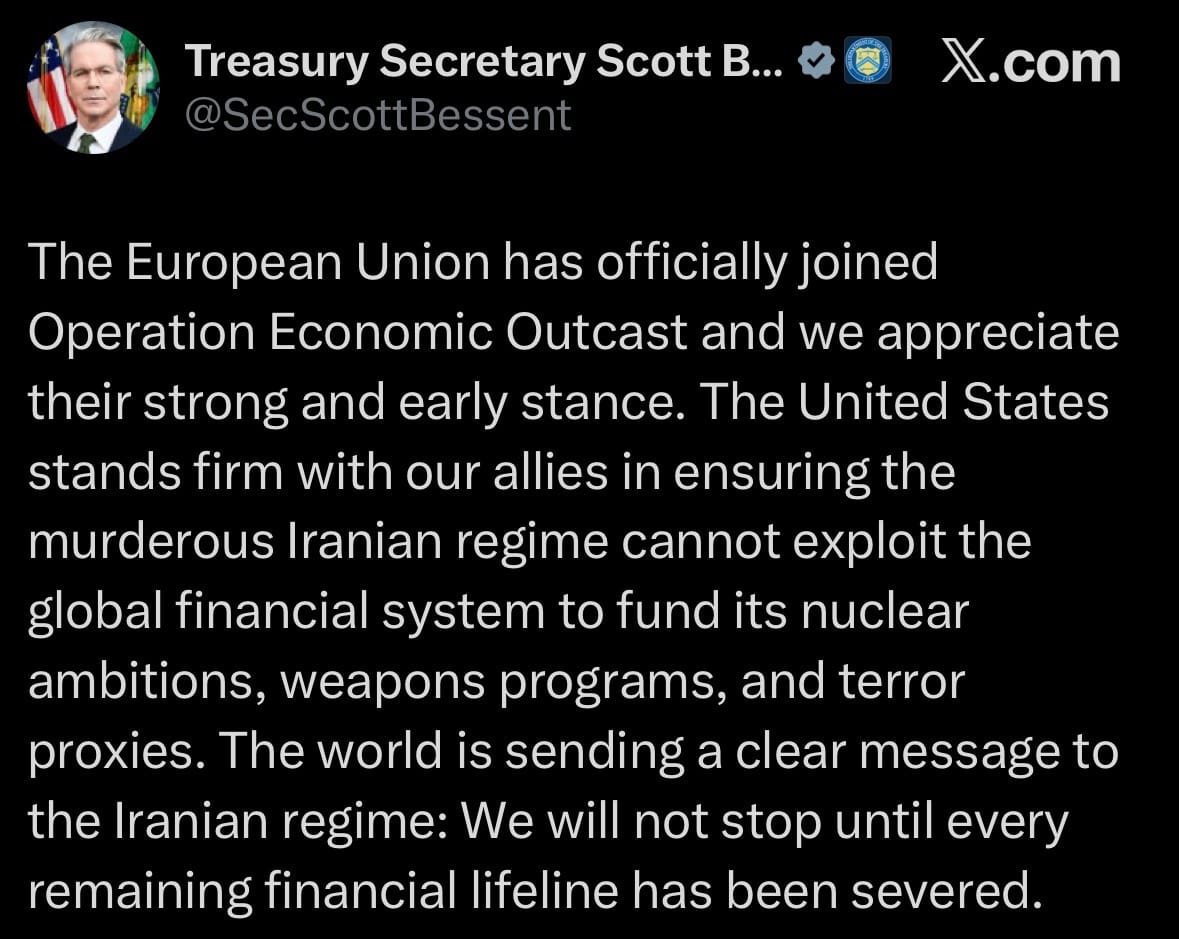
- September 3, 2026 — U.S. Treasury Secretary Scott Bessent is using this week’s G20 meetings to push other major economies to join “Operation Economic Outcast,” a U.S.-led campaign designed to financially isolate Iran and pressure Tehran back toward negotiations.
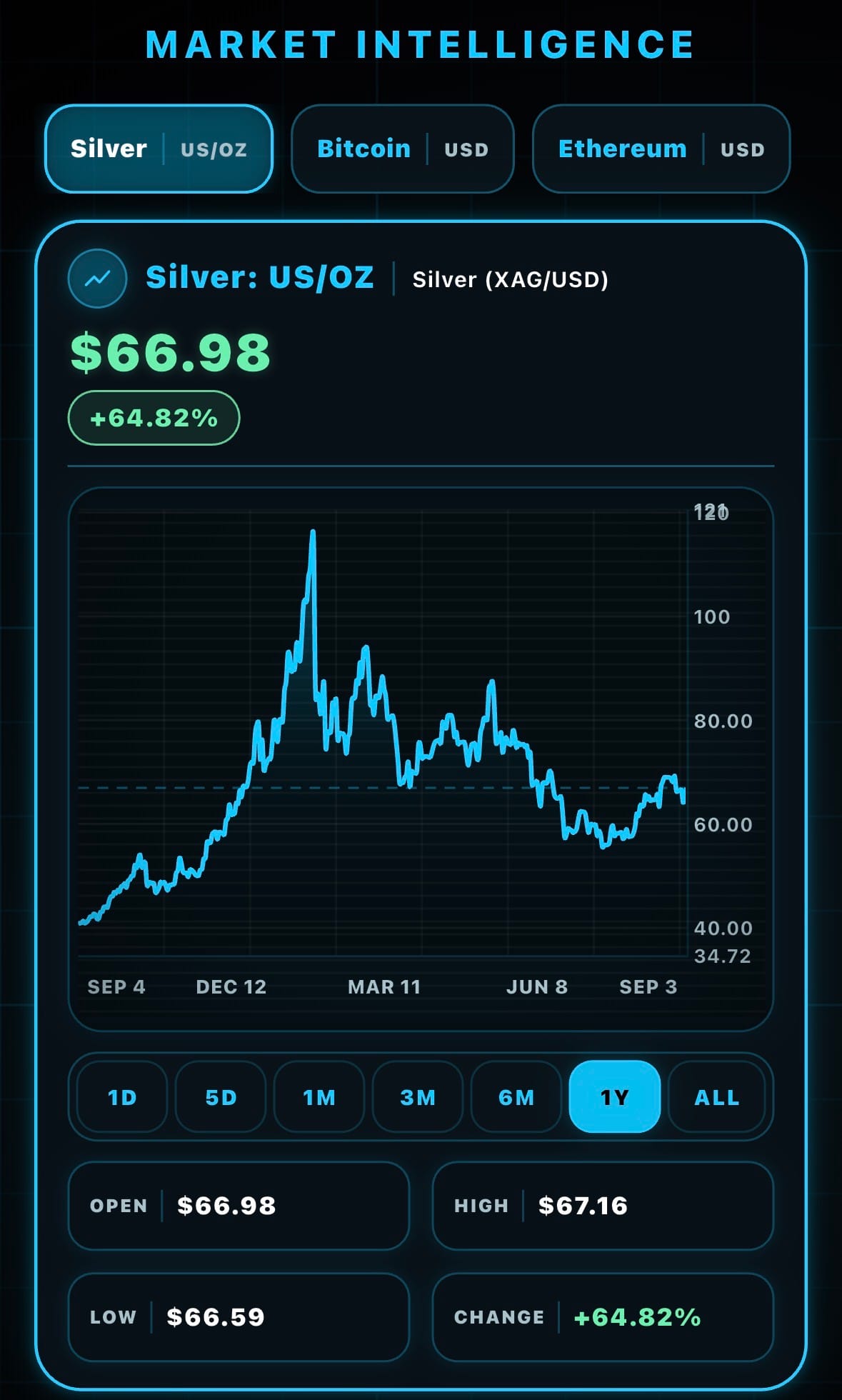
- Past 1 year of Silver price action:
Science & Technology:
- September 3, 2026 — OpenAI launched GPT-6 Astra, its most capable AI model yet, designed to autonomously complete complex work across computers, browsers, coding tools, research, cybersecurity, and professional software.

- Astra can see and operate computer interfaces to complete multi-step tasks much like a person using a mouse and keyboard, and is rolling out first to select organizations before expanding to ChatGPT Plus, Pro, Business, Enterprise, the API, and AWS.

Space:
- September 4, 2026 — India’s space agency ISRO successfully launched EOS-05 (GISAT-1A) aboard a GSLV-F17 rocket at 2:55 a.m. local time from the Satish Dhawan Space Centre in Sriharikota.
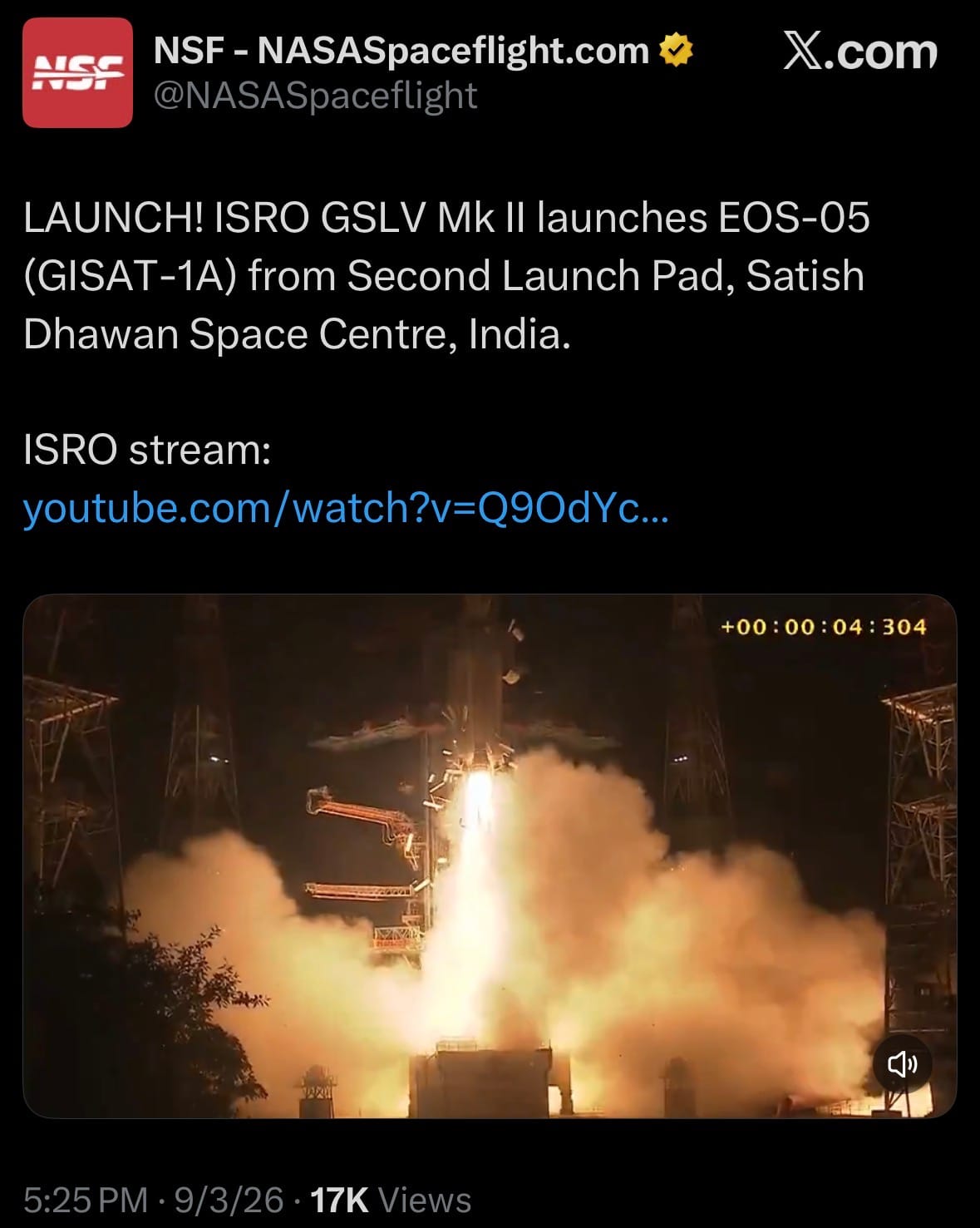
- EOS-05 is India’s first imaging satellite designed to operate from geosynchronous orbit, allowing it to continuously monitor India and surrounding areas for severe weather, floods, wildfires, environmental changes, and other disasters.
Statistic:
- Top assets by market cap:
- 🥇 Gold: $31.477T
- 🇺🇸 NVIDIA: $5.516T
- 🇺🇸 Apple: $4.789T
- 🇺🇸 Alphabet (Google): $4.146T
- 🥈 Silver: $3.803T
- 🇺🇸 Microsoft: $3.787T
- 🇺🇸 Amazon: $2.792T
- 🇹🇼 TSMC: $2.162T
- 🇺🇸 SpaceX: $1.973T
- 🇺🇸 Broadcom: $1.699T
- 🇸🇦 Saudi Aramco: $1.672T
- ₿ Bitcoin: $1.630T
- 🇺🇸 Meta Platforms: $1.555T
- 🇺🇸 Tesla: $1.486T
- 🇰🇷 Samsung: $1.234T
- 🇺🇸 Berkshire Hathaway: $1.087T
- 🇺🇸 Micron Technology: $1.082T
- 🇺🇸 Vanguard S&P 500 ETF: $1.057T
- 🇺🇸 Eli Lilly: $1.034T
- 🇺🇸 JPMorgan Chase: $962.42B
- 🇺🇸 iShares Core S&P 500 ETF: $888.37B
- 🇺🇸 Walmart: $862.81B
- 🇰🇷 SK Hynix: $856.52B
- 🇺🇸 SPDR S&P 500 ETF: $817.03B
- 🇺🇸 AMD: $744.66B
- 🇺🇸 Visa: $707.14B
History of Visa
- Visa grew out of the early American credit-card industry, when banks were trying to create a practical way for consumers to buy now and pay later without maintaining separate credit accounts at every store. Charge cards such as Diners Club appeared in 1950 and American Express followed in 1958, but the breakthrough for modern bank credit cards came from Bank of America. On September 18, 1958, it launched BankAmericard through the famous “Fresno Drop,” mailing roughly 60,000 unsolicited cards to residents of Fresno, California. Cardholders could make purchases at participating merchants, Bank of America paid the merchant, and the customer later repaid the bank—either completely or over time with interest. The experiment initially produced heavy fraud and credit losses, but Bank of America improved underwriting and fraud controls and expanded the system throughout California. Beginning in 1966, it licensed BankAmericard to banks outside California, allowing independent banks to issue compatible cards while participating in the same growing payment network. Competitors responded by creating the Interbank Card Association in 1966, which eventually became Mastercard, establishing the Visa–Mastercard rivalry that continues today.
- The system became Visa as the card network expanded nationally and internationally. Bank of America surrendered direct control of the program in 1970, when participating U.S. banks created National BankAmericard Inc., while international banks were coordinated through IBANCO beginning in 1974. In 1976, the international network was unified under the simpler global name Visa. The important distinction is that Visa generally does not lend the customer the money: banks such as JPMorgan Chase, Bank of America, Capital One, or thousands of other financial institutions issue Visa-branded cards and extend the credit. Visa operates the enormous electronic network connecting the customer → merchant → merchant’s bank/payment processor → Visa → cardholder’s bank, allowing transactions to be authorized within seconds and later cleared and settled. Technology transformed this process through magnetic stripes in the 1970s, electronic authorization, ATMs and debit cards, computerized fraud detection, internet payments, EMV chips, contactless payments, tokenization, smartphones, and digital wallets such as Apple Pay and Google Pay. Visa expanded across virtually every major international market and developed VisaNet, one of the world’s largest payment-processing networks.
- Visa eventually became one of the world’s most valuable financial-technology companies because it earns money from the movement of payments rather than taking most consumer credit risk itself. The modern corporate structure was consolidated and Visa completed its IPO in 2008, raising approximately $17.9 billion, then the largest U.S. IPO ever. Today Visa connects billions of payment credentials, tens of millions of merchants, thousands of banks and financial institutions, and markets across more than 200 countries and territories, processing enormous amounts of payment volume every year. It earns primarily through service fees, transaction/data-processing fees, international and cross-border payments, and other network services, while the issuing banks generally earn the interest charged on credit-card balances. Its largest direct competitor is Mastercard, while American Express and Discover use somewhat different models; internationally it also competes with systems such as China’s UnionPay and increasingly with account-to-account payments, fintech companies, digital wallets, stablecoins, and real-time payment networks. Visa’s evolution is essentially 1950 Diners Club → 1958 BankAmericard/Fresno Drop → 1966 national licensing → 1970 independent bank network → 1974 international organization → 1976 Visa → electronic payment revolution → debit/internet/chip/contactless payments → 2008 IPO → smartphones and tokenization → today’s global digital-payment infrastructure. The key to understanding Visa is simple: it evolved from a credit card into the network connecting banks, consumers, merchants, and increasingly digital financial systems around the world.
Image of the day:

Thanks for reading, We’ll be back on Monday! Earth is complicated, we make it simple.
- Download our mobile app:


Click below to view our previous newsletters:
Support/Suggestions Email:
support@earthintel.io