Thursday☕️🌎


Trending:
- September 2, 2026 — AeroVironment won a $464.8 million U.S. Army contract to produce dozens of LOCUST high-energy laser systems designed to detect, track, and destroy drones using directed laser energy.
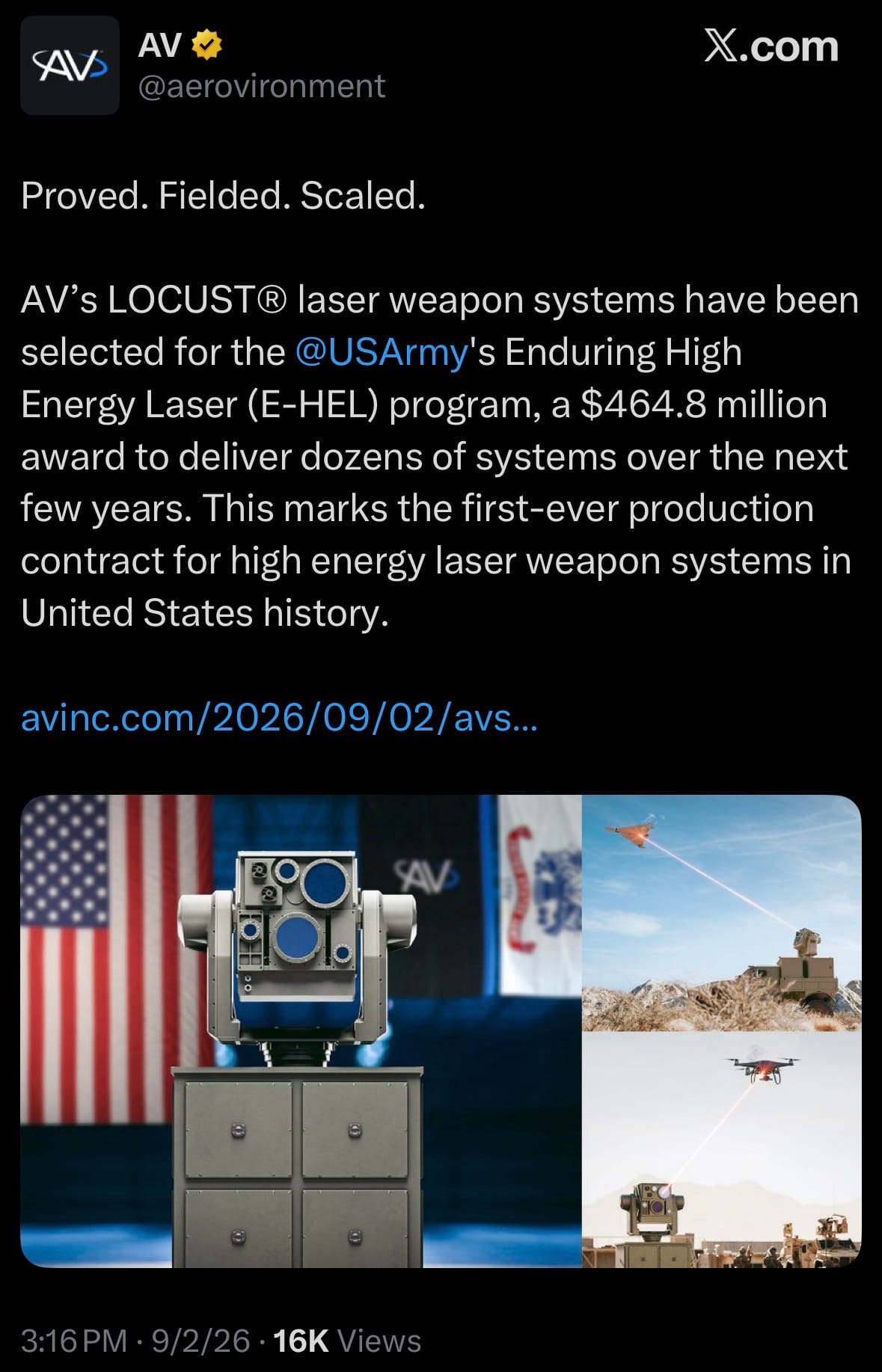
- AeroVironment says it is the first U.S. production contract for high-energy laser weapon systems, moving the technology from testing into larger-scale military deployment.
Economics & Markets:
- September 2, 2026 — The U.S. Mint released the new President Donald J. Trump $1 coin for America’s 250th anniversary, featuring Trump’s portrait on the front and the Presidential Seal on the back.
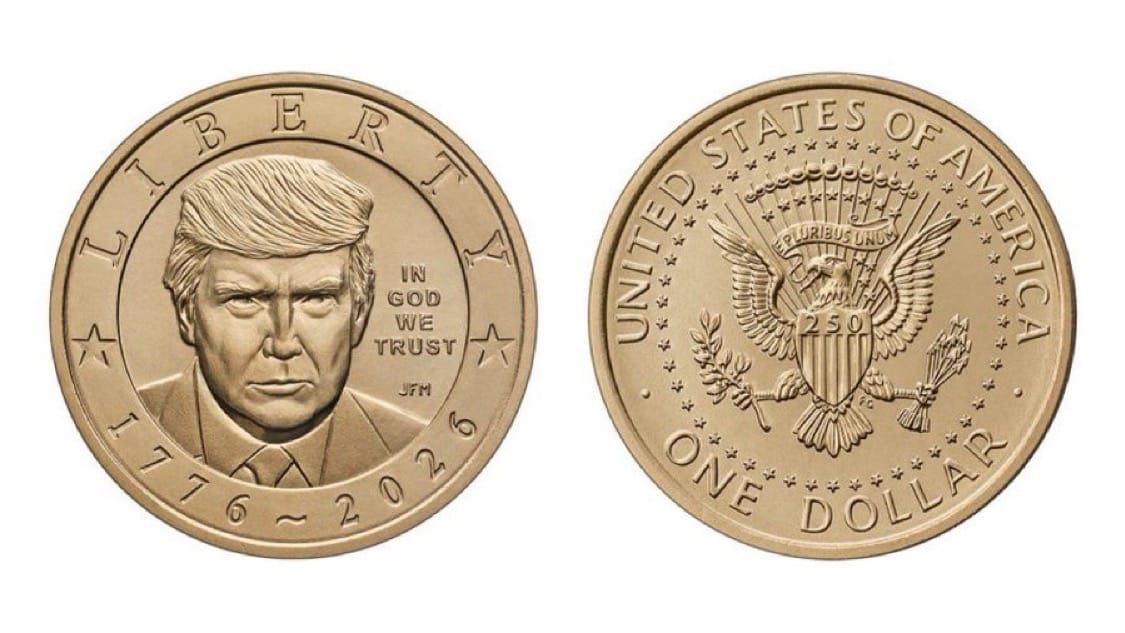
- The coin is real U.S. legal tender and can be spent for $1, but it is currently being sold directly by the U.S. Mint in collectible rolls and bags rather than being routinely distributed through banks and businesses like quarters, dimes, or other everyday coins.
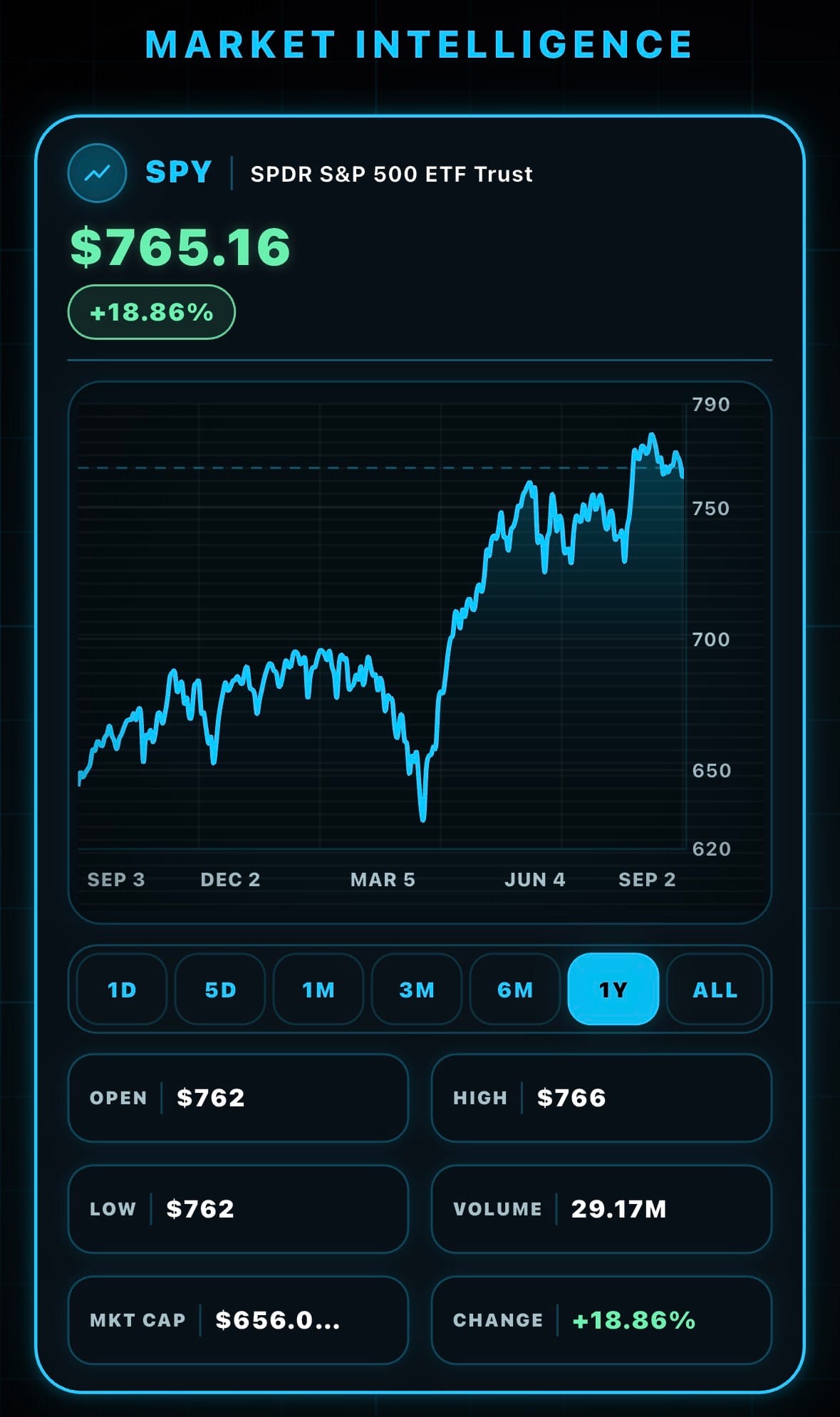
- Past year of SPY (S&P 500 ETF) price action:
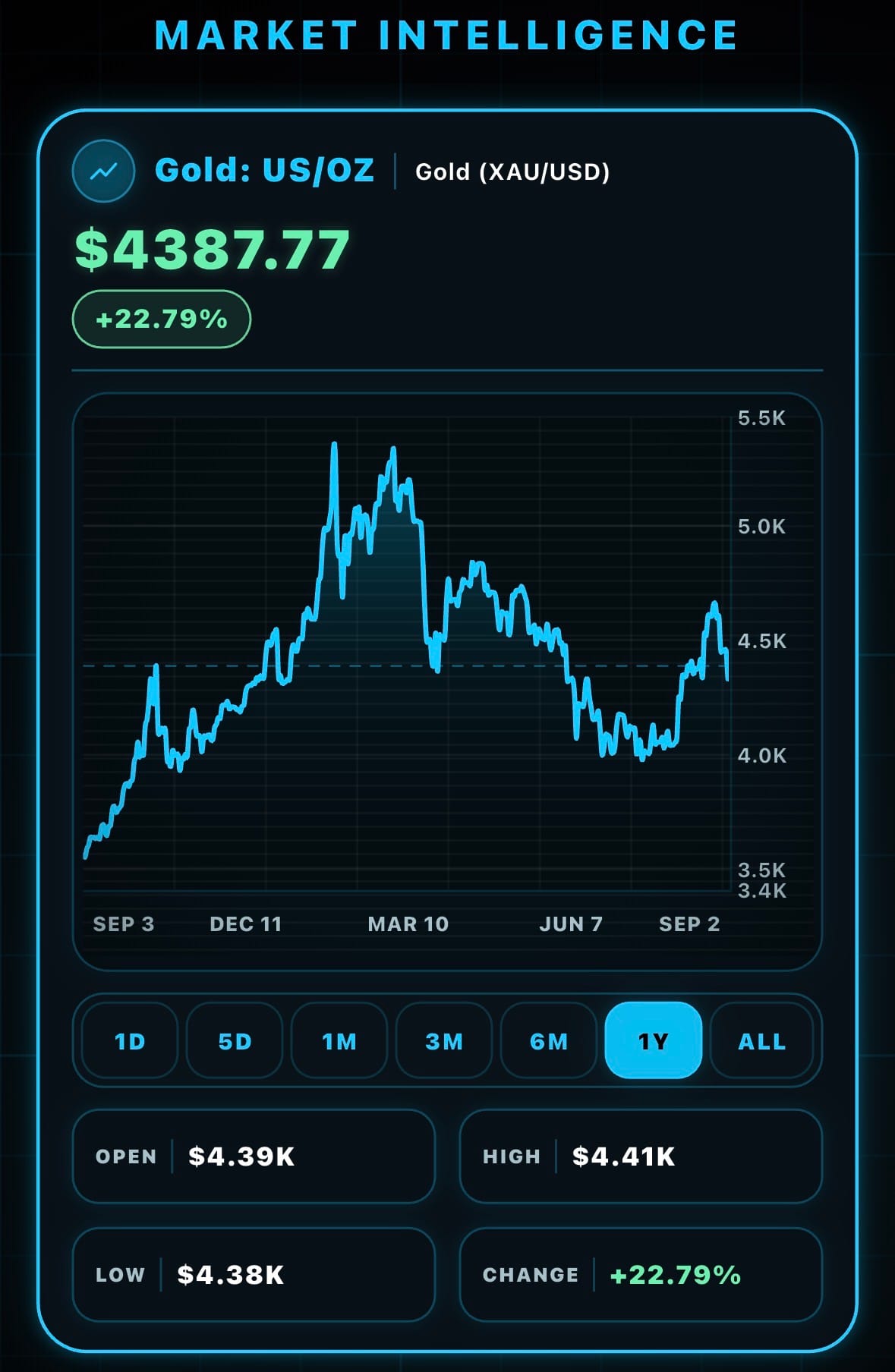
- Past 1 year of gold price action:
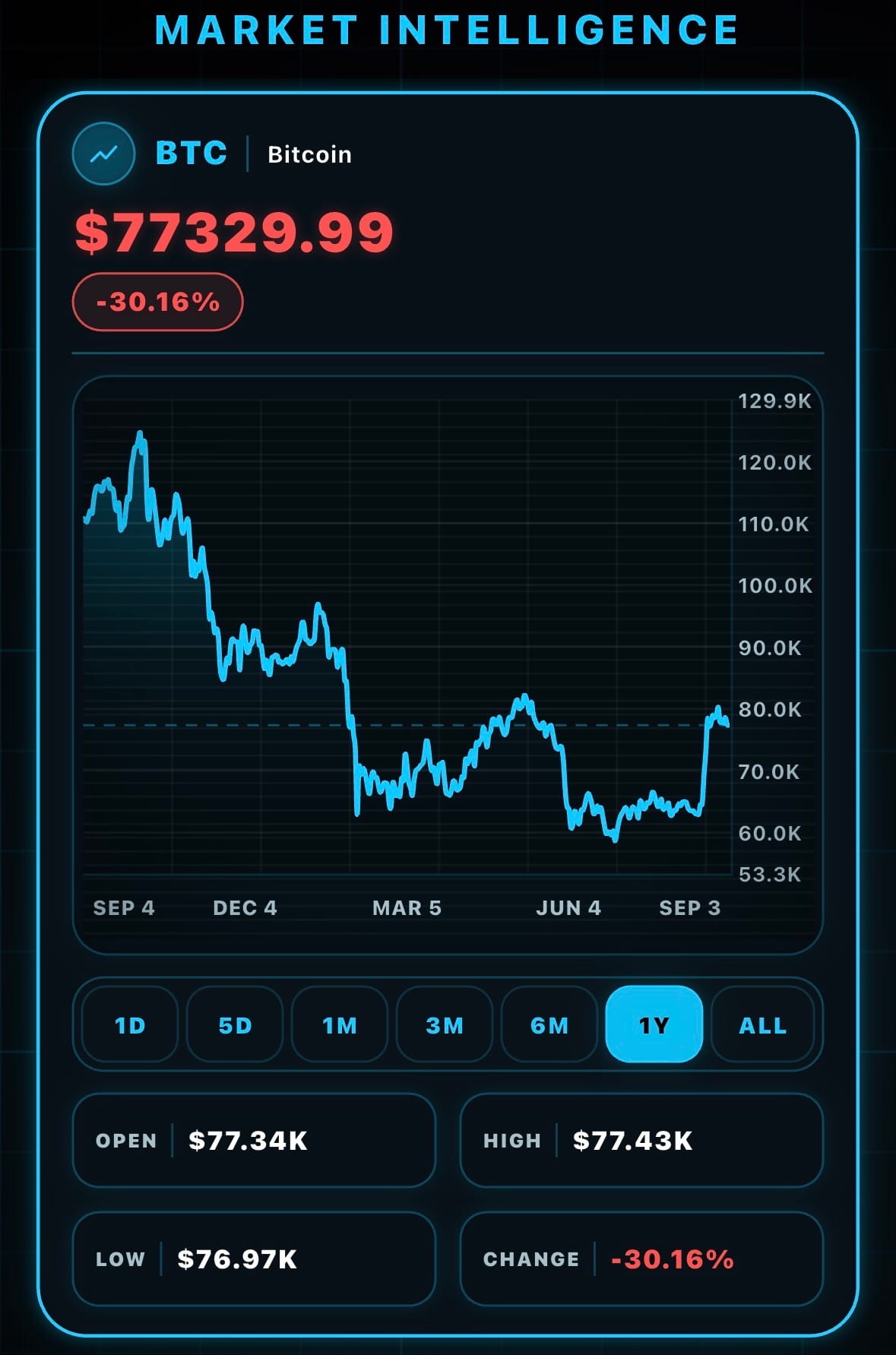
- Past 1 year of Bitcoin price action:
Geopolitics & Military Activity:
- September 2, 2026 — U.S. Marines and sailors from the USS San Antonio intercepted and sank a vessel in the Eastern Pacific that SOUTHCOM says was being used as a floating refueling station for drug-smuggling boats linked to Ecuador’s Los Choneros organization.

- Those aboard were transferred to Ecuadorian authorities, while destroying the vessel removed an offshore fuel point used to support longer-range drug trafficking.


Science & Technology:
- September 2, 2026 — Meta released Muse Spark 1.3, its newest AI model for coding and autonomous agent work, delivering a major performance improvement over Muse Spark 1.2 while remaining extremely inexpensive to run.
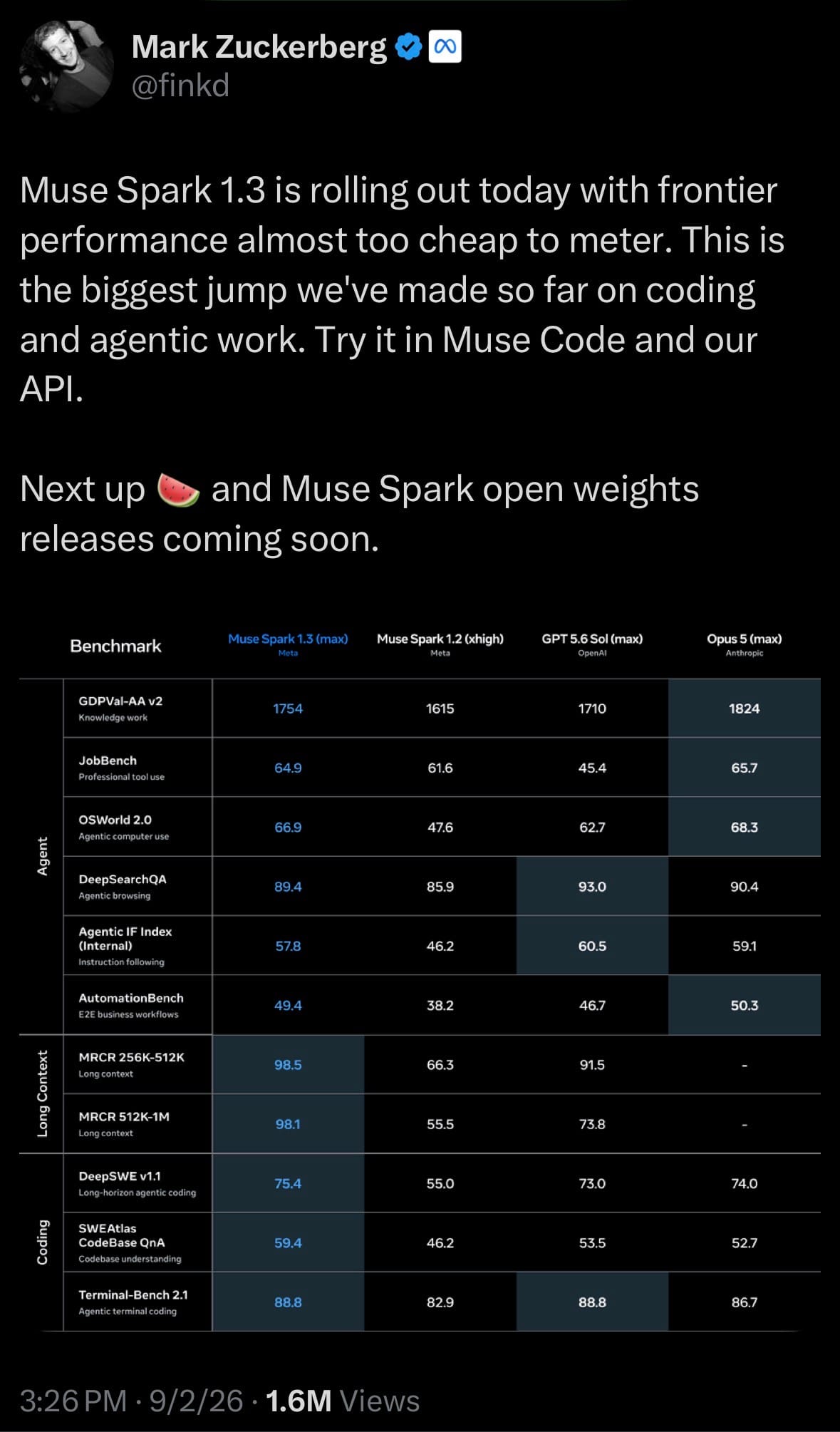
- Meta says the model now competes with leading OpenAI and Anthropic models across coding, computer-use, research, and long-context tasks, and is available through Muse Code and its API, with open-weight versions planned next.
Statistic:
- Largest oil and gas companies by market capitalization:
- 🇸🇦 Saudi Aramco: $1.676T
- 🇺🇸 Exxon Mobil: $674.97B
- 🇺🇸 Chevron: $415.42B
- 🇬🇧 Shell: $255.24B
- 🇨🇳 PetroChina: $235.73B
- 🇫🇷 TotalEnergies: $199.62B
- 🇺🇸 ConocoPhillips: $164.82B
- 🇨🇳 CNOOC: $151.65B
- 🇧🇷 Petrobras: $134.42B
- 🇬🇧 BP: $113.13B
- 🇨🇦 Enbridge: $109.88B
- 🇺🇸 Marathon Petroleum: $108.67B
- 🇨🇦 Canadian Natural Resources: $106.80B
- 🇺🇸 Valero Energy: $105.40B
- 🇳🇴 Equinor: $103.43B
- 🇺🇸 Phillips 66: $102.67B
- 🇺🇸 Southern Company: $101.58B
- 🇨🇳 Sinopec: $97.57B
- 🇺🇸 Duke Energy: $94.00B
- 🇺🇸 Williams Companies: $91.93B
- 🇺🇸 SLB (Schlumberger): $86.27B
- 🇺🇸 Enterprise Products: $84.99B
- 🇦🇪 TAQA: $81.43B
- 🇨🇦 Suncor Energy: $80.75B
- 🇮🇹 ENI: $79.54B
History of Apple
- Apple began with Steve Jobs and Steve Wozniak during the personal-computer revolution of the 1970s. Jobs was the product visionary and salesman, while Wozniak was the engineering genius behind Apple’s earliest computers. Along with Ronald Wayne, they founded Apple Computer on April 1, 1976, initially operating from the Jobs family home in California. Wozniak designed the Apple I, and Jobs saw its commercial potential; the Apple II followed in 1977 and became one of the first truly successful mass-market personal computers. Apple went public in 1980, making Jobs, then only 25, extremely wealthy. Jobs became obsessed with making computers easier and more visually intuitive, helping push Apple toward the mouse and graphical user interface after exposure to work being done at Xerox PARC. That produced the Lisa in 1983 and, more importantly, the Macintosh in 1984. But Jobs was demanding, confrontational, and increasingly difficult for Apple’s management structure to contain. Apple had recruited former Pepsi executive John Sculley as CEO in 1983, famously after Jobs asked him whether he wanted to keep selling sugar water or help “change the world.” When Macintosh sales initially disappointed expectations, Jobs and Sculley fought over control. In 1985, Apple’s board sided with Sculley, stripped Jobs of his operational authority, and Jobs resigned from the company he had co-founded.
- Jobs’ firing ultimately created the technology that helped save Apple. After leaving, he founded NeXT in 1985, building expensive but technologically advanced computers and software, and in 1986 purchased the computer-animation company that became Pixar from George Lucas for about $10 million. Pixar eventually produced Toy Story in 1995, became enormously successful, and later sold to Disney. Apple, meanwhile, initially remained profitable through the Macintosh but gradually lost ground to cheaper Microsoft Windows-powered PCs from companies such as Dell, Compaq, IBM, and Gateway. By the mid-1990s, Apple had too many products, declining market share, leadership turnover, and serious financial problems. NeXT’s advanced operating system offered Apple a solution. Apple purchased NeXT in 1996 for roughly $400 million, bringing Jobs back after approximately 11 years away. Jobs quickly regained influence, became interim CEO in 1997, eliminated unsuccessful products, dramatically simplified Apple’s lineup, and secured a $150 million investment from Microsoft. The iMac arrived in 1998, followed by Mac OS X, Apple Stores and the iPod in 2001, then the iTunes Store in 2003. Instead of merely saving Apple, Jobs transformed it from a struggling computer manufacturer into a consumer-technology company built around tightly integrated hardware + software + design + services.
- Jobs’ second era produced the products that turned Apple into one of history’s most valuable companies. Apple introduced the iPhone in 2007, combining the phone, internet, touchscreen computing, music, and eventually photography and applications into one device; the company simultaneously dropped “Computer” from its name and became Apple Inc. The App Store followed in 2008 and the iPad in 2010, creating enormous new software and mobile-computing ecosystems. Jobs battled pancreatic neuroendocrine cancer for years, resigned as CEO in August 2011, and died on October 5, 2011, at age 56. Tim Cook, Jobs’ longtime operations leader, became CEO and expanded Apple into an even larger global company through the Apple Watch, AirPods, services, custom A-series chips, M-series Apple silicon, and Vision Pro, while the iPhone remained its central product. Apple’s story is therefore inseparable from Jobs’ rise, removal, and return: 1976 Jobs/Wozniak found Apple → 1977 Apple II → 1980 IPO → 1984 Macintosh → 1985 Jobs forced out → NeXT + Pixar → Apple nearly collapses → 1996 Apple buys NeXT → 1997 Jobs takes control again → 1998 iMac → 2001 iPod → 2007 iPhone → 2008 App Store → 2010 iPad → 2011 Jobs dies/Tim Cook takes over → today’s global Apple ecosystem. Ironically, removing Jobs from Apple helped create NeXT, whose software became the technological foundation for Apple’s modern operating systems and gave the company the reason to bring him back—making his firing and return one of the most consequential corporate comeback stories in business history.
Image of the day:

Thanks for reading! Earth is complicated, we make it simple.
- Download our mobile app:

Click below to view our previous newsletters:
Support/Suggestions Email:
support@earthintel.io