Monday☕️


Trending:
- As of Yesterday, May 3rd, a hantavirus outbreak on the MV Hondius cruise ship killed 3 people, with 1 confirmed case and 5 suspected infections.

- The ship was sailing from Argentina to Cape Verde with about 170 people on board and is now off Praia, Cape Verde. Hantavirus primarily spreads through contact with infected rodent droppings, urine, or saliva.
Economics & Markets:
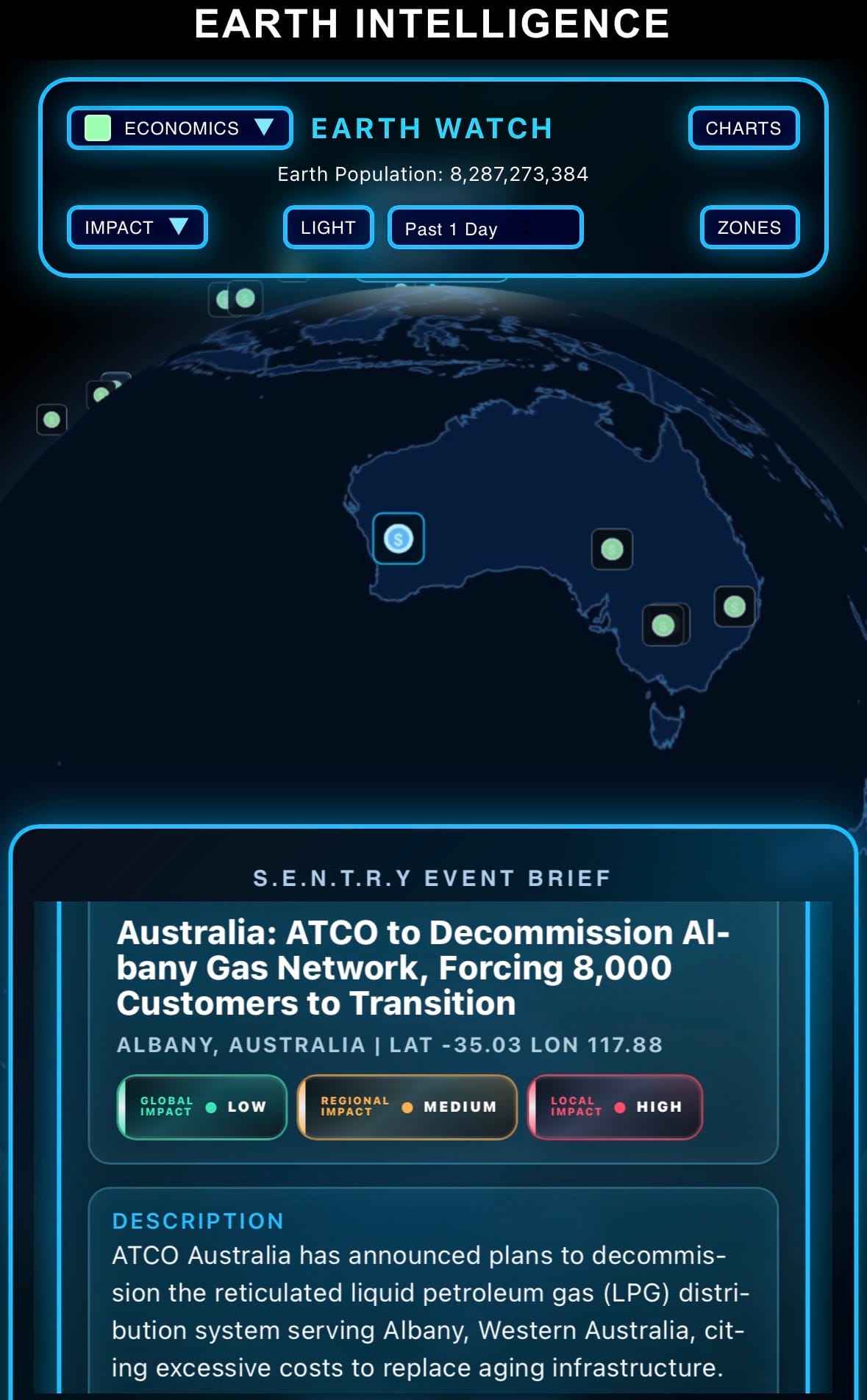
Geopolitics & Military Activity:
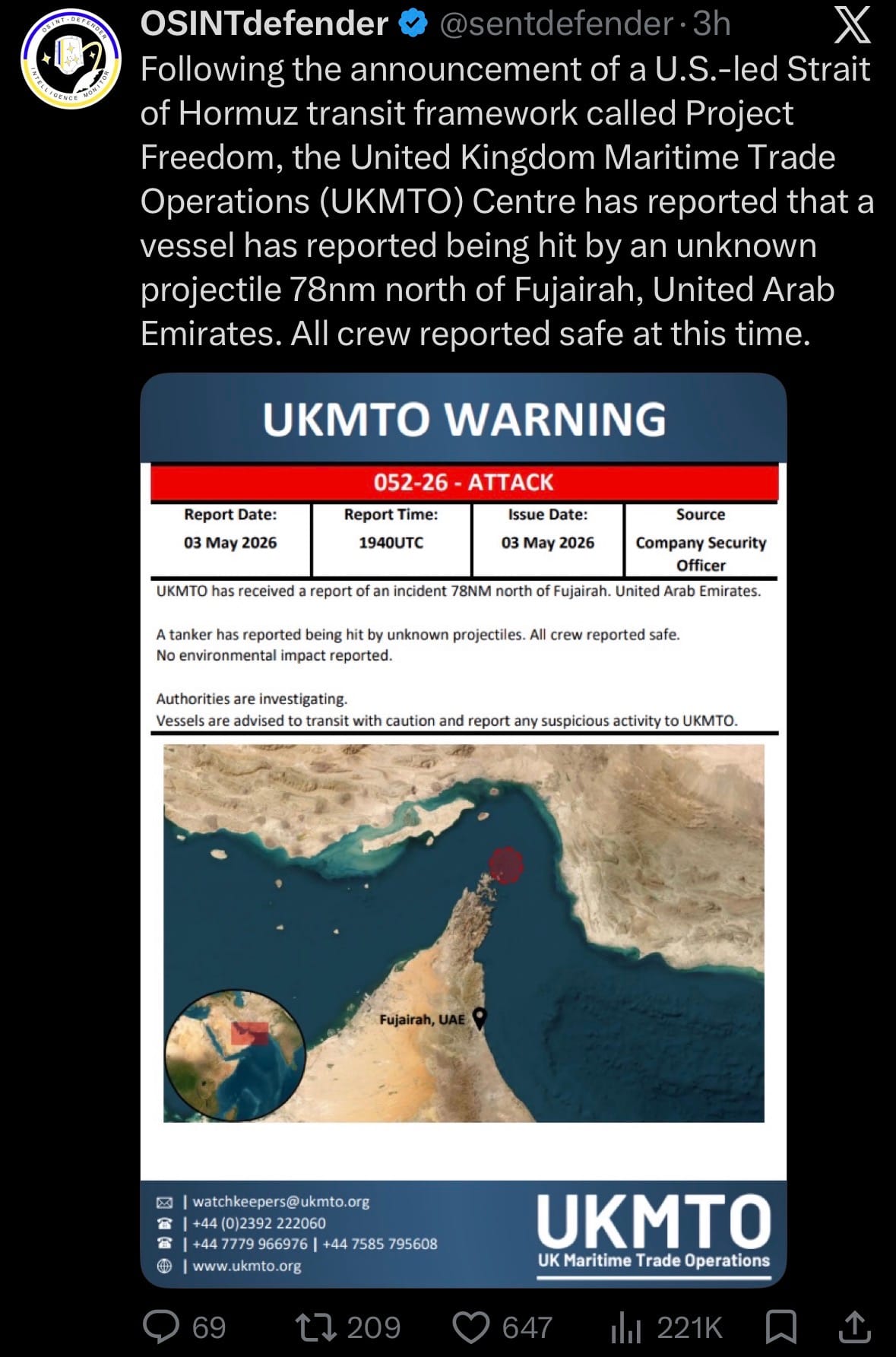
- Today, the U.S. has begun Project Freedom to protect commercial ships in the Strait of Hormuz, deploying warships, aircraft, and 15,000 troops so a quarter of the world’s oil supply can continue flowing freely.
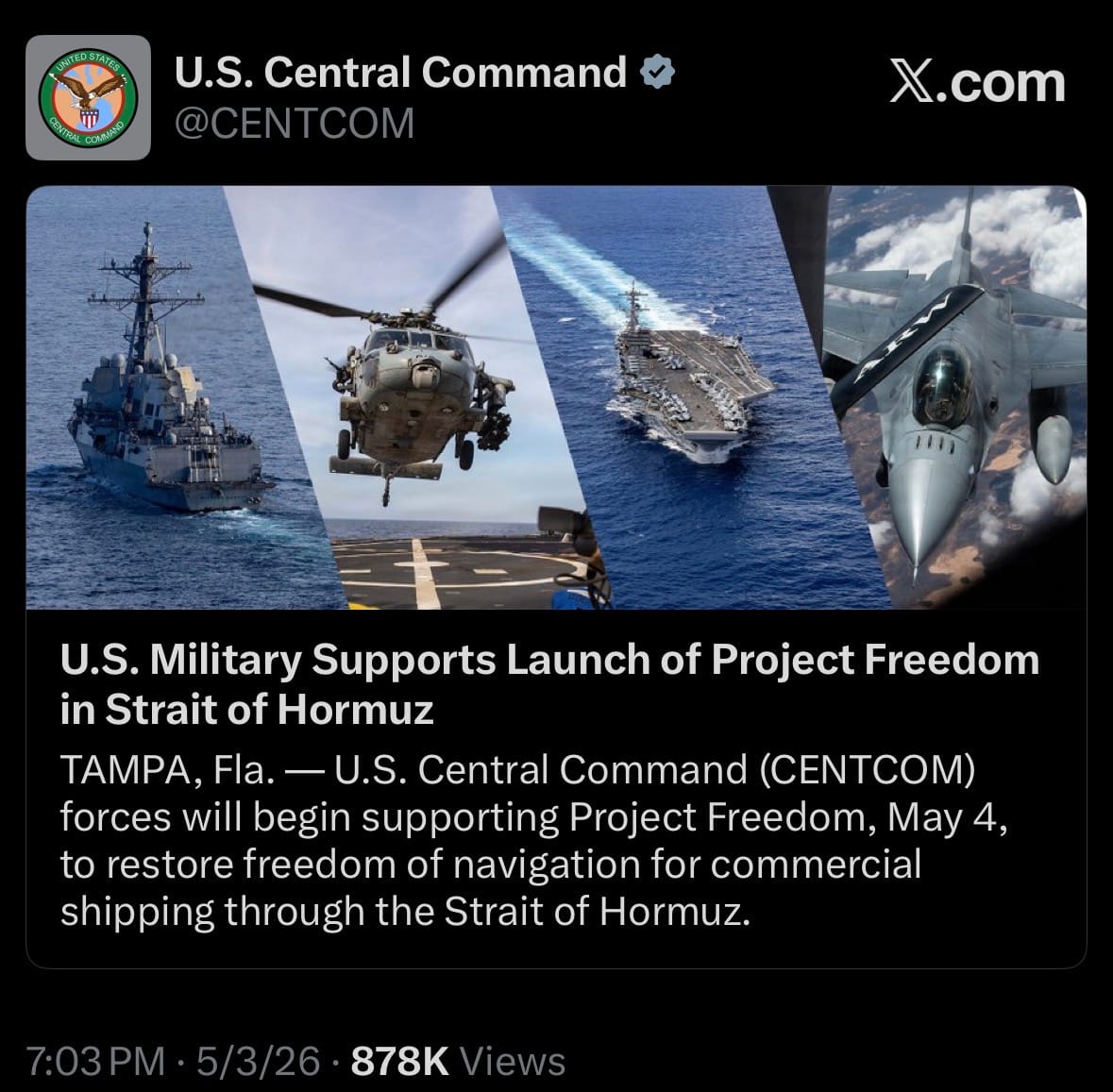
- This creates easing pressure on global shipping by escorting merchant vessels, while maintaining the naval blockade and countering Iranian threats and tolls in the region.
Space:
- Yesterday, SpaceX launched a Falcon 9 rocket from California carrying 45 satellites into orbit.
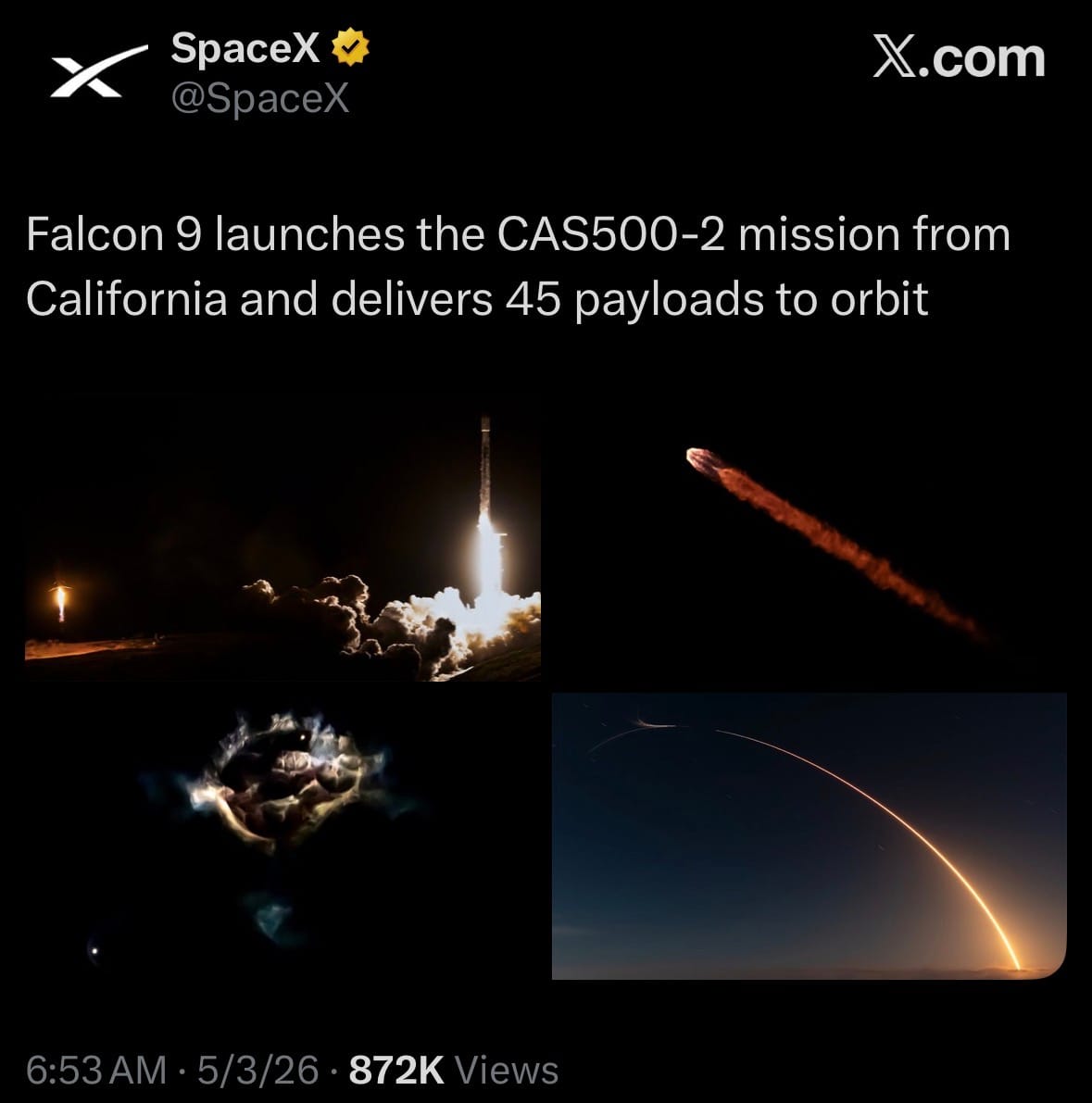
- The main payload was South Korea’s CAS500-2, a high-resolution Earth-observation satellite, along with 44 smaller satellites from companies including: Planet Labs (Pelican imaging satellites), Argotec (HEO MicroSats for Italy’s IRIDE constellation), Loft-EarthDaily (EarthDaily Analytics satellites), Lynk Global (direct-to-device connectivity), True Anomaly, Exolaunch, Impulso.Space, and others.
Statistic:
- Largest assets on Earth by market capitalization:
- Gold: $32.059T
- 🇺🇸 NVIDIA: $4.823T
- 🇺🇸 Alphabet (Google): $4.635T
- Silver: $4.271T
- 🇺🇸 Apple: $4.110T
- 🇺🇸 Microsoft: $3.076T
- 🇺🇸 Amazon: $2.886T
- 🇹🇼 TSMC: $2.062T
- 🇺🇸 Broadcom: $1.994T
- 🇸🇦 Saudi Aramco: $1.773T
- Bitcoin: $1.603T
- 🇺🇸 Meta Platforms: $1.545T
- 🇺🇸 Tesla: $1.467T
- 🇺🇸 Walmart: $1.048T
- 🇰🇷 Samsung: $1.020T
- 🇺🇸 Berkshire Hathaway: $1.020T
- 🇺🇸 Vanguard S&P 500 ETF: $905.86B
- 🇺🇸 Eli Lilly: $862.00B
- 🇺🇸 JPMorgan Chase: $837.26B
- 🇺🇸 iShares Core S&P 500 ETF: $802.16B
- 🇺🇸 SPDR S&P 500 ETF: $737.21B
- 🇰🇷 SK Hynix: $678.72B
- 🇺🇸 Exxon Mobil: $634.91B
- 🇺🇸 Visa: $623.82B
- 🇺🇸 Vanguard Total Stock Market ETF: $620.76B
History:
- U.S. presidential power has always been shaped by an ongoing push-and-pull between expansion and restriction, with key legal and political battles defining the limits of executive authority. The Constitution (1787) established a strong but constrained executive, with checks from Congress and the courts. Early tests came quickly: Marbury v. Madison (1803) established judicial review, allowing courts to limit executive actions, while Youngstown Sheet & Tube Co. v. Sawyer (1952) became one of the most important presidential power restrictions—when President Truman tried to seize steel mills during the Korean War, the Supreme Court blocked him, reinforcing that the president cannot act outside congressional authority even in wartime. Congress has also imposed limits directly, such as the War Powers Resolution (1973) after the Vietnam War, requiring presidents to notify Congress within 48 hours of military action and limiting deployments without approval. Following Watergate, major oversight reforms were passed, including the Congressional Budget and Impoundment Control Act (1974) and the creation of stronger intelligence oversight committees, aimed at preventing unchecked executive actions. The Foreign Intelligence Surveillance Act (FISA, 1978) further restricted surveillance powers by requiring court approval for domestic intelligence operations. These moments represent major oversight wins, where the legislative and judicial branches pulled power back from the presidency.
- At the same time, presidents have repeatedly expanded their authority, especially during crises. Abraham Lincoln (1861–1865) dramatically expanded executive power during the Civil War, including suspending habeas corpus—actions later partially validated by Congress. Franklin D. Roosevelt (1933–1945) expanded federal and executive power through the New Deal and wartime authority, including controversial actions like Executive Order 9066 (1942), which was upheld by the Supreme Court at the time (Korematsu v. United States, 1944). In the modern era, presidents have increasingly used executive orders, emergency powers, and national security authority to bypass gridlock. After 9/11 (2001), the presidency gained significant power through the Authorization for Use of Military Force (AUMF) and expanded surveillance under the Patriot Act, allowing broad counterterrorism operations globally. However, courts and Congress have pushed back at times, such as in Hamdan v. Rumsfeld (2006), where the Supreme Court limited military tribunals, and more recently in disputes over immigration, emergency declarations, and executive authority. From 2020–2026, battles have continued over issues like emergency powers, federal agency control, and executive action limits, with courts frequently acting as the deciding force. The overall pattern is clear: presidential power expands during crisis (war, economic collapse, terrorism), then faces partial rollback through legal and political challenges—creating a continuous cycle where the limits of executive authority are constantly tested, redefined, and contested.
Image of the day:

Thanks for reading! Earth is complicated, we make it simple.

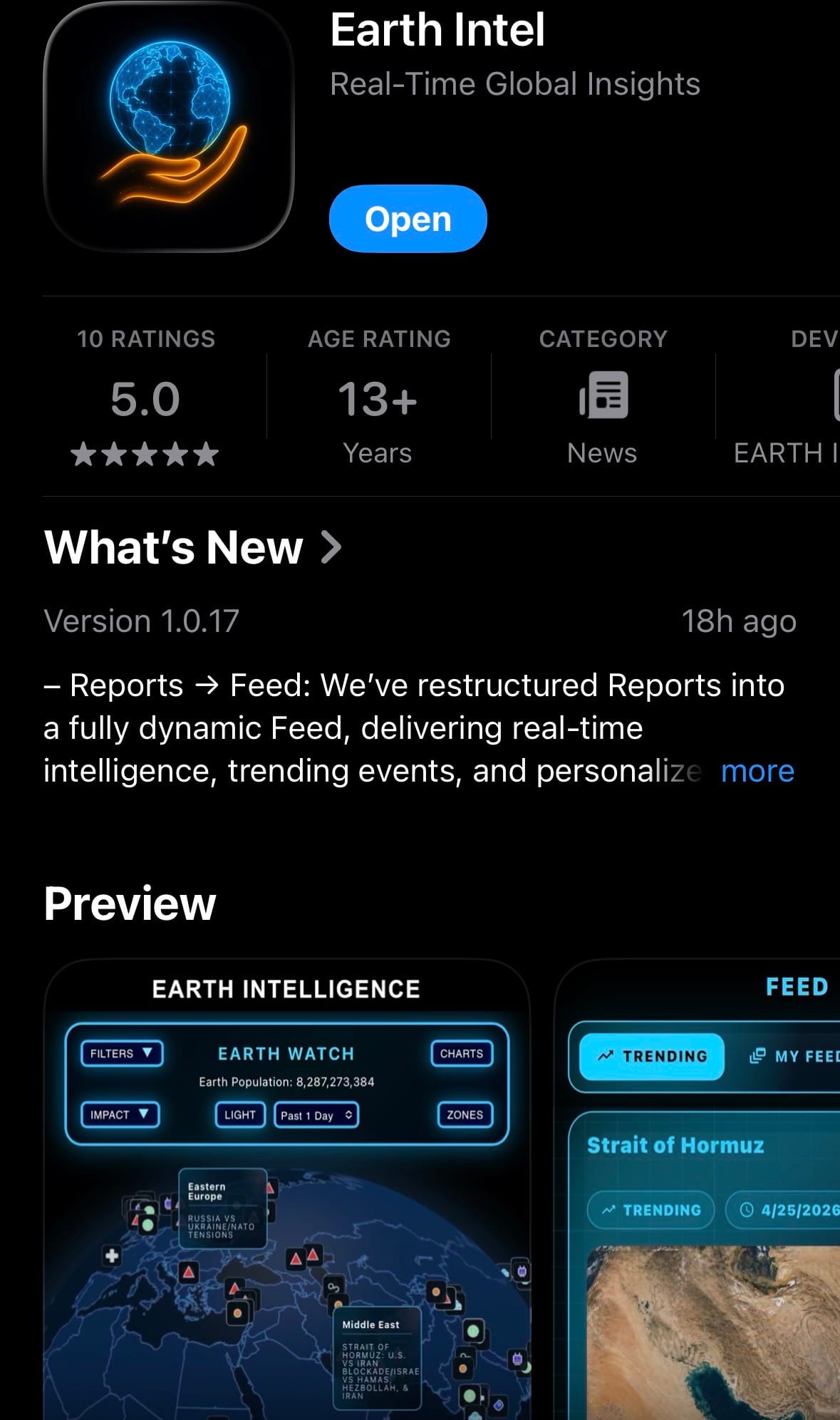
- Download our mobile app:


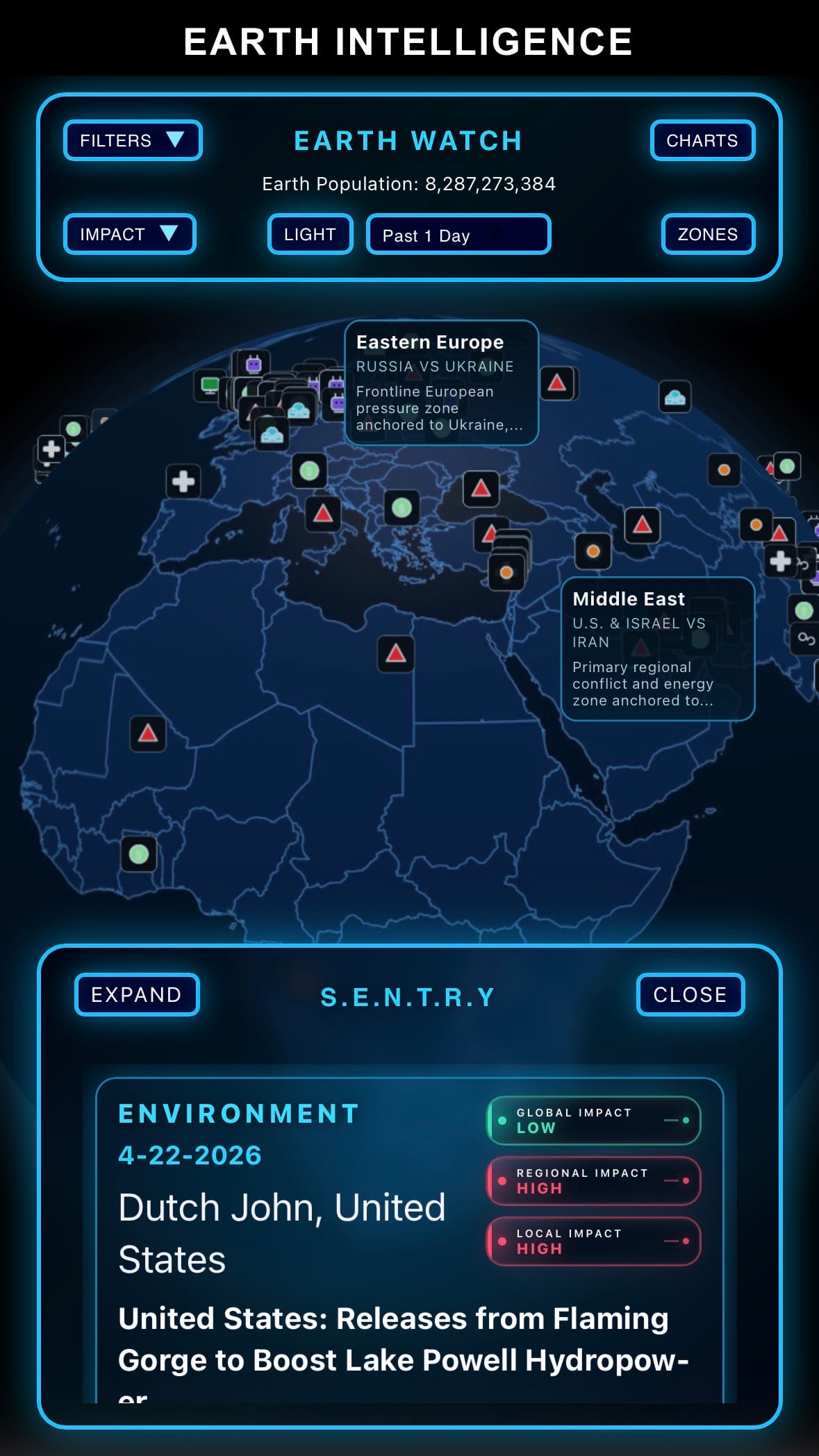
- Click below if you’d like to view our free EARTH WATCH globe:
Click below to view our previous newsletters:
Support/Suggestions Email:
support@earthintel.io