Monday☕️

Trending:
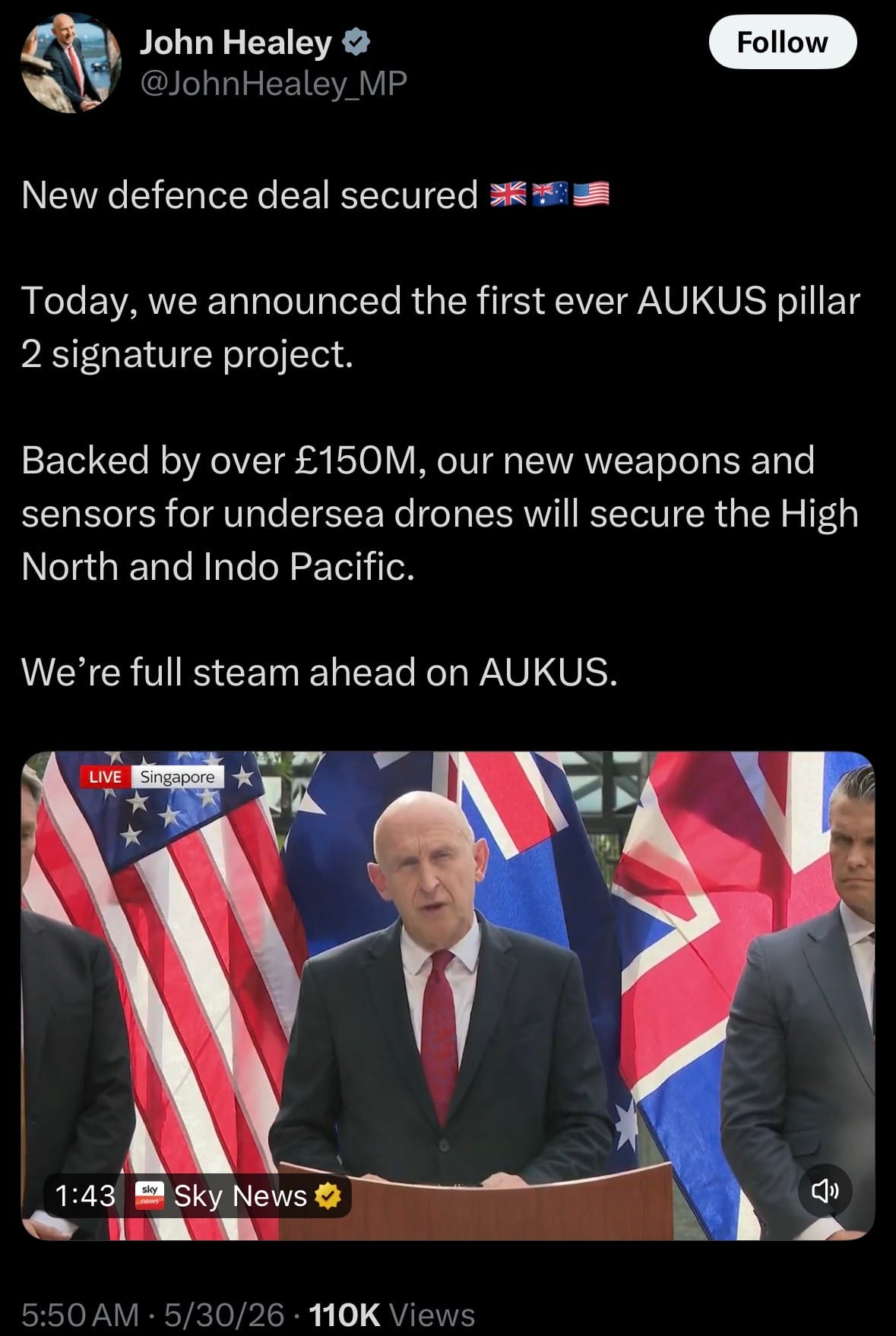
- Yesterday, the United States, United Kingdom, and Australia announced the first-ever AUKUS Pillar 2 signature project. Pillar 2 focuses on advanced defense technologies (beyond nuclear submarines); this project, backed by over $202 million USD, will develop cutting-edge weapons, sensors, and payloads for uncrewed undersea vehicles to protect seabed infrastructure, conduct surveillance, strikes, and strengthen security in the High North and Indo-Pacific.
U.S.-Iran Airstrikes:
- Over the weekend of May 30–31, 2026, U.S. Central Command (CENTCOM) conducted airstrikes on Iranian radar, air defense sites, and drone command facilities in Goruk and on Qeshm Island.
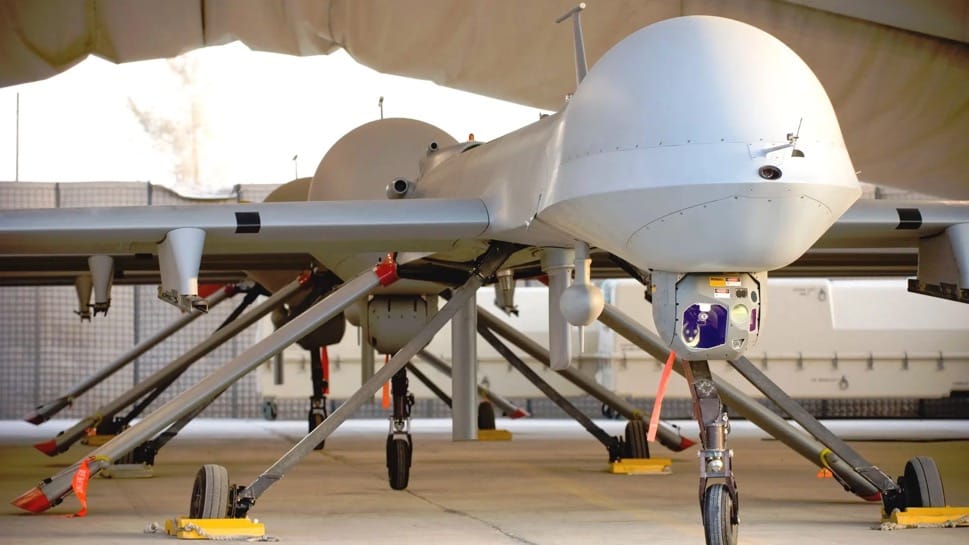
- The strikes responded to Iran shooting down a U.S. MQ-1 drone operating over international waters; U.S. forces destroyed Iranian air defenses, a ground control station, and two one-way attack drones that threatened shipping.
Economics & Markets:
- Russian-occupied Melitopol (southern Ukraine) gasoline has completely run out at stations, causing long queues and panic among locals and people traveling from Crimea.
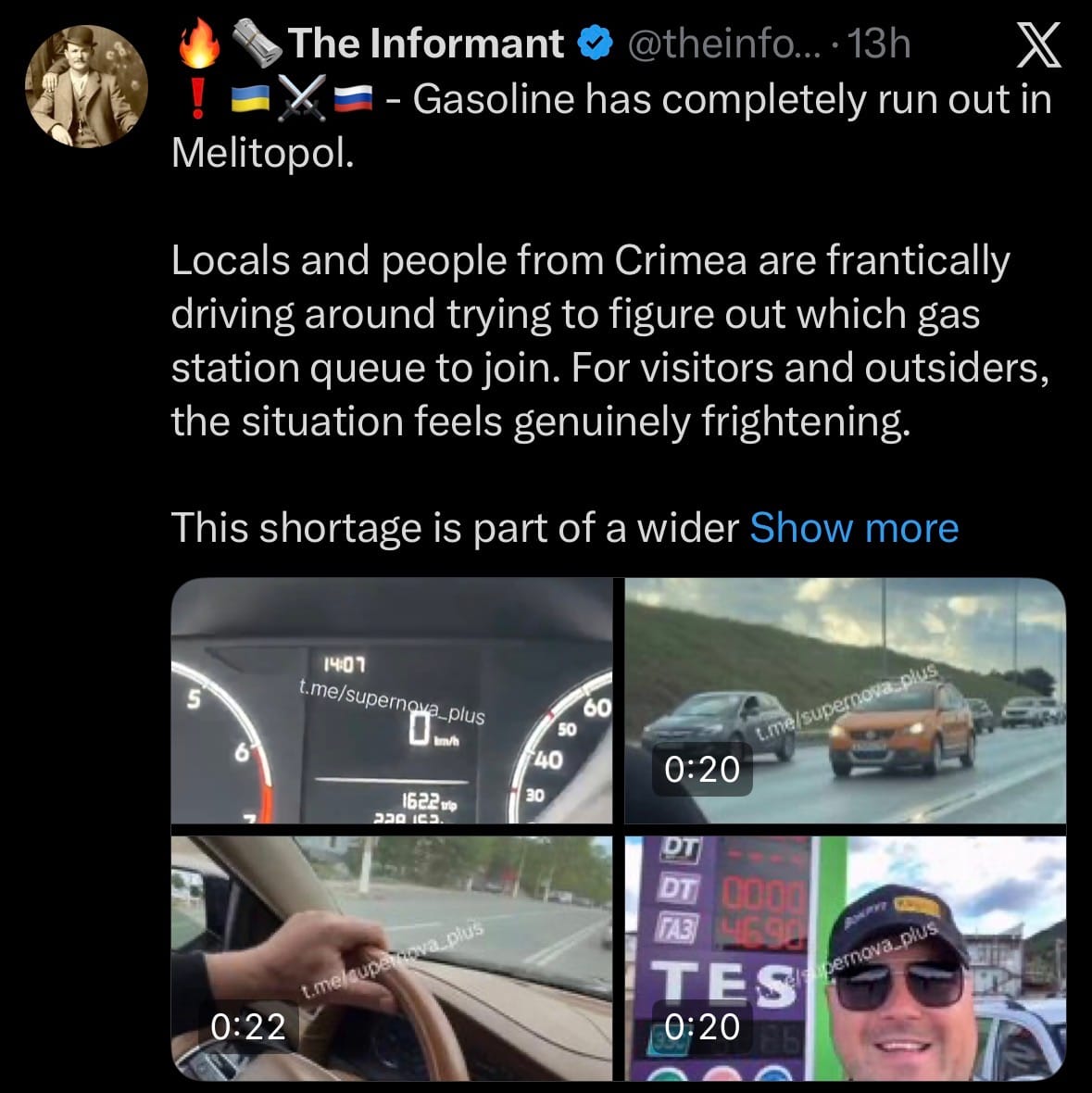
- Ukrainian strikes have severely disrupted Russian fuel supply routes through the Berdyansk-Melitopol-Dzhankoi corridor, destroying tankers and infrastructure. As a result, occupation authorities have imposed strict rationing (max 20 liters per person/vehicle), with many other stations out of 92/95 gasoline and only limited diesel available.
Space:
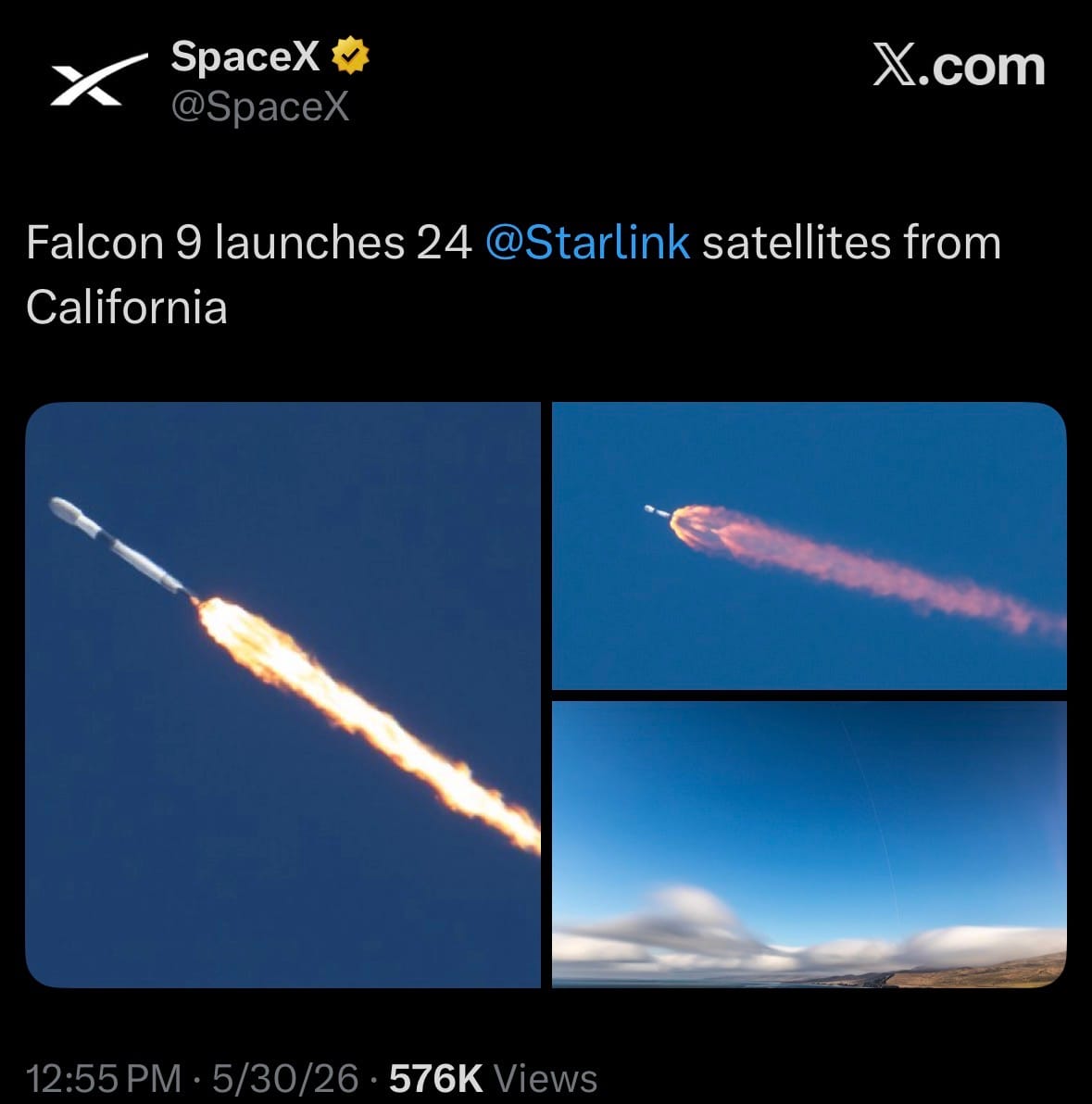
- On May 30, 2026, SpaceX launched a Falcon 9 rocket from Vandenberg Space Force Base in California. The mission successfully deployed 24 Starlink satellites into low-Earth orbit.
- On May 30, 2026, China successfully launched 4 SatNet test satellites on a Long March 2D rocket from Xichang Satellite Launch Center. These are technology demonstration satellites for China’s state-owned Guowang (SatNet) low-Earth orbit broadband internet constellation.
Statistic:
- Largest public companies on Earth by market capitalization:
- 🇺🇸 NVIDIA: $5.114T
- 🇺🇸 Apple: $4.583T
- 🇺🇸 Alphabet (Google): $4.560T
- 🇺🇸 Microsoft: $3.344T
- 🇺🇸 Amazon: $2.911T
- 🇹🇼 TSMC: $2.170T
- 🇺🇸 Broadcom: $2.115T
- 🇸🇦 Saudi Aramco: $1.775T
- 🇺🇸 Tesla: $1.636T
- 🇺🇸 Meta Platforms (Facebook): $1.605T
- 🇰🇷 Samsung: $1.510T
- 🇰🇷 SK Hynix: $1.112T
- 🇺🇸 Micron Technology: $1.095T
- 🇺🇸 Berkshire Hathaway: $1.023T
- 🇺🇸 Eli Lilly: $985.37B
- 🇺🇸 Walmart: $922.64B
- 🇺🇸 AMD: $841.55B
- 🇺🇸 JPMorgan Chase: $802.00B
- 🇺🇸 Oracle: $649.35B
- 🇳🇱 ASML: $621.58B
- 🇺🇸 Visa: $620.65B
- 🇺🇸 Exxon Mobil: $602.09B
- 🇺🇸 Intel: $576.38B
- 🇺🇸 Johnson & Johnson: $542.41B
- 🇨🇳 Tencent: $492.92B
- 🇺🇸 Cisco: $474.62B
History:
- Weather modification began as a scientific experiment but quickly became a strategic interest for governments around the world. The first major breakthrough occurred in 1946, when American scientist Vincent Schaefer successfully triggered snowfall by dropping dry ice into a cloud during experiments at General Electric. Shortly afterward, fellow researcher Bernard Vonnegut discovered that silver iodide could act as an artificial ice nucleus, making cloud seeding far more practical. These discoveries launched a global race to influence weather. The United States began cloud-seeding programs throughout the 1950s, while the Soviet Union developed its own atmospheric modification projects to increase agricultural yields and manage weather across its vast territory. During the 1950s and 1960s, Canada, France, Australia, and South Africa also launched weather-modification research programs. One of the most ambitious projects was the U.S. government’s Project Stormfury (1962–1983), which attempted to weaken Atlantic hurricanes by seeding them with silver iodide. Although the project ultimately failed to prove hurricanes could be reliably controlled, it represented one of the largest weather-engineering efforts in history. During the Cold War, weather became increasingly viewed not just as an environmental challenge but as a potential strategic asset.
- The most significant military use of weather modification came during the Vietnam War through Operation Popeye (1967–1972). Conducted by the United States Air Force and CIA-supported operations, aircraft seeded clouds over parts of Laos, Cambodia, and North Vietnam in an attempt to extend the monsoon season and turn supply routes such as the Ho Chi Minh Trail into mud. Internal documents later summarized the goal as “make mud, not war.” The operation reportedly increased rainfall in targeted areas and became one of the reasons the international community negotiated the Environmental Modification Convention (ENMOD) in 1977, which prohibited hostile environmental modification in warfare. Throughout the 1970s–2000s, weather modification expanded globally. The Soviet Union used cloud seeding to reduce hail damage and improve agriculture. Russia later continued these programs and became known for clearing clouds before major public events such as Victory Day celebrations in Moscow. Israel conducted decades of cloud-seeding research beginning in the 1960s over the Sea of Galilee watershed. Australia experimented with rainfall enhancement programs, while the United Arab Emirates began major cloud-seeding efforts in the 1990s and 2000s to increase rainfall in its desert climate. By the early 2000s, weather modification had become an accepted, though limited, atmospheric management tool used by dozens of countries.
- By 2026, more than 50 countries have experimented with or actively operate weather-modification programs. China is widely considered the largest operator in the world. Its national weather-modification program expanded dramatically after the 2008 Beijing Olympics, where cloud-seeding aircraft and rockets were used to reduce the chance of rain during ceremonies. By the 2020s, China was operating weather-modification systems across hundreds of thousands of square miles, with plans covering regions larger than many countries. The United States continues cloud-seeding programs in states such as Colorado, Utah, Wyoming, Idaho, Nevada, and California to increase snowpack and water resources. The UAE conducts hundreds of cloud-seeding missions annually using specialized aircraft. Modern techniques now include silver iodide flares, hygroscopic salt particles, advanced weather radar, AI-assisted forecasting, satellite monitoring, and atmospheric modeling systems. At the same time, new forms of climate engineering have emerged, including marine cloud brightening, stratospheric aerosol injection, and carbon-removal technologies designed to influence global climate rather than local weather. This is where many modern conspiracy theories emerge. Proven capabilities include limited rainfall enhancement, fog dispersal, and hail suppression. More speculative claims involve controlling hurricanes, steering storms, creating droughts, triggering disasters, or operating secret climate weapons. What history clearly shows is that governments have spent 80 years (1946–2026) researching ways to influence weather, have successfully modified some localized atmospheric conditions, and continue investing billions into understanding and potentially managing environmental systems. The debate today is no longer whether weather can be influenced—it is how much influence is possible, who controls it, and where the line exists between weather modification and climate engineering.
Image of the day:
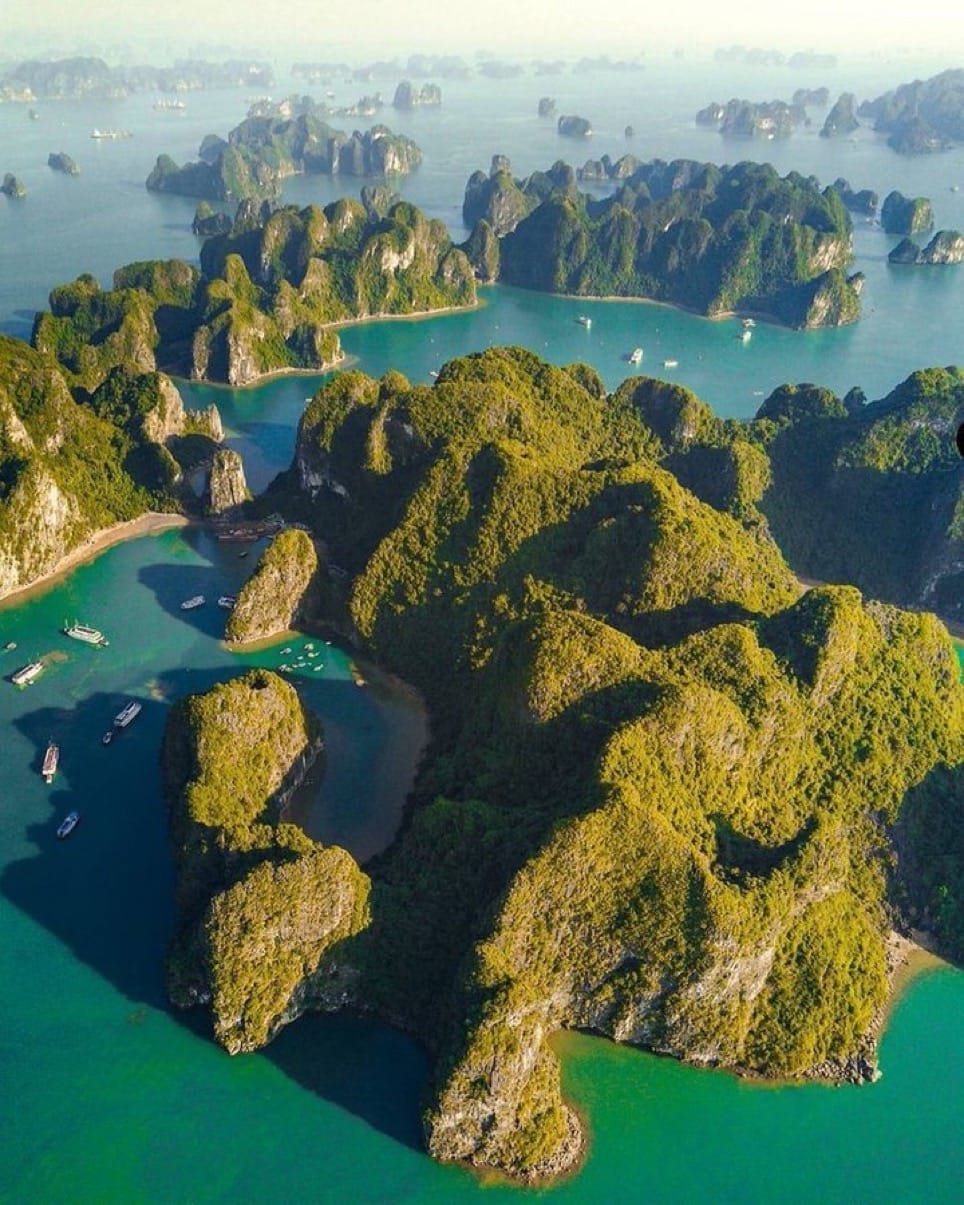
Thanks for reading! Earth is complicated, we make it simple.
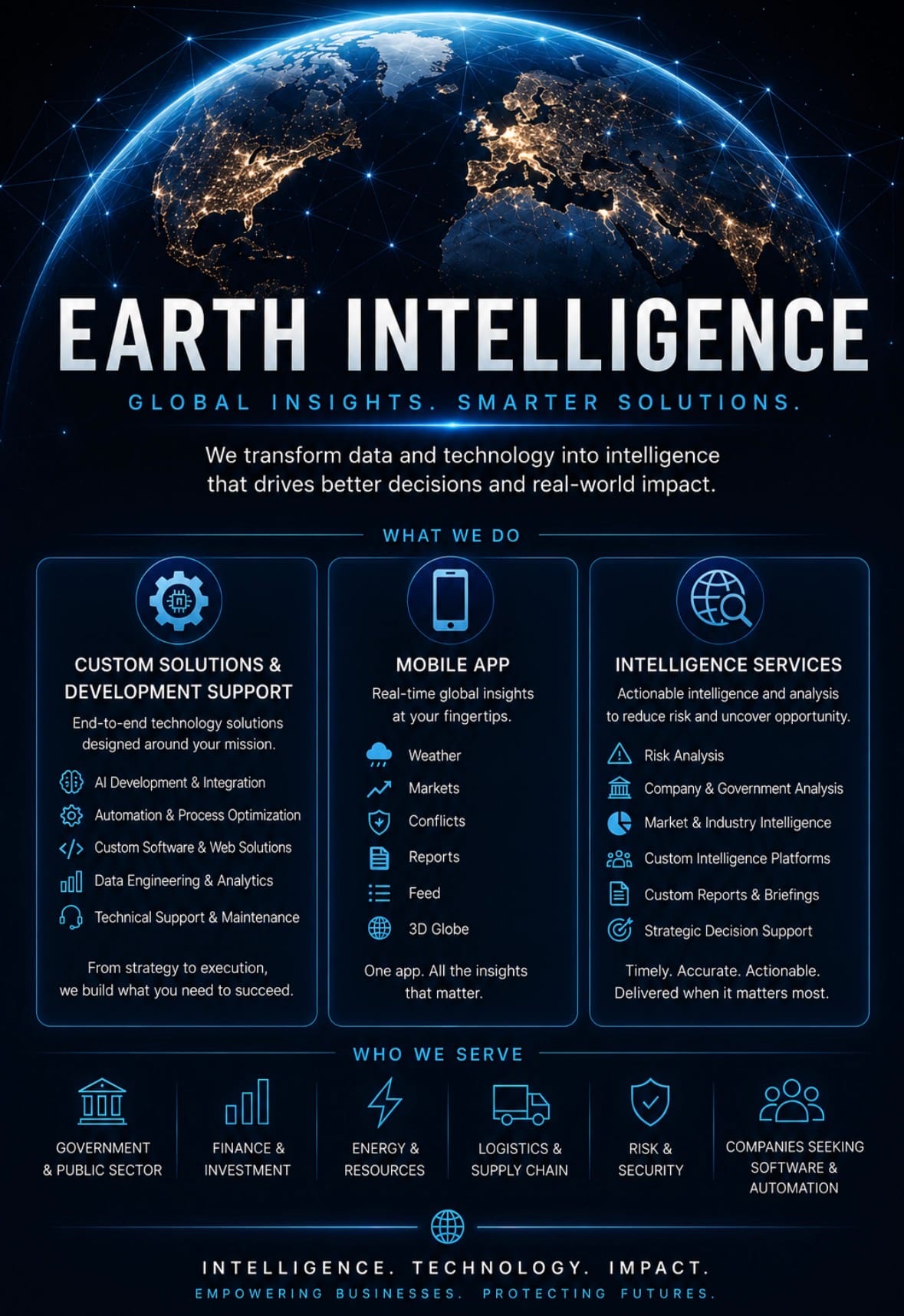
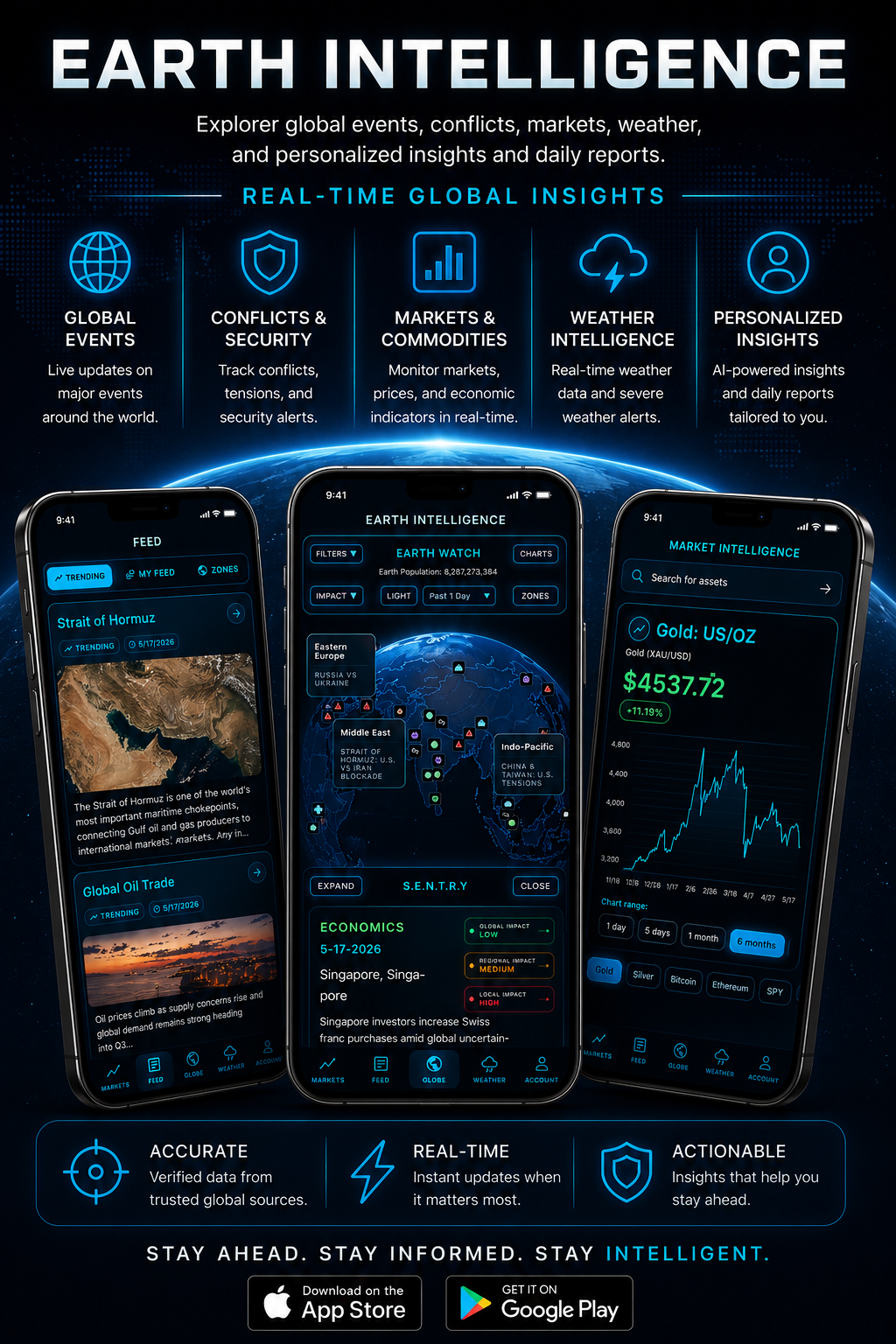
- Download our mobile app:


Click below to view our previous newsletters:
Support/Suggestions Email:
support@earthintel.io