Monday☕️🌎


Trending:
- August 16, 2026 — Belgium is battling the largest wildfire in its modern history after a fire that began August 14 burned roughly 30 square kilometers (3,000 hectares) of the High Fens nature reserve near the German border.

- Around 600 people were evacuated from nearby communities, while more than 250 emergency personnel and firefighting aircraft from several European countries are working to contain the blaze, which has been difficult to control because of dry peatlands, forests, heat, and shifting winds.
Geopolitics & Military Activity:
- August 16, 2026 — Ukraine launched one of its largest drone attacks on the Moscow region, setting fire to Wildberries’ massive 250,000-square-meter warehouse in Koledino and hitting another logistics complex in Domodedovo.

- Ukraine says it has now disabled seven of Wildberries’ 10 largest logistics centers, which Kyiv claims support Russia’s military supply network; Russian authorities reported at least one person killed and several injured across the Moscow region, while major Moscow airports temporarily suspended flights.


Environment & Weather:
Space:
- August 15, 2026 — SpaceX successfully launched two Falcon 9 rockets just 38.5 minutes apart from opposite U.S. coasts, setting a company record for the shortest time between launches.
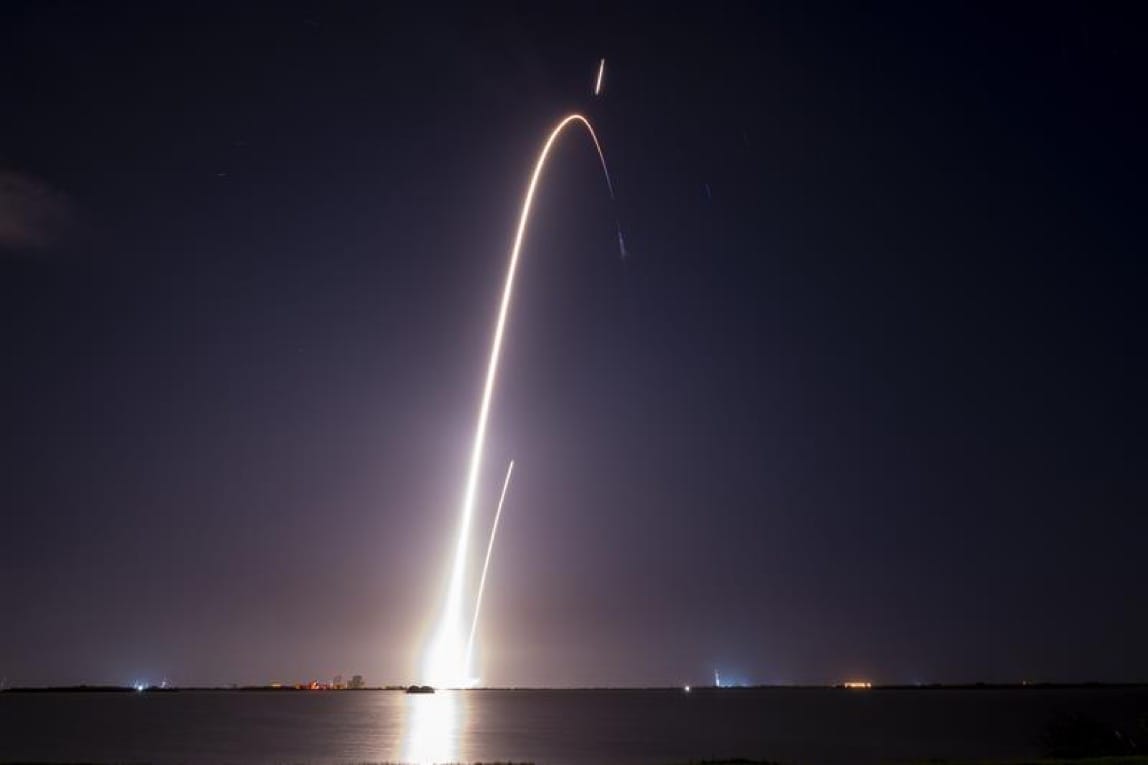
- The first launched eight Globalstar communications satellites from Cape Canaveral, Florida, followed by the classified USSF-366 mission for the U.S. Space Force from Vandenberg, California; both boosters landed successfully, with the second marking SpaceX’s 650th booster recovery.
Statistic:
- Largest assets on Earth by market capitalization:
- 🇺🇸 NVIDIA: $5.453T
- 🇺🇸 Apple: $4.464T
- 🇺🇸 Alphabet (Google): $4.201T
- 🇺🇸 Microsoft: $3.678T
- 🇺🇸 Amazon: $2.833T
- 🇹🇼 TSMC: $2.211T
- 🇺🇸 Broadcom: $1.869T
- 🇺🇸 SpaceX: $1.844T
- 🇸🇦 Saudi Aramco: $1.722T
- 🇺🇸 Meta Platforms: $1.502T
- 🇺🇸 Tesla: $1.351T
- 🇰🇷 Samsung: $1.273T
- 🇺🇸 Micron Technology: $1.097T
- 🇺🇸 Berkshire Hathaway: $1.078T
- 🇺🇸 Eli Lilly: $1.051T
- 🇺🇸 Vanguard S&P 500 ETF: $1.021T
- 🇺🇸 JPMorgan Chase: $964.49B
- 🇺🇸 Walmart: $917.32B
- 🇺🇸 iShares Core S&P 500 ETF: $905.86B
- 🇺🇸 AMD: $839.72B
- 🇰🇷 SK Hynix: $825.10B
- 🇺🇸 SPDR S&P 500 ETF: $820.96B
- 🇳🇱 ASML: $708.31B
- 🇺🇸 Vanguard Total Stock Market ETF: $680.91B
- 🇺🇸 Visa: $679.88B
History of Visa:
- Visa began as a Bank of America experiment, not as a technology company. On September 18, 1958, Bank of America launched BankAmericard in Fresno, California, mailing roughly 60,000 unsolicited credit cards to residents in what became known as the “Fresno Drop.” Credit cards already existed—companies such as Diners Club (1950) and American Express had introduced charge cards—but BankAmericard was designed as a reusable, revolving-credit card accepted by many different merchants. The rollout initially suffered heavy fraud and unpaid balances, but Bank of America improved authorization, collections, merchant rules, and fraud controls. During the 1960s, it began licensing BankAmericard to other banks across the United States and internationally. Competitors responded by creating Interbank Card Association in 1966, which eventually became Mastercard. Because Bank of America could not realistically control a worldwide payment system alone, participating banks created National BankAmericard Inc. in 1970 to operate the network independently. International operations were coordinated through IBANCO in 1974, and in 1976, BankAmericard was renamed Visa, a short name designed to work across languages and countries.
- Visa’s real innovation was creating a global network connecting consumers, banks and merchants. Visa generally does not lend consumers the money on a Visa card; banks and financial institutions issue the cards and provide the credit. When someone taps or inserts a Visa card, the merchant sends the transaction through an acquiring bank or payment processor, Visa’s network routes the authorization request to the cardholder’s issuing bank, the bank approves or declines it, and the response travels back—normally within seconds. The transaction is later cleared and settled between the institutions. This model allowed Visa to scale without becoming the bank behind every transaction. Technology continuously improved the system: magnetic stripes expanded during the 1970s, electronic authorization replaced manual phone calls, ATMs and debit cards expanded during the 1980s and 1990s, the internet created e-commerce payments, EMV chips reduced counterfeit-card fraud, and contactless tap-to-pay, smartphones, tokenization and digital wallets transformed cards into digital credentials. Visa also built VisaNet, its enormous transaction-processing infrastructure, and expanded into debit, commercial payments, cross-border transactions, fraud detection, money movement and APIs. The rise of PayPal, Apple Pay, Google Pay, Stripe, Block and other fintech companies did not necessarily eliminate Visa because many of those services still use Visa’s underlying network to move payments.
- Today, Visa is one of the world’s largest payment networks, connecting billions of payment credentials, tens of millions of merchants and thousands of financial institutions across more than 200 countries and territories. Visa became a public company through its massive 2008 IPO, initially raising about $17.9 billion, then one of the largest U.S. IPOs ever. Its business is powerful because Visa can earn fees from enormous payment volume without taking most of the direct consumer credit risk carried by issuing banks. It makes money primarily from service fees, transaction processing, international transactions and other network services. Visa competes most directly with Mastercard, while American Express and Discover operate somewhat different models, and China’s UnionPay is another enormous global card network. The next competition is increasingly digital: instant bank payments, stablecoins, cryptocurrencies, AI-powered commerce and digital wallets could change how money moves. Visa has responded by investing in tokenization, cybersecurity, fraud-detection AI, real-time money movement and blockchain/stablecoin settlement infrastructure. Its evolution can be summarized as 1958 BankAmericard → 1970 independent bank network → 1976 Visa → electronic global payments → 2008 public company → today’s digital payment infrastructure. What began as 60,000 physical cards mailed to people in one California city evolved into a financial network capable of helping authorize and settle commerce across almost the entire planet.
Image of the day:
Thanks for reading! Earth is complicated, we make it simple.
- Download our mobile app:



Click below to view our previous newsletters:
Support/Suggestions Email:
support@earthintel.io