Tuesday☕️🌎


Trending:
- Yesterday, a powerful magnitude 7.4 earthquake struck western Colombia near San José del Palmar, killing at least 111 people and injuring 87, with officials warning the death toll could rise as rescue operations continue.
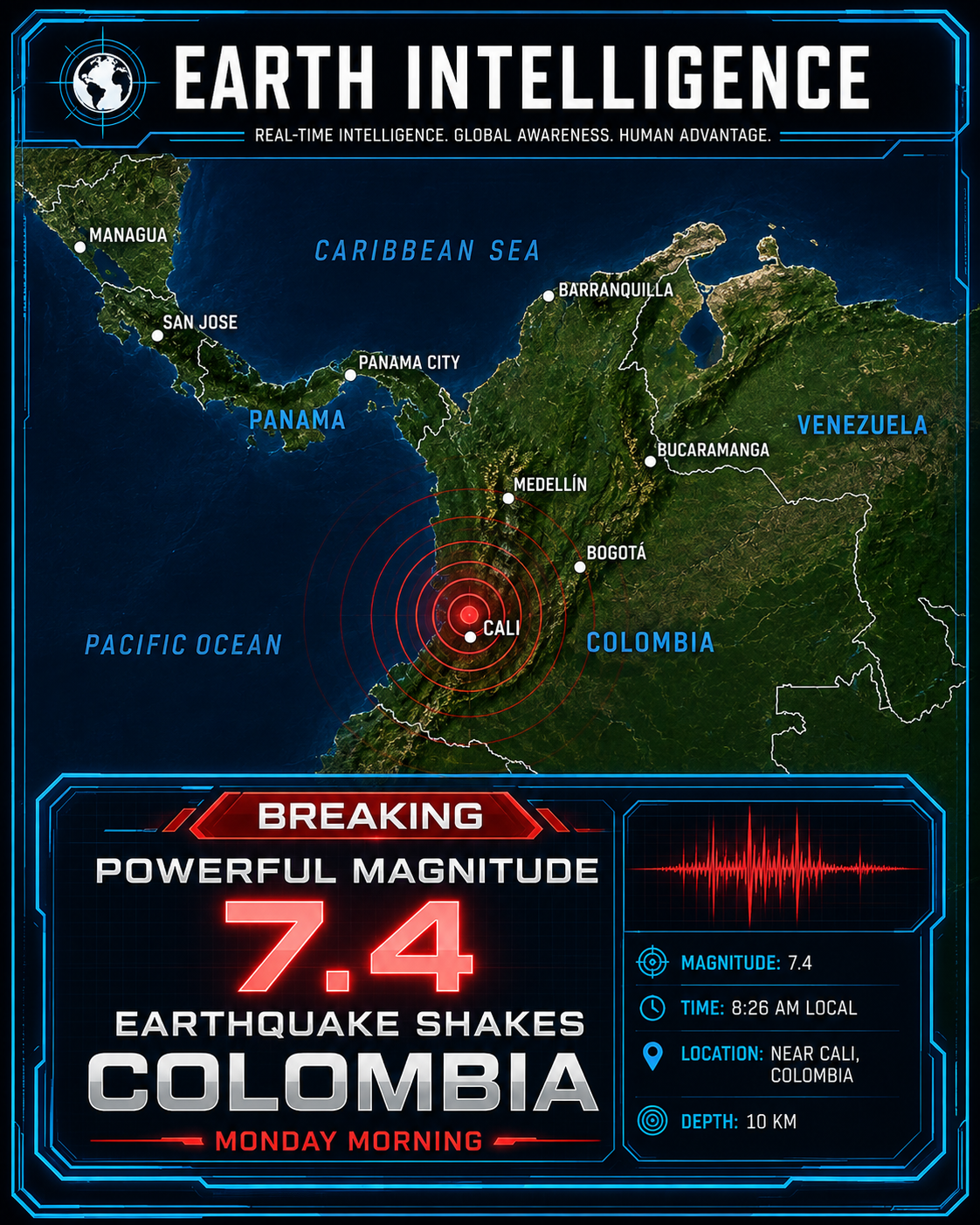
- The quake—the strongest to hit Colombia this century—caused widespread building collapses and infrastructure damage across Pereira, Cali, Manizales and Chocó, disrupted airports and power, and was felt as far away as Ecuador, Panama and Venezuela.
Economics & Markets:

Business:
- August 10, 2026 — Archer Aviation signed agreements to acquire Boeing’s Wisk Aero, Insitu, and SkyGrid, with Boeing taking nearly a 20% stake in Archer and becoming a strategic partner; the deal is expected to close by year-end.
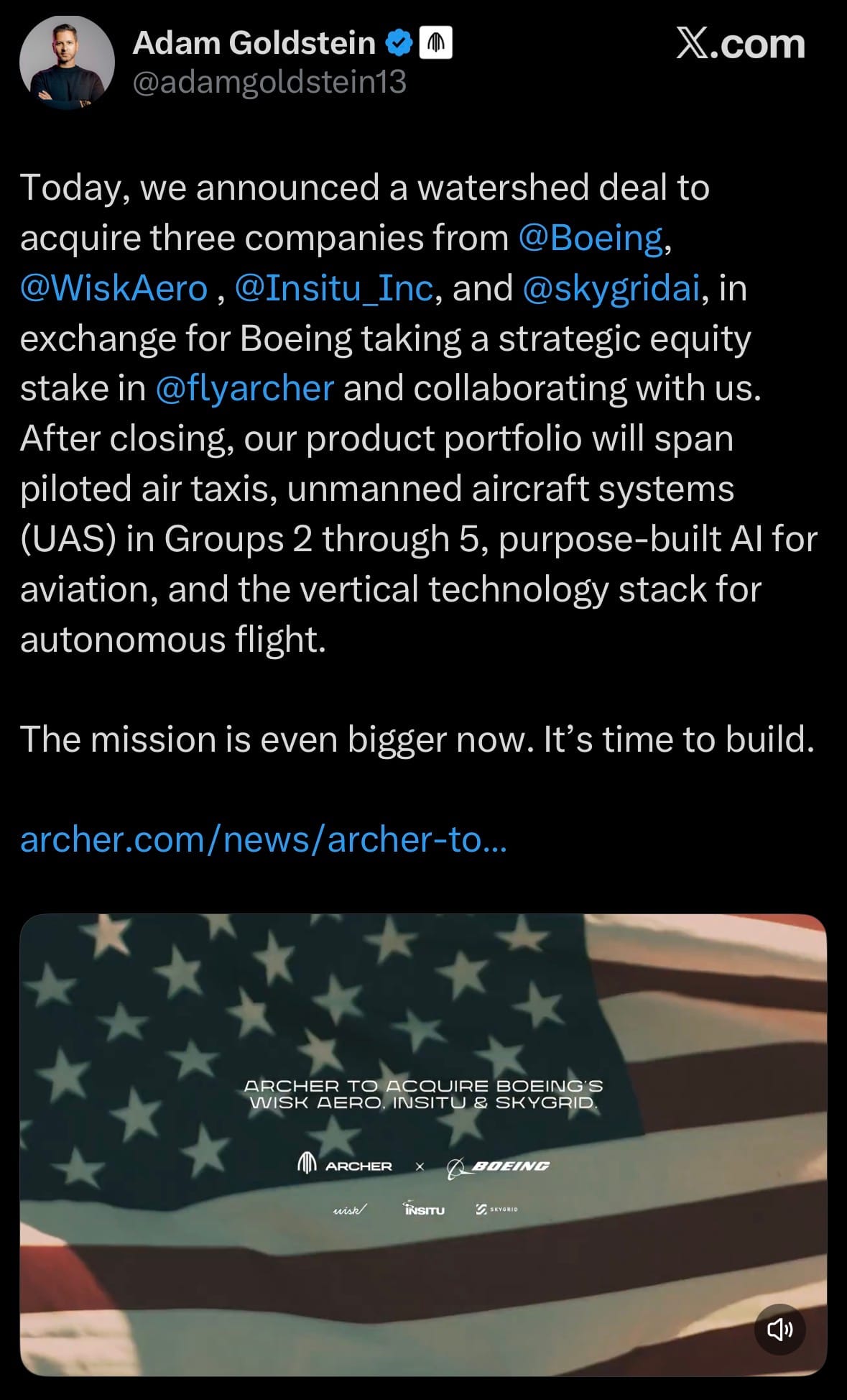
- Wisk brings advanced autonomous-flight technology that Archer plans to test first on its Halo/Thunder aircraft before eventually bringing autonomy to passenger air taxis; Insitu adds an established military drone business with more than $200 million in annual revenue, operations in 35 countries, 4,000 drones produced, and nearly 2 million flight hours; and SkyGrid adds airspace-management software that Archer plans to combine with its ZEE aviation AI model—expanding Archer into air taxis, military drones, aviation AI, and autonomous flight systems.
Environment & Weather:

Space:
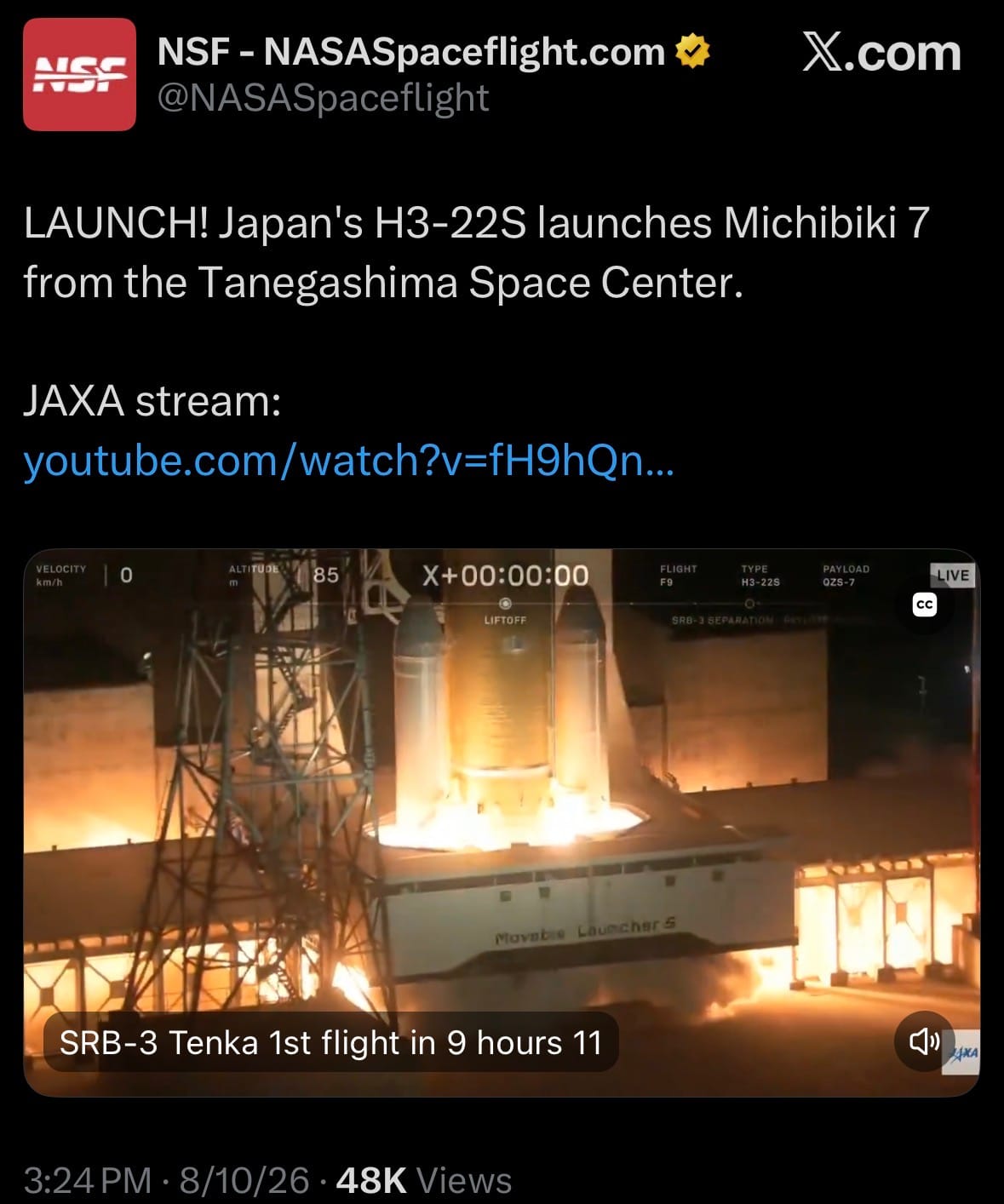
- Michibiki 7 — August 11, 2026 — Japan successfully launched the Michibiki 7 navigation satellite aboard an H3 rocket from the Tanegashima Space Center, expanding Japan’s satellite navigation system and improving GPS coverage across Japan and the Asia-Pacific.
- ChinaSat 4B — August 10, 2026 — China attempted to launch the ChinaSat 4B communications satellite aboard a Long March 7A rocket from the Wenchang Space Launch Site, but the rocket failed about 85 seconds after liftoff and the satellite was lost.
Science & Technology:

Statistic:
- Largest public clothing companies on Earth by market capitalization:
- 🇫🇷 LVMH: $274.66B
- 🇪🇸 Inditex: $212.49B
- 🇫🇷 Hermès: $198.92B
- 🇺🇸 TJX Companies: $175.44B
- 🇯🇵 Fast Retailing: $151.76B
- 🇫🇷 Dior: $91.67B
- 🇺🇸 Ross Stores: $81.74B
- 🇺🇸 Cintas: $81.11B
- 🇺🇸 Nike: $62.47B
- 🇫🇷 Kering: $40.13B
- 🇩🇪 Adidas: $33.83B
- 🇺🇸 Tapestry: $33.29B
- 🇸🇪 H&M: $30.21B
- 🇺🇸 Ralph Lauren: $24.24B
- 🇬🇧 Next plc: $24.10B
- 🇺🇸 Burlington Stores: $23.34B
- 🇮🇹 Moncler: $16.03B
- 🇨🇦 lululemon athletica: $14.51B
- 🇮🇹 Prada: $14.33B
- 🇨🇦 Aritzia: $11.61B
- 🇵🇱 LPP SA: $11.07B
- 🇨🇦 Gildan: $10.64B
- 🇺🇸 Levi Strauss & Co.: $9.08B
- 🇺🇸 Gap Inc.: $7.74B
- 🇭🇰 Bosideng: $7.12B
History:
- Lululemon began in Vancouver, Canada, in 1998, when entrepreneur Chip Wilson founded the company after becoming interested in yoga and noticing that existing athletic clothing was poorly suited for the activity. Wilson had previously built the surf, skate, and snowboard company Westbeach, giving him experience in technical apparel. The first Lululemon Athletica store opened in Vancouver’s Kitsilano neighborhood in 2000, initially functioning partly as a design studio and community space. Its core breakthrough was treating yoga clothing as premium technical athletic equipment rather than inexpensive workout wear. Lululemon developed fitted products using stretchy technical fabrics, flat seams, sweat-management features, and designs that could transition from a yoga studio into everyday life. The company also built communities around stores by working with local yoga instructors, athletes, and fitness ambassadors instead of relying entirely on traditional advertising. This combination helped establish the modern athleisure market, where athletic clothing became normal everyday clothing.
- Lululemon expanded rapidly during the 2000s across Canada and the United States. Private-equity firms Advent International and Highland Capital Partners invested in 2005, helping finance expansion, and Lululemon completed its IPO in 2007, listing on Nasdaq under LULU. Chip Wilson gradually moved away from day-to-day management, and the company went through several leadership transitions. One of its biggest crises occurred in 2013, when some of its black Luon yoga pants were recalled because the material could become excessively sheer. The episode contributed to the departure of CEO Christine Day and damaged the company’s reputation for quality. Wilson also generated controversy with comments about the products and customers, eventually stepping down as chairman in 2013 and leaving the board in 2015, although he remained a major shareholder. Lululemon recovered by strengthening quality control, expanding internationally, improving e-commerce, and moving beyond women’s yoga apparel. Under CEO Calvin McDonald, who took over in 2018, the company accelerated into men’s clothing, running, training, footwear, accessories, and international markets. Major products such as the Align leggings, Scuba hoodies, ABC men’s pants, Define jackets, and technical running apparel helped transform Lululemon from a yoga brand into a broader premium athletic company.
- Today, Lululemon competes with Nike, Adidas, Athleta, Alo Yoga, Vuori, Under Armour, and other premium athletic brands, but its business model remains distinctive. Instead of competing primarily through professional sports sponsorships, Lululemon built much of its power around premium pricing, technical fabrics, direct-to-consumer sales, carefully controlled stores, limited discounting, community marketing, and extremely strong brand loyalty. It operates hundreds of stores internationally and has made China and broader international expansion major growth priorities as North American growth has matured. The company has also experimented beyond clothing: it purchased connected-fitness company Mirror for $500 million in 2020, but the pandemic-era home-fitness strategy struggled and Lululemon later substantially reduced the business, demonstrating that its strongest competitive advantage remains apparel rather than hardware. Its current focus is expanding men’s products, running and training categories, footwear, international markets, fabric innovation, and maintaining its premium position while competing with rapidly growing brands such as Alo and Vuori. In less than three decades, Lululemon went from a single Vancouver yoga store to one of the world’s most recognizable athletic-apparel companies, helping turn leggings, technical workout clothing, and athleisure into a massive global fashion category.
Image of the day:

Thanks for reading! Earth is complicated, we make it simple.
- Download our mobile app:



Click below to view our previous newsletters:

Support/Suggestions Email:
support@earthintel.io