Thursday☕️


Trending:
- On May 20, the FBI shut down a major India-based call center that defrauded hundreds of elderly Americans and other victims out of millions of dollars through tech support scams.
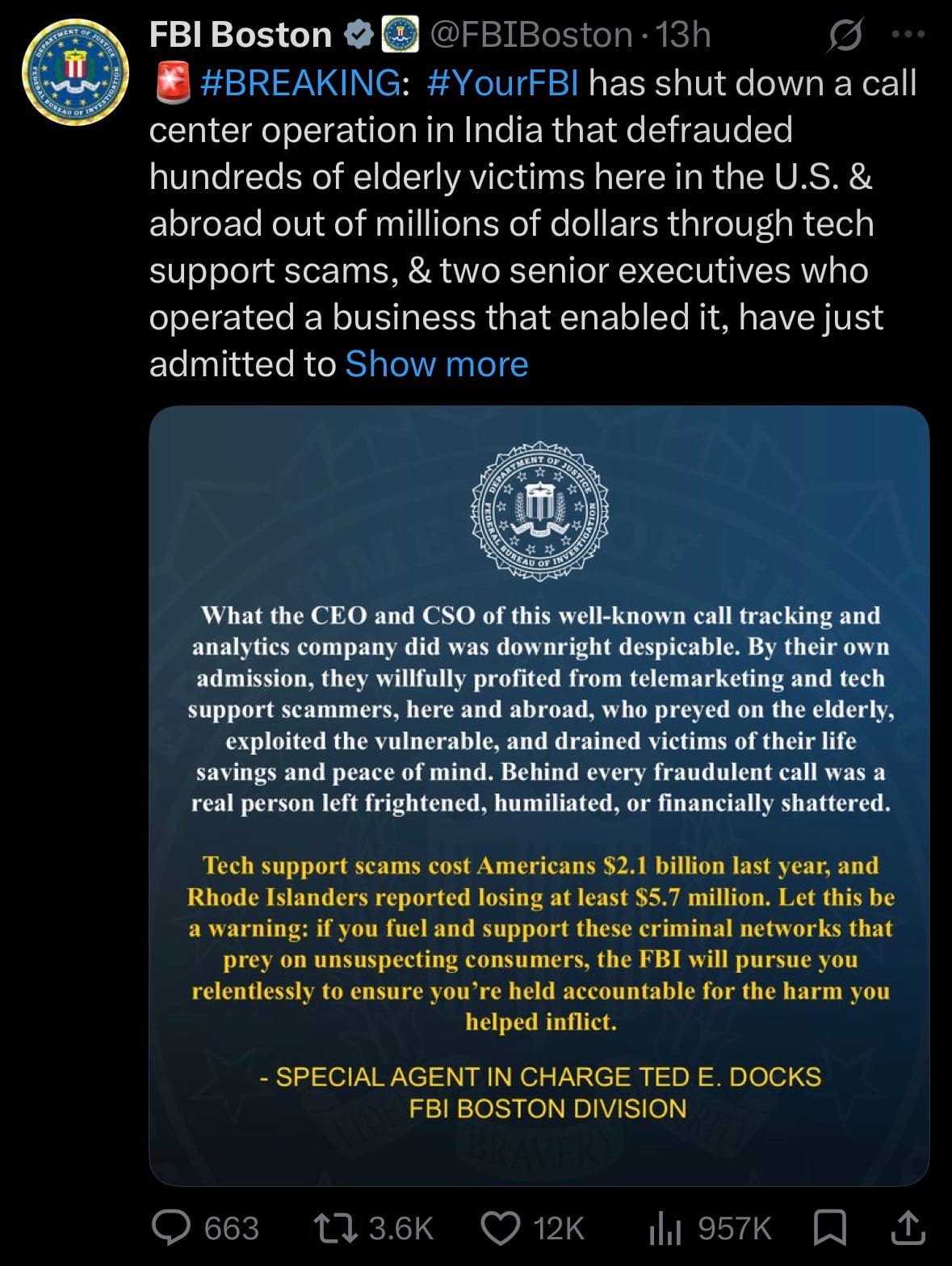
- Two senior executives of the U.S.-based company that routed the scam calls admitted they knowingly ignored the widespread fraud. This follows earlier arrests and convictions of a former employee and five India-based telemarketers in the FBI Boston investigation.
Economics & Markets:
- On May 20, SpaceX officially filed for its highly anticipated IPO on Nasdaq under the ticker $SPCX.
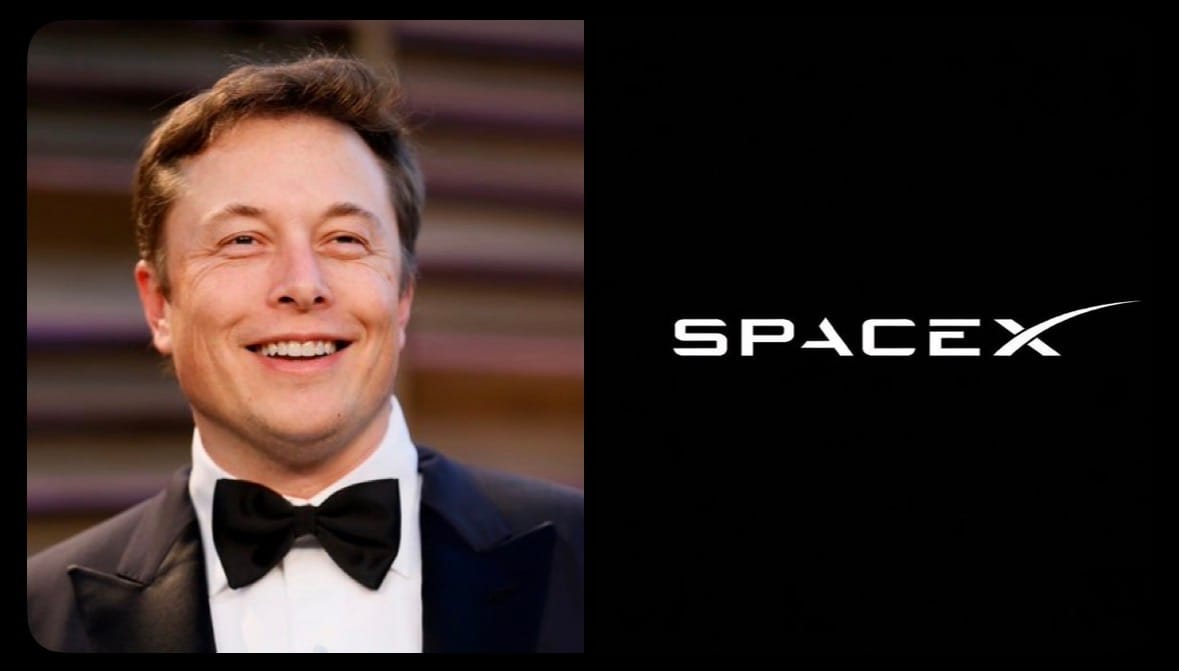
- The company is targeting a valuation of $1.75 trillion to over $2 trillion — which would make it one of the largest IPOs in history and raise up to $75 billion. Elon Musk, who owns approximately 43% of SpaceX, would likely become the world’s first trillionaire once the shares begin trading.
Cartel Sanctions:
- On May 20, the U.S. Treasury’s Office of Foreign Assets Control (OFAC) sanctioned more than a dozen individuals and entities in two separate networks tied to the Sinaloa Cartel’s fentanyl trafficking.

- The sanctions freeze any U.S.-based assets and ban Americans from doing business with them. Key targets include Armando de Jesús Ojeda Avilés (who leads a major money-laundering network) and Jesús González Peñuelas (a fugitive heading a drug-trafficking and laundering organization), directly disrupting the cartel’s ability to move money and fentanyl that kills tens of thousands of Americans each year.
Geopolitics & Military Activity:
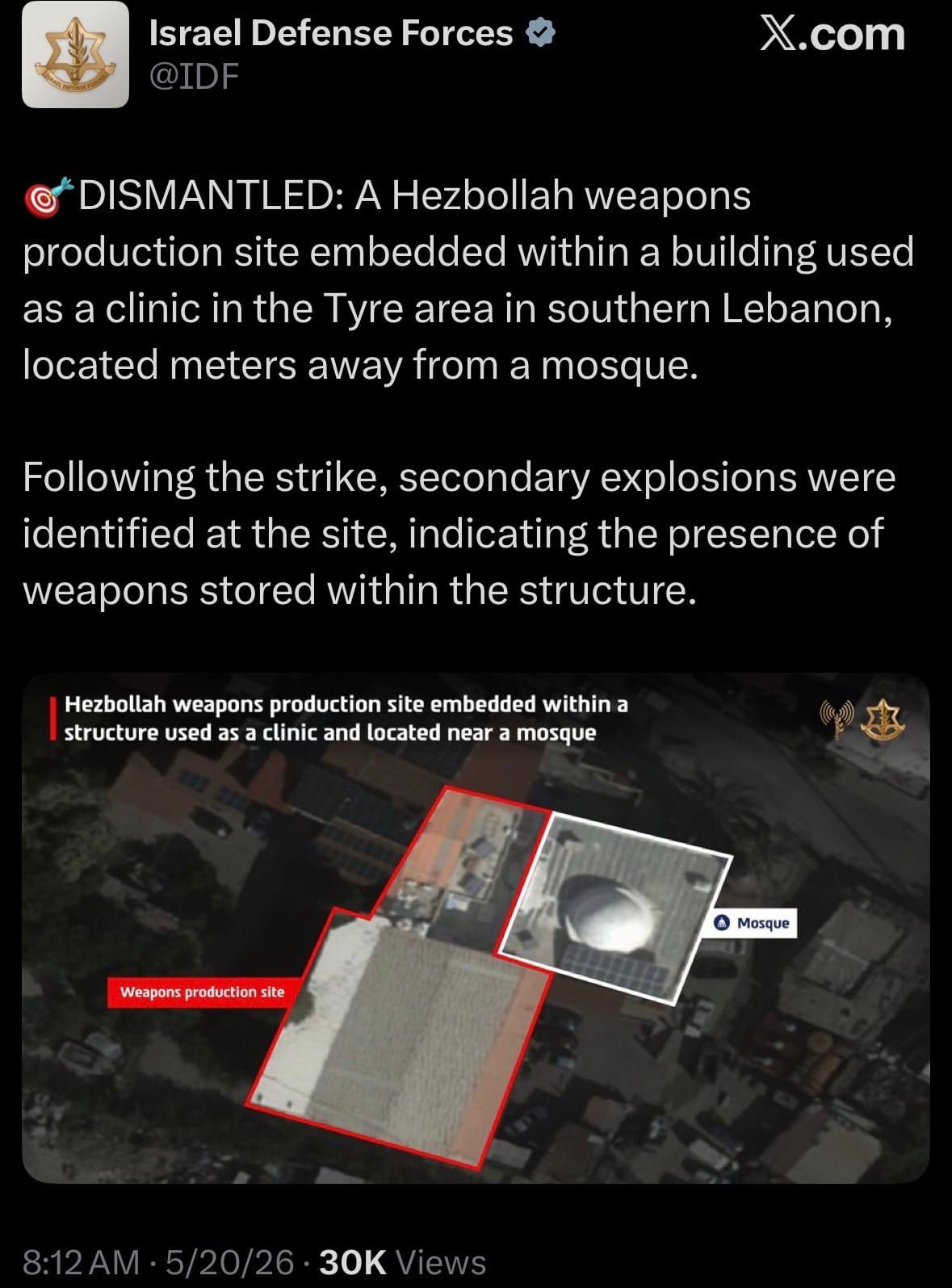
- On May 20, JIATFS and U.S. Southern Command partners conducted a successful multi-national operation with Mexico, Guatemala, Costa Rica, and Panama to track and interdict an illicit aircraft flying through Central America.
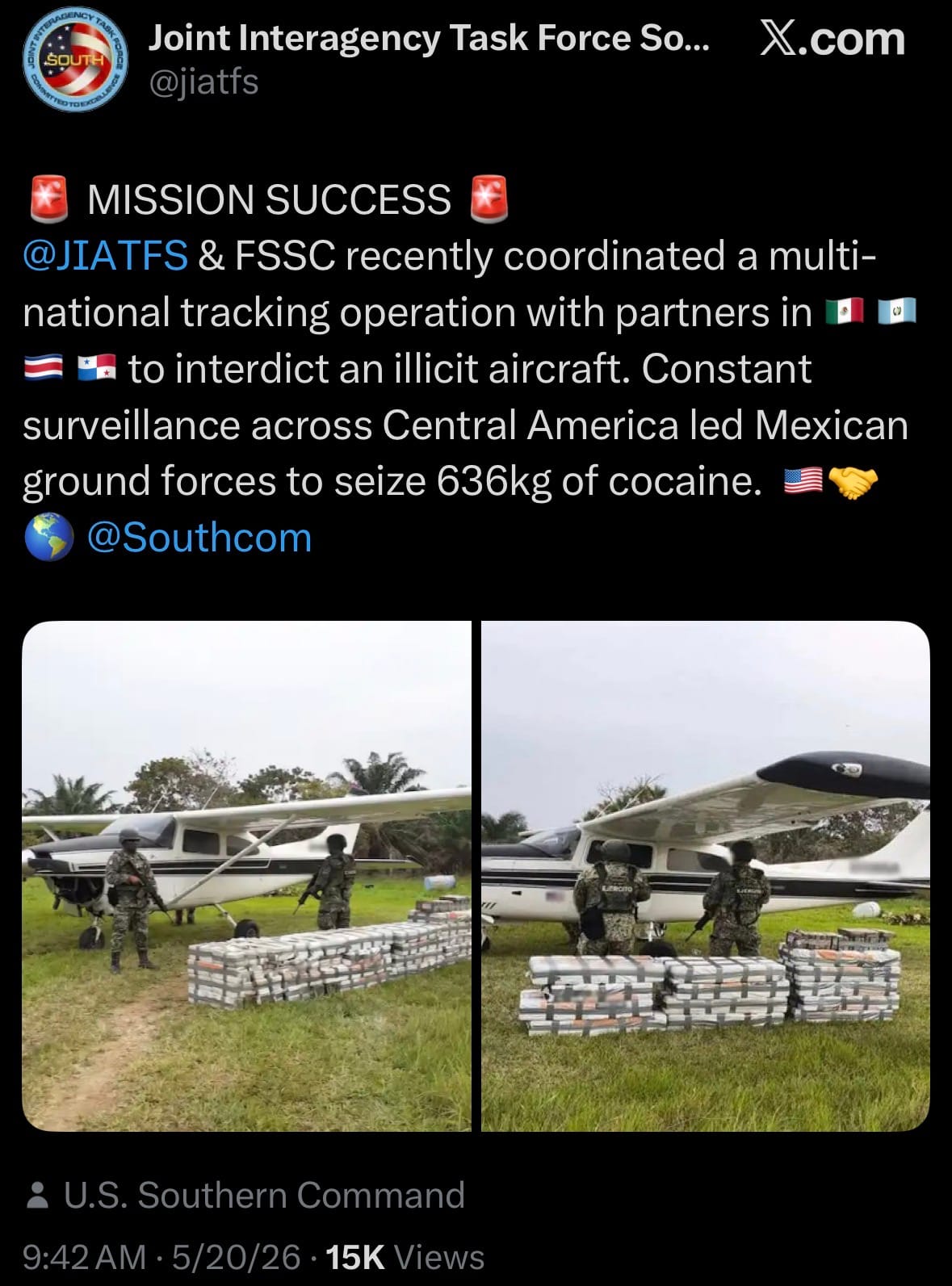
- Mexican ground forces seized 636 kg (about 1,400 lbs) of cocaine as a result of the coordinated surveillance and takedown.
Space:
Statistic:
- Largest public telecom companies by market capitalization:
- 🇨🇳 China Mobile: $239.91B
- 🇯🇵 SoftBank Group Corp.: $216.63B
- 🇺🇸 T-Mobile US: $205.79B
- 🇺🇸 Verizon: $199.67B
- 🇺🇸 AT&T: $173.22B
- 🇩🇪 Deutsche Telekom: $164.08B
- 🇮🇳 Bharti Airtel: $119.85B
- 🇺🇸 Comcast: $88.87B
- 🇺🇸 American Tower: $85.73B
- 🇲🇽 America Movil: $80.22B
- 🇯🇵 NTT (Nippon Telegraph & Telephone): $79.18B
- 🇺🇸 Ciena: $78.44B
- 🇯🇵 KDDI: $66.44B
- 🇨🇳 China Telecom: $64.85B
- 🇸🇬 Singtel: $62.65B
- 🇸🇦 Saudi Telecom Company: $58.27B
- 🇫🇷 Orange: $57.60B
- 🇨🇭 Swisscom: $45.18B
- 🇦🇪 Emirates Telecom (Etisalat Group): $43.66B
- 🇦🇺 Telstra: $43.38B
- 🇺🇸 EchoStar: $41.09B
- 🇺🇸 Crown Castle: $40.43B
- 🇬🇧 Vodafone: $35.09B
- 🇭🇰 CK Hutchison Holdings: $34.89B
- 🇺🇸 AST SpaceMobile: $34.76B
- 🇹🇼 Chunghwa Telecom: $34.11B
History:
- The Pentagon was created out of the massive military expansion of World War II, when the United States realized its existing command structure was too fragmented to manage a global war. Before the Pentagon existed, the War Department and Navy Department operated separately from scattered offices across Washington, D.C., making coordination difficult as the U.S. mobilized millions of troops and began operating across Europe, the Pacific, and beyond. In 1941, construction began on a new centralized headquarters in Arlington, Virginia, and the building was completed remarkably fast during wartime, officially opening in 1943. Its unique five-sided shape came from the original site layout requirements, though the location later changed while the design remained. At the time, it became the largest office building in the world, symbolizing the rise of the United States as a global military power. After World War II, the military was reorganized through the National Security Act of 1947, which created the Department of Defense, the U.S. Air Force, the CIA, and the National Security Council. The Pentagon then evolved from just a building into the central command hub of the modern American military system, coordinating the Army, Navy, Air Force, and later other branches through a unified defense structure during the Cold War.
- During the Cold War (1947–1991), the Pentagon became the nerve center of America’s global military strategy against the Soviet Union. It oversaw nuclear deterrence, strategic bomber forces, global naval operations, missile defense systems, intelligence coordination, and massive military-industrial expansion. This period saw the rise of enormous defense budgets, classified programs, and advanced weapons development tied to contractors like Lockheed, Boeing, Northrop, Raytheon, and General Dynamics. The Pentagon directed major wars and operations including Korea, Vietnam, the Gulf War, Iraq, Afghanistan, and countless covert or proxy conflicts through alliances and intelligence coordination. It also became deeply connected with emerging technologies—satellites, stealth aircraft, GPS, cyber systems, drones, and nuclear command infrastructure. During the 1980s, under Reagan-era military expansion, the Pentagon managed one of the largest peacetime defense buildups in history, accelerating stealth programs, missile defense concepts like SDI (“Star Wars”), and advanced aerospace systems. The building itself became a symbolic target, most notably during the September 11, 2001 attacks, when American Airlines Flight 77 struck the Pentagon, killing 125 personnel inside and further reshaping U.S. defense priorities toward counterterrorism and homeland security.
- From the 2000s to 2026, the Pentagon evolved from a traditional military headquarters into the command center of a multi-domain global defense network operating across land, sea, air, cyber, space, and intelligence environments simultaneously. It now coordinates massive combatant commands like INDOPACOM, CENTCOM, NORTHCOM, AFRICOM, and EUCOM, while integrating with agencies like the NSA, CIA, Space Force, and Cyber Command. Modern Pentagon priorities have shifted heavily toward strategic competition with China and Russia, hypersonic weapons, AI-driven warfare, autonomous systems, cyber operations, orbital defense, and supply-chain resilience. It also manages one of the largest budgets on Earth—over $800 billion annually by the mid-2020s—supporting global bases, advanced weapons programs, nuclear modernization, and next-generation systems. Increasingly, the Pentagon operates less like a traditional war office and more like a global defense coordination engine tied directly into satellites, AI, real-time surveillance, logistics networks, and industrial production. What began in 1943 as a centralized wartime office building has evolved into the operational core of the largest and most technologically advanced military system in human history.
Image of the day:

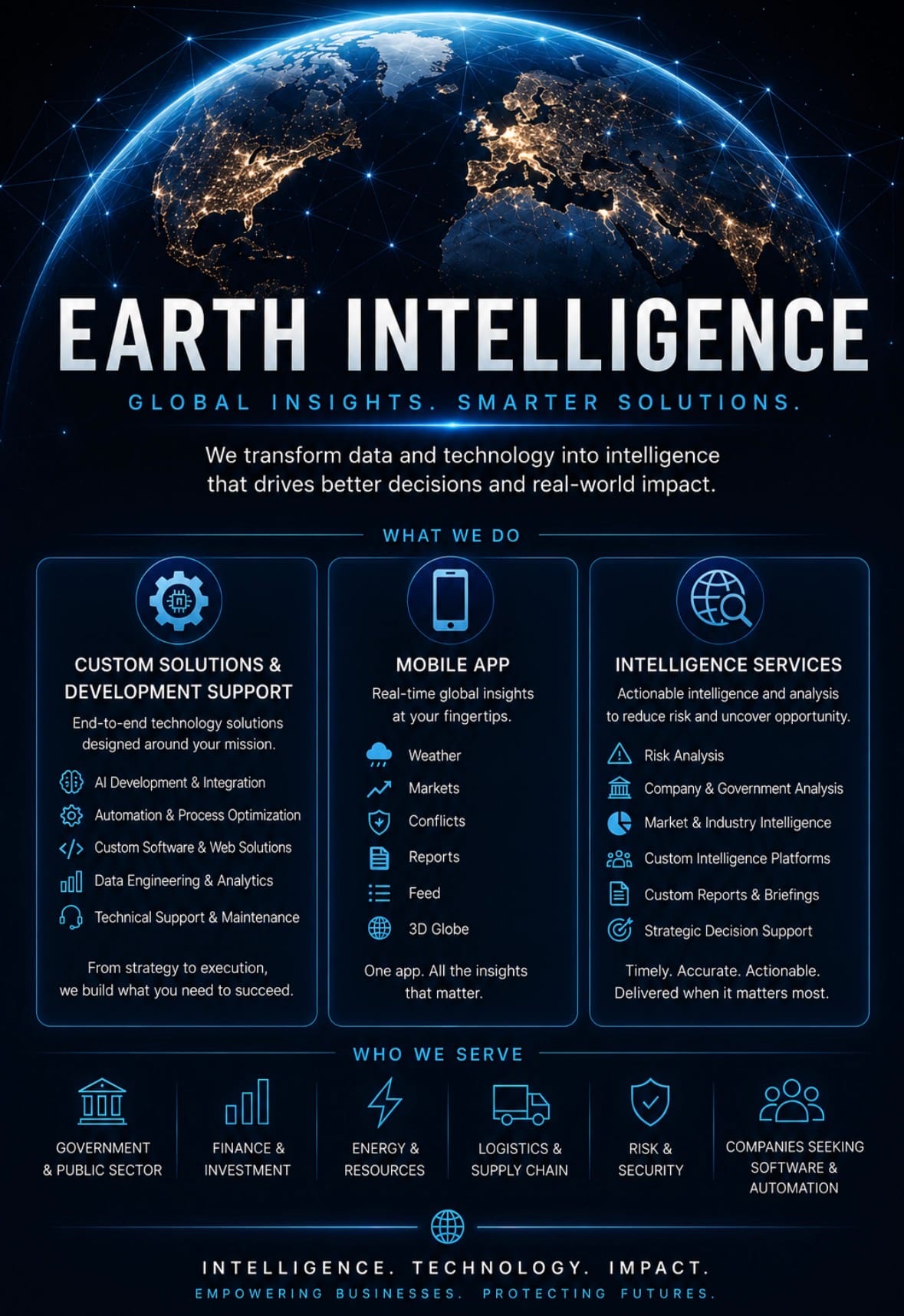
Thanks for reading! Earth is complicated, we make it simple.
- Download our mobile app:

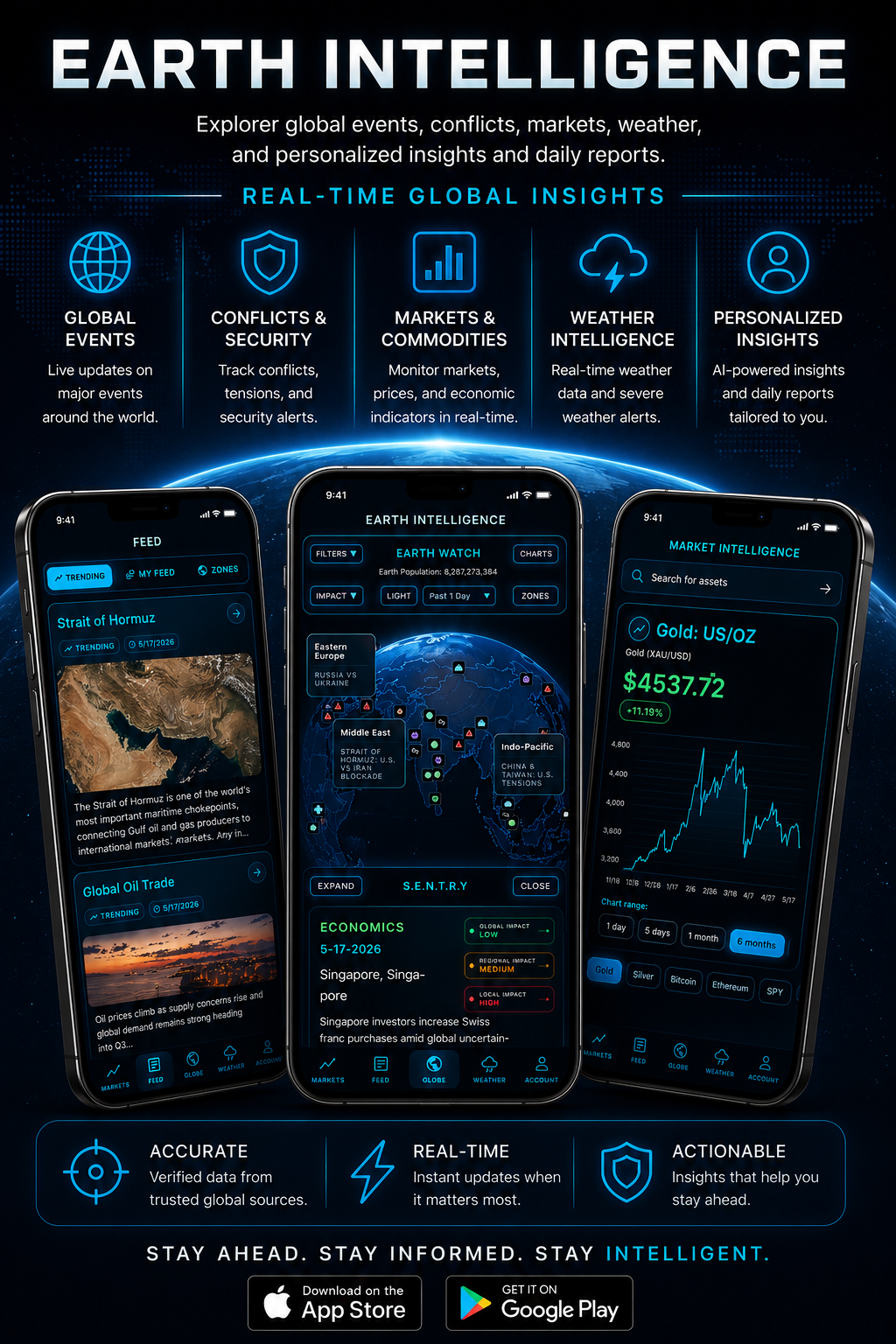

Click below to view our previous newsletters:

Support/Suggestions Email:
support@earthintel.io