Wednesday☕️

Trending:
- As of May 19, Bolivia is in serious crisis with widespread protests, highway blockades, and violent clashes between security forces and supporters of former President Evo Morales.
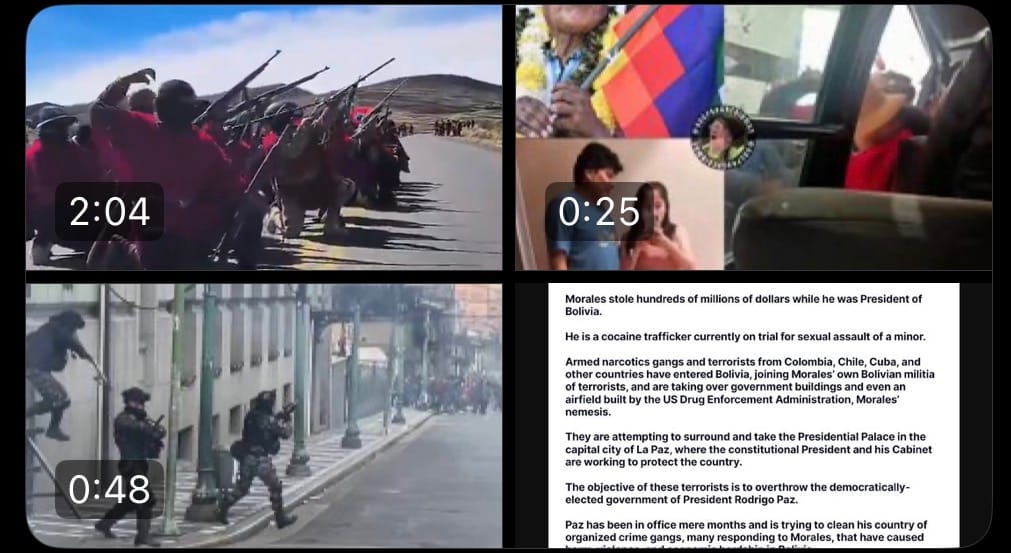
- Unions and Morales loyalists are reportedly forcing Indigenous communities and farmers to join protests (with fines or confiscations for refusal), while blocking major roads, seizing buildings, and demanding the resignation of current President Rodrigo Paz amid severe food shortages. Morales’ opponents are calling for a state of siege to restore order, with Erik Prince warning of a potential narco-linked violent takeover.
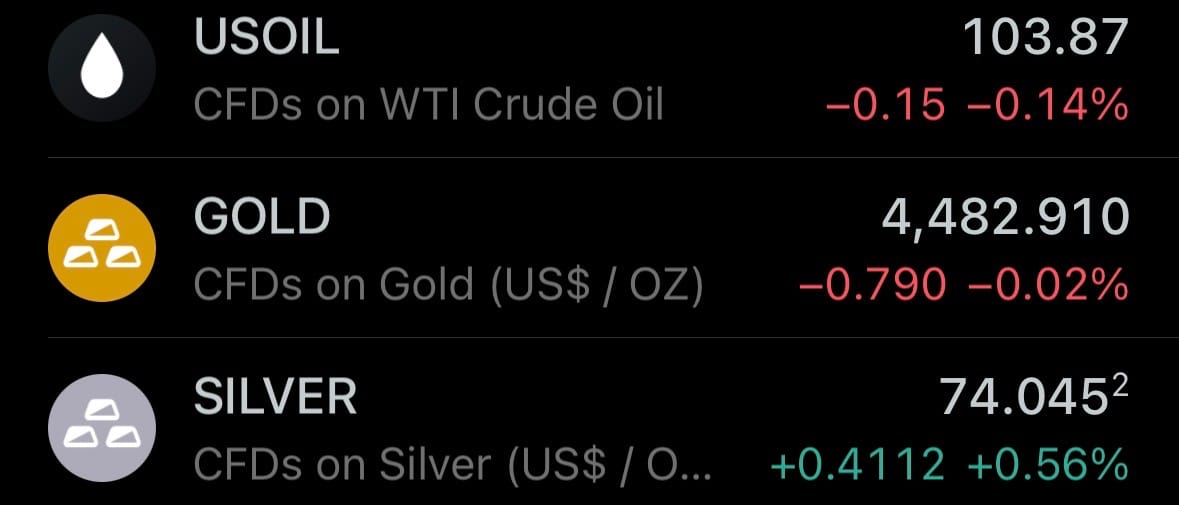
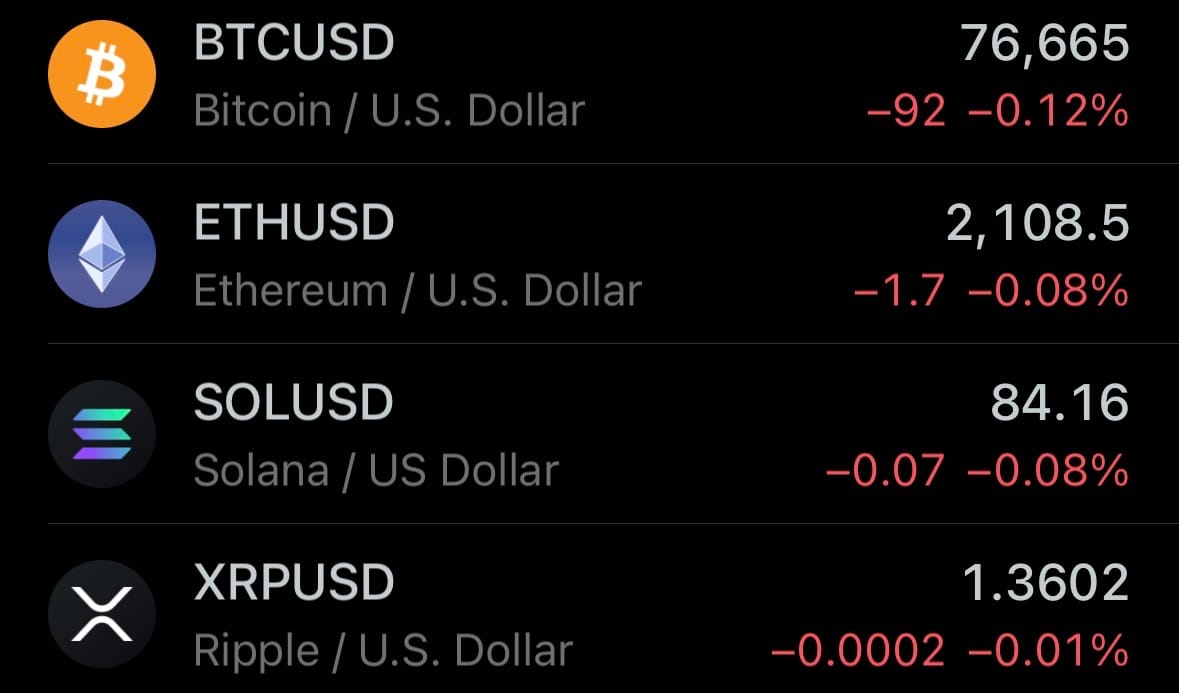
Economics & Markets:
Geopolitics & Military Activity:
- On May 18, U.S. Africa Command (AFRICOM) conducted a counter-terrorism operation in Northeast Nigeria in coordination with Nigerian forces.
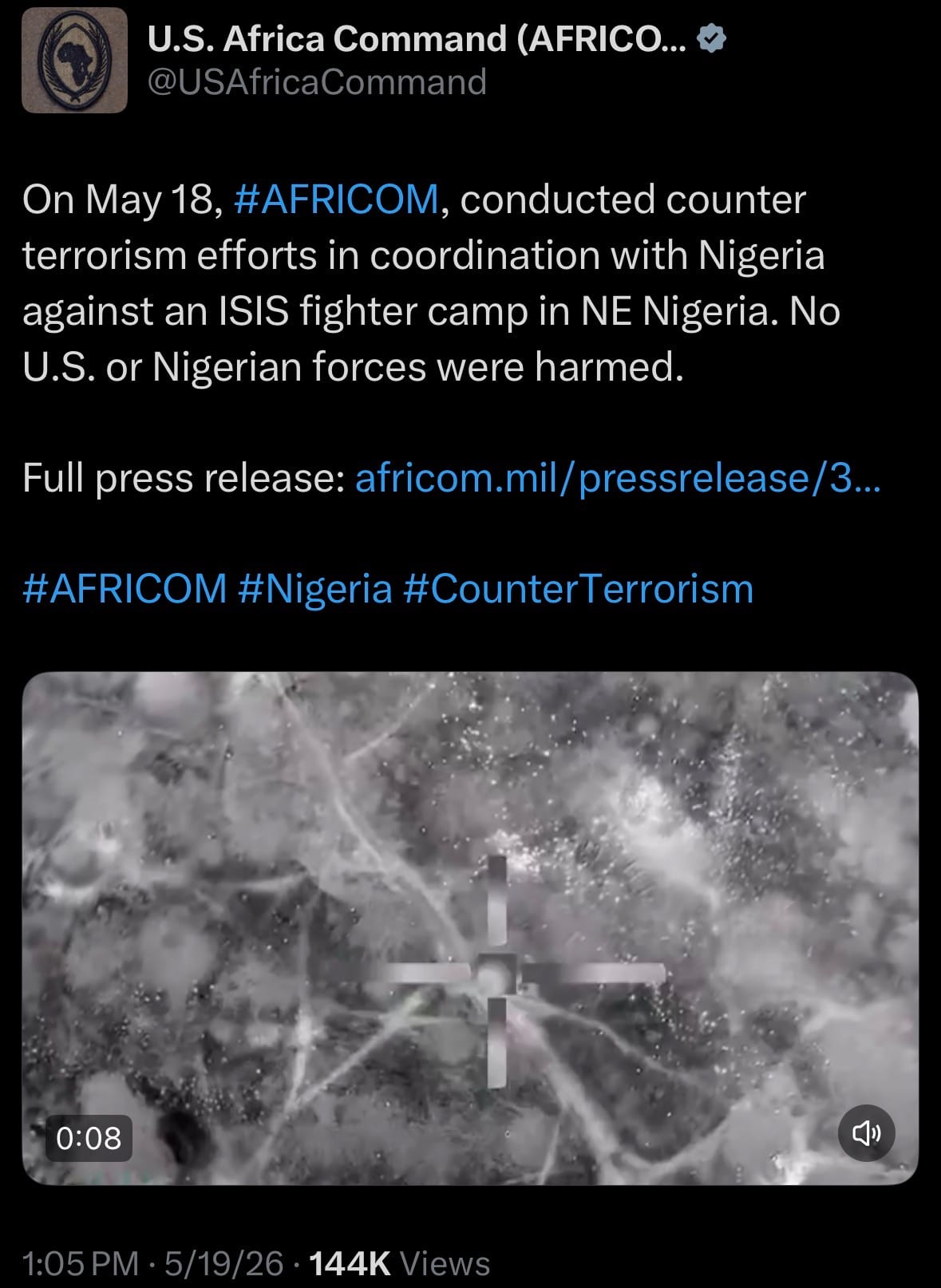
- The joint strike targeted an ISIS fighter camp, successfully disrupting the group’s activities with no casualties reported among U.S. or Nigerian forces. This is part of ongoing U.S.-Nigerian efforts to combat ISIS-West Africa Province in the region.
Science & Technology:
- On May 19, Google introduced Gemini 3.5, its newest family of AI models that combine frontier-level intelligence with strong real-world action capabilities.

- The first model released is Gemini 3.5 Flash, described as Google’s strongest yet for agentic tasks and advanced coding.
Statistic:
- Largest public clothing companies by market capitalization:
- 🇫🇷 LVMH: $265.02B
- 🇫🇷 Hermès: $195.53B
- 🇪🇸 Inditex: $180.16B
- 🇺🇸 TJX Companies: $166.62B
- 🇯🇵 Fast Retailing: $142.24B
- 🇫🇷 Dior: $90.61B
- 🇺🇸 Cintas: $68.90B
- 🇺🇸 Ross Stores: $68.79B
- 🇺🇸 Nike: $62.81B
- 🇫🇷 Kering: $34.36B
- 🇩🇪 Adidas: $30.23B
- 🇸🇪 H&M: $27.72B
- 🇺🇸 Tapestry: $26.59B
- 🇬🇧 Next plc: $19.69B
- 🇺🇸 Ralph Lauren: $19.44B
- 🇺🇸 Burlington Stores: $17.97B
- 🇮🇹 Moncler: $15.86B
- 🇨🇦 lululemon athletica: $14.25B
- 🇮🇹 Prada: $11.61B
- 🇨🇦 Aritzia: $11.18B
- 🇵🇱 LPP SA: $10.68B
- 🇨🇦 Gildan: $10.12B
- 🇺🇸 Levi Strauss & Co.: $7.99B
- 🇺🇸 Gap Inc.: $7.59B
- 🇺🇸 VF Corporation: $6.54B
- 🇮🇹 Brunello Cucinelli: $6.47B
History:
- Naval blockades are one of the oldest and most powerful tools in warfare, built around a simple principle: control the sea, and you control trade, food, reinforcements, and survival itself. Early forms appeared in the ancient world, especially during the Peloponnesian War (431–404 BC) when Athens used naval dominance to cut off rival cities and pressure entire populations without direct invasion. The strategy expanded through the Roman era and into the age of empires, where maritime powers realized that strangling an enemy economically could be more effective than battlefield victories alone. During the Napoleonic Wars (1803–1815), Britain used its navy to blockade France and dominate global trade routes, while Napoleon responded with the Continental System, an attempt to economically isolate Britain from Europe. This period proved that naval blockades could become weapons against entire economies, not just military fleets. In the American Civil War (1861–1865), the Union’s Anaconda Plan blockaded Confederate ports, crippling Southern trade and limiting access to weapons and supplies. By the late 1800s and early 1900s, as global shipping and industrialization expanded, naval blockades became increasingly tied to industrial warfare and strategic control of global commerce.
- During World War I (1914–1918) and World War II (1939–1945), naval blockades evolved into massive industrial-scale operations. Britain’s blockade of Germany during WWI restricted food, fuel, and raw materials, contributing to severe shortages and weakening the German war effort, while Germany responded with unrestricted submarine warfare using U-boats against Allied shipping. In WWII, naval blockades became global and multi-layered: the Allies used fleets, submarines, and air power to choke Axis supply chains across the Atlantic and Pacific, while Japan’s access to oil and resources was systematically cut off by the U.S. Navy. These wars proved that controlling shipping lanes and chokepoints could determine the outcome of entire conflicts. During the Cold War, blockades became more politically calibrated. The most famous example was the Cuban Missile Crisis (1962), where the U.S. imposed a “quarantine” around Cuba to stop Soviet missile shipments without formally declaring war. Naval blockades were now being used not just for warfighting, but as tools of geopolitical pressure, deterrence, and controlled escalation. At the same time, blockades increasingly merged with sanctions, intelligence operations, and surveillance, turning maritime control into part of a broader economic warfare system.
- From the 2000s to 2026, naval blockades evolved into highly complex strategic operations centered around global chokepoints and real-time economic disruption. Modern naval powers like the United States, China, Russia, and Iran focus heavily on controlling key maritime arteries such as the Strait of Hormuz, South China Sea, Bab el-Mandeb, and the Suez region, where huge portions of global trade and energy flow pass through narrow waterways. Instead of traditional fleets simply stopping ships, modern blockades combine warships, drones, satellites, missile systems, mines, cyber operations, and economic restrictions into layered control systems. The clearest modern example is the 2026 Strait of Hormuz crisis, where Iran established selective internal control of traffic using mines, drones, missile threats, and patrol enforcement around areas like Larak Island, while the United States simultaneously imposed broader maritime restrictions across the strait itself. This created a rare adversarial dual blockade, where both sides controlled different layers of the same chokepoint, severely disrupting global oil and LNG flows. Today, naval blockades are no longer just about physically stopping ships—they are about controlling the movement of global resources, energy, and supply chains in real time. What began as ancient siege tactics has evolved into one of the most powerful forms of economic and geopolitical warfare on Earth.
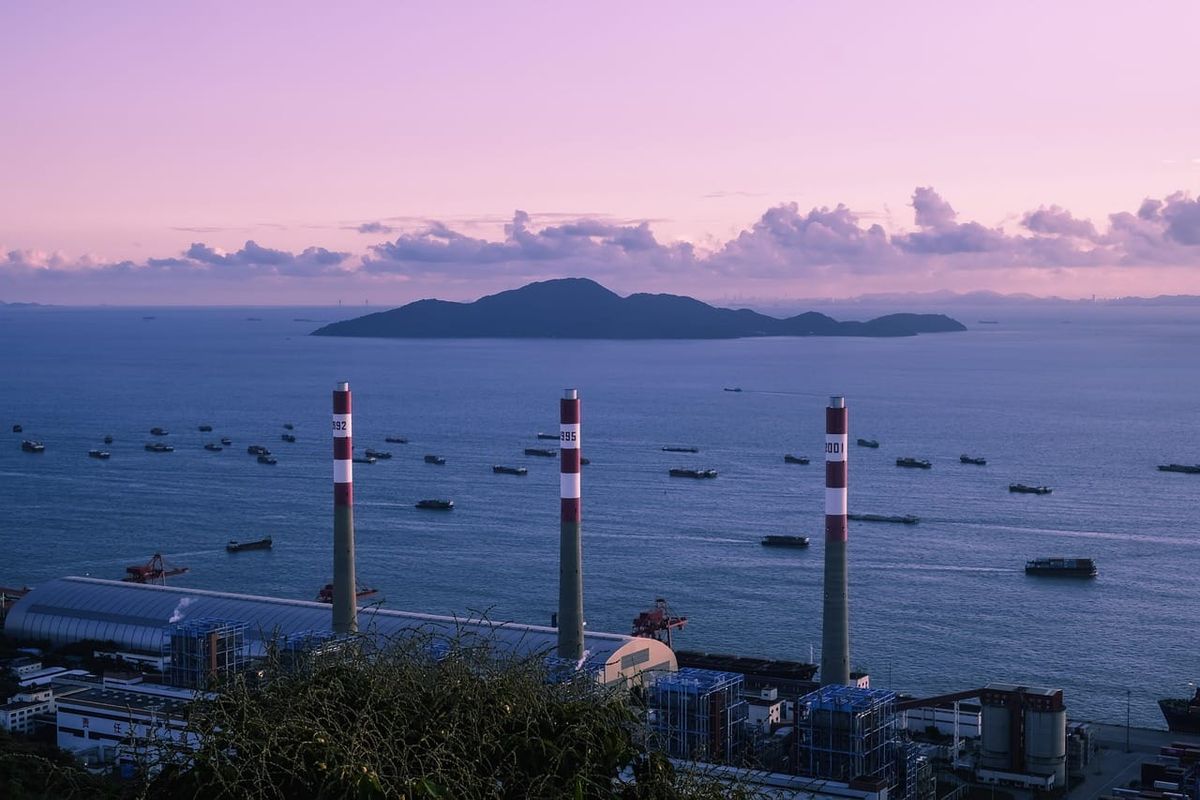
Image of the day:

Thanks for reading! Earth is complicated, we make it simple.
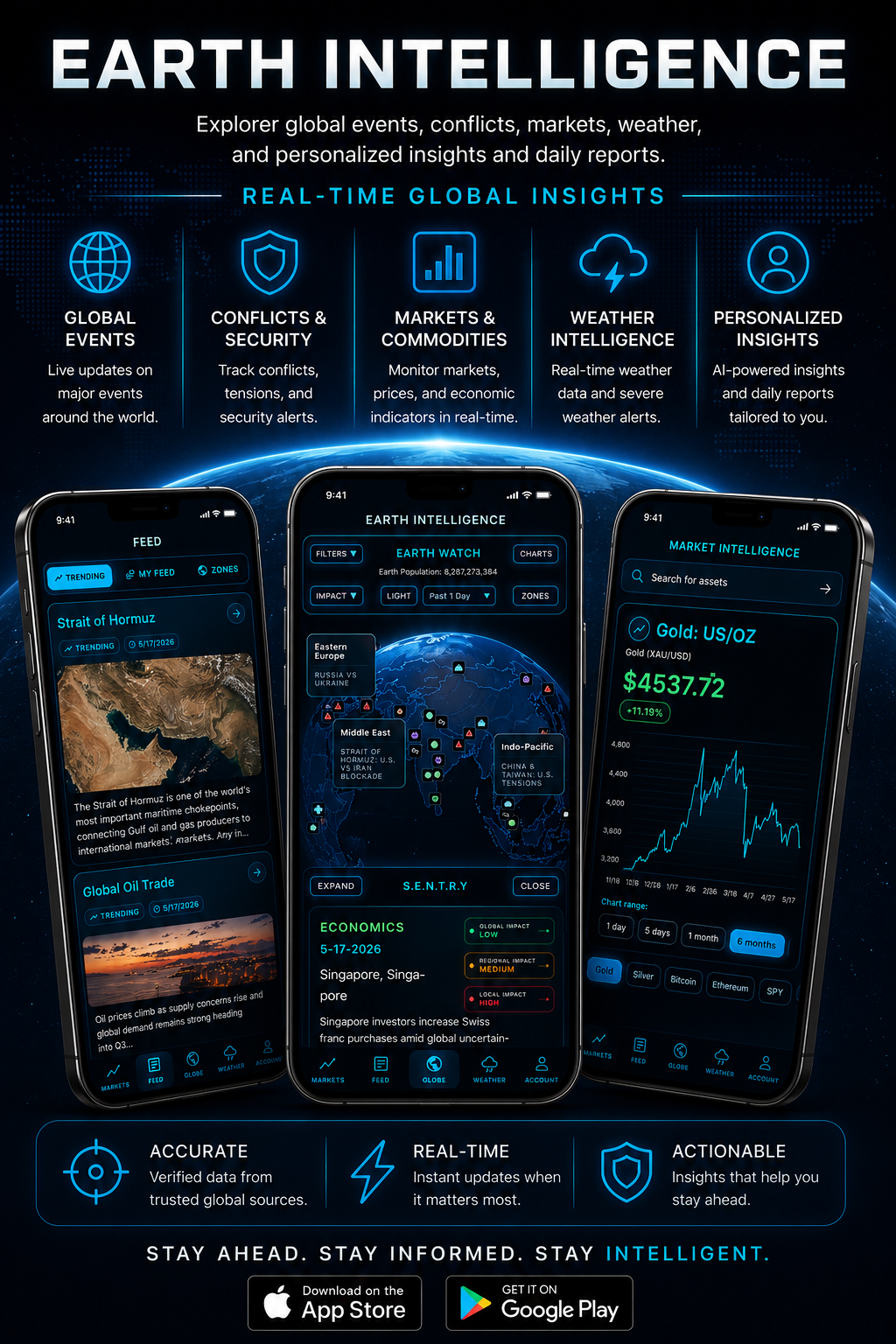
- Download our mobile app:


Click below to view our previous newsletters:
Support/Suggestions Email:
support@earthintel.io