Thursday☕️


Trending:
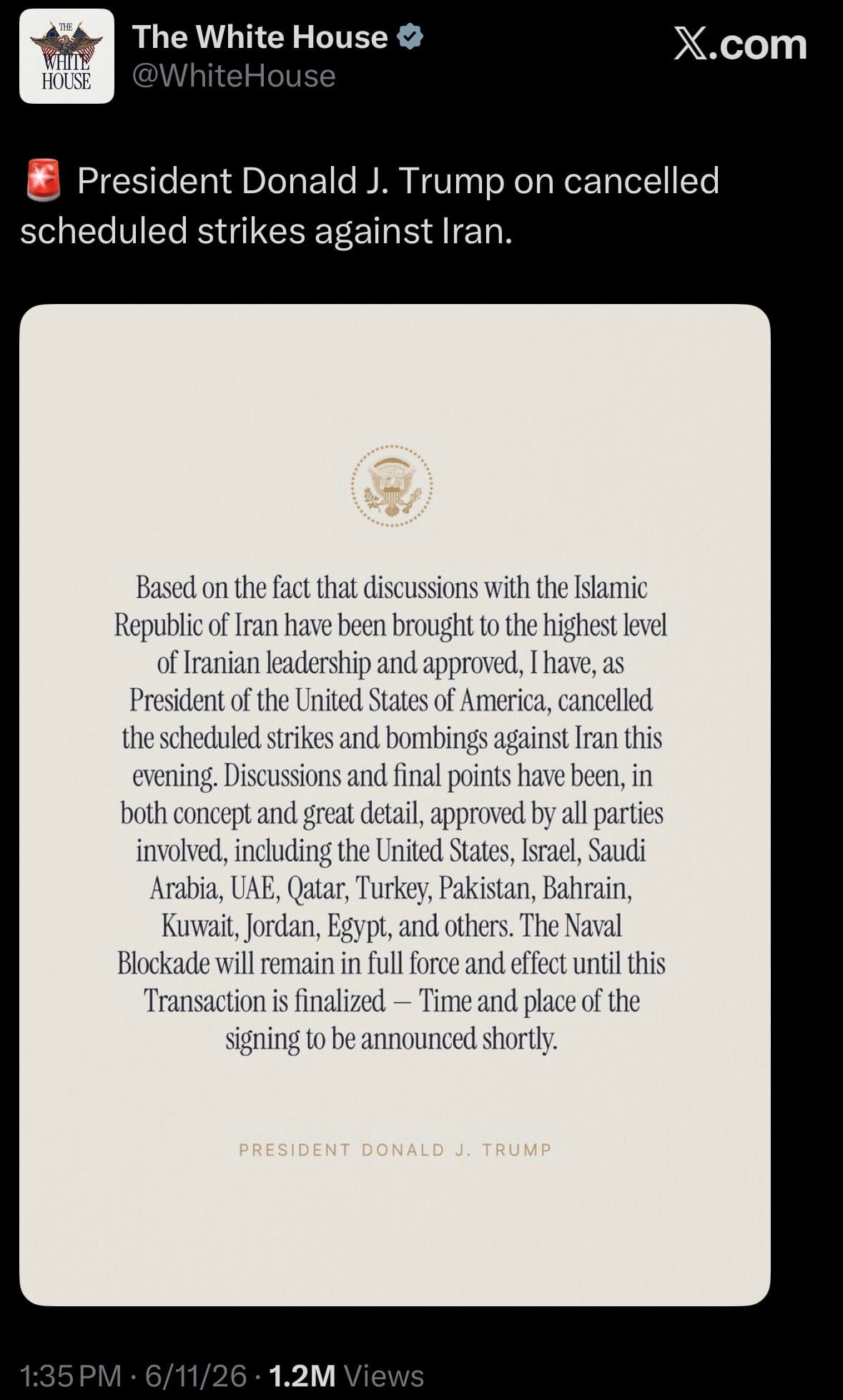
- On June 10, 2026, U.S. Central Command forces carried out additional self-defense strikes against Iran. The strikes targeted Iranian military surveillance capabilities, communication systems, and air defense sites using precision munitions from U.S. Marine Corps, Air Force, and Navy assets. The U.S. described the action as a response to Iran’s continued aggression.
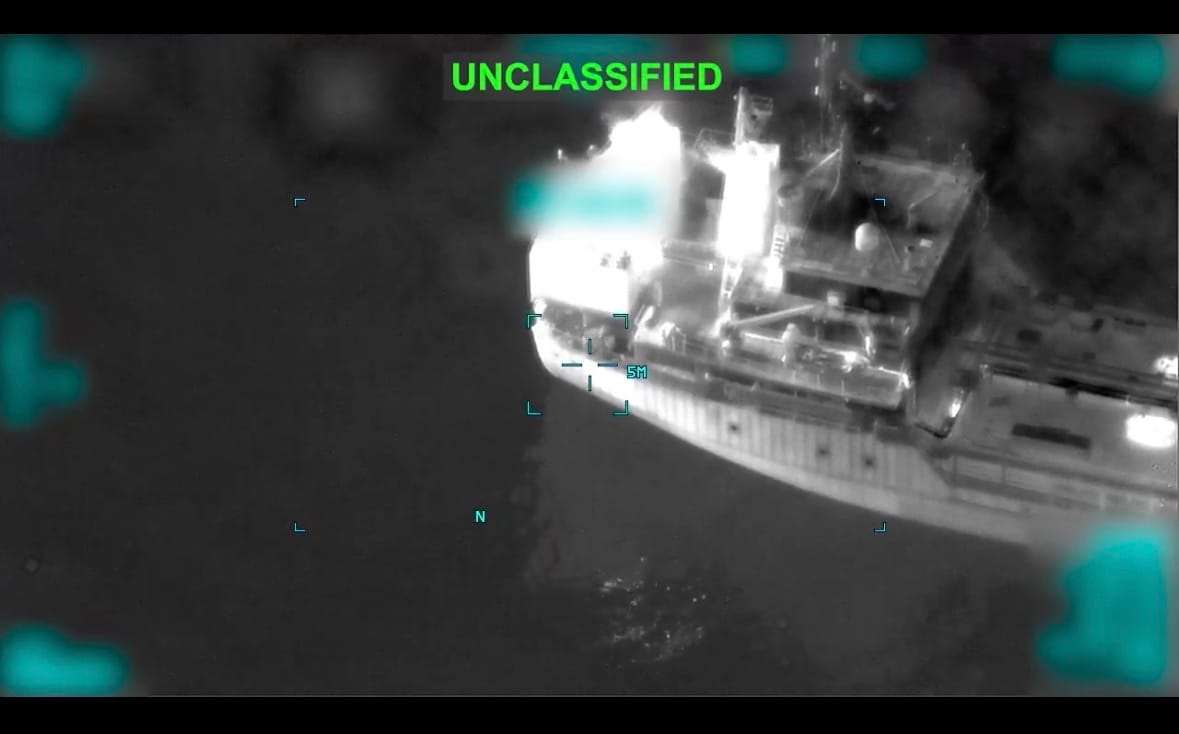
- Also on June 10, U.S. forces disabled the third oil tanker violating the blockade in the Gulf of Oman. A U.S. aircraft fired Hellfire missiles into the engine room of the Guinea-Bissau-flagged M/T Jalveer after it ignored orders while attempting to transport Iranian oil. This brings the total to three tankers disabled this week as part of the ongoing blockade enforcement.
Economics & Markets:
- On June 11, 2026, the United States officially became the world’s largest oil exporter, surpassing Saudi Arabia and Russia.
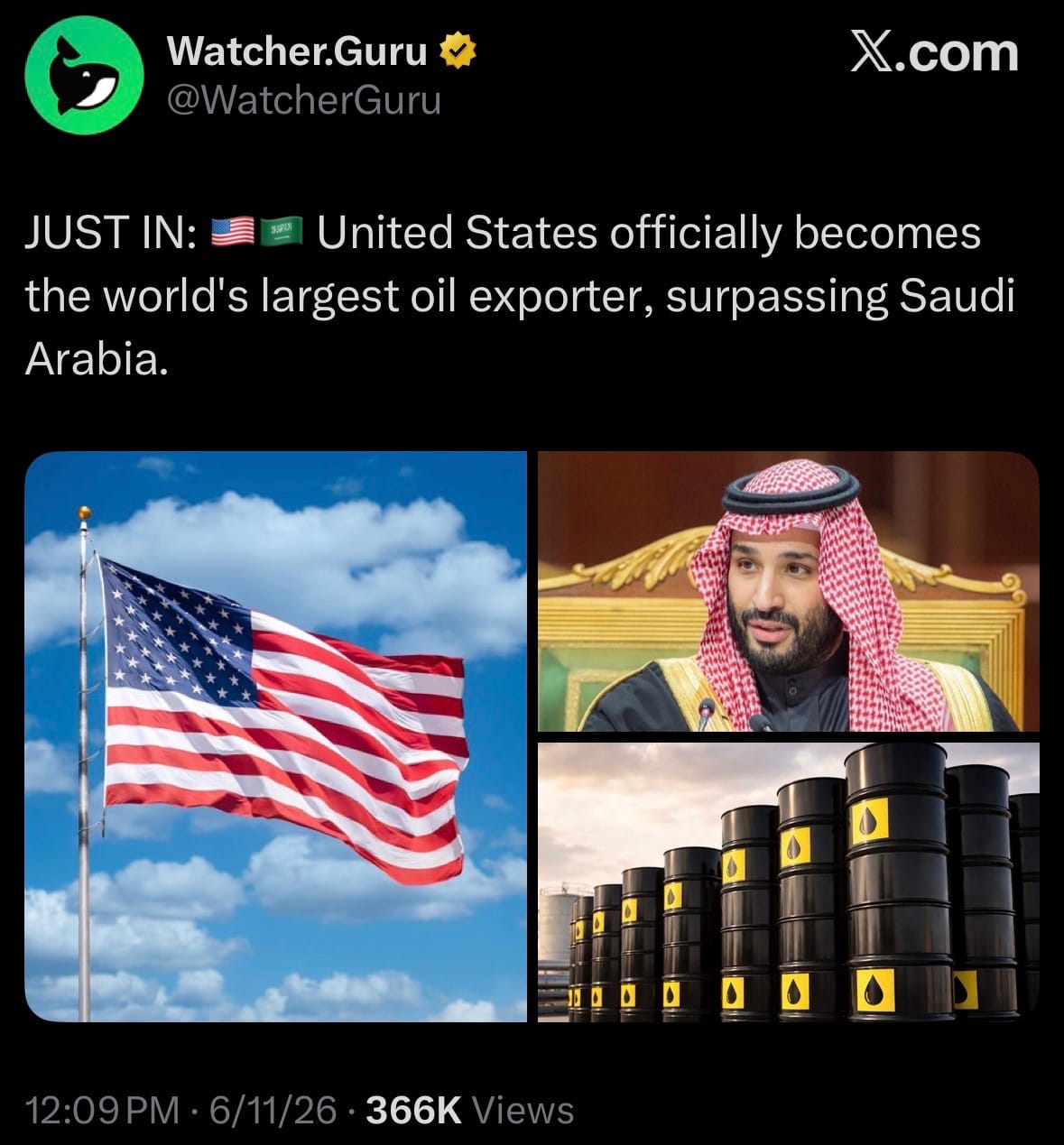
- U.S. exports of crude oil and petroleum products reached approximately 10.5 million barrels per day in May, ahead of Russia (around 7 million bpd) and Saudi Arabia (around 5.9 million bpd). This marks the third consecutive month the U.S. has held the top position.
Geopolitics & Military Activity:
- On June 11, 2026, U.S.-led Joint Interagency Task Force South (JIATFS), working with the Department of Defense, U.S. Southern Command, and the Panamanian Navy, intercepted a drug smuggling vessel in the Caribbean.
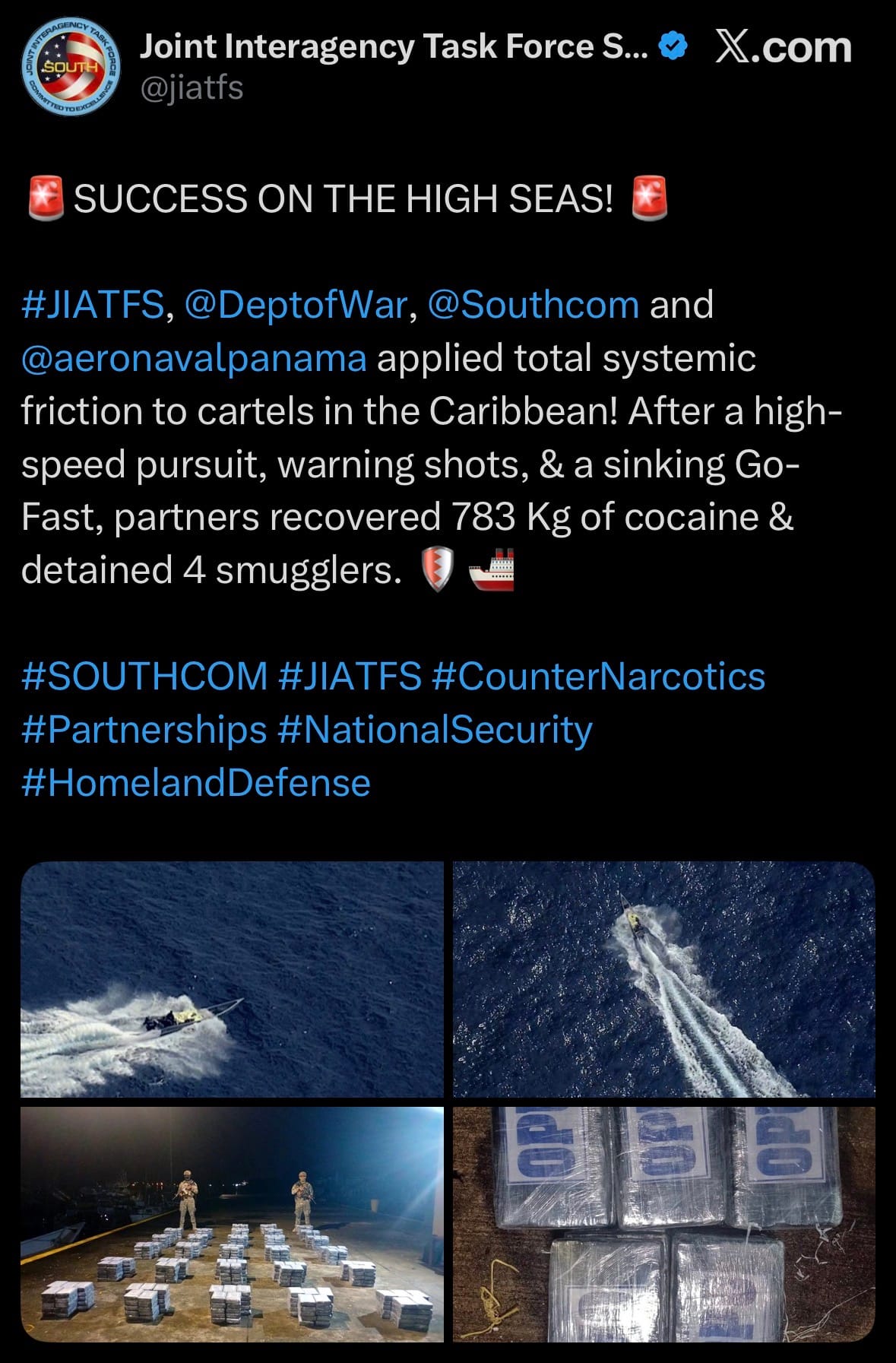
- After a high-speed chase and warning shots that caused the go-fast boat to sink, authorities recovered 783 kg of cocaine and detained four smugglers.
Science & Technology:
- On June 11, 2026, xAI launched the Grok Build Plugin Marketplace in beta.

- This new tool allows developers to easily integrate services like MongoDB, Vercel, Sentry, Cloudflare, and Chrome DevTools directly from their terminal while working with Grok, making it simpler and faster to add databases, hosting, monitoring, and other features to projects.
Statistic:
- Largest assets on Earth by market capitalization:
- Gold: $29.437T
- 🇺🇸 NVIDIA: $4.962T
- 🇺🇸 Alphabet (Google): $4.348T
- 🇺🇸 Apple: $4.342T
- Silver: $3.799T
- 🇺🇸 Microsoft: $2.899T
- 🇺🇸 Amazon: $2.597T
- 🇹🇼 TSMC: $2.183T
- 🇺🇸 Broadcom: $1.834T
- 🇺🇸 SpaceX: $1.765T
- 🇸🇦 Saudi Aramco: $1.751T
- 🇺🇸 Tesla: $1.499T
- 🇺🇸 Meta Platforms: $1.442T
- 🇰🇷 Samsung: $1.286T
- Bitcoin: $1.271T
- 🇺🇸 Micron Technology: $1.123T
- 🇺🇸 Berkshire Hathaway: $1.047T
- 🇺🇸 Eli Lilly: $1.035T
- 🇰🇷 SK Hynix: $977.57B
- 🇺🇸 Vanguard S&P 500 ETF (VOO): $970.98B
- 🇺🇸 Walmart: $958.94B
- 🇺🇸 JPMorgan Chase: $839.99B
- 🇺🇸 iShares Core S&P 500 ETF (IVV): $828.12B
- 🇺🇸 AMD: $796.46B
- 🇺🇸 SPDR S&P 500 ETF (SPY): $777.84B
- 🇳🇱 ASML: $732.09B
- 🇺🇸 Vanguard Total Stock Market ETF (VTI): $646.23B
History:
- The history of joint foreign military partnerships is really the history of nations realizing that alliances are often more powerful than standing alone. Ancient examples include the Greek city-state alliances during the Persian Wars (499–449 BC), where independent city-states coordinated against a larger threat, and Rome’s extensive use of allied kingdoms and auxiliary forces across Europe, North Africa, and the Middle East. During the Middle Ages and Renaissance, kingdoms regularly formed military coalitions, but these were often temporary and unstable. The modern concept emerged during the Napoleonic Wars (1803–1815), when multiple European powers repeatedly formed coalition armies against France. By World War I (1914–1918), multinational military coordination reached a new level through the Allied Powers, while World War II (1939–1945) demonstrated the full power of integrated coalition warfare. The United States, United Kingdom, Soviet Union, Free French Forces, resistance movements, and dozens of other nations coordinated intelligence, logistics, naval operations, air campaigns, and ground offensives across multiple continents. Operations like D-Day (1944) involved forces from the U.S., Britain, Canada, Free France, Poland, Norway, the Netherlands, Belgium, and others operating under a unified command structure, becoming a model for future multinational military cooperation.
- After World War II, permanent military partnerships became central to global security. The most important was NATO (1949), which began with 12 members and grew into the largest military alliance in history, reaching 32 member nations by 2026. NATO established the principle that an attack on one member is considered an attack on all members under Article 5. The Soviet response was the Warsaw Pact (1955–1991), which unified the militaries of the Eastern Bloc under Moscow’s leadership. Beyond these major alliances, the Cold War produced countless bilateral and regional military partnerships. The Five Eyes alliance connected intelligence operations between the United States, United Kingdom, Canada, Australia, and New Zealand. The U.S. built defense treaties with Japan (1951), South Korea (1953), the Philippines, Australia, and many others. Russia maintained security partnerships across the former Soviet sphere, while China developed military relationships throughout Asia, Africa, and later the Belt and Road network. By the 1990s and 2000s, military partnerships increasingly expanded beyond traditional warfare into peacekeeping, counterterrorism, disaster response, anti-piracy operations, special forces cooperation, intelligence sharing, and cybersecurity. Operations in Afghanistan (2001–2021) involved more than 50 nations at various points, making it one of the largest multinational military efforts in modern history.
- By 2026, global military partnerships have become highly interconnected networks rather than simple alliances. NATO remains the most advanced military coalition, integrating forces from North America and Europe through shared exercises, logistics systems, command structures, intelligence networks, and weapons interoperability. In the Indo-Pacific, new partnerships have emerged such as AUKUS (2021) between Australia, the United Kingdom, and the United States, focused on nuclear-powered submarines, advanced technologies, AI, cyber capabilities, and undersea warfare. The Quad (United States, Japan, India, Australia) has become an important security framework in Asia. Europe operates numerous multinational formations such as the Eurocorps, while Africa maintains regional military organizations under the African Union and subregional groups like ECOWAS. The Middle East features growing cooperation between Gulf states, while China has expanded military partnerships through joint exercises with Russia, Pakistan, Iran, African nations, and Belt and Road partners. The Russia-Ukraine War (2022–present) showcased the scale of modern military partnerships, with Ukraine receiving intelligence, training, logistics, weapons, and operational support from dozens of countries while Russia deepened cooperation with partners such as Belarus, Iran, and North Korea. Today, the strongest militaries rarely operate alone. Modern warfare increasingly depends on intelligence sharing, satellite networks, cyber cooperation, joint exercises, special operations partnerships, logistics agreements, and multinational task forces. The result is a world where military power is often measured not only by the strength of a nation’s own forces, but by the size and capability of the alliance network standing behind it.
Image of the day:

Thanks for reading! Earth is complicated, we make it simple.
- Download our mobile app:


Click below to view our previous newsletters:
Support/Suggestions Email:
support@earthintel.io