Thursday☕️🌎


Trending:
- September 9, 2026 — The United States designated Ecuador’s Los Tiguerones gang as a Foreign Terrorist Organization, targeting its access to the U.S. financial system over its involvement in drug trafficking and violent attacks.
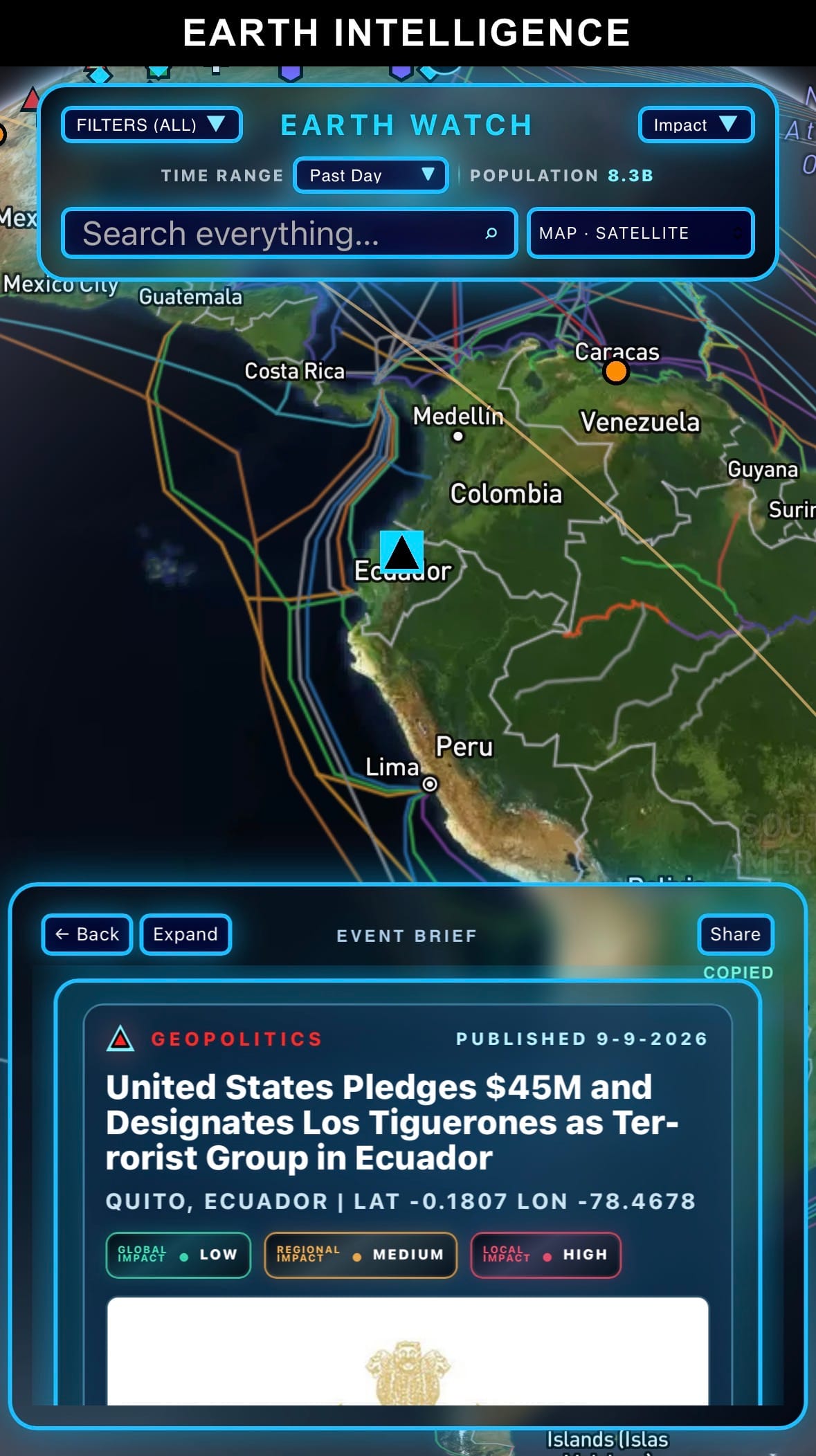
- During a visit to Ecuador, Secretary of State Marco Rubio also announced plans to seek $45 million from Congress for additional security assistance and provide Ecuador with a 110-foot Coast Guard vessel and five interceptor boats to strengthen operations against drug trafficking.
Economics & Markets:
- September 9, 2026 — The U.S. Treasury sanctioned Xinbi Guarantee, a Chinese-language online marketplace accused of helping cybercriminals run scams, launder money, and move stolen funds targeting Americans.
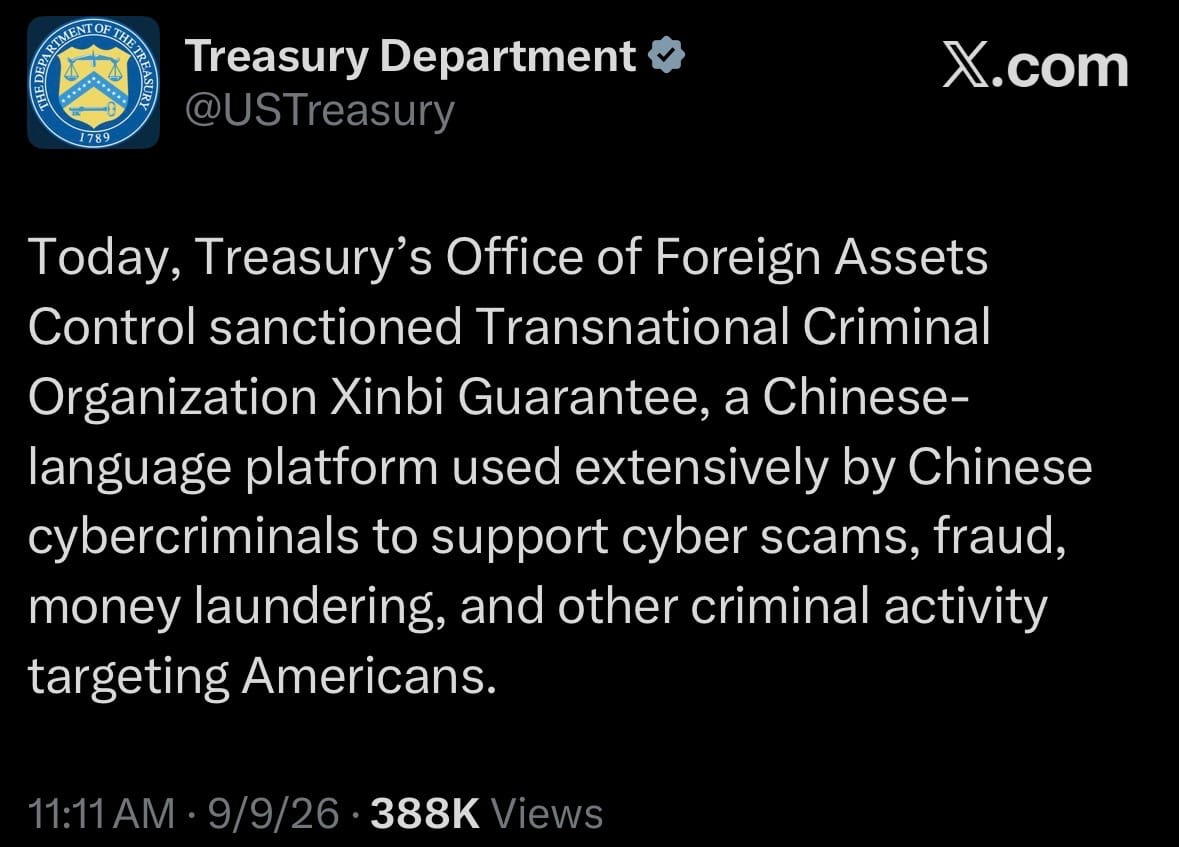
- Treasury says the platform has processed more than $24 billion since around 2022, while the Justice Department simultaneously seized infrastructure and cryptocurrency wallets used by the network.
Geopolitics & Military Activity:
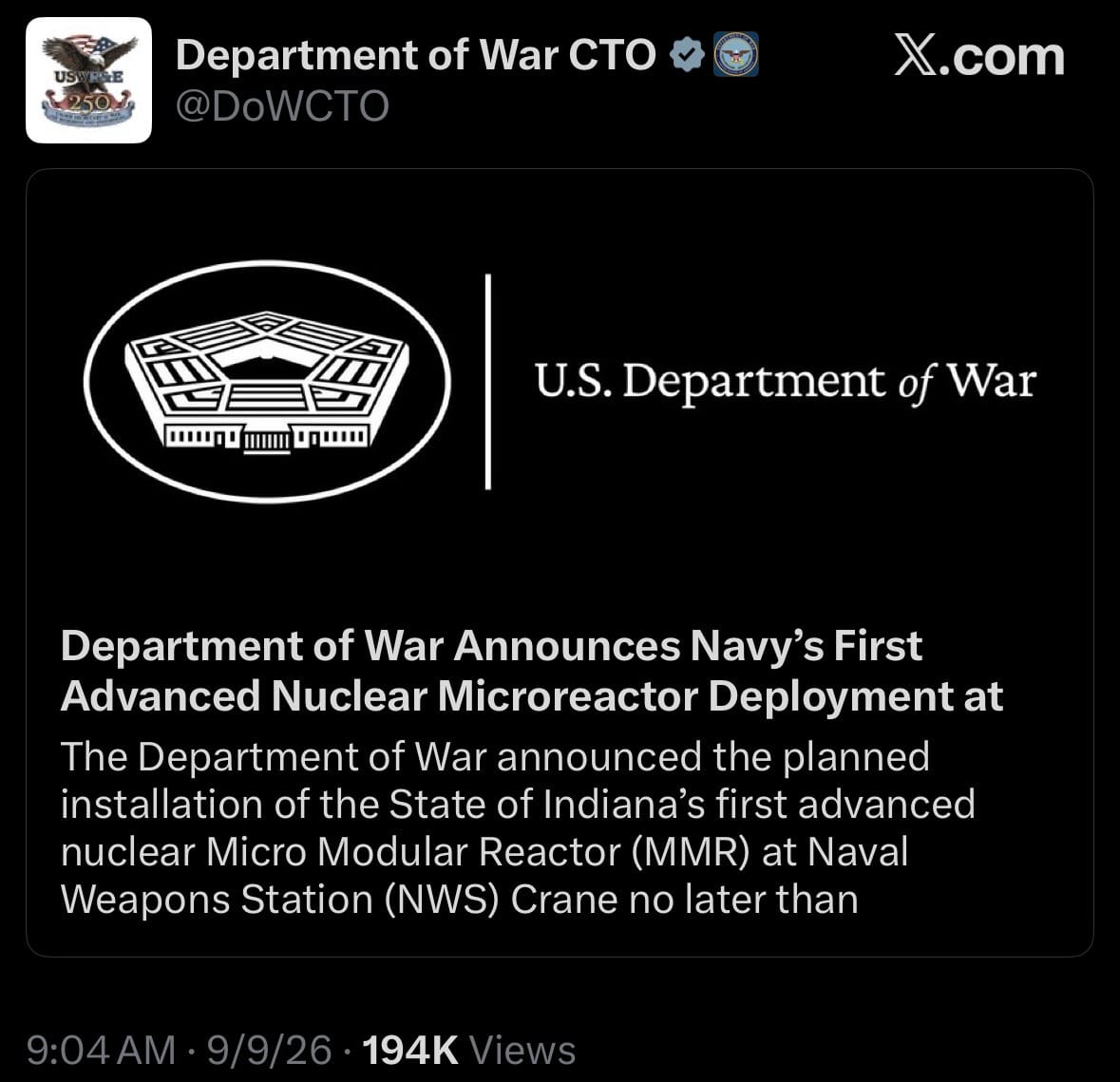
Science & Technology:
- September 9, 2026 — Apple unveiled its new product lineup, led by the iPhone Duo, the company’s first foldable iPhone, alongside the iPhone 18 Pro and Pro Max, Apple Watch Series 12, Apple Watch Ultra 4, and AirPods 5.
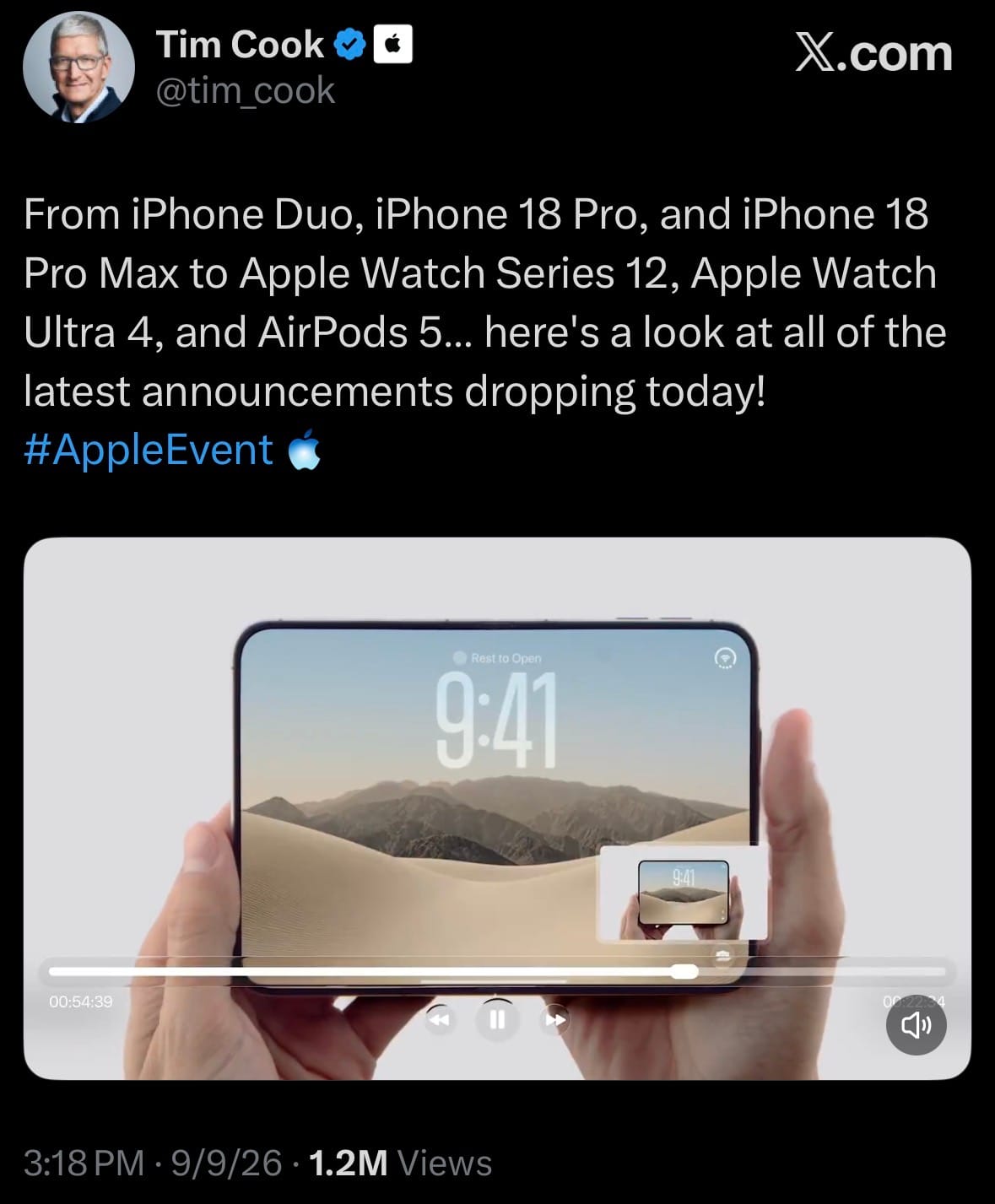
- The iPhone 18 Pro models add the new A20 Pro chip, variable-aperture 48MP camera and longer battery life, while the new Watches improve health tracking and AirPods 5 add stronger noise cancellation; most products launch September 18, while the foldable iPhone Duo launches October 23.
Statistic:
- Largest financial service companies by market cap:
- 🇺🇸 JPMorgan Chase: $942.88B
- 🇺🇸 Visa: $685.93B
- 🇺🇸 Mastercard: $497.13B
- 🇺🇸 Bank of America: $438.23B
- 🇨🇳 China Construction Bank: $423.21B
- 🇬🇧 HSBC: $359.97B
- 🇨🇳 Agricultural Bank of China: $355.85B
- 🇨🇳 ICBC: $344.30B
- 🇺🇸 Morgan Stanley: $338.22B
- 🇨🇳 Bank of China: $312.28B
- 🇺🇸 Goldman Sachs: $299.55B
- 🇨🇦 Royal Bank of Canada: $286.31B
- 🇺🇸 Wells Fargo: $271.16B
- 🇯🇵 Mitsubishi UFJ Financial: $260.45B
- 🇯🇵 SoftBank Group: $252.50B
- 🇺🇸 Citigroup: $231.15B
- 🇺🇸 American Express: $217.31B
- 🇪🇸 Santander: $213.18B
- 🇨🇦 Toronto-Dominion Bank: $195.21B
- 🇺🇸 Charles Schwab: $184.24B
- 🇦🇺 Commonwealth Bank: $183.55B
- 🇸🇬 DBS Group: $173.01B
- 🇨🇭 UBS: $167.90B
- 🇨🇳 CM Bank: $167.40B
- 🇯🇵 Sumitomo Mitsui Financial Group: $166.60B
History of Citigroup
- Citigroup traces its roots to City Bank of New York, founded in 1812 with $2 million in capital to serve the rapidly expanding economy of New York City. It became National City Bank of New York in 1865 and grew alongside America’s transformation into an industrial and financial power, financing trade, corporations, infrastructure, and international commerce. By 1914, it had opened a branch in Buenos Aires, beginning an aggressive international expansion that eventually made it one of America’s most global banks. Under banker James Stillman and later leaders, National City developed close relationships with major industrial companies and expanded throughout Latin America, Europe, and Asia. It became the First National City Bank in 1955, introduced major consumer-banking innovations, and launched the Everything Card in 1967, which eventually became part of the Mastercard network. The bank created Citicorp in 1968 as its holding company and became a major force in credit cards, consumer banking, corporate lending, foreign exchange, and international finance.
- The modern Citigroup was created through one of the most important financial mergers in American history. In 1998, Citicorp merged with Travelers Group in a roughly $70 billion transaction engineered by Sandy Weill and John Reed, creating Citigroup. Travelers brought businesses including investment bank Salomon Smith Barney, insurance, brokerage, and asset management, while Citicorp brought its enormous global banking and credit-card operations. The combination created a financial “supermarket” offering banking, securities, insurance, investment banking, and consumer finance under one organization. It also helped accelerate the political movement that culminated in the 1999 repeal of major portions of the Glass-Steagall restrictions separating commercial and investment banking. Citigroup became one of the world’s largest financial institutions, but its complexity and aggressive exposure to mortgages and structured financial products became disastrous during the 2008 Global Financial Crisis. Citi suffered enormous losses, its stock collapsed, and the U.S. government provided extraordinary support including $45 billion of TARP capital and guarantees covering hundreds of billions of dollars of assets. Citi survived, but the crisis permanently changed the company and led to years of restructuring, asset sales, tighter regulation, and reduced risk.
- Today, Citigroup remains one of America’s “Big Four” banks, alongside JPMorgan Chase, Bank of America, and Wells Fargo, but it is especially distinguished by its international corporate-banking and payments network. Its major businesses include Citibank, credit cards, wealth management, investment banking, markets and trading, securities services, commercial banking, treasury services, foreign exchange, and global payments for multinational companies and governments. Citi has spent the 2020s simplifying its organization, exiting many international consumer-banking operations while concentrating on large corporations, institutional investors, wealthy clients, and cross-border financial infrastructure. Its global network remains a major advantage: a multinational company can use Citi to move money, manage currencies, finance operations, and conduct transactions across dozens of countries through one banking relationship. The evolution is essentially 1812 City Bank of New York → 1865 National City Bank → 1914 international expansion → 1955 First National City Bank → 1968 Citicorp → 1998 Citigroup megamerger → 2008 near-collapse and government rescue → 2010s restructuring → today’s global banking, markets, credit-card, and payments institution.
Image of the day:

Thanks for reading! Earth is complicated, we make it simple.
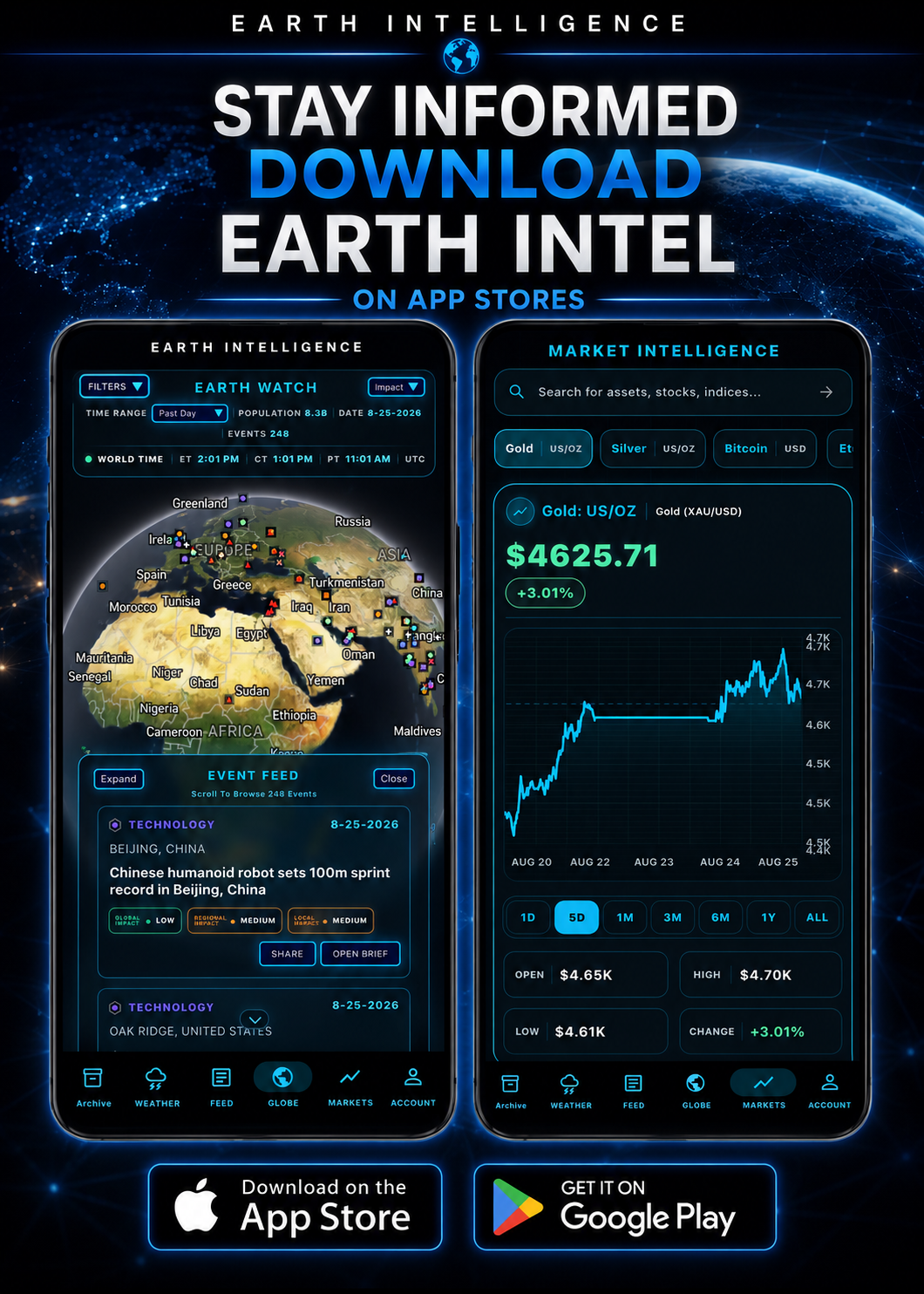
- Download our mobile app:

Click below to view our previous newsletters:
Support/Suggestions Email:
support@earthintel.io