Tuesday☕️


Trending:
- Amazon Supply Chain Services Overview:Amazon has launched Amazon Supply Chain Services (ASCS), opening its massive logistics network to every business — not just Amazon sellers. Any company can now use the same freight, warehousing, fulfillment, and shipping services that power Amazon.com to move, store, and deliver products faster and more reliably.
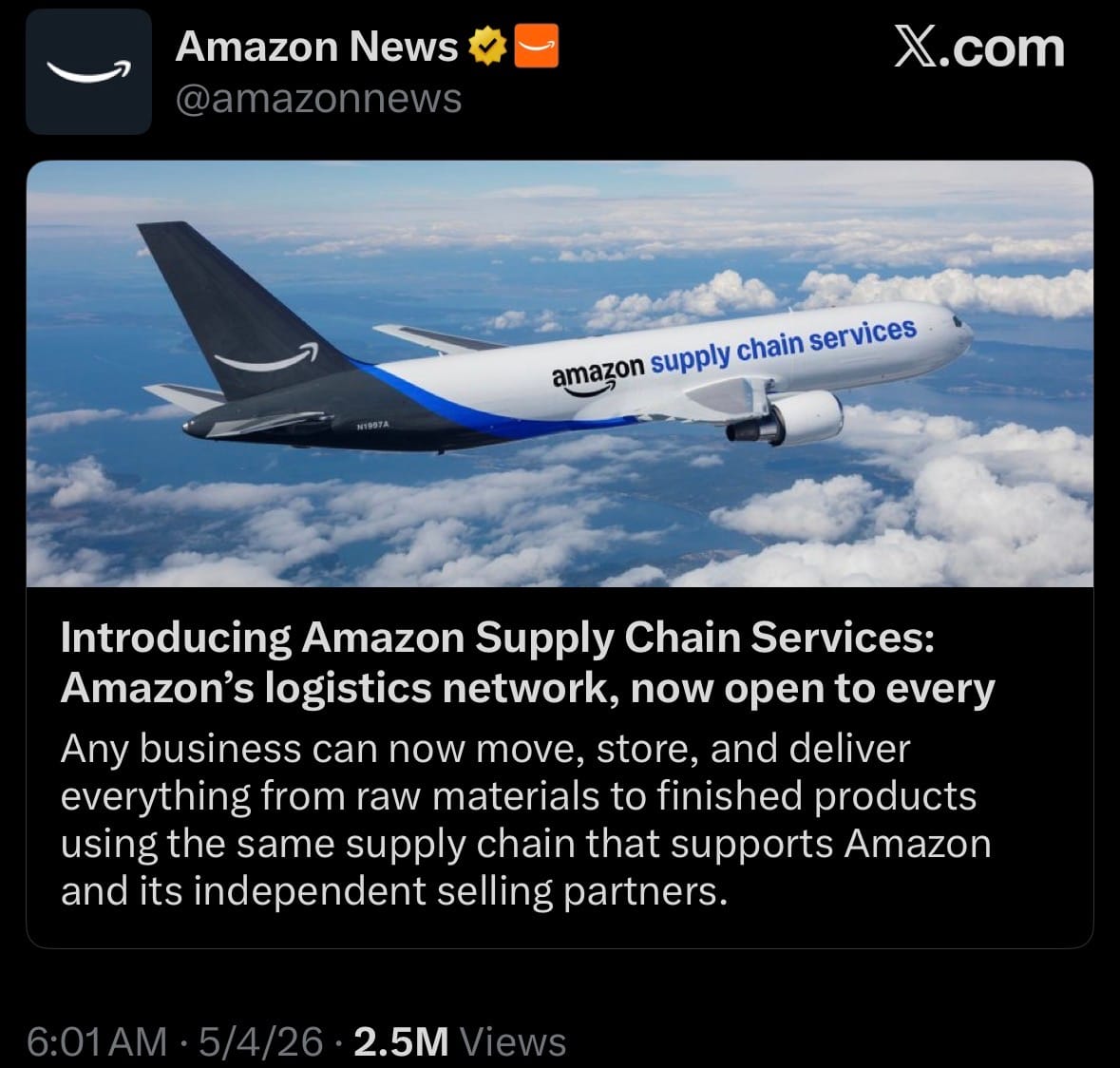
- This gives businesses of all sizes and industries (retail, manufacturing, healthcare, automotive, etc.) access to Amazon’s proven global supply chain infrastructure.
Economics:
Geopolitics & Military Activity:
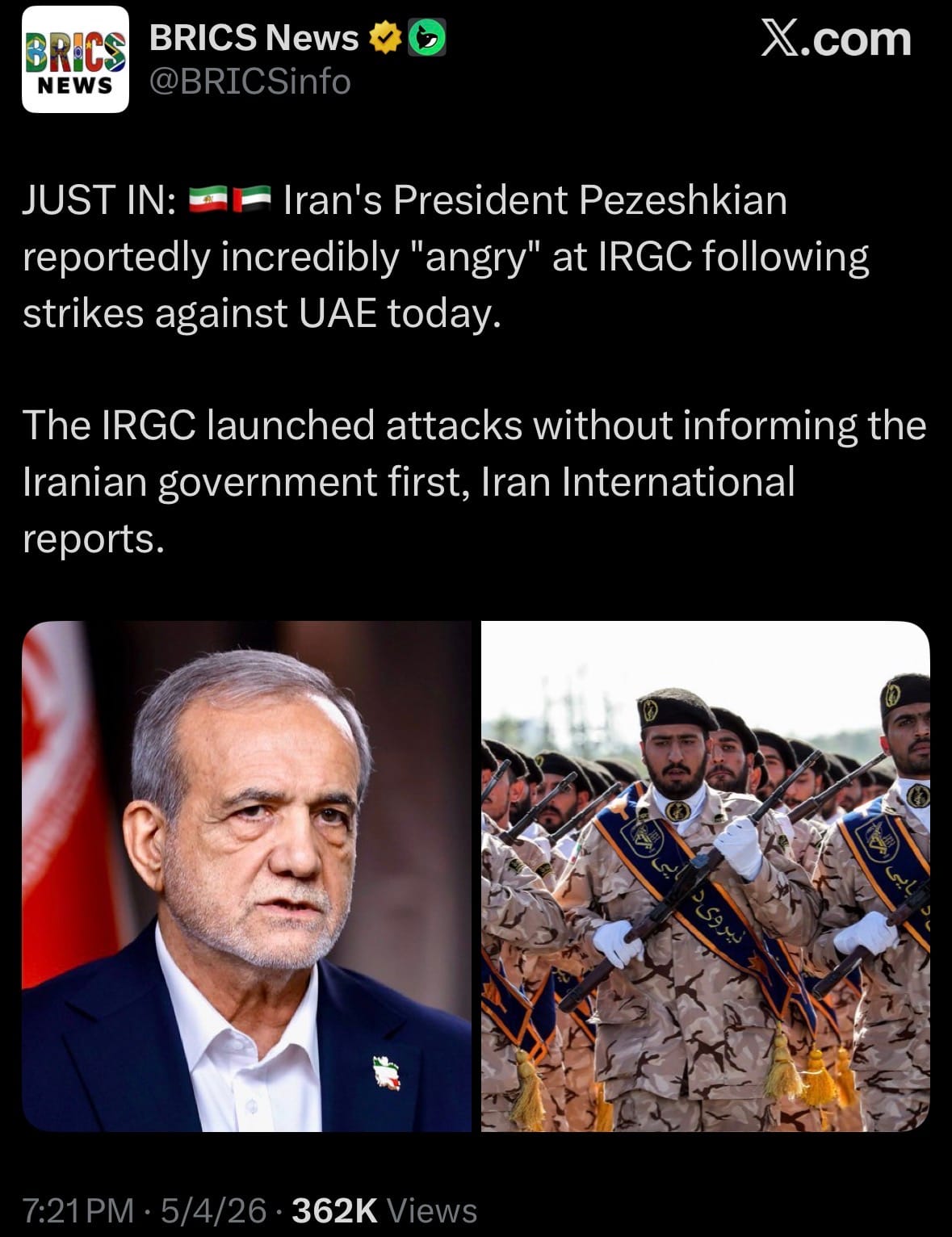
- Yesterday, Iran launched missiles and drones at targets in the UAE and attacked vessels in the Strait of Hormuz in response to the U.S. starting Project Freedom to escort commercial ships.
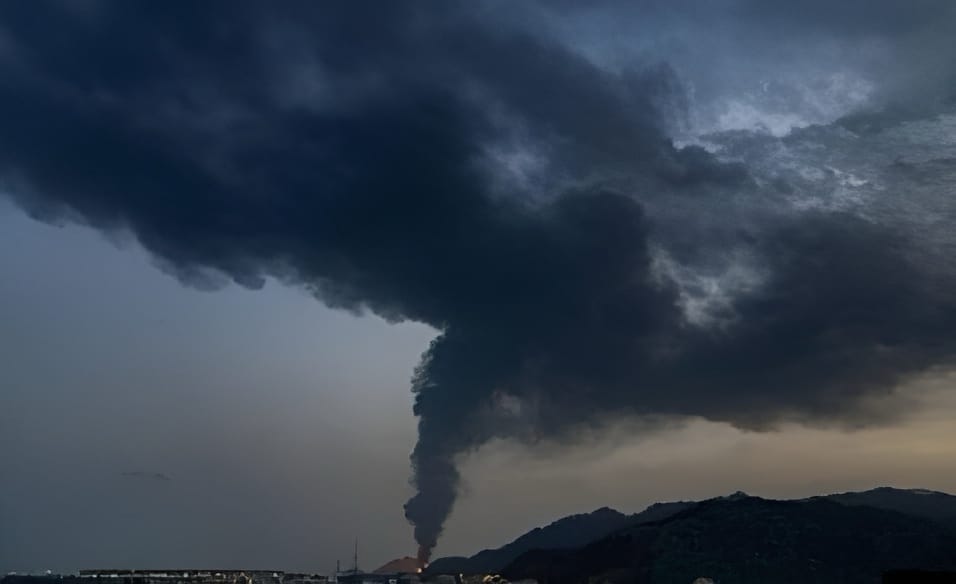
- Key incidents included a drone strike that caused a major fire at the Fujairah oil facility (injuring three people), multiple projectiles fired at UAE territory (most intercepted), and attacks on ships plus a possible warning shot at U.S. warships. The strikes mark a serious escalation and test of the fragile ceasefire, with the U.S. responding by sinking several Iranian fast-attack boats.
Science & Technology:
- Lockheed Martin has joined a partnership with Firefly Aerospace and Seagate Space to develop sea-based (offshore) launch capabilities using Firefly’s Alpha rocket and Seagate’s Gateway offshore launch platform.
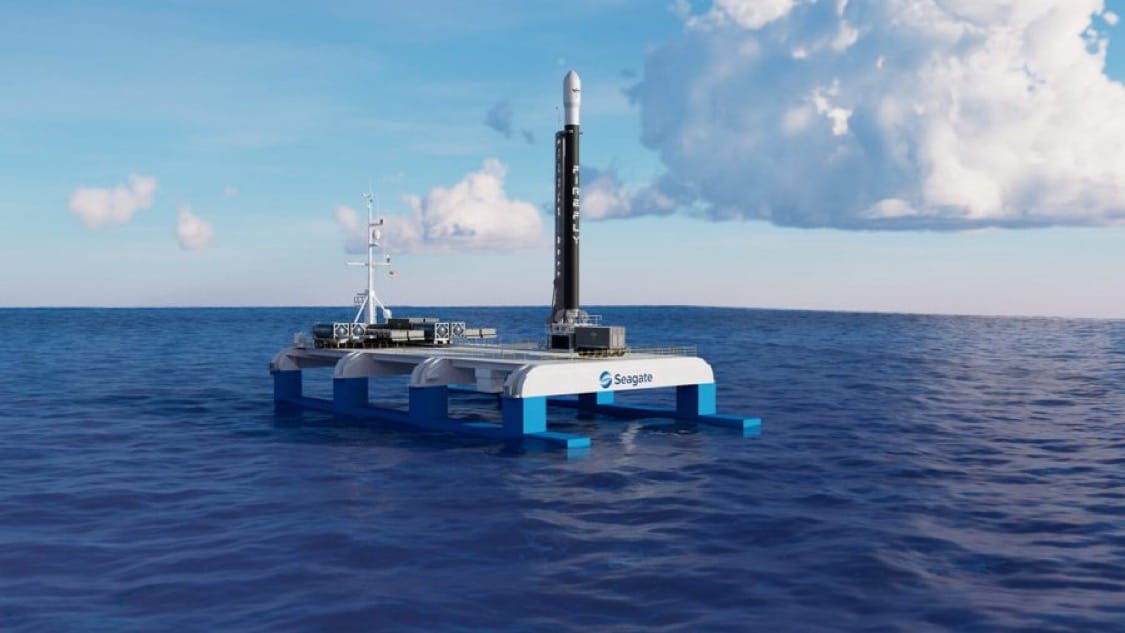
- Announced on May 4, the collaboration focuses on mission concepts and flight demonstrations to provide flexible, rapid-response launches for national security and other customers from the ocean.
Statistic:
- Largest public automakers by market capitalization:
- 🇺🇸 Tesla: $1.474T
- 🇯🇵 Toyota: $222.96B
- 🇨🇳 BYD: $137.47B
- 🇨🇳 Xiaomi: $102.07B
- 🇰🇷 Hyundai: $95.65B
- 🇺🇸 General Motors: $68.25B
- 🇮🇹 Ferrari: $59.78B
- 🇩🇪 BMW: $54.03B
- 🇩🇪 Mercedes-Benz: $49.58B
- 🇩🇪 Volkswagen: $49.11B
- 🇺🇸 Ford: $45.82B
- 🇮🇳 Maruti Suzuki India: $44.51B
- 🇩🇪 Porsche: $42.89B
- 🇰🇷 Kia: $40.56B
- 🇮🇳 Mahindra & Mahindra: $39.53B
- 🇨🇳 Geely: $31.56B
- 🇯🇵 Honda: $30.95B
- 🇨🇳 Great Wall Motors: $24.92B
- 🇨🇳 SAIC Motor: $23.19B
- 🇨🇳 Seres Group: $22.63B
- 🇯🇵 Suzuki Motor: $21.51B
- 🇨🇳 Chery Automobile: $21.48B
- 🇳🇱 Stellantis: $20.51B
- 🇺🇸 Rivian: $19.20B
- 🇨🇳 Li Auto: $18.27B
History:
- Sea-based space launches developed from the strategic need for flexibility, efficiency, and survivability in getting payloads into orbit. Early concepts emerged in the 1960s when the U.S. explored offshore launch ideas, but the first true operational system came with Sea Launch (founded 1995)—a multinational effort led by the U.S. (Boeing), Russia, Ukraine, and Norway. Using a converted oil platform (Odyssey) positioned near the equator in the Pacific, Sea Launch conducted its first successful mission in 1999, launching Zenit rockets. The equatorial position gave rockets a boost from Earth’s rotation, increasing payload efficiency. Despite technical success, financial instability led to bankruptcy in 2009, and the system later fell under Russian control but has remained largely inactive. Around the same time, the U.S. military explored sea-based missile launch concepts through naval platforms, but these were more defense-oriented than commercial space systems. The core idea, however, was proven: launching from the ocean reduces risk to populated areas, avoids airspace restrictions, and allows global positioning for optimal trajectories.
- From the 2010s to 2026, sea-based launch systems have re-emerged with multiple global players pushing different approaches. China has become one of the most active, conducting its first successful sea launch in 2019 using a Long March rocket from a mobile barge in the Yellow Sea, and has since continued developing this capability as part of its strategy for rapid, flexible satellite deployment and military resilience. The United States, while not using sea platforms for liftoff at scale, has dominated ocean-based infrastructure through SpaceX, which pioneered autonomous drone ships (starting 2015) for landing reusable boosters—turning the ocean into a critical part of the launch and recovery cycle. This dramatically reduced costs and enabled high-frequency launches. Other players like Rocket Lab (U.S./New Zealand) focus on ocean recovery of boosters, while countries like Russia have explored reviving Sea Launch and similar concepts. By 2026, sea-based launches are increasingly viewed as part of a distributed launch architecture, especially for military and rapid-response scenarios—where rockets can be launched from unpredictable locations at sea, making them harder to track or target. The evolution is clear: from a single commercial platform → to multiple nations using the ocean as a mobile, strategic launch domain, turning global waters into an extension of space infrastructure.
Image of the day:

Thanks for reading! Earth is complicated, we make it simple.

- Download our mobile app:


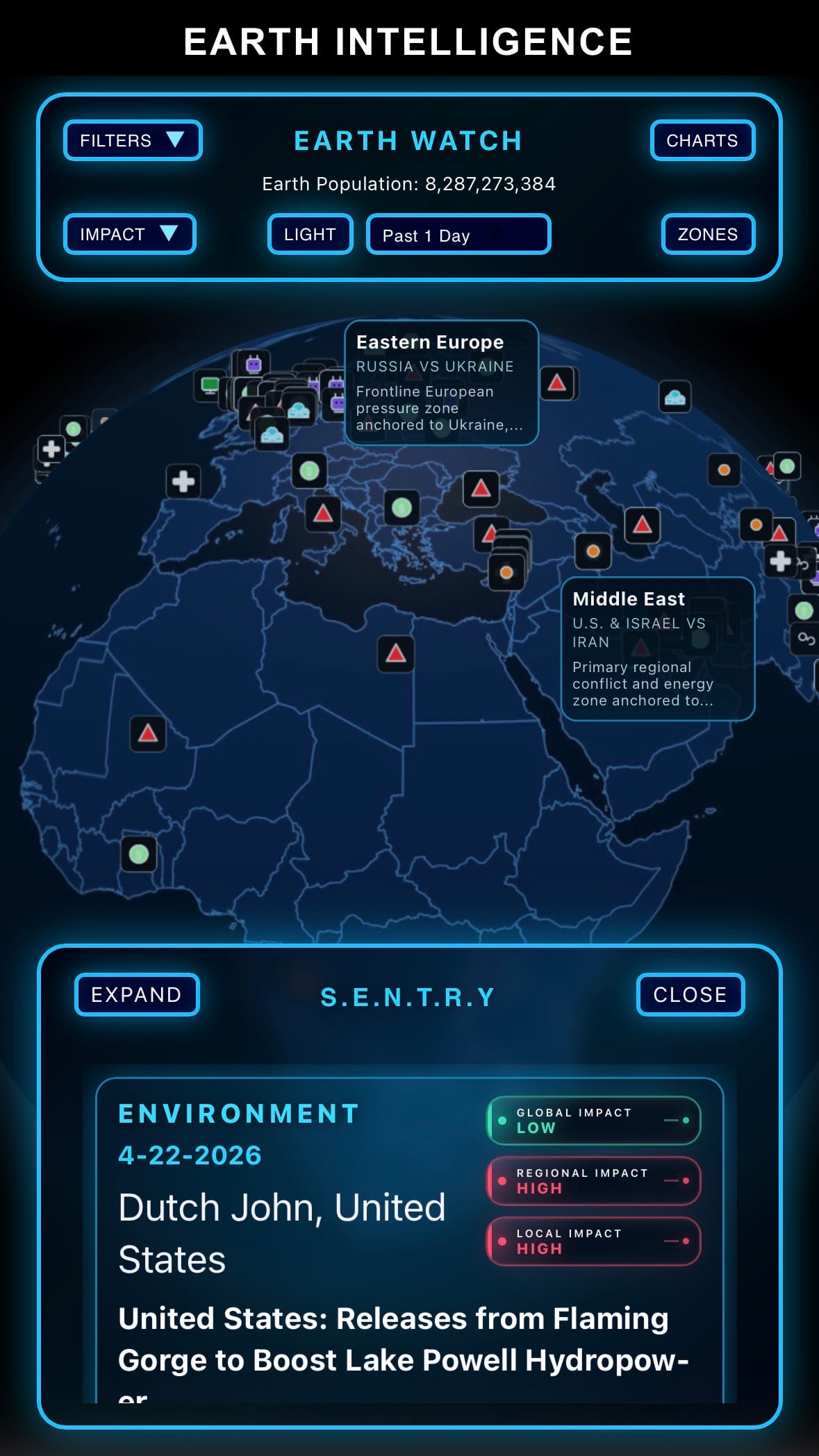
- Click below if you’d like to view our free EARTH WATCH globe:
Click below to view our previous newsletters:

Support/Suggestions Email:
support@earthintel.io