Tuesday☕️

Trending:
- On June 1, 2026, Anthropic confidentially submitted a draft S-1 registration statement to the U.S. Securities and Exchange Commission (SEC).

- This filing gives the company the option to pursue an initial public offering (IPO) once the SEC review is complete; it follows Anthropic’s recent Series H funding round (announced May 28) that raised $65 billion at a $965 billion post-money valuation.
Geopolitics & Military Activity:
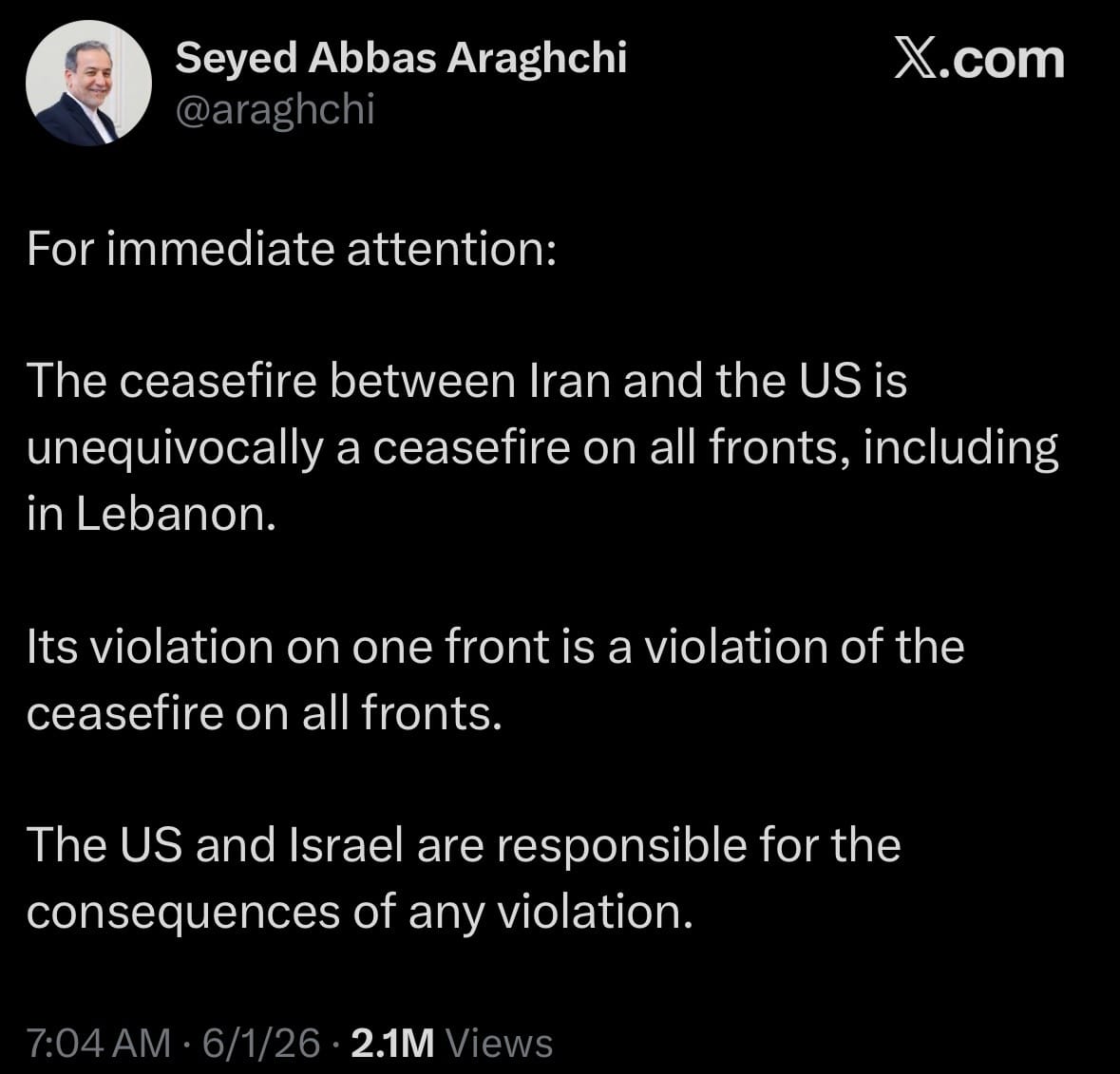
- On Monday, June 1, 2026, Iran suspended the U.S.-brokered ceasefire. Iran’s Foreign Minister said the truce covers all fronts including Lebanon and any violation cancels the entire agreement.
- Clashes continue between Hezbollah and Israel, with Iranian missile activity against U.S. forces and threats to close the Strait of Hormuz, driving oil prices up 8% to $94 per barrel.
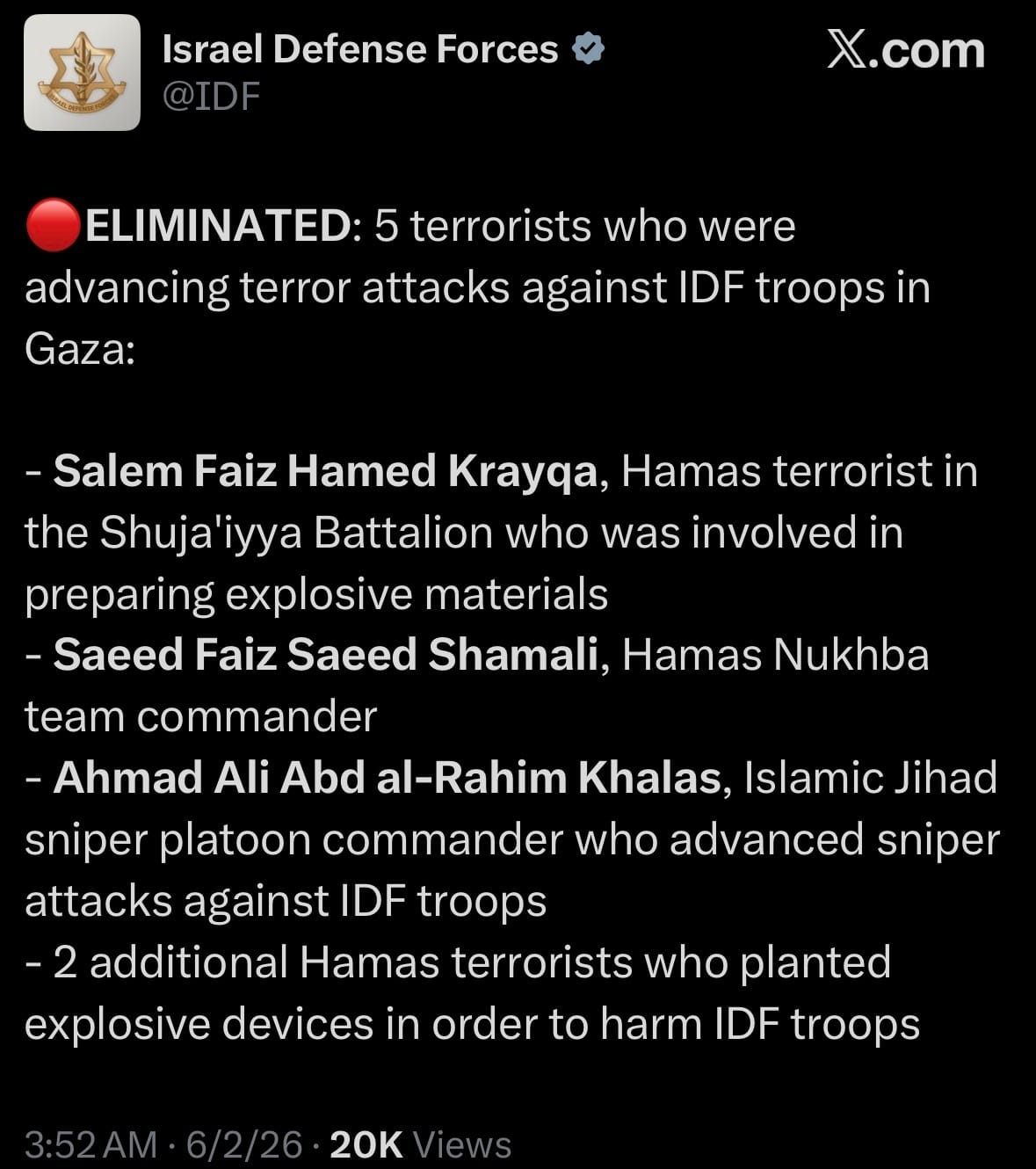
- Today, June 2, 2026, the IDF reported eliminating five militants in Gaza who were preparing attacks on Israeli forces. These included Hamas members Salem Faiz Hamed Krayqa (Shuja’iyya Battalion, involved in explosives), Saeed Faiz Saeed Shamali (Nukhba commander), Islamic Jihad sniper commander Ahmad Ali Abd al-Rahim Khalas, and two other Hamas operatives planting explosive devices.
- In Lebanon, the IDF continued ground operations and airstrikes targeting Hezbollah positions in southern Lebanon, including areas beyond the Litani River such as Beaufort Castle.
Science & Technology:
- Yesterday, a new AI startup called Cerebral Valley unveiled “Agentic OS,” a voice-first mobile operating system concept for phones.

- It lets users speak naturally to AI agents that can understand context, answer questions, and take real actions across the phone — such as sending messages, booking rides, editing photos, or controlling apps — without needing to tap or swipe.
Statistic:
- Largest railroad companies by market capitalization:
- 🇺🇸 Union Pacific Corporation: $156.44B
- 🇺🇸 CSX Corporation: $85.21B
- 🇨🇦 CPKC (Canadian Pacific Kansas City): $78.72B
- 🇨🇦 Canadian National Railway: $72.44B
- 🇺🇸 Norfolk Southern: $68.53B
- 🇯🇵 East Japan Railway: $23.63B
- 🇯🇵 Central Japan Railway: $20.11B
- 🇮🇳 Indian Railway Finance: $13.25B
- 🇨🇳 China Railway Construction: $12.93B
- 🇫🇷 Getlink: $11.46B
- 🇯🇵 West Japan Railway: $7.07B
- 🇯🇵 Hankyu Hanshin Holdings: $6.71B
- 🇦🇺 Qube Holdings: $6.37B
- 🇯🇵 Tokyu: $5.83B
- 🇧🇷 Rumo: $5.14B
- 🇦🇺 Aurizon Holdings: $5.10B
- 🇯🇵 Tokyo Metro: $5.07B
- 🇹🇼 Taiwan High Speed Rail: $4.53B
- 🇮🇳 Indian Railway Catering & Tourism: $4.34B
- 🇯🇵 Kintetsu GHD: $4.16B
- 🇯🇵 Odakyu Electric Railway: $3.40B
- 🇯🇵 Kyushu Railway Company: $3.31B
- 🇯🇵 Tobu Railway: $3.29B
- 🇯🇵 Keisei Electric Railway Co., Ltd.: $3.14B
- 🇯🇵 Keio Corporation: $2.60B
- 🇹🇭 Bangkok Expressway and Metro (BEM): $2.39B
- 🇯🇵 Meitetsu: $2.21B
History:
- Submarines evolved from centuries of attempts to operate beneath the surface of the ocean. One of the earliest known designs was created by Cornelius Drebbel in 1620, who demonstrated a manually powered submarine on the River Thames for the English crown. During the American Revolution, the Turtle (1775) became the first military submarine used in combat, attempting to attach explosives to British ships. The concept matured during the American Civil War, when the Confederate submarine H.L. Hunley (1864) became the first submarine to sink an enemy warship, though it was lost shortly afterward. The true submarine revolution began in the late 1800s with inventors like John Philip Holland, whose designs led to the first practical modern submarines. By World War I (1914–1918), Germany’s U-boats demonstrated how submarines could threaten global shipping on a massive scale. During World War II (1939–1945), submarine warfare became one of the most important components of naval strategy, with German U-boats attacking Allied shipping in the Atlantic while American submarines devastated Japanese supply lines in the Pacific. The biggest breakthrough came in 1954 when the United States launched the USS Nautilus, the world’s first nuclear-powered submarine, allowing submarines to remain underwater for months instead of days.
- During the Cold War (1947–1991), submarines became one of the most powerful military assets ever created. Nuclear-powered attack submarines (SSNs) hunted enemy fleets, while ballistic missile submarines (SSBNs) became a key part of nuclear deterrence. The U.S. developed classes like the Los Angeles, Seawolf, and later Virginia-class, while the Soviet Union fielded powerful submarines such as the Typhoon, Akula, and Oscar-class. These vessels carried nuclear missiles, cruise missiles, special operations forces, and advanced surveillance systems. The underwater competition became one of the most secretive aspects of the Cold War, with both sides tracking each other beneath the oceans. By the 2000s–2026, submarines evolved into stealth intelligence and strike platforms capable of launching precision missiles, gathering signals intelligence, deploying drones, and supporting special operations. Major submarine powers now include the United States, Russia, China, United Kingdom, France, and India, but the United States remains widely considered the most dominant overall submarine force. The U.S. operates roughly 70+ nuclear submarines, including the highly advanced Virginia-class and Ohio-class fleets, supported by unmatched training, sensors, global logistics, and undersea surveillance networks. Russia maintains some of the fastest and deepest-diving submarines, while China has rapidly expanded its fleet and is closing the technology gap. As of 2026, most naval analysts still rank the United States as the world’s leading submarine power, followed by Russia and China, with its advantage stemming not just from submarine numbers but from decades of experience, stealth technology, nuclear propulsion expertise, and global operational reach.
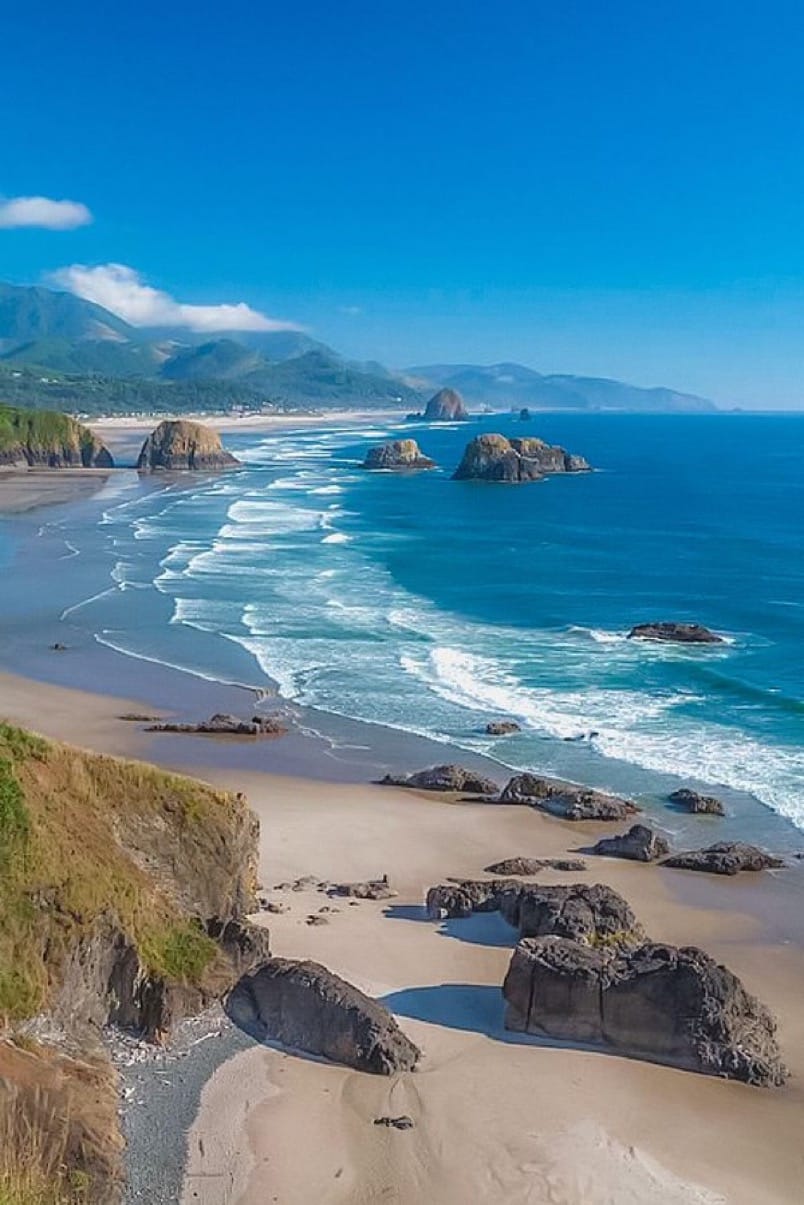
Image of the day:
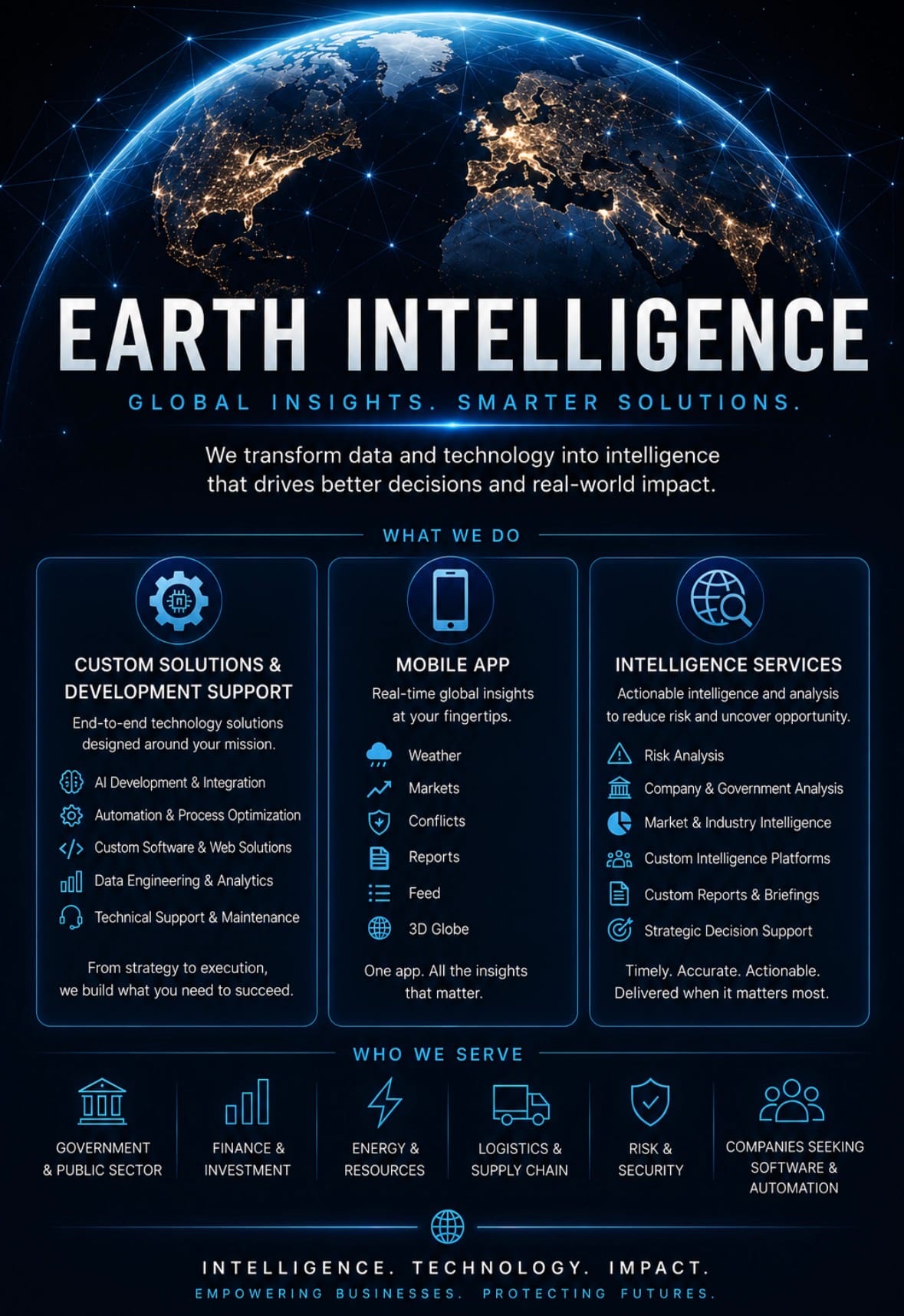
Thanks for reading! Earth is complicated, we make it simple.
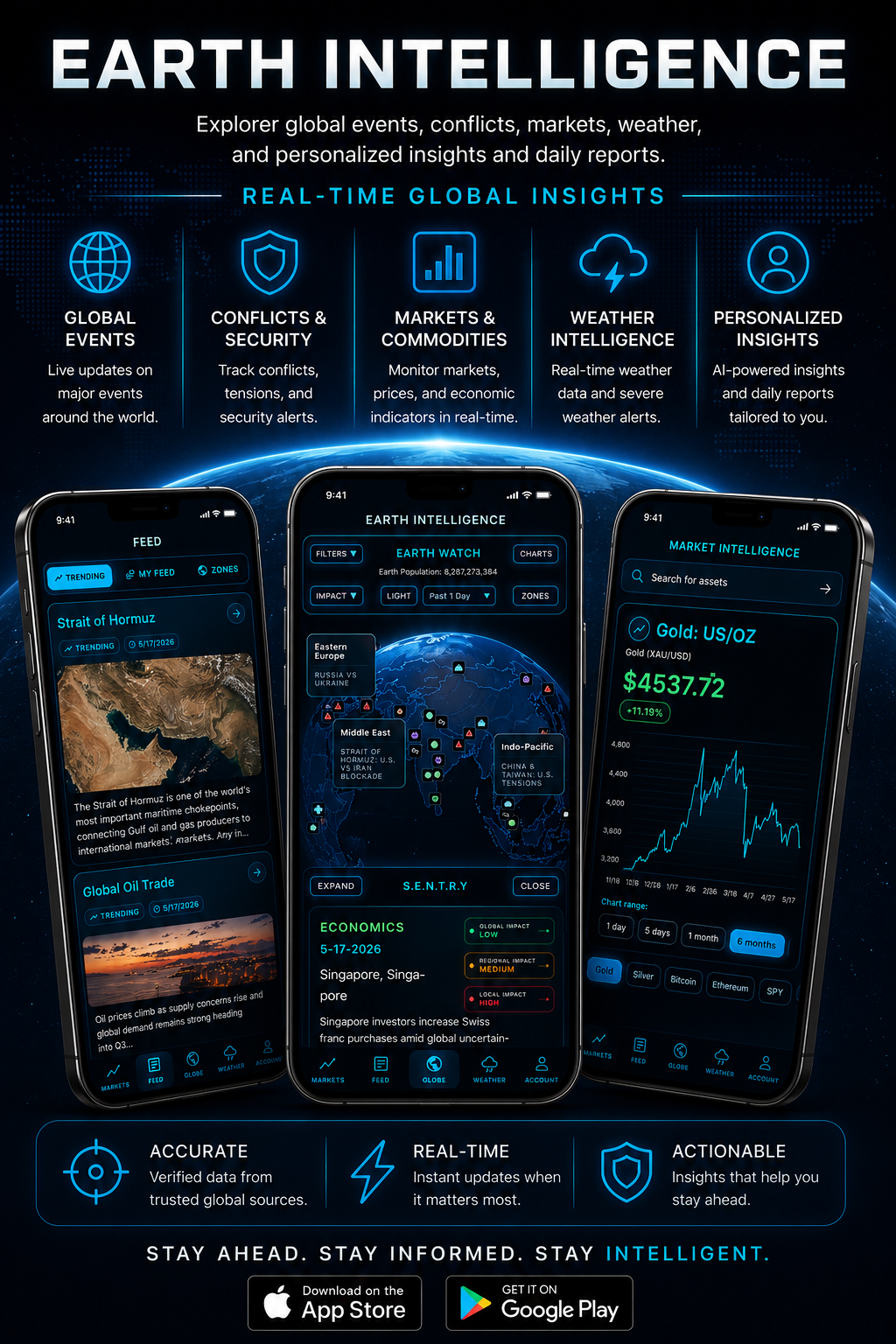
- Download our mobile app:


Click below to view our previous newsletters:

Support/Suggestions Email:
support@earthintel.io