Tuesday☕️

Trending:
- Over the last 48 hours, Iran launched ballistic missiles toward Israel on June 7–8. Most were intercepted, with no reported casualties. Israel responded with airstrikes on military targets in central and western Iran on June 8. Both sides have since stated they are pausing further direct attacks while warning they would respond to additional strikes.
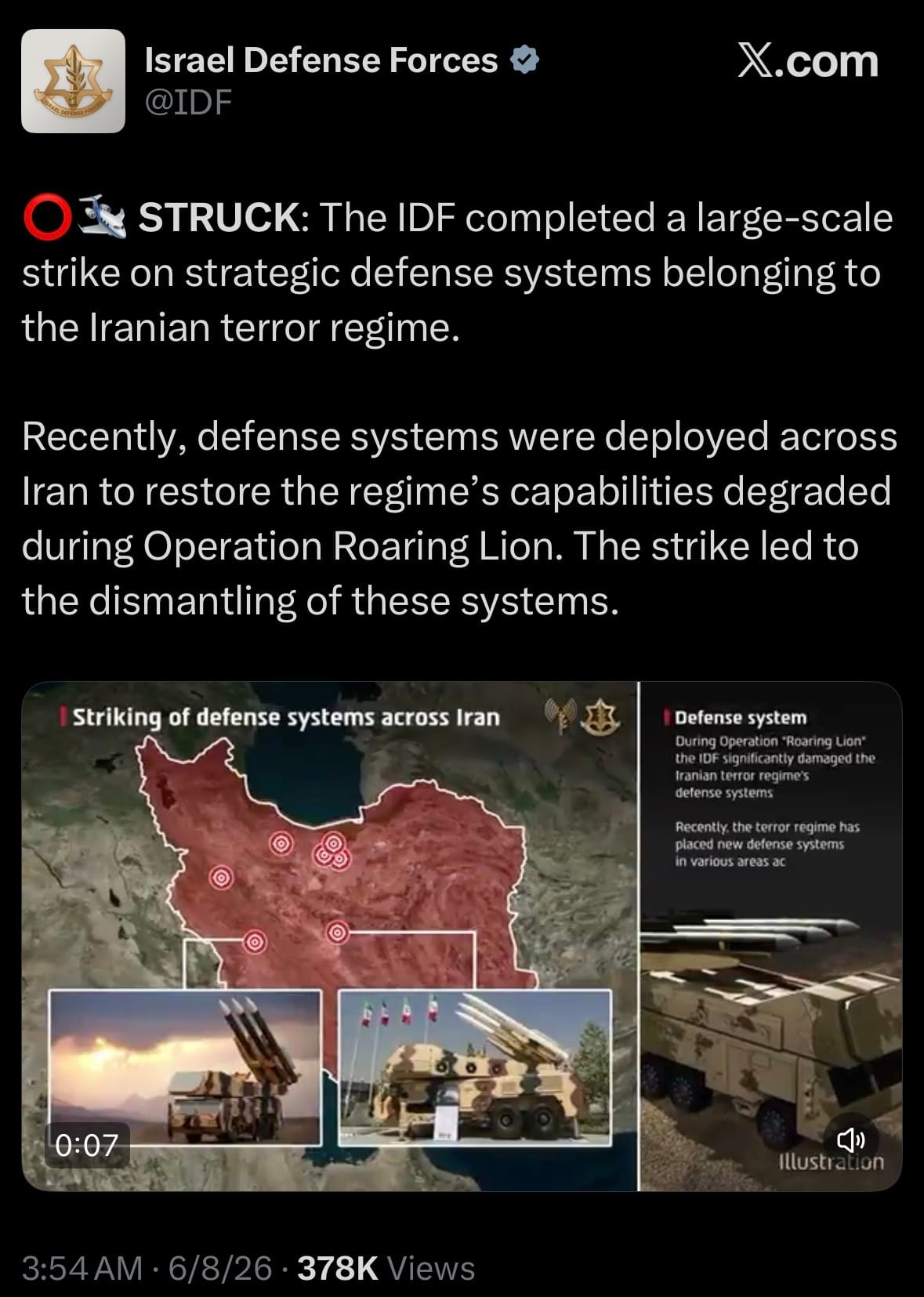
- Iran has stated that its actions are in response to ongoing Israeli military operations in Lebanon and Gaza. Tehran has indicated that a key condition for any lasting ceasefire or broader de-escalation is for Israel to cease those operations and withdraw from areas in southern Lebanon. This position has been cited as a primary obstacle in current ceasefire negotiations involving the U.S., Iran, Israel, and regional actors.
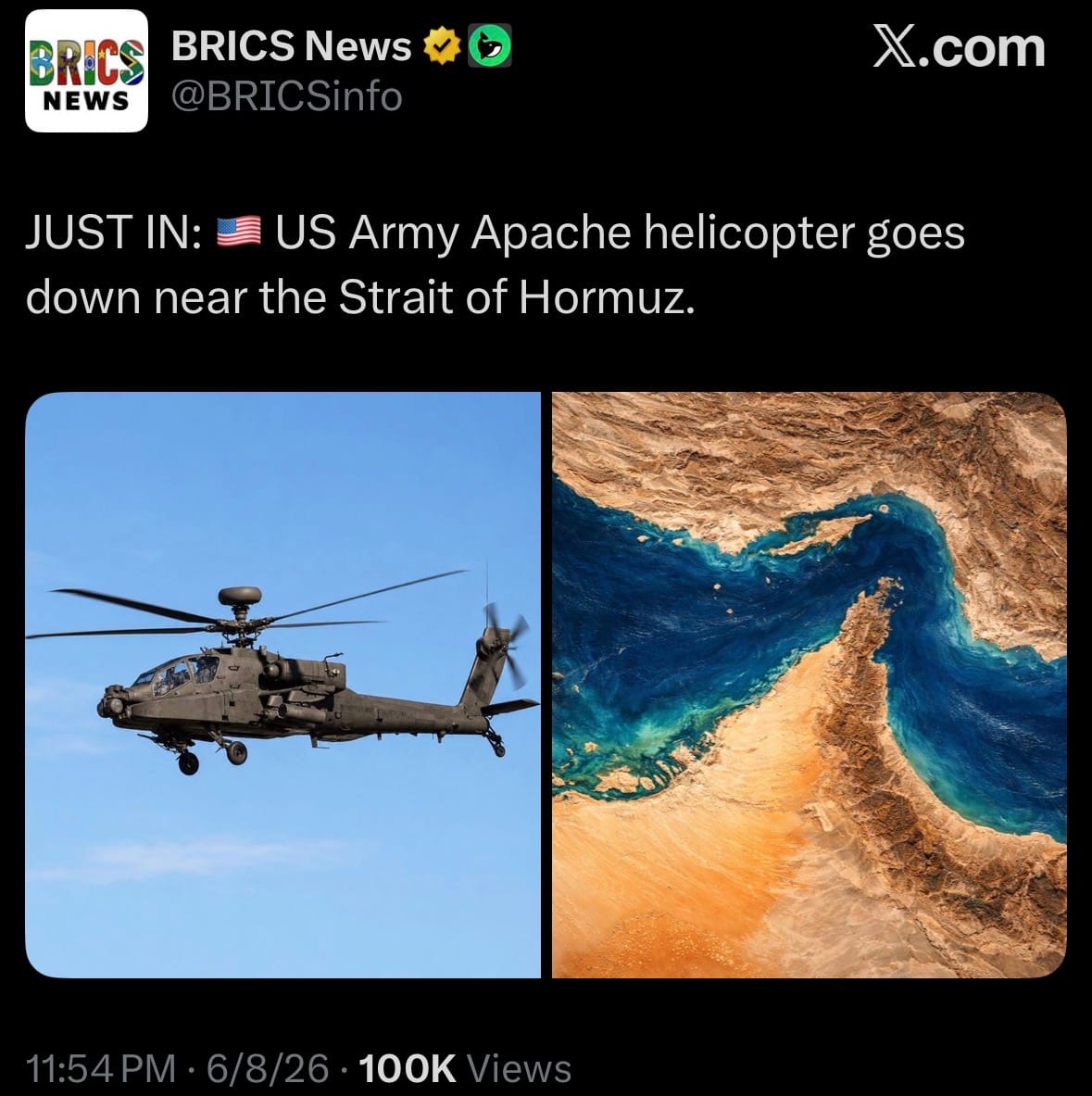
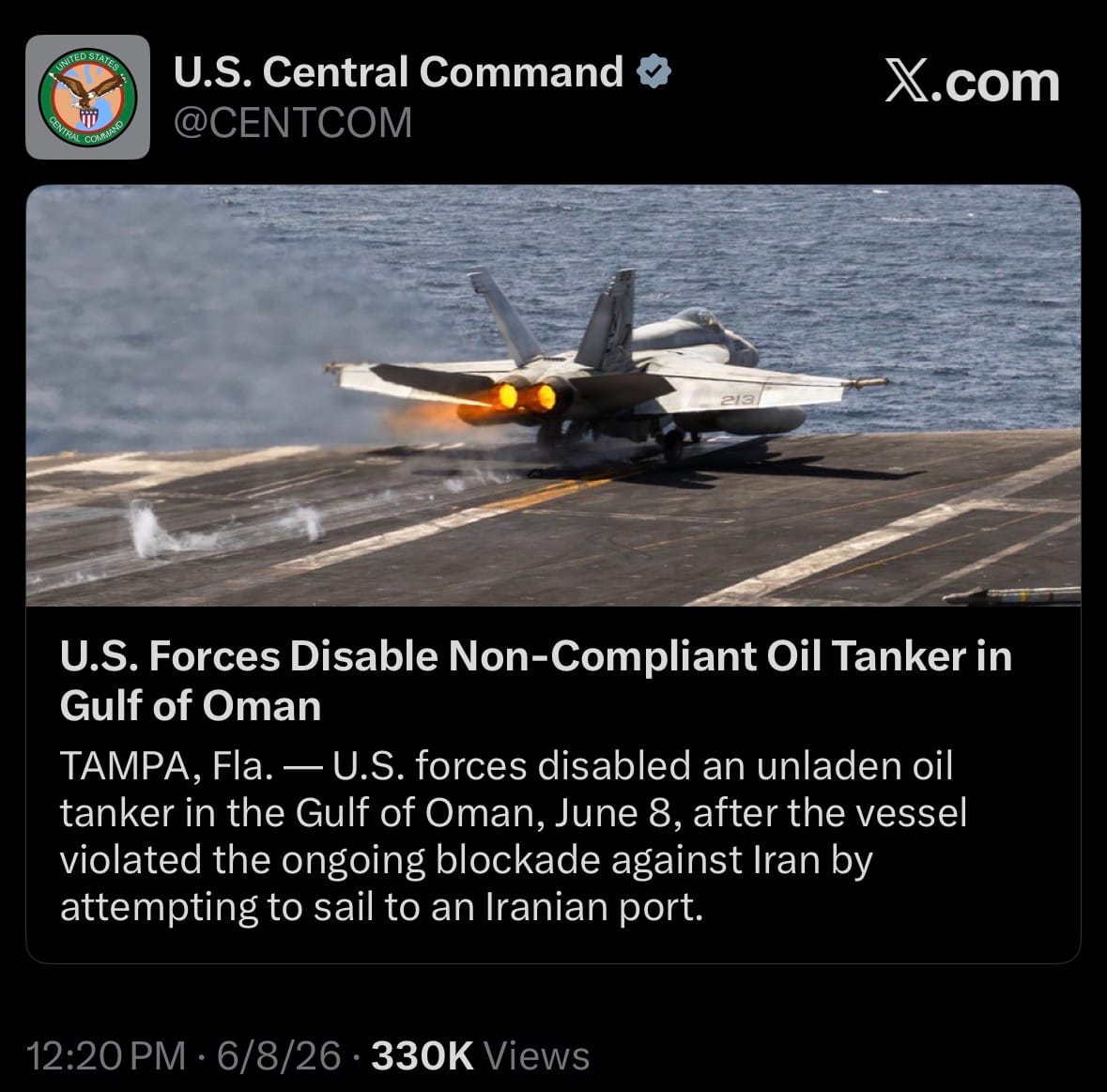
Geopolitics & Military Activity:
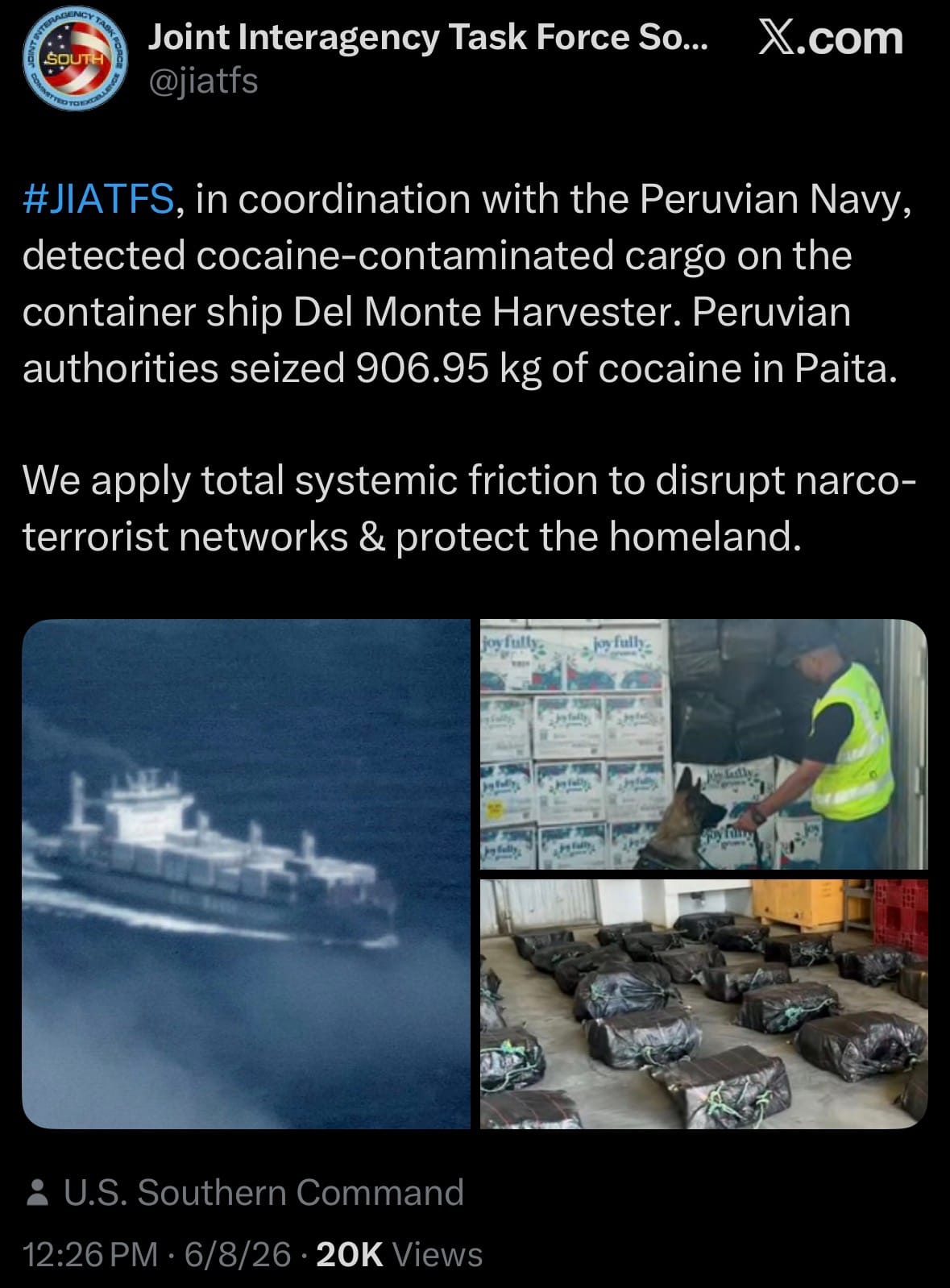
- The U.S.-led Joint Interagency Task Force South (JIATFS), working with the Peruvian Navy, detected cocaine hidden in cargo aboard the container ship Del Monte Harvester. Peruvian authorities seized 906.95 kg (about 2,000 pounds) of cocaine in the port of Paita.
Environment & Weather:
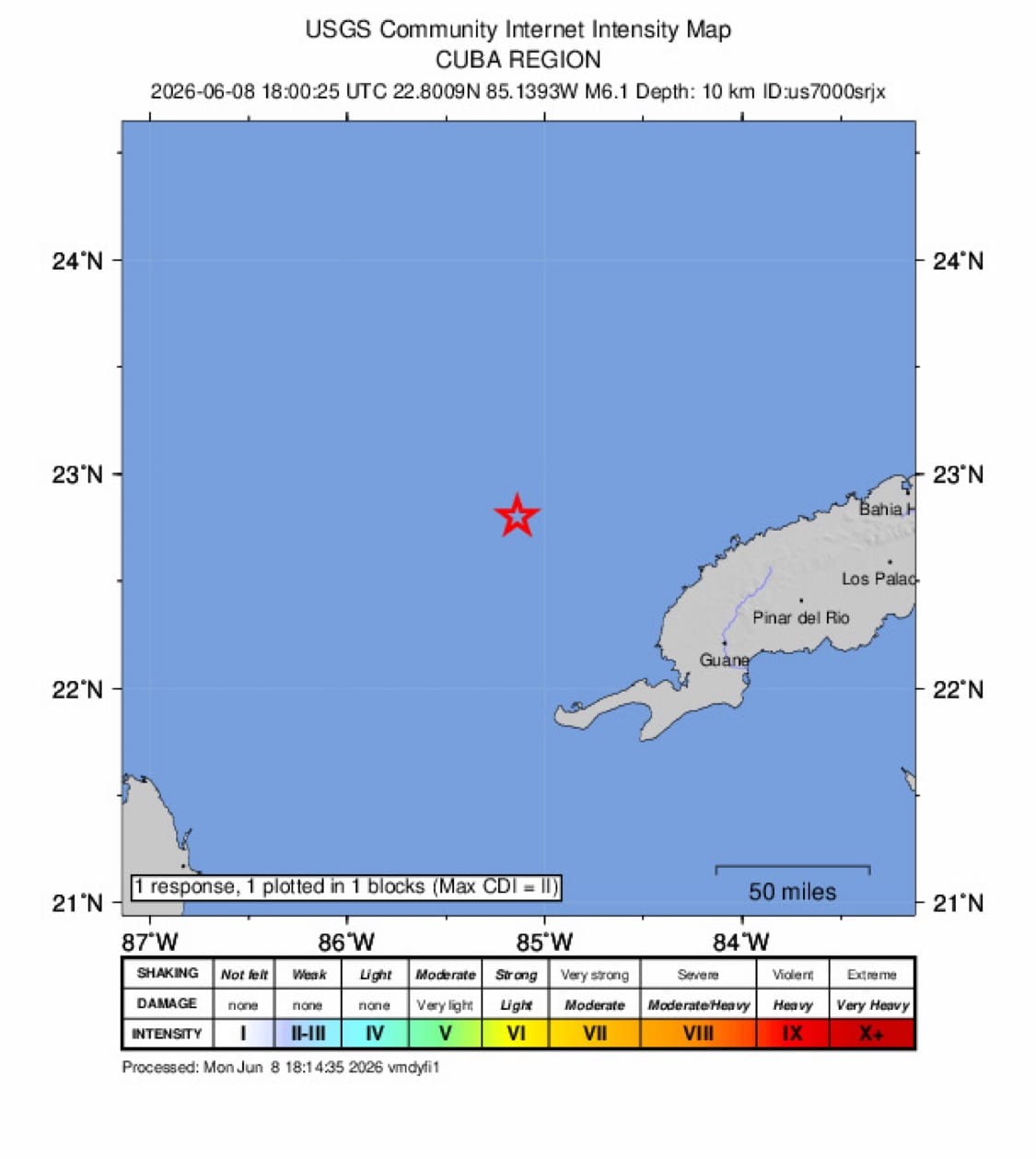
- Over the past 36 hours, a magnitude 6.1 earthquake struck about 155 km west of Pinar del Río, Cuba, on June 8. It was felt in parts of southern Florida and Mexico, with no reported damage or injuries.
- Additionally, a magnitude 7.8 earthquake struck offshore Sarangani in the southern Philippines on June 8. It caused strong shaking, a tsunami warning, landslides, building collapses, at least 32–35 deaths, and over 200 injuries.
Space:
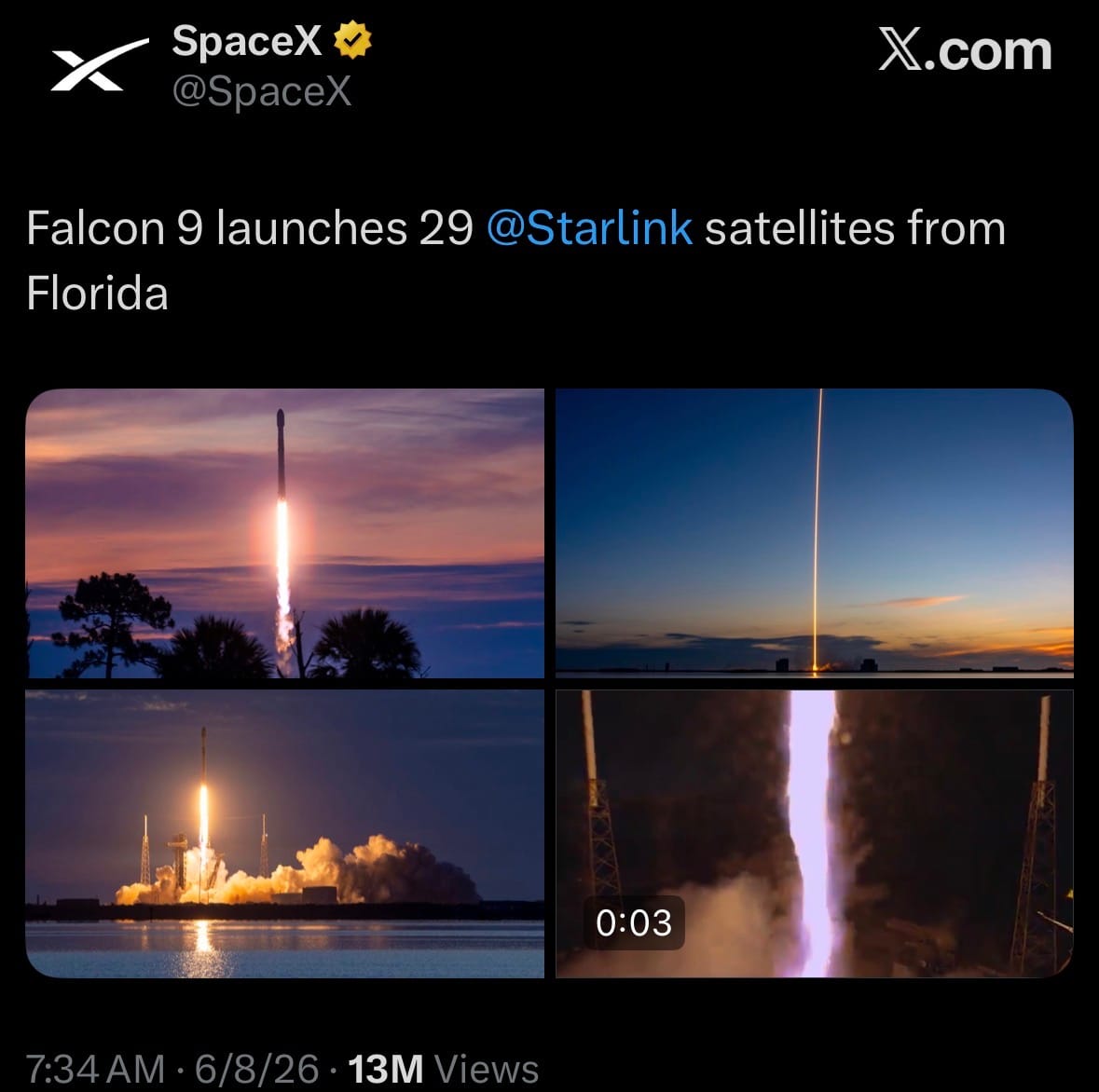
- Yesterday, June 8, 2026, SpaceX launched a Falcon 9 rocket from Cape Canaveral Space Force Station in Florida at 6:13 a.m. ET, successfully deploying 29 Starlink satellites into low Earth orbit while its booster completed a record 35th flight and landed safely.
Statistic:
- Largest public banking companies by market capitalization:
- 🇺🇸 JPMorgan Chase: $833.62B
- 🇨🇳 China Construction Bank: $401.80B
- 🇺🇸 Bank of America: $380.59B
- 🇨🇳 Agricultural Bank of China: $341.32B
- 🇺🇸 Morgan Stanley: $334.76B
- 🇨🇳 ICBC: $316.55B
- 🇬🇧 HSBC: $313.91B
- 🇺🇸 Goldman Sachs: $308.28B
- 🇨🇳 Bank of China: $291.42B
- 🇨🇦 Royal Bank of Canada: $271.43B
- 🇺🇸 Wells Fargo: $247.75B
- 🇺🇸 Citigroup: $227.31B
- 🇯🇵 Mitsubishi UFJ Financial Group: $224.63B
- 🇦🇺 Commonwealth Bank: $190.62B
- 🇨🇦 Toronto-Dominion Bank: $188.61B
- 🇪🇸 Santander: $174.95B
- 🇨🇭 UBS: $155.00B
- 🇨🇳 China Merchants Bank (CM Bank): $154.60B
- 🇺🇸 Charles Schwab: $153.18B
- 🇯🇵 Sumitomo Mitsui Financial Group: $147.65B
- 🇸🇬 DBS Group: $141.01B
- 🇪🇸 BBVA: $124.31B
- 🇮🇹 UniCredit: $123.97B
- 🇫🇷 BNP Paribas: $118.45B
- 🇮🇳 HDFC Bank: $118.08B
- 🇯🇵 Mizuho Financial Group: $116.82B
History:
- The history of chokepoints is the history of controlling civilization itself. Long before modern nations existed, empires learned that controlling narrow passages of land or water meant controlling trade, military movement, information, and wealth. Ancient Egypt depended on the Nile River chokepoints (c. 3000 BC onward) to move grain and resources, while the Persian Empire (550–330 BC) controlled key routes connecting Asia, Africa, and Europe. The Greeks famously defended the narrow pass of Thermopylae in 480 BC, where a small force delayed a much larger Persian army because geography restricted movement. The Romans later built their empire around strategic control of the Mediterranean Sea, which they called Mare Nostrum (“Our Sea”), allowing them to dominate trade and military logistics across Europe, North Africa, and the Middle East. During the Middle Ages, cities such as Constantinople controlled the Bosporus Strait, one of the most important waterways on Earth, linking the Black Sea to the Mediterranean. Whoever controlled Constantinople controlled trade between Europe and Asia, making it one of the most contested cities in history. The fall of Constantinople to the Ottoman Empire in 1453 shifted global trade patterns and helped drive European exploration, eventually leading to the discovery of new maritime routes and the Age of Exploration.
- The age of empires transformed chokepoints into strategic assets that could determine the fate of nations. The Strait of Gibraltar, connecting the Atlantic Ocean to the Mediterranean, became vital to British naval dominance. The opening of the Suez Canal in 1869 revolutionized global shipping by linking Europe directly to Asia without requiring ships to sail around Africa. The canal quickly became one of the most valuable strategic assets on Earth, playing major roles in both World Wars and the Suez Crisis of 1956. The Panama Canal, completed in 1914, connected the Atlantic and Pacific Oceans, dramatically reducing travel time for military and commercial vessels. During both World Wars, Germany attempted to disrupt Allied shipping routes through submarine campaigns because controlling or threatening chokepoints could cripple entire economies. As oil became the lifeblood of industrial civilization during the 20th century, new chokepoints gained immense importance. The Strait of Hormuz, between Iran and Oman, became critical because a significant portion of the world’s oil exports passes through it. Other key chokepoints include Bab el-Mandeb between the Red Sea and Gulf of Aden, the Strait of Malacca between Malaysia and Indonesia, and the Turkish Straits connecting the Black Sea to global markets. By the Cold War, naval strategy increasingly revolved around controlling these narrow passages and preventing adversaries from doing the same.
- By 2026, chokepoints remain some of the most strategically important locations on Earth because they sit at the intersection of energy, trade, military power, and geopolitics. The Strait of Hormuz handles a substantial share of global oil and LNG exports, making it one of the most closely watched waterways in the world. The Suez Canal carries roughly 10–15% of global trade, while the Strait of Malacca serves as the primary maritime artery connecting East Asia with the Middle East, Europe, and Africa. The Bab el-Mandeb has become increasingly important due to conflicts in Yemen and attacks on commercial shipping, while the South China Sea has emerged as one of the most contested regions globally because trillions of dollars in trade flow through it annually. Modern chokepoint control no longer relies solely on warships—it now involves satellites, drones, missiles, cyber capabilities, intelligence networks, economic sanctions, and global surveillance systems. Recent events in the Red Sea, the South China Sea, and the Persian Gulf demonstrate that even in the age of space technology and global communications, geography still matters. Throughout history, empires have risen and fallen based on their ability to control the world’s critical chokepoints. From Thermopylae in 480 BC to the Strait of Hormuz in 2026, the lesson remains the same: whoever controls the narrow passages often influences the flow of commerce, resources, military power, and ultimately the course of history itself.
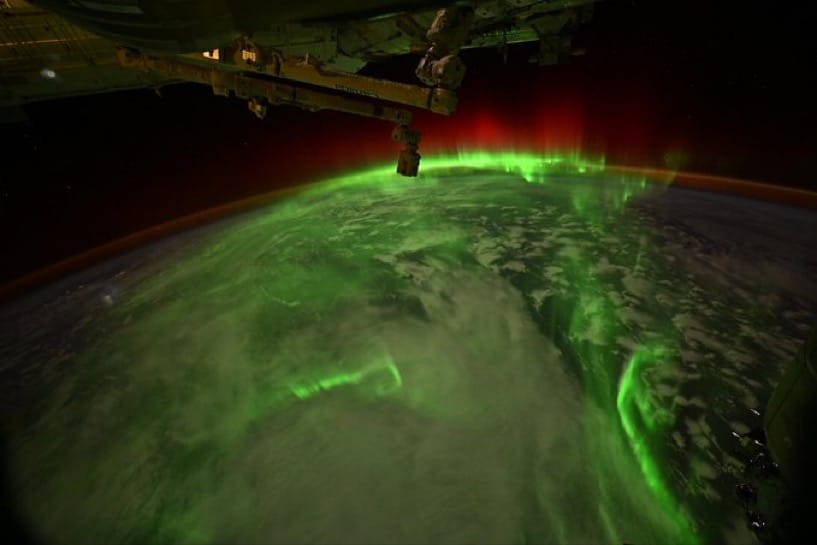
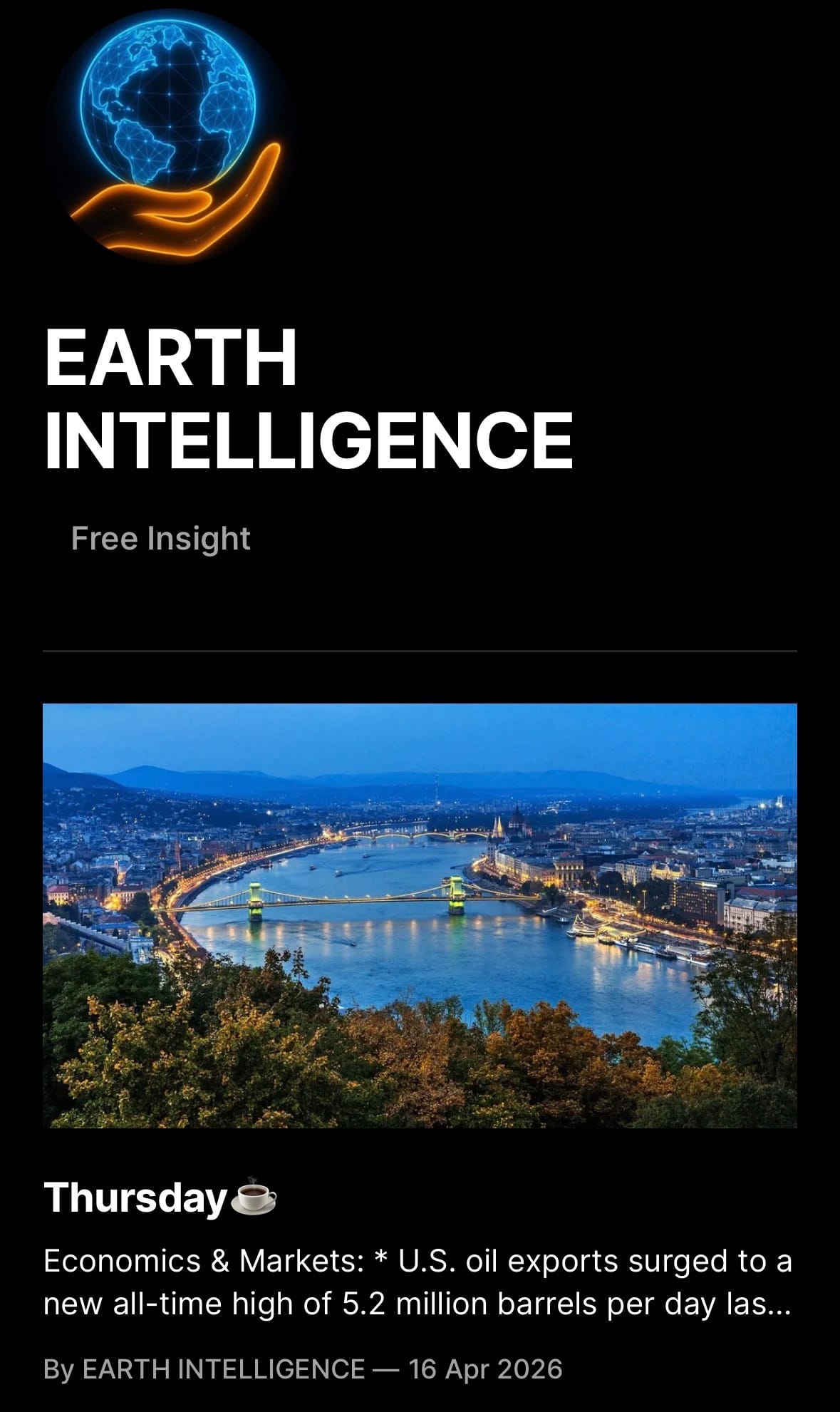
Image of the day:
Thanks for reading! Earth is complicated, we make it simple.
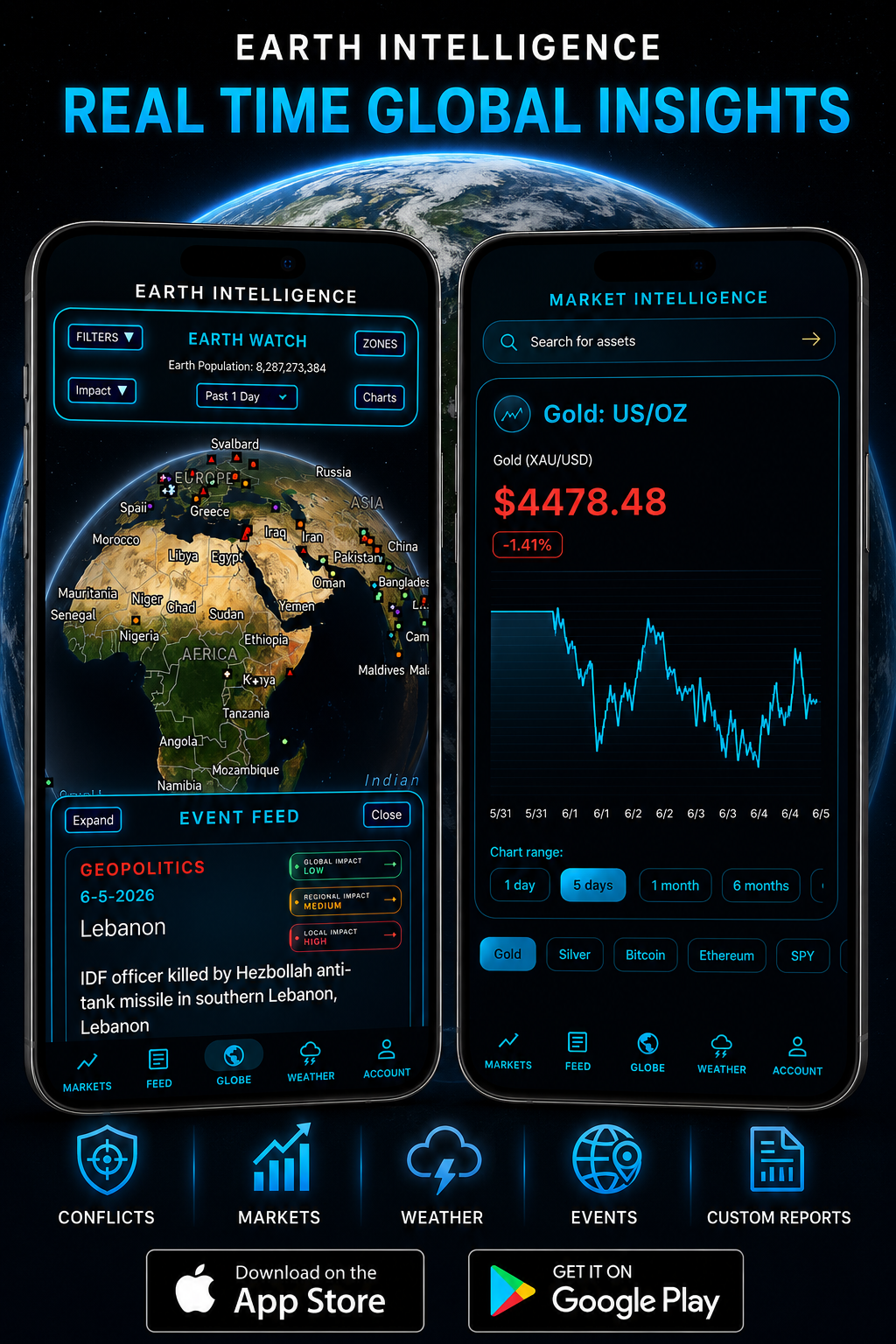
- Download our mobile app:


Click below to view our previous newsletters:
Support/Suggestions Email:
support@earthintel.io