Wednesday☕️


Trending:
- On November 4, 2025, a UPS Airlines MD-11 cargo plane, operating as Flight 2976, crashed shortly after takeoff from Louisville Muhammad Ali International Airport in Kentucky, resulting in at least seven fatalities and multiple injuries. The aircraft, carrying three crew members, exploded into a fireball upon impact near the airport grounds, with initial reports indicating it may have struck vehicles or structures, leading to additional casualties on the ground.
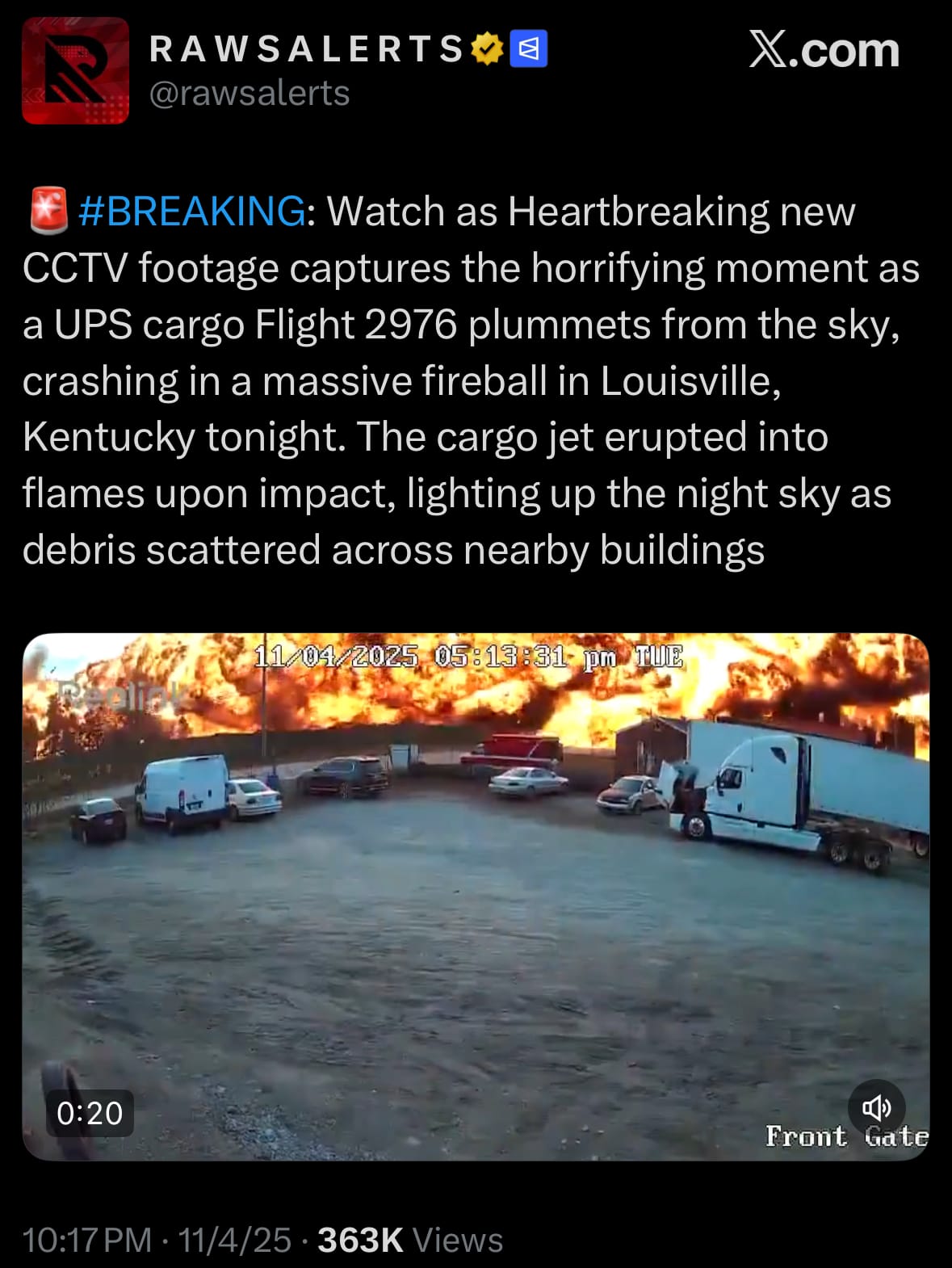
- Emergency responders issued a shelter-in-place order for nearby areas due to a large plume of smoke and potential hazards, while the Federal Aviation Administration closed the airport, disrupting operations at UPS's primary air hub. Investigations by the National Transportation Safety Board were promptly initiated, focusing on factors such as mechanical issues, weather conditions, or pilot error, though no definitive cause was immediately determined..
Economics & Markets:
- Yesterday’s U.S. stock market:

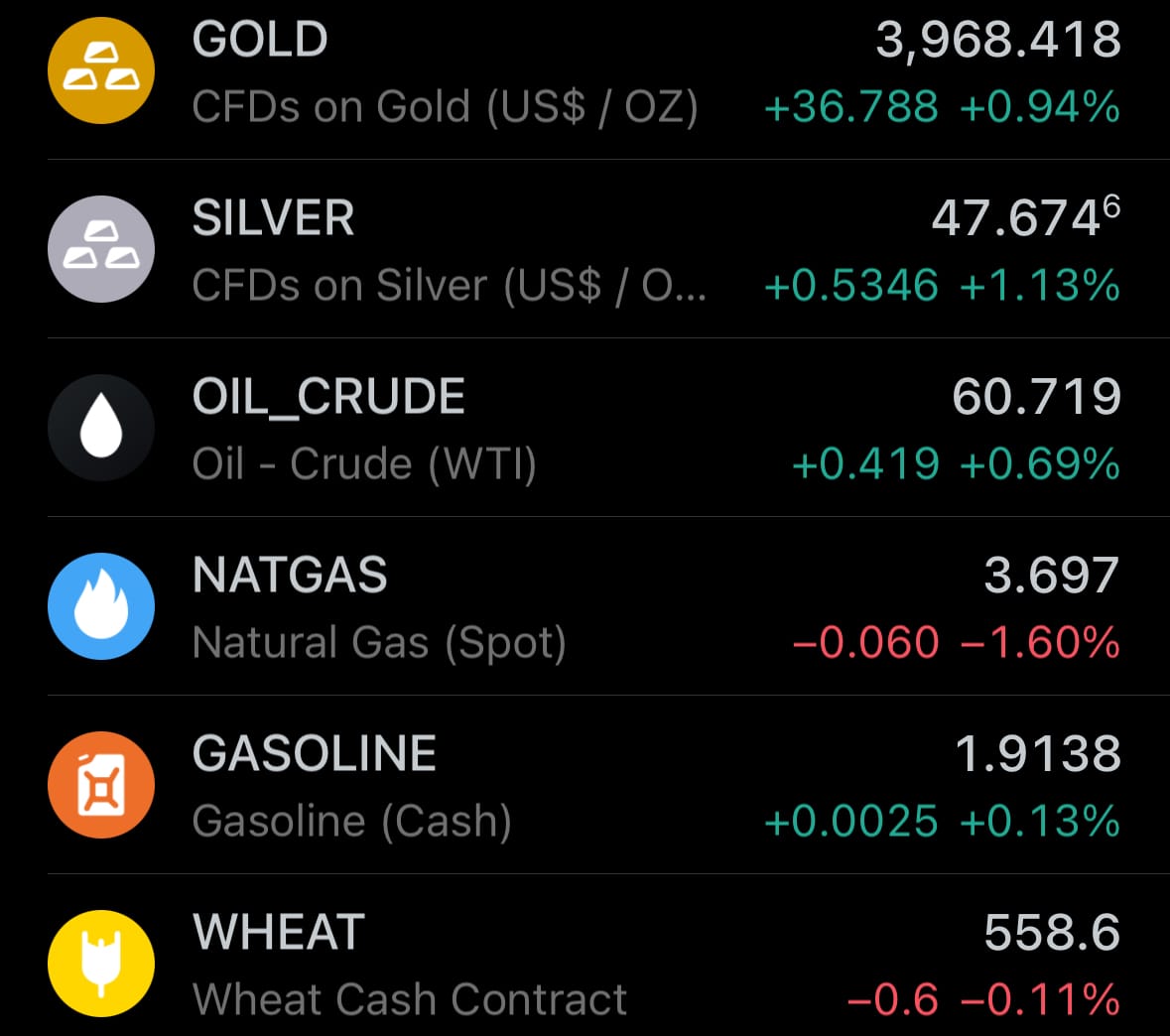
- Today’s commodity market:
- Today’s crypto market:

Geopolitics & Military Activity:
- On November 4, 2025, the U.S. military carried out an airstrike on a vessel suspected of drug smuggling in the eastern Pacific Ocean, as part of an ongoing counter-narcotics effort initiated by the Trump administration.
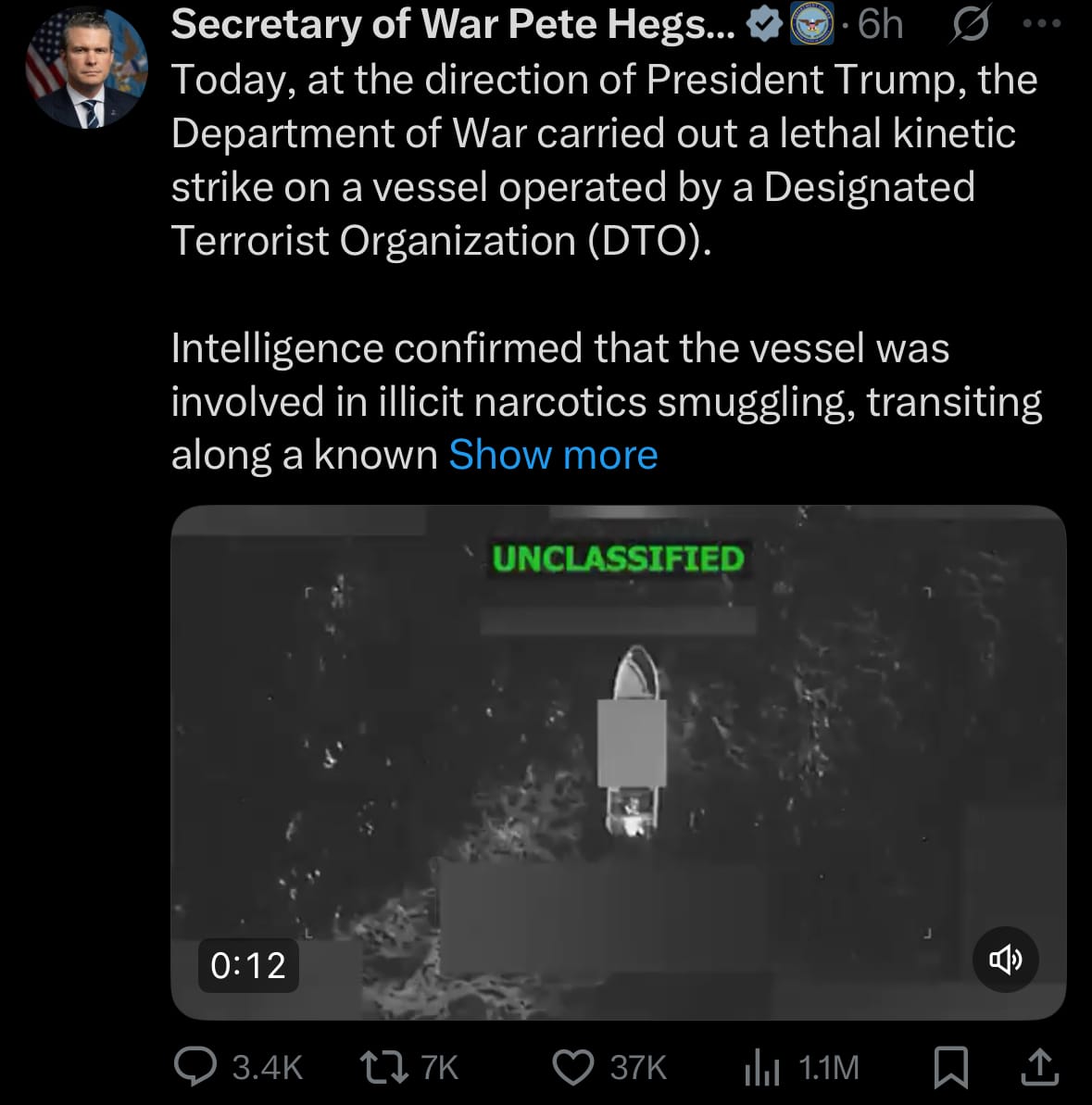
- These operations indicate a move toward more assertive approaches in addressing drug trafficking, which may help lower import volumes but have generated discussions on humanitarian effects, respect for national sovereignty, and possibilities of wider regional tensions in Latin America.
Space:
- On November 4, 2025, Europe's Ariane 6 rocket successfully launched the Sentinel-1D Earth observation satellite from the Guiana Space Center in Kourou, French Guiana, marking the vehicle's fourth flight since its inaugural mission earlier in the year. The launch occurred at 6:02 p.m. local time, deploying the satellite into a sun-synchronous orbit approximately 55 minutes later, where it will join the Copernicus program's constellation to monitor environmental changes, natural disasters, and maritime activities using advanced radar imaging.
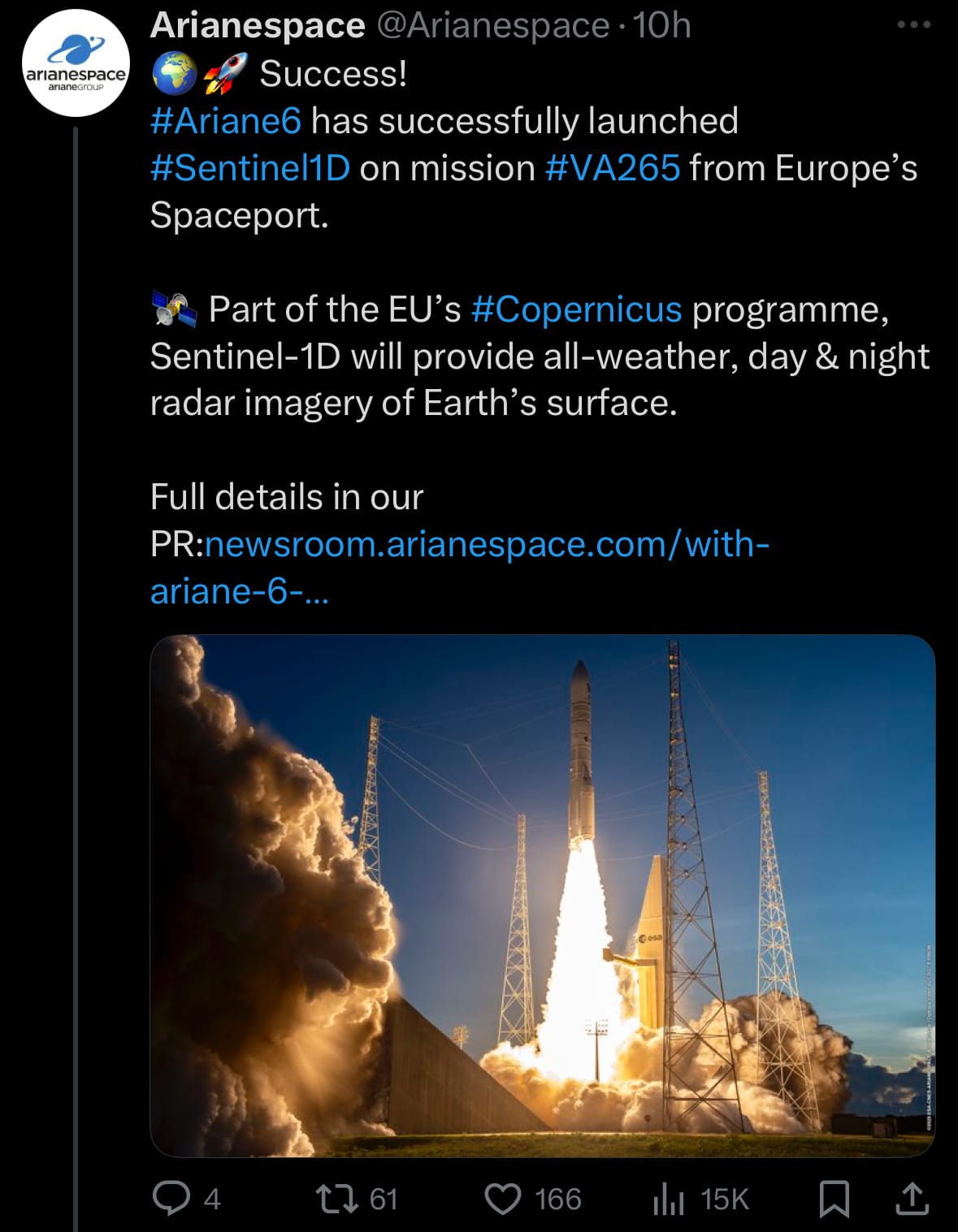
- This mission, designated VA265, highlighted improvements in the Ariane 6's performance, including precise orbital insertion and the separation of auxiliary payloads, with the rocket's design aimed at providing reliable and cost-effective access to space for European institutions and commercial clients.
Science & Technology:
Statistic:
- Largest public tech companies by market capitalization:
- 🇺🇸 NVIDIA: $4.837T
- 🇺🇸 Apple: $3.990T
- 🇺🇸 Microsoft: $3.822T
- 🇺🇸 Alphabet (Google): $3.352T
- 🇺🇸 Amazon: $2.665T
- 🇺🇸 Broadcom: $1.661T
- 🇺🇸 Meta Platforms: $1.581T
- 🇹🇼 TSMC: $1.525T
- 🇺🇸 Tesla: $1.477T
- 🇨🇳 Tencent: $728.65B
- 🇺🇸 Oracle: $707.48B
- 🇺🇸 Netflix: $463.12B
- 🇺🇸 Palantir: $452.50B
- 🇰🇷 Samsung: $452.30B
- 🇺🇸 AMD: $405.79B
- 🇳🇱 ASML: $399.84B
- 🇨🇳 Alibaba: $392.75B
- 🇩🇪 SAP: $302.37B
- 🇺🇸 Cisco: $284.99B
- 🇺🇸 IBM: $281.21B
- 🇰🇷 SK Hynix: $276.10B
- 🇺🇸 Micron Technology: $244.73B
- 🇺🇸 Salesforce: $242.22B
- 🇨🇦 Shopify: $209.64B
- 🇺🇸 AppLovin: $205.88B
History:
- The history of battleships starts with France’s La Gloire (1859) and Britain’s HMS Warrior (1860) introduced the world to ironclad, steam-powered warships, ending the age of wooden fleets. The following decades saw nations like Britain, Germany, Japan, and the United States compete to build bigger and more heavily armed vessels, culminating in Britain’s revolutionary HMS Dreadnought in 1906. This ship’s all-big-gun design and turbine propulsion made every earlier warship obsolete and ignited a global arms race. By World War I, dreadnoughts and battlecruisers dominated fleets: Britain’s Queen Elizabeth class, Germany’s König and Derfflinger, and Japan’s Kawachi and Kongo set new standards in firepower and armor. Between the wars, treaty restrictions encouraged innovation, leading to modernized and balanced ships such as the U.S. Nevada and North Carolina classes, Britain’s Nelson, Japan’s rebuilt Nagato and Kongo, France’s Richelieu, Italy’s Littorio, and Germany’s Bismarck. World War II became the high point of battleship design, with the massive U.S. Iowa and Japan’s Yamato representing peak naval engineering. Yet the war also revealed their vulnerability to air power, as aircraft carriers and submarines took over the decisive role at sea.
- After 1945, the battleship’s era came to an end. The United States briefly reactivated its Iowa-class ships during Korea, Vietnam, and the 1980s, even arming them with Tomahawk missiles, but by the 1990s, all were retired. Britain, France, Italy, Germany, and Japan had long since abandoned their battleship fleets, and the Soviet Union’s planned Sovetsky Soyuz class never left the drawing board. Today, no nation operates true battleships. Their strategic function—long-range strike, naval dominance, and deterrence—has shifted to carriers, submarines, and advanced missile destroyers and cruisers. Modern warships such as the U.S. Arleigh Burke and Zumwalt classes, China’s Type 055, and Russia’s Kirov class serve as their successors, relying on guided missiles, radar systems, and stealth technology rather than armor and big guns. These ships maintain the same goal once embodied by the battleship: to project power and control the seas through superior technology and precision.
Image of the day:

Thanks for reading!
- EARTH INTELLIGENCE builds private intelligence systems for organizations — connecting their internal and external data with AI to create one interactive command center for real-time awareness, decision making, and predictions.
Earth is complicated, we make it simple.
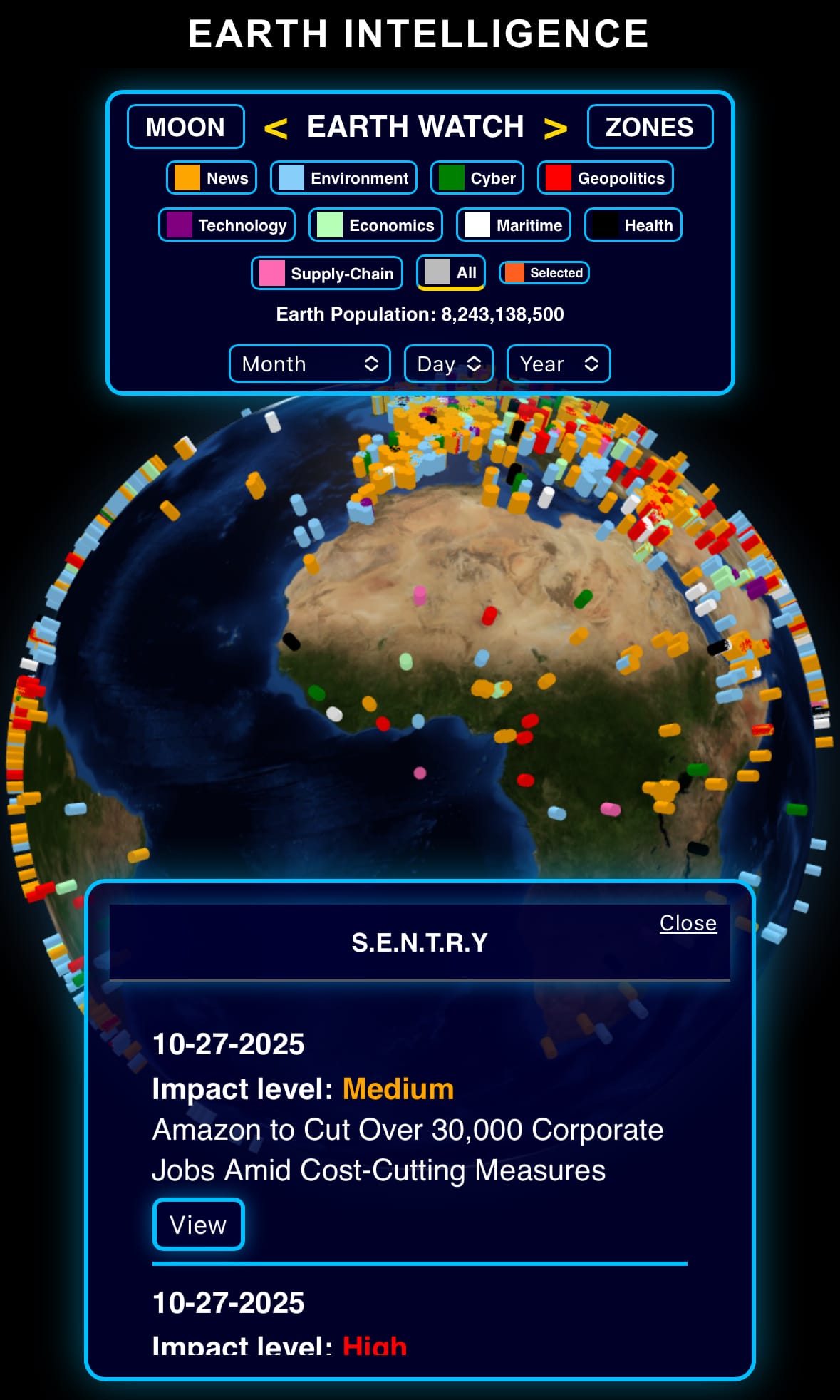
- Click below if you’d like to view our free EARTH WATCH globe:

Click below to view our previous newsletters:

Support/Suggestions Email:
earthintelligence@earthintel.news